
How to clean a crystal chandelier – 2 methods
To clean a crystal chandelier, cut the power at the consumer unit, dust it dry, then wipe each crystal with a damp cotton glove – never spray the fitting. For dust and a light film, wiping the drops in place is enough. A sticky grey film usually means taking the crystals down, washing them in a bowl, rinsing them in distilled water and polishing them dry. Before you start, find out what the drops and the frame are made of, because that decides the solution, and set the ladder up so it never stands on towels.

How do you clean a crystal chandelier?
Switch the circuit off at the consumer unit and wait for the bulbs to cool. Dust the chandelier dry, then wipe each crystal with a cotton glove dampened in the cleaning solution and polish it straight away with a dry one. Liquid always goes on the glove, never on the chandelier.
- Dust and a light film: wipe in place (method A). A sticky film and crystals that come off: wash them in a bowl (method B). Unknown material, an antique, work at great height or damaged wiring: call a professional.
- Uncoated crystal and glass are cleaned with distilled water and isopropyl alcohol; acrylic and coated crystals with plain water and a drop of washing-up liquid.
- A gilded, chrome or brass frame gets a dry, at most barely damp microfibre cloth, with no ammonia, vinegar, polishes or cream cleaners.
- Crystals never go in the dishwasher or in hot water. A final rinse in distilled water and polishing in cotton gloves prevent water spots.
Contents
- What is your chandelier made of? That decides the method
- How often should you clean a crystal chandelier?
- Safety: power, ladder and the weight of the fitting
- Preparation: photos, towels, gloves and a second person
- Cleaning chandelier crystals: what to use without harming finishes
- Method A: cleaning the crystals in place – step by step
- Method B: removing and washing the crystals – step by step
- Drying without water spots or streaks
- Frame, lamp holders and bulbs
- Reassembly and testing
- Corroded pins, missing and cloudy crystals
- When should you call a professional?
- Frequently asked questions
- Which method to choose
What is your chandelier made of? That decides the method
On a chandelier, “crystal” describes the look, not the composition. Under the same name you will find drops made of lead crystal, lead-free optical glass, ordinary glass, acrylic and, in boho-style lamps, shell. Each of these materials tolerates different things, and the frame is often more delicate than the drops themselves. How to clean a chandelier therefore depends first on what its drops and frame are made of.
Crystals (drops)
- Lead crystal – glass with added lead oxide. In traditional European terminology, “lead crystal” contains at least 24% PbO (by weight) and “full lead crystal” at least 30%. It is heavy, splits light into strong rainbow reflections and, tapped gently with a fingernail, rings for a long time. It is also softer than ordinary glass, so it scratches more easily and dislikes sudden changes of temperature. Dishwasher detergents can cloud it permanently.
- K9 crystal and lead-free crystal glass – K9 is the Chinese designation for a borosilicate optical glass, equivalent to BK7-type glass. It contains no lead, is very clear and is common in new chandeliers. “K9 crystal” in a shop description is a trade name, though, not a certificate of composition, so clean it as gently as lead crystal.
- Ordinary pressed glass – less sparkle, sometimes with a visible mould seam. Clean it exactly like crystal.
- Coated crystals – iridescent (“aurora borealis”), smoked, tinted or gold-coated on the surface. The coating is thinner and more delicate than the glass itself: plain water with a drop of washing-up liquid only, no alcohol, no scrubbing.
- Acrylic (PMMA) – two to three times lighter than glass of the same size, warmer to the touch, and when tapped it gives a dull click instead of a ring. Even kitchen roll scratches it, and alcohol, ammonia and solvents can cause a network of fine cracks (crazing). Wash acrylic with lukewarm water, a drop of mild washing-up liquid and a soft microfibre cloth.
- Capiz shell – thin, translucent discs cut from the shell of a marine mollusc, threaded on chains in boho and coastal-style lamps. They are calcium carbonate: vinegar and lemon juice literally dissolve them, and soaking can split the layers and ruin the lacquer they are often coated with. Clean capiz dry, with a duster or a soft brush, and lift individual marks with a barely damp cloth, drying straight away.
- Fabric shades – some chandeliers have small shades over the bulbs. Take them off before cleaning the crystals and dust them with a soft brush or a lint roller. Do not wet them, because glued seams do not tolerate water.
Weight, coolness to the touch and sound are clues, not certainties. If you bought your chandelier recently, the drop material is listed in the specifications on the product page, and it is what we use to filter, for example, Crystal Chandeliers. If the material is unknown and the chandelier is old, start with dry dusting and a test wipe on one crystal in an inconspicuous spot. Show a valuable piece to a specialist before you put anything in water.
Frame
- Electroplated finishes – chrome, nickel, gold and brass plating. This is a thin layer of metal over steel or brass. Ammonia and acids can discolour it, and polishes and abrasives can wear through it. Once worn away, the plating will not come back.
- Lacquered brass and painted metal – white, black, cream, as well as “antique” and “distressed” finishes. The patina here is often a paint or lacquer effect, so harder rubbing removes it along with the lamp’s character. Alcohol and solvents can dull lacquer.
- Gold leaf and wooden parts – on older and carved chandeliers. Dry only, with a soft brush: gilding is sometimes laid on a ground that dissolves in water.





How often should you clean a crystal chandelier?
Dust it dry every 1–2 months, wipe the crystals in place (method A) once or twice a year, and take them down for a wash (method B) every 1–3 years. In a kitchen, a dining room or near a fireplace, repeat method B every year.
A microfibre duster on a long handle or dry cotton gloves is all you need for dusting. Regular dusting does not give the dust time to bond with the greasy film that settles from the air. In an open-plan kitchen, a dining room, a room with a fireplace or where people smoke, grease and soot form a sticky film that wiping alone will not remove.
You will know it is time when the crystals look grey or milky in daylight, the rainbow reflections on the walls have gone, and a finger leaves a clear mark on a drop.
Plan the job for a bright day, because daylight shows every streak. If you want your crystal chandelier sparkling for Christmas, do it two or three weeks ahead rather than the day before guests arrive. If a pin snaps or a crystal turns out to be missing, you will still have time to order parts.
Safety: power, ladder and the weight of the fitting
Switch off the chandelier’s circuit at the circuit breaker (MCB) in the consumer unit. The wall switch is not enough: someone can flick it on by accident, and in older installations it is sometimes wired into the neutral, which leaves the lamp holders live. Tape over the breaker lever, leave a note saying “Do not switch on – work on the light” and tell everyone in the house. Then flip the wall switch: the chandelier should not light up. That confirms you have switched off the right circuit, but it is not a voltage test. So still do not put anything into the lamp holders, and keep liquid away from the electrics. If you do not know which breaker serves the room, switch off the whole home at the main switch or ask an electrician for help.
Incandescent and halogen bulbs get hot enough to burn, and a cold, damp cloth on hot glass can shatter it. Start only when every bulb is cool to the touch.
Use a stable household stepladder with a platform and handrail, compliant with EN 131, fully opened with the spreaders locked. Its feet must stand on a bare, level, non-slip floor, never on towels or a blanket. Choose a height that puts the chandelier at chest level, because working with your arms above your head is the easiest way to lose your balance. Stand only on the steps the ladder manufacturer permits, never on the tool tray. Do not lean out sideways; move the ladder instead. Do not climb with your hands full, wear stable shoes and take breaks. Chairs, stools and tables are not work platforms.
A crystal chandelier from our range usually weighs from around 5 to nearly 20 kg, and old multi-tier models can be heavier. Never hold on to the chandelier, never lean the ladder against it, never pull it down and never turn it to reach the other side: the ceiling fixing is not made for that. If the ceiling rose is coming away, the hook is bent, the ceiling is cracked or wires are showing from under the rose, stop and call an electrician.
Taking the chandelier down from the ceiling is not part of cleaning it. Disconnecting and reconnecting the fitting is work on the electrical installation, so leave it to an electrician. Both methods below assume the fitting stays on its hook.
Do not spray anything onto the chandelier – not water, not alcohol, not a cleaner. The mist settles in the lamp holders, on the wiring, in the ceiling rose and on LED modules. Always put the liquid on a cloth or glove. If liquid does get into a lamp holder, the ceiling rose, a driver or between wires, do not switch the power on “to see”. Keep the circuit off and call an electrician.
Isopropyl alcohol is flammable. Work in a ventilated room, away from lit candles (Christmas ones included), the fireplace and cigarettes. Dampen the cloth down at floor level by the bowl, and keep the bottle capped and away from the ladder. Never mix cleaning products, especially bleach with ammonia or acids.
Children and pets should stay in another room, because a falling crystal is sharp glass.
Preparation: photos, towels, gloves and a second person
- Before you take anything off, photograph the chandelier from four sides and take close-ups of each tier. For elaborate models, draw a diagram: tiers numbered from the top, arms numbered in order starting from the one pointing at the window. Crystals of similar shape often differ in length by a few millimetres and will not go back in the right places without a photo.
- Get egg boxes, a muffin tin or small bowls labelled with the tier number, a separate one for each type of crystal.
- Spread thick towels or a folded blanket under the chandelier to catch a falling crystal and drips, but so that the ladder’s feet stand beside them, on the floor. Move the table out from under the chandelier or cover it with a blanket.
- Use lint-free cotton gloves for holding and polishing the crystals, because they leave no fingerprints, and nitrile gloves for washing, because they grip wet glass better. For method A you will need two pairs of cotton gloves.
- Supplies: distilled or deionised water without added fragrance, isopropyl alcohol and mild washing-up liquid. Tools: two plastic bowls, several microfibre cloths, a soft brush or toothbrush, small plastic bags, flat smooth-jawed pliers and spare pins in the size your chandelier uses.
- Ask a second person to help. They hand you crystals and take them from you, so you never come down the ladder with your hands full. They also keep everyone out from under the chandelier and watch that nothing catches on your elbow. With a heavier chandelier and work at height, do not work alone.
- Since the chandelier is off, work in daylight or set up a floor lamp plugged into a socket on a different circuit.
Cleaning chandelier crystals: what to use without harming finishes
For cleaning chandelier crystals made of uncoated crystal or glass, use distilled water with isopropyl alcohol (70% or 99% isopropanol), at roughly 3–4 parts water to 1 part alcohol by volume. Distilled water contains no minerals, so it keeps white limescale spots to a minimum once dry. The alcohol dissolves the greasy film and speeds up evaporation, so there are fewer streaks. For a noticeably greasy film, add one drop of washing-up liquid per half litre of solution. The solution is for the crystals only – not for the frame, coated crystals, acrylic or glued parts.
The wash for method B is lukewarm water with a few drops of mild washing-up liquid per litre. More is not better: excess detergent stays on the glass as a milky haze and has to be rinsed off afterwards.
Use chandelier cleaners just like the home-made solution: on a cloth, not on the fitting. You will also see drip-dry cleaners that you spray onto the hanging chandelier and then let it drip dry. We do not recommend them for cleaning at home. The mist and the drips reach the lamp holders, wiring and ceiling rose, and no cover provides a watertight seal there. If a cleaner contains ammonia or alcohol, it must not run onto a gilded or lacquered frame either.
Glass cleaner works on crystal and glass, but only applied to a cloth. Many glass cleaners contain ammonia, so keep them away from the frame, and do not use them on acrylic at all.
What never to use:
- ammonia on the frame – it discolours brass, gilding and lacquer,
- vinegar and lemon juice on a hanging chandelier – the acid attacks metal pins, frame finishes and capiz shell,
- cream cleaners, powders, melamine sponges and scourers – they scratch crystal and wear through finishes,
- bleach, chlorine-based cleaners, acetone and solvents,
- kitchen roll – it leaves lint and scratches acrylic,
- the dishwasher and hot water.
Before using any new product for the first time, check the chandelier manufacturer’s instructions and test it on one crystal in an inconspicuous spot.
Method A: cleaning the crystals in place – step by step
Choose this method when your crystal chandelier needs regular care: the crystals have dust and a light film rather than a sticky layer. It also suits chandeliers whose drops are wired on or hard to remove, and those with hundreds of small crystals.
- Switch off the power at the consumer unit, secure the breaker and wait for the bulbs to cool.
- Lay out the towels and set up the ladder on the bare floor so that you work at chest height.
- You can loosely slip a small plastic bag over each cold bulb and its holder. It only guards against a stray drop and is not insulation; you still work so that no liquid gets anywhere near the holders.
- Dust the crystals dry, from top to bottom, with a soft brush, a duster or a dry glove. Starting with a damp cloth turns dust into mud.
- Dampen the glove, not the chandelier. Down by the bowl, dampen a cotton glove in the solution and wring it out well: it should be damp, not wet. Put a dry glove on your other hand.
- With the damp hand, cup a crystal and wipe it on all sides; polish it straight away with the dry hand. Support each drop from below and do not pull on the pin.
- Work from top to bottom, so any drips run onto crystals you have not cleaned yet. On each tier, go from the centre outwards, so you do not reach through drops you have already polished. Move around the chandelier with the ladder. Do not turn the chandelier, because that twists the cable or chain and strains the fixing.
- Change gloves as soon as they start to look grey. Dirty cotton smears the film instead of lifting it.
- Clean the frame separately, dry or with a barely damp microfibre cloth, to suit its finish (details in the frame section). Do not carry the alcohol solution onto lacquer or gilding.
- Check that everything is dry, remove the bags and only then switch the power back on. If any drop got into a lamp holder or the ceiling rose, follow the rule in the safety section.
Method B: removing and washing the crystals – step by step
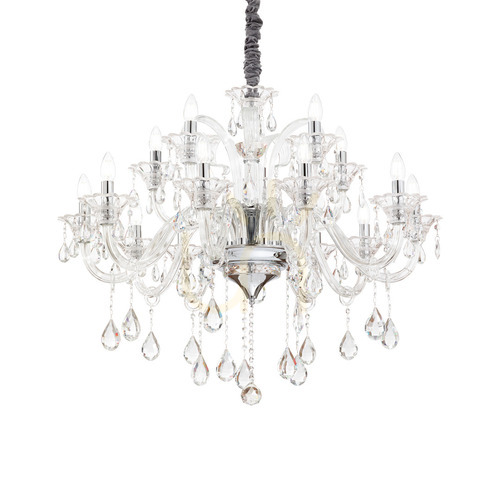
Choose this method when the crystals are grey, sticky or yellowed, when it has been several years since the last wash, or when the chandelier hangs in a kitchen, dining room or near a fireplace. The crystals must also come off safely. Chandeliers with strands of octagons and garlands of teardrops, such as classic Maria Theresa Chandeliers, often have several hundred pieces. Take whole strands off and do not unpick them into individual crystals. Strands joined with metal pins can be washed briefly; strands threaded on string or glued should only be wiped, never immersed.







- Secure and prepare the work area as in steps 1–2 of method A. Set out two plastic bowls on a table nearby: one with the washing solution, the other with distilled water.
- Take off one tier at a time, from the bottom up and from the outside in, so your hands do not catch the crystals still hanging. On large chandeliers, remove crystals alternately from opposite sides so the fitting does not tilt. Put each batch into its labelled container and wash it before taking down the next one. Do not take everything off at once, because it is easy to lose track of the order.
- Open the pins gently. Support the crystal, open the pin with your fingers or smooth-jawed pliers and bend it as little as possible: brass wire snaps after a few bends. Set aside corroded, brittle or bent pins for replacement straight away.
- Wash in a plastic bowl lined with a towel, not in a ceramic sink, where crystal chips easily. The water should be lukewarm, comfortable for your hands, never hot. Wash a few crystals at a time so they do not knock against each other. Clean the facets and grooves with a soft brush. You can leave dirty crystals to soak for a few minutes, but no longer, because metal pins do not like long soaks.
- Rinse in distilled water at a similar temperature. When the water in the second bowl turns cloudy, change it.
- Dry and polish the crystals as described in the next section.
- While the crystals dry, clean the frame, lamp holders and bulbs.
- Rehang the crystals following your photos, in the reverse order to removal: from top to bottom and from the centre outwards. Wear cotton gloves so you leave no fingerprints.
- Switch the power on only when everything is dry and checked against the list in the reassembly section.
Drying without water spots or streaks
Marks have three sources: minerals from tap water, detergent residue and fingerprints. Tap water leaves the white spots, which is why the final rinse is always in distilled water. Lay the crystals out in a single layer on a thick towel, not in a pile, and blot them dry with a lint-free cloth. Then, wearing cotton gloves, polish each crystal with a dry microfibre cloth.
Before you rehang the crystals, wait until the holes and pins are dry. Moisture trapped in a hole can encourage corrosion of the pin and discolouration around it. Do not dry them with a hot hairdryer or on a radiator: sudden heating is bad for lead crystal, and acrylic can warp.
Finally, hold each crystal up to a window. A streak comes off with a dry microfibre cloth. White limescale spots are a mineral deposit that neither alcohol nor another rinse will remove. The way to deal with stubborn limescale is described under cloudy crystals.
Frame, lamp holders and bulbs
Start the frame with dry dusting: a soft brush reaches the bends of the arms and the decorative details where most dirt collects. Then wipe it with a microfibre cloth barely dampened with water and a drop of washing-up liquid, and dry it immediately. Gilded and chrome frames, typical of Glamour Chandeliers, are thin finishes: no metal polish, no ammonia, no vinegar. Clean a wooden or gold-leaf frame with a dry brush only.



Clean lamp holders dry only and only on the outside, with a soft brush; never push anything inside to the contacts. While you are at it, inspect them closely. Brown or black discolouration, melted plastic or a loose holder means the chandelier must not be switched on until an electrician has checked it. The same goes for a cable with cracked, crumbling or frayed insulation, which is common on old chandeliers. Do not touch or bend suspect wiring.
Wipe plastic candle sleeves (the tubes that imitate candles) with a barely damp cloth, and clean paper ones dry only. Replace any that are cracked.
Clean bulbs cold, with a dry or barely damp cloth, on the glass only and away from the cap. They must be completely dry before you screw them back in. Hold G9 halogen capsules with a cloth, because grease from your fingers shortens their life. When replacing bulbs, do not exceed the maximum wattage stated for the holder, and fit bulbs of the same colour temperature. E14 LED candle bulbs run much cooler than incandescent ones, which spares the sleeves and shades.
On chandeliers with integrated LEDs, clean around the modules dry only, and never open the module housings or drivers.
Reassembly and testing
Before switching the power on, run through a short checklist:
- All crystals hang as in the photos, and asymmetric drops face outwards.
- Every pin is closed: check it by eye while supporting the crystal, rather than tugging it downwards.
- No crystal touches a bulb directly.
- The bags are off, and the lamp holders, bulbs and ceiling rose are dry.
- Nothing is left on the floor or in the containers.
Then switch on the breaker at the consumer unit and the wall switch. If one arm does not light, switch the power off and check that the bulb is screwed in and working. Do not dismantle the fitting: if a new bulb does not help, it is a job for an electrician. Over the following days, glance at the chandelier now and then, because a crooked crystal is easier to fix before it falls.
Corroded pins, missing and cloudy crystals
Replace corroded or rusty pins. Chandelier pins are sold in various sizes and finishes, so measure the old one or take it along as a sample. Replace a whole tier at once so the metal colour stays even. Paper clips and wire are no substitute: they rust, and the crystal hangs crooked.
For a missing crystal on a newer chandelier, contact the seller or manufacturer. Give them the model, a photo and the crystal’s dimensions: length, width and hole position. Many manufacturers keep spare parts, and for old chandeliers specialist suppliers match them. Until the part arrives, move a crystal from the side facing the wall to the front, where a gap would show. Take chipped or cracked crystals off at once, because they have sharp edges and can crack further.
Cloudiness that does not go after washing has three possible causes: detergent residue, limescale, or permanent surface etching from the dishwasher, harsh chemicals or years in a kitchen. Another rinse in distilled water removes detergent residue. Stubborn limescale can be lifted only from an uncoated crystal that is off the chandelier, with the pin removed. Wipe the glass with a cloth dampened in diluted vinegar and rinse it at once in distilled water. Never do this on a hanging chandelier or on capiz. If that does not help either, do not reach for stronger chemicals. The remaining options are replacing the crystal or having it polished by a specialist workshop, which is worth it for valuable lead crystal.
Loose arms, flickering, sparking or a burning smell mean one thing: switch the circuit off and call an electrician.
When should you call a professional?
Call a professional when the chandelier has several hundred crystals or several tiers, or hangs above a stairwell or in a double-height room. The same applies to an antique, to a chandelier whose material you do not know, and to any sign of damaged wiring.
A household ladder and two pairs of hands are enough for a typical living-room chandelier. A chandelier counts as large when you cannot reach its centre without leaning out from the ladder. One that hangs very high needs scaffolding or a lift, and one that is too heavy needs work you cannot do safely from a ladder. Treat as antique any piece with hand-cut lead crystal, gold leaf or old fabric-covered wiring.
There are firms that specialise in cleaning chandeliers in place, including from scaffolding. Taking a chandelier off its hook, checking the wiring and rehanging it is always a job for an electrician.
Frequently asked questions
Can I put chandelier crystals in the dishwasher?
No. The crystals knock against each other and the basket, hot water and strong detergent can permanently cloud lead crystal, and the metal pins corrode. Wash removable uncoated crystals by hand in lukewarm water.
What should I clean the crystals with to avoid streaks?
Clean uncoated crystal and glass with distilled water and a little isopropyl alcohol, applied to a cotton glove or microfibre cloth. Polish each crystal immediately with a second, dry glove. Streaks most often come from tap water, too much detergent and fingers.
Can I clean a chandelier with vinegar?
Not while it is hanging. Vinegar dissolves limescale on glass, but on a chandelier it never reaches only the glass. It gets onto the pins, hooks, frame finish and lacquer, which the acid damages, and it literally dissolves capiz shell.
Distilled water with isopropyl alcohol works better on a greasy film, and rinsing in distilled water prevents limescale.
Do I need to take the chandelier down to clean it?
No. Both methods assume the chandelier stays where it is, and only the crystals come off. Disconnecting the fitting from the installation is a job for an electrician, and rehanging a heavy fitting on its hook means checking the fixing too.
How do I clean a capiz shell chandelier?
Dry, with a duster or a soft brush. Lift individual marks with a barely damp cloth and dry immediately. Do not soak the shells and do not use vinegar or alcohol: capiz is calcium carbonate, which acid dissolves and water splits into layers.
What if liquid gets into a lamp holder?
Do not switch the power on to see whether “it’s fine”. Keep the circuit off and ask an electrician to check it. Moisture in a holder or ceiling rose is not necessarily visible, and a short circuit can damage the holder or an LED driver.
Which method to choose
If your crystal chandelier is only dusty and has no sticky film, method A is enough. If the crystals are grey and sticky, or the chandelier hangs near a kitchen or fireplace, plan method B straight away and ask someone to help. Wiping that kind of film in place again and again will not remove it; it only smears it. If you do not know the material, or the chandelier hangs higher than you can reach from a household ladder, call a professional first.
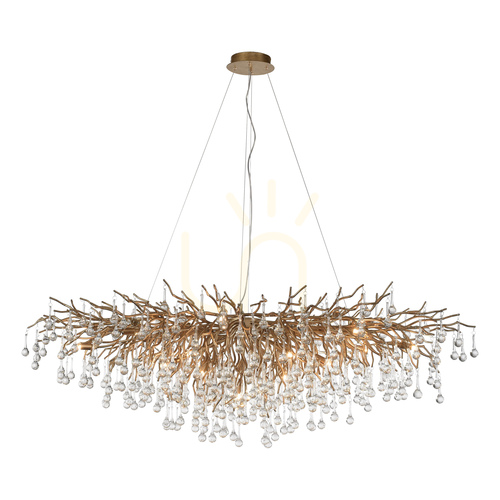
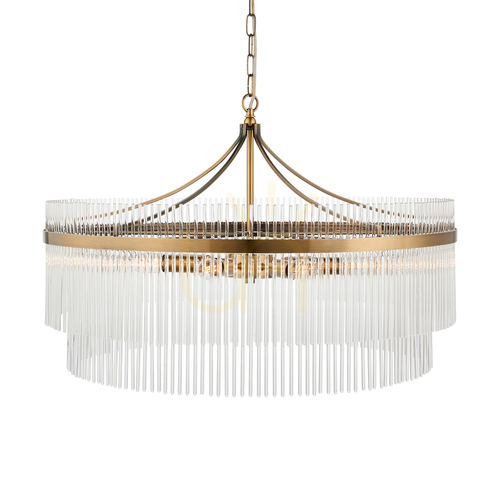
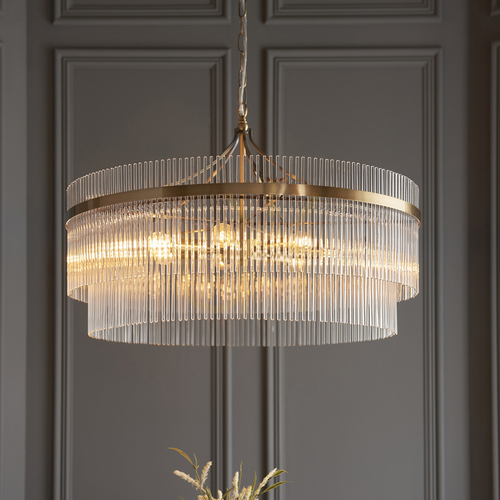
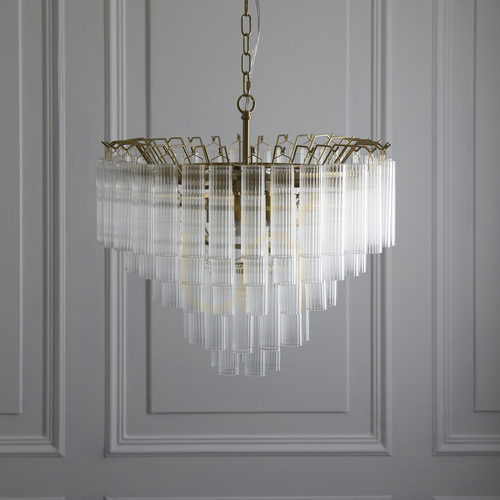
If you are wondering about a new chandelier while you clean, count the drops: models with large glass elements or rods are much quicker to clean than those with hundreds of small crystals. You will find the full range under Chandeliers.







Marek Więcław


Maybe you will be interested in products from these categories?
Chandeliers
Tags & Blog Categories