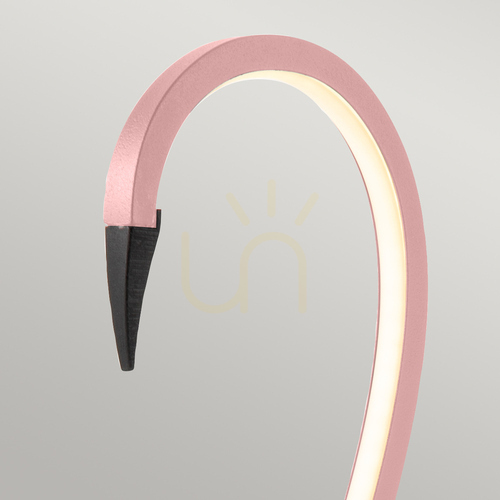
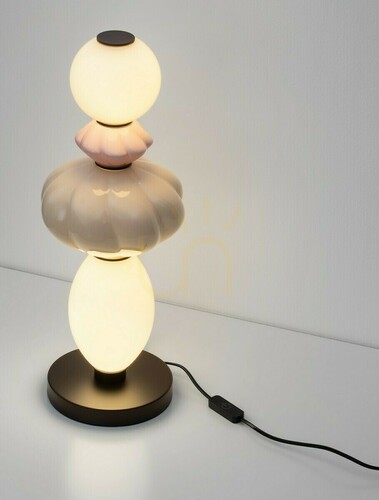
A pink desk lamp is a working lamp first and a colour choice second: it still has to put enough glare-free light on your notebook or keyboard. What the pink changes is the mood of the desk – and, if the shade is translucent, the colour of the light itself.
That second point is worth knowing before you buy. A lamp painted pink on the outside works exactly like any other task light, while a lamp with a pink glass or fabric shade behaves more like a soft accent light. Both have their place; they just do different jobs.
Blush, dusty or hot pink?
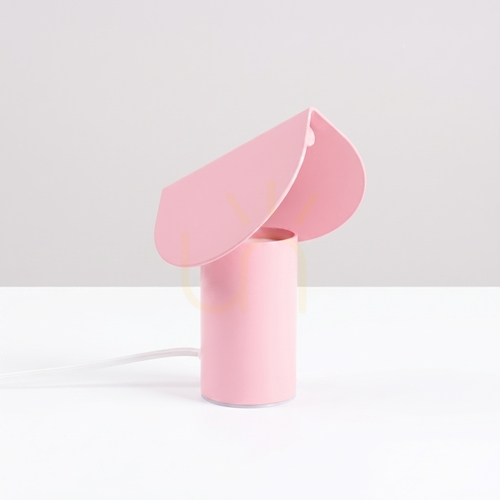
The shade of pink decides where the lamp fits. Light pink and blush are the easy ones: they sit quietly next to white furniture, pale oak and grey, so a lamp bought for a child's room still works after a redecoration. Dusty pink, with its muted, slightly beige undertone, is the grown-up version – pair it with brass, walnut or a deep sage green and a home office looks considered rather than cute. Hot pink and raspberry are statement colours for a teenager's room or a pop-inspired scheme, where they work best against black or navy.
A vintage pink desk lamp usually means an enamelled metal dome on an angled arm, or a ribbed or opaline glass shade – lovely to look at, but check which of the two you are getting, because they light the desk very differently.
What the shade does to the light
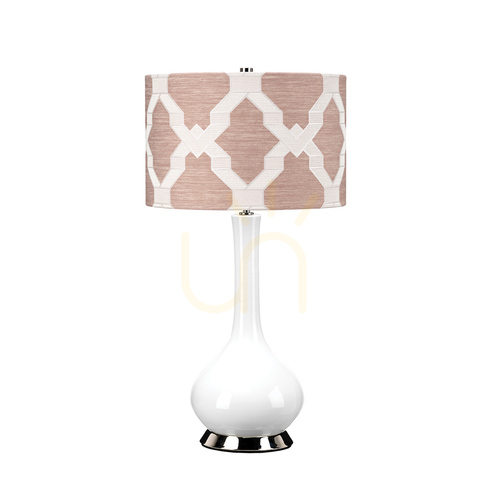
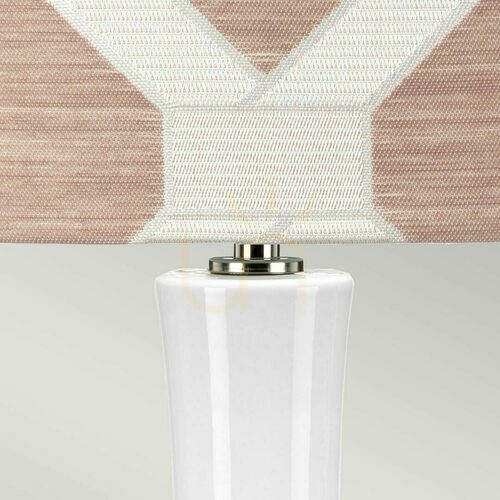
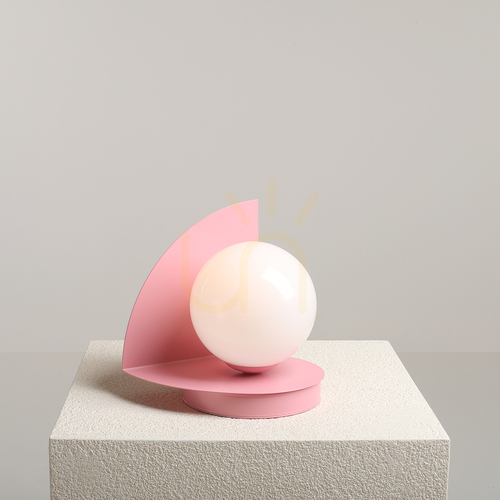
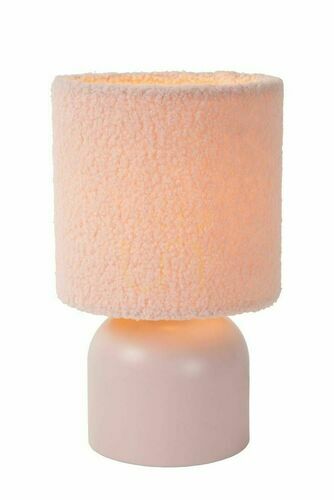
An opaque metal shade, pink outside and white or silver inside, throws neutral light onto the page. A shade in pink glass, fabric or thin plastic lets light through and tints it a warm, salmon colour. It also swallows part of the output, so the lamp looks dimmer than the bulb suggests. That rosy glow is pleasant for winding down in the evening, but for drawing, sewing or matching paint colours it skews what you see. Treat a translucent pink lamp as a second light, not the main one.
Choosing one for your desk
The European workplace standard BS EN 12464-1 recommends about 500 lux on the surface where you read, write or type. Ceiling lights rarely deliver that on their own, so the desk lamp tops it up where it matters.
| Feature |
What to look for |
| Brightness |
usually 400–800 lumens for study or work; 150–300 lumens is decorative only |
| Colour temperature |
4000 K for daytime focus, 2700–3000 K for a warm desk lamp in the evening; tunable white does both |
| Colour rendering |
CRI 80 or above; 90+ for art and craft work |
| Light source |
integrated LED, or a replaceable bulb: B22 bayonet, E27 or E14 screw cap |
| Arm and head |
balanced or spring arm, flexible gooseneck, or a swivel head |
| Fixing |
weighted base, or a clamp for the edge of a narrow desk |
| Power |
mains plug; USB or a rechargeable battery for cordless use |
With a bulb-fitted lamp, check the maximum wattage on the label and fit an LED bulb – it runs much cooler than an old incandescent, which matters under a fabric shade.
Setting it up
If you are right-handed, put the lamp on the left so your hand doesn't shadow the page; left-handers do the opposite. Keep the head just below eye level so you never look straight into the LED. Next to a monitor, aim the lamp at the keyboard or papers rather than the screen to avoid reflections.
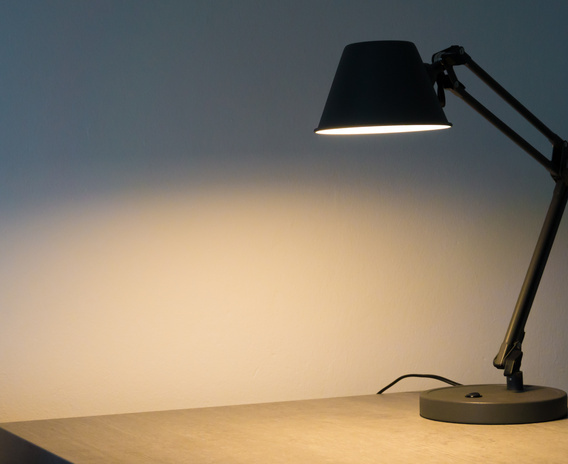
On a small desk, a clamp-on lamp frees the whole surface, and a long arm reaches across it. On a deep worktop, an angled arm reaches much further than a short lamp with a dome.
Care and common mistakes
- Buying for colour alone. A pretty pink glass lamp won't light homework properly.
- Ignoring flicker. Cheap LED lamps can flicker, which tires the eyes over a long evening.
- Cleaning with solvents. Unplug first, dust with a dry microfibre cloth and wipe powder-coated metal with a damp cloth and a drop of washing-up liquid. Alcohol and solvents dull the finish.
- Leaving it in strong sun. Pale plastics and fabric shades can fade or yellow on a sunny windowsill.
Frequently asked questions
What is the best desk lamp for a small desk?
A clamp-on lamp or one with a slim base and a long, adjustable arm. It leaves the surface free and still reaches the whole working area.
What is the best table lamp for reading?
One with a directional head or opaque shade, roughly 400–800 lumens, warm to neutral white and a CRI of at least 80. A translucent pink shade gives atmosphere but not enough focused light to read comfortably for long.
What makes a good pink table lamp for a girl's room?
A steady base or clamp, an LED source that stays cool to the touch, a simple touch switch and an arm she can aim herself. Light pink tends to outlast a hot pink phase.
Is a battery-powered pink lamp bright enough to study by?
For short sessions, yes. Cordless lamps are handy away from a socket, but they are often less bright and dim as the battery runs down, so a mains lamp is the better choice for long study evenings.
Does a pink shade make the light pink?
Only if it is translucent – glass, fabric or thin plastic. An opaque metal shade with a light interior gives untinted light.
What colour temperature makes a desk lamp feel warm?
Around 2700–3000 K feels cosy and suits evening reading. For concentrated daytime work, switch to 4000 K, which keeps you more alert.
More on choosing a shape, arm and light source: desk lamps. If you'd like the same colour by the bed, carry on with pink bedside lamps.