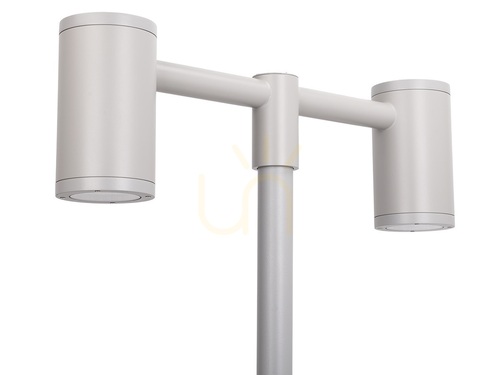
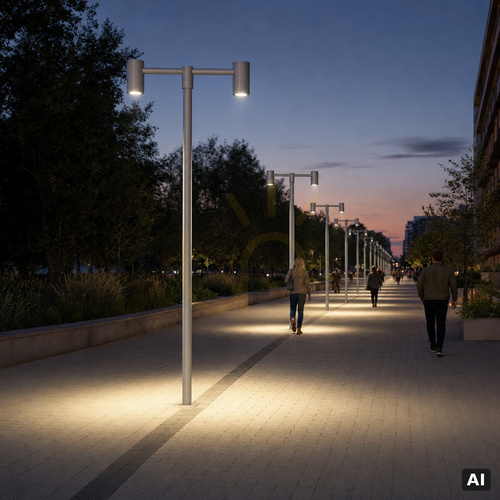
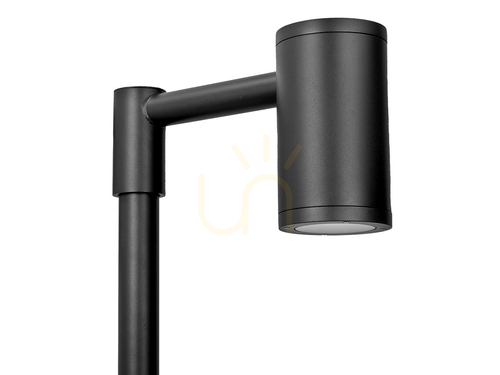
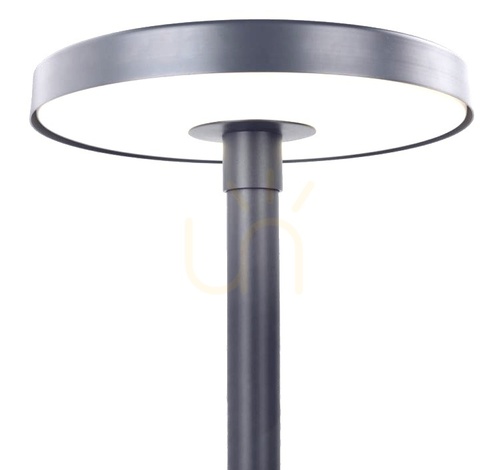
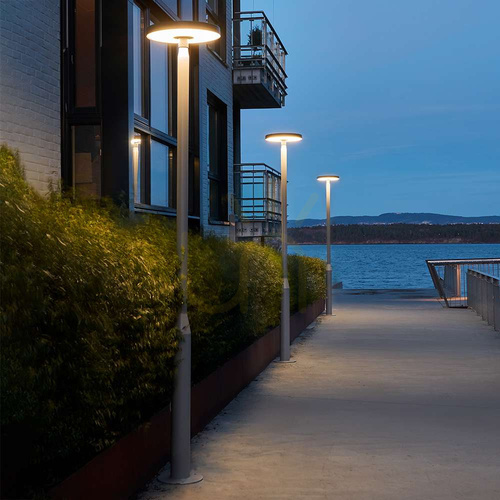
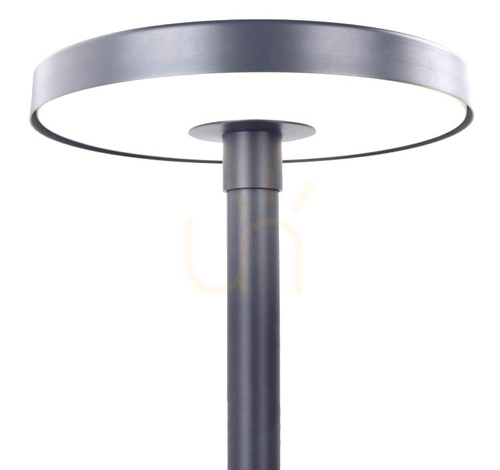
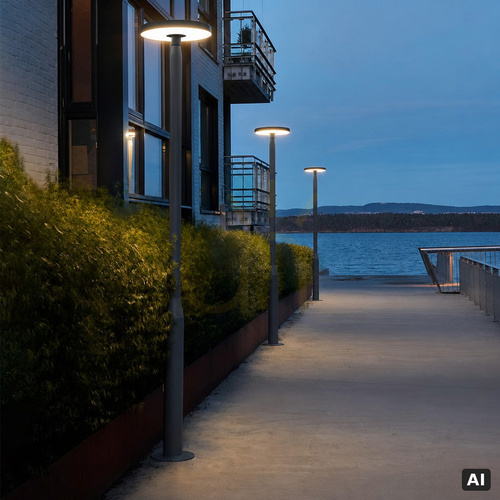
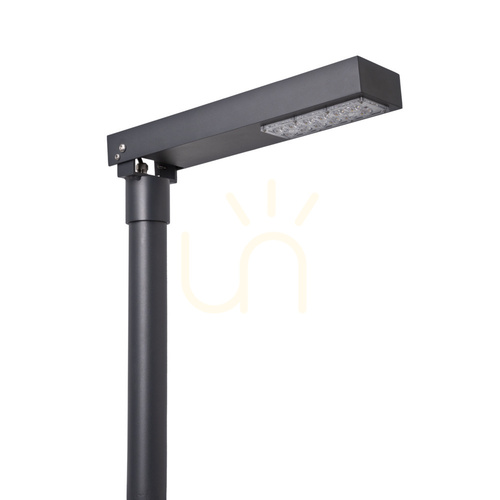
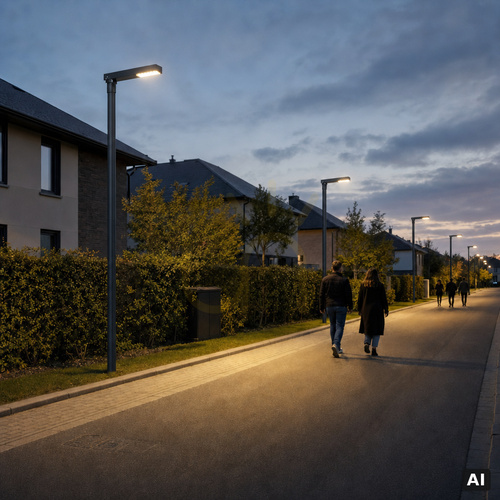
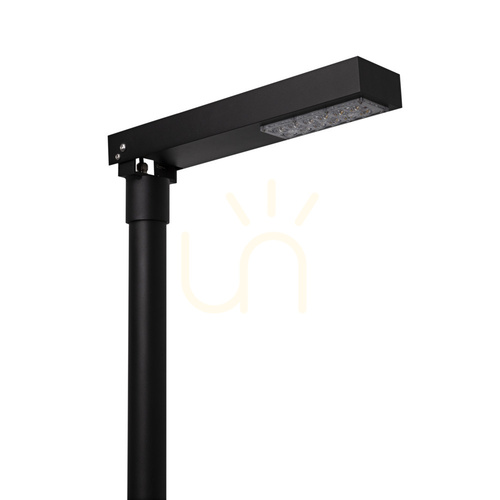
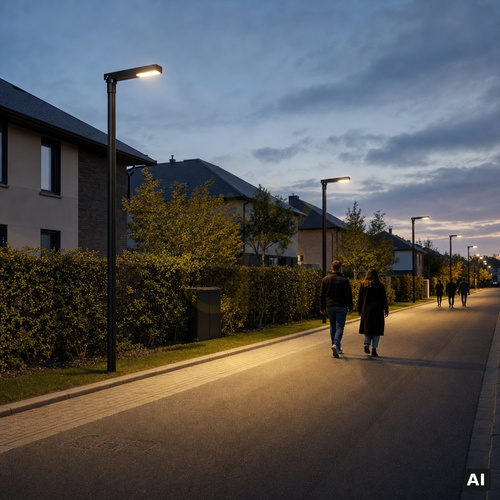
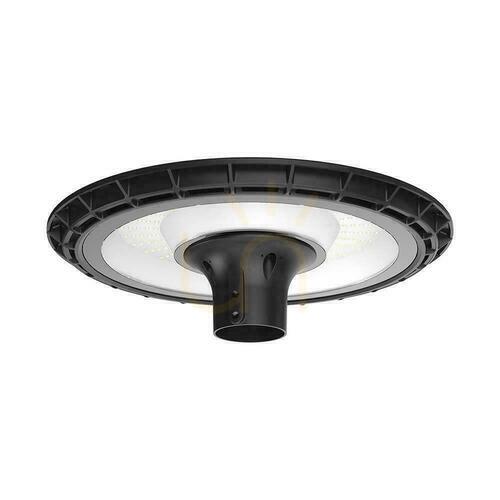
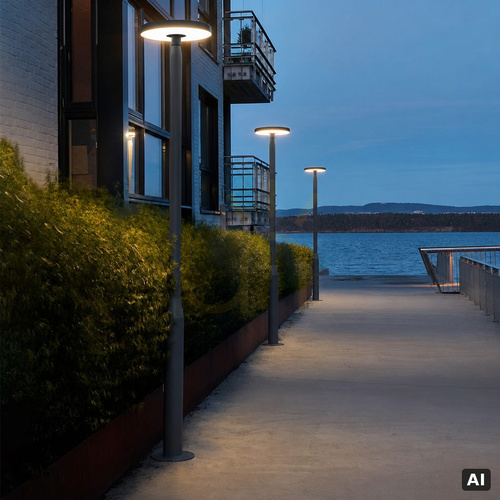
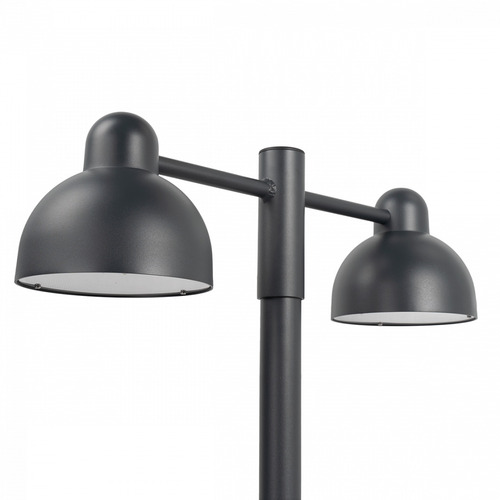
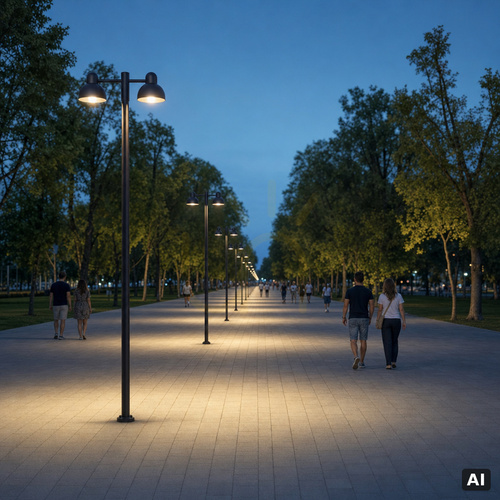
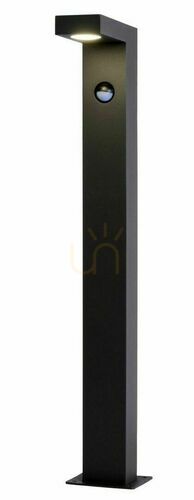
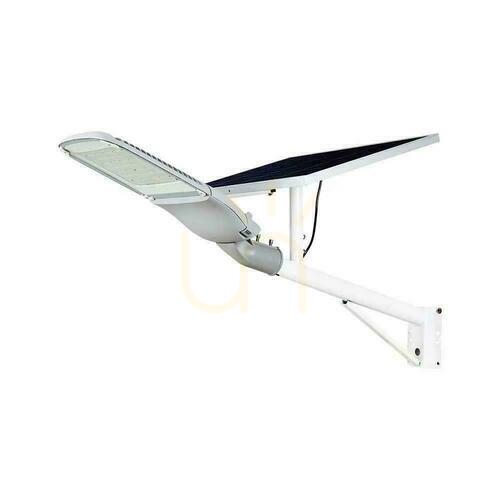
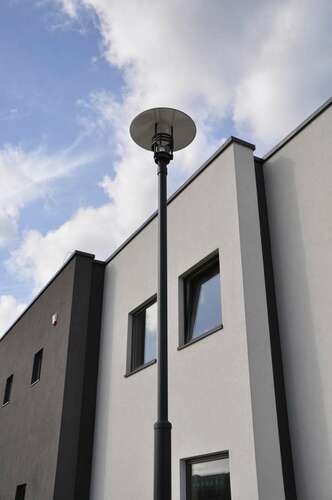
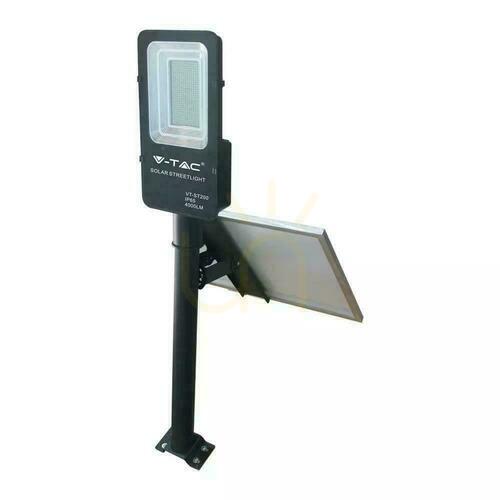
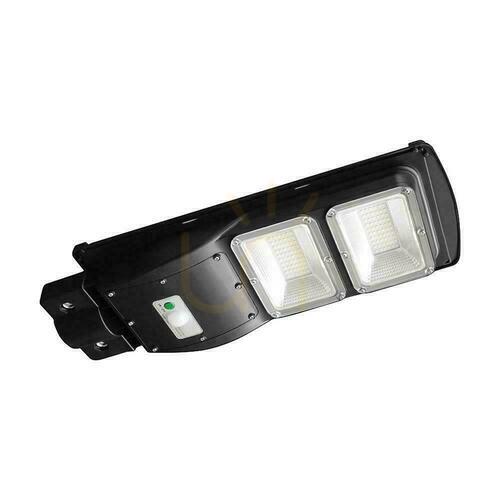
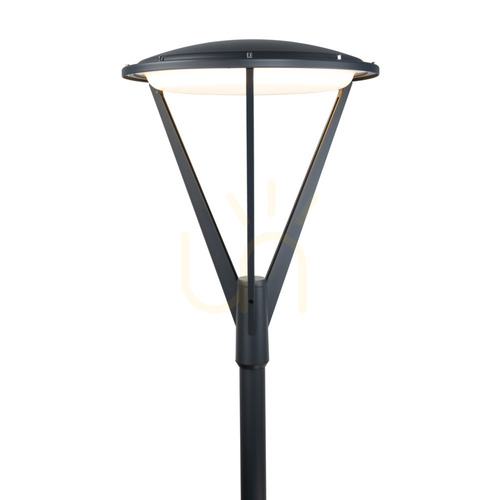
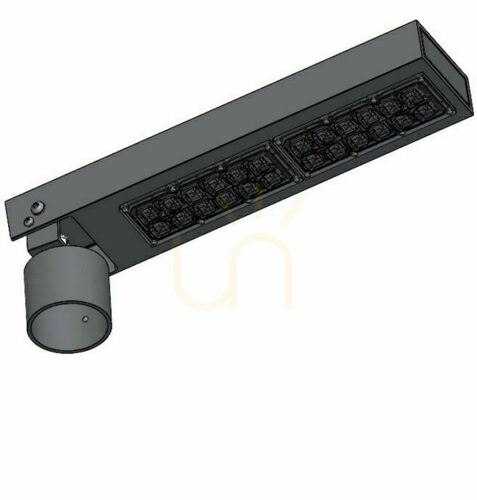
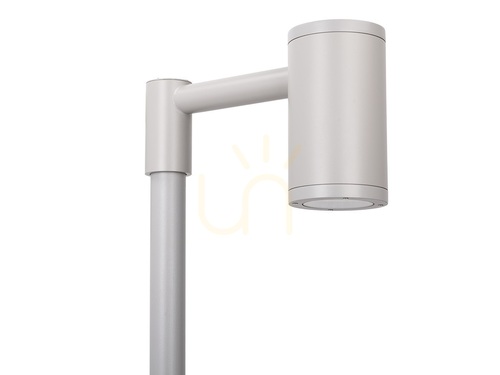
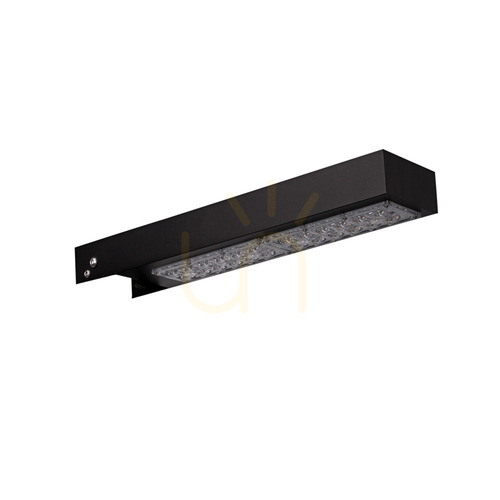
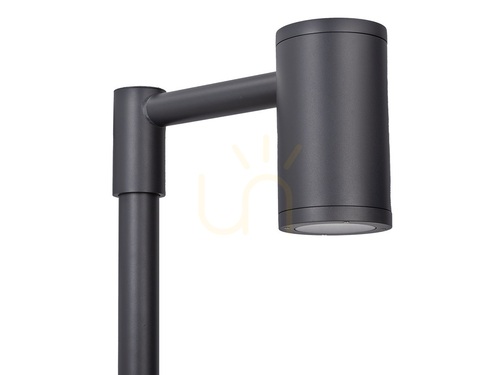
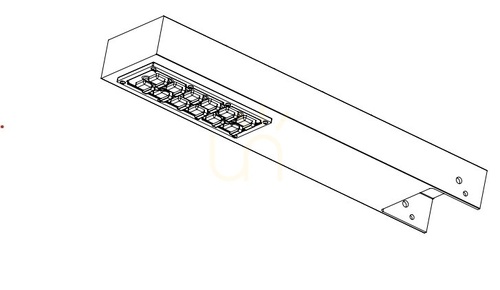
An LED street light is a road-style lantern head mounted on a 3–6 m column, built to spread an even sheet of light along a driveway, private road or car park. Compared with an ordinary garden lantern it sits higher, puts out several times more light and uses optics that throw that light along the surface you drive on rather than in a soft glow around the post.
Private buyers rarely light a public highway – that is the council's job, designed to BS 5489 and BS EN 13201. Where these lights earn their place is on the long gravel drive to a farmhouse, an unadopted lane shared by a handful of houses, a small business yard or a residents' car park behind a block of flats.
Lamp post, street light or garden lantern?
In everyday British English a lamp post is the whole thing – column plus lantern – and often means a decorative post in a garden. A street light is the working light on top: an LED head with a lens system shaped for roads. Garden lanterns and bollards usually stand 0.5–2.5 m tall and light a path or border; street-style fittings start roughly where those stop.
Two families cover most needs. Contemporary LED heads are flat, low-profile and aimed downwards. Heritage lanterns keep the Victorian or Edwardian outline that suits conservation areas and period houses; some take an E27 or E40 lamp, others hide an integrated LED module inside the traditional shape.
Choosing the right fitting
Ignore the wattage in the product name and read the lumen figure. LED efficacy runs from around 100 to over 150 lm/W, so two 50 W heads can differ by half again in useful light. The figures below are typical starting points for private sites, not a lighting design.
| Setting |
Column height |
Spacing |
Light output |
Colour temperature |
| Long domestic driveway |
3–4 m |
10–15 m |
2,000–4,000 lm |
2700–3000 K |
| Shared private lane |
4–6 m |
15–24 m |
3,000–6,000 lm |
3000 K |
| Residents' or customer car park |
5–8 m |
18–30 m |
6,000–12,000 lm |
3000–4000 K |
| Commercial yard, loading area |
8–10 m |
by design |
10,000 lm and above |
4000 K |
A useful rule of thumb is to space columns three to four times their mounting height apart; further than that and you get bright pools with dark gaps between. For car parks, BS EN 12464-2 suggests average illuminance of about 5, 10 and 20 lux for light, medium and heavy traffic.
Check the fixing before anything else. Post-top lanterns slide over a spigot, most often 60 mm or 76 mm across; side-entry heads clamp onto a bracket arm. Reducers exist, but it is easier to match column and lantern from the start. Look for IP65 or IP66, an impact rating of IK08 or higher where vehicles or footballs are about, and built-in surge protection.
Installation in the UK
A street light on your own land doesn't normally need planning permission, though listed buildings and conservation areas can be an exception. The electrical side is another matter: a new outdoor circuit falls under BS 7671 and, in England, is notifiable building work under Part P, so use a registered electrician. Expect steel wire armoured cable buried in a trench, a duct under the drive and a concrete root or flange-plate foundation for the column.
Most people fit a photocell so the light comes on at dusk and goes off at dawn. Many councils dim their LED lights by around half after midnight, and the same trick works at home with a timer or a dimmable driver. If the drive only needs light when a car arrives, a fitting with a PIR sensor is the simpler answer.
Frequently asked questions
What are the downsides of LED street lights?
Mainly glare and colour. Early installations used cold 5000–6500 K light that many residents found harsh and bluish. Choose 3000 K or warmer, a flat glass front and a head that sits level, and most of the complaints disappear.
How do I stop a street light shining into my garden?
On a public light, ask the council for a back shield. On your own, prevent it at the design stage: asymmetric optics that face the road, no upward tilt, and a column placed so the house next door sits behind the lantern, not in front of it. Light spilling onto a neighbour's property can count as a statutory nuisance.
What are the best lights for a long driveway?
Low-level bollards suit short, winding drives. Once a drive runs beyond 50 m or so, a few 3–4 m columns with road optics light it more evenly with fewer fittings and fewer trenches.
Can I replace an old sodium lantern with LED?
Usually yes. If the spigot size matches, only the head changes. An LED retrofit lamp in the old fitting is cheaper but less efficient, because the original reflector was designed for a different light source.
Do I need a photocell on an LED lamp post head?
It isn't compulsory, but without one the light depends on someone remembering the switch. Many heads have a socket on the housing where a plug-in photocell or control node fits.
How long do LED street lights last?
Quality modules are rated for roughly 50,000 hours before dropping to 80% of their output – well over ten years of dusk-to-dawn use. The driver often fails first, so a replaceable one is worth having.
For more on lower lights along paths and borders, see garden lanterns; where running a cable is impractical, solar garden lanterns are the natural next step.