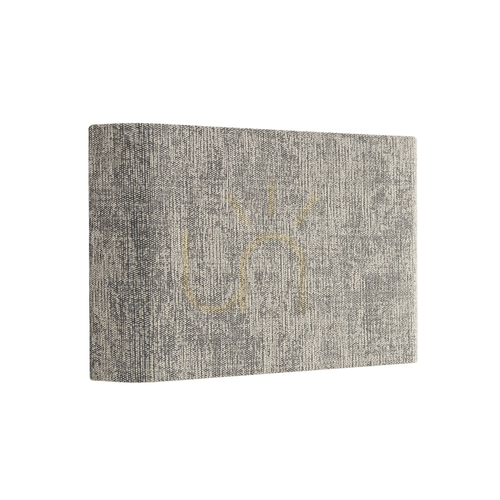
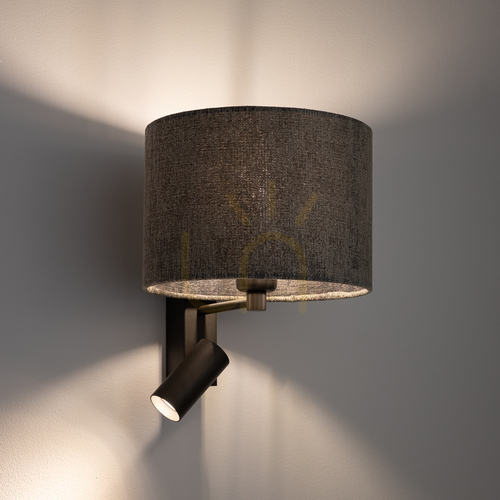
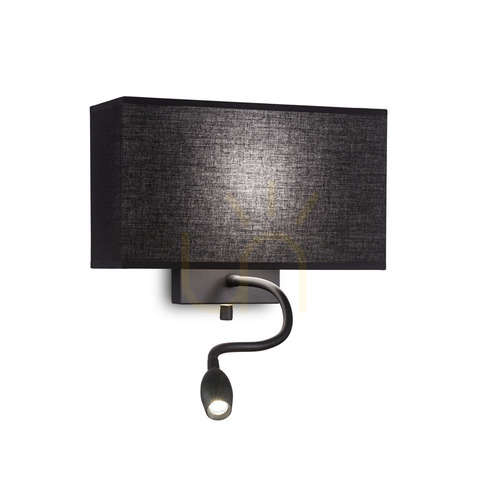
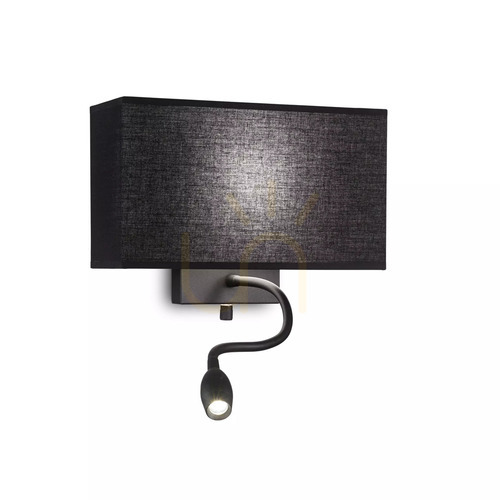
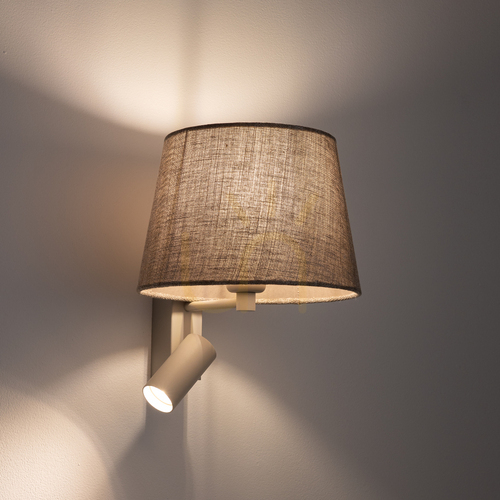
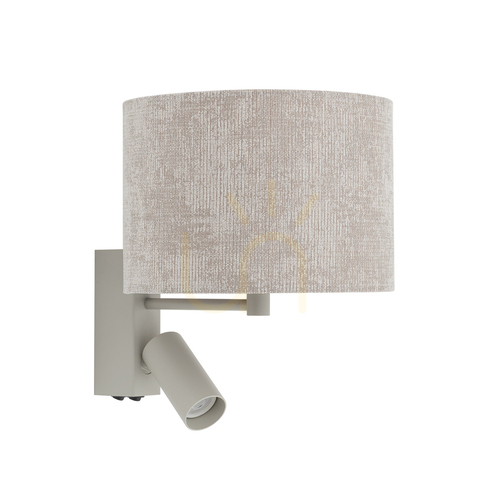
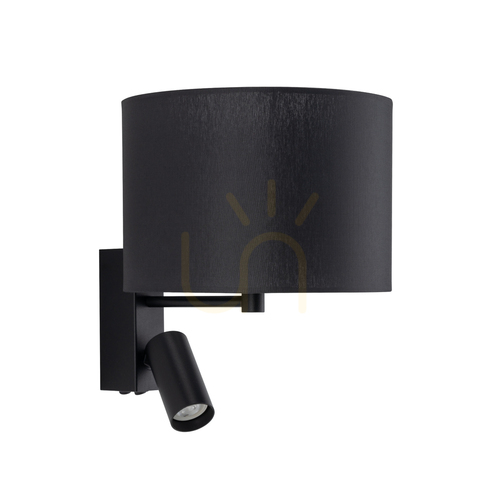
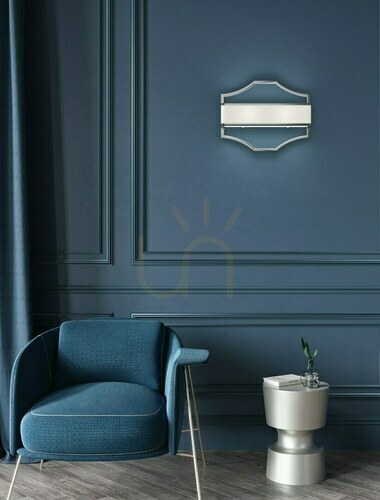
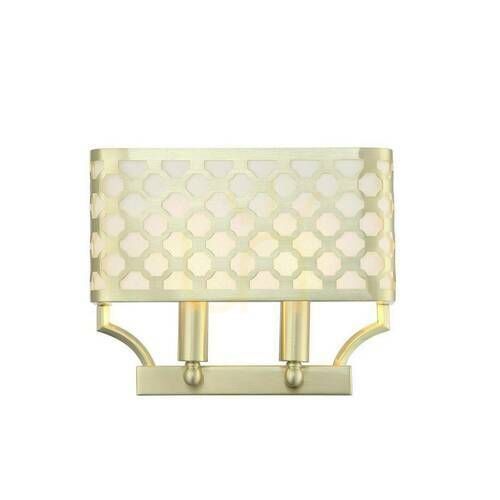
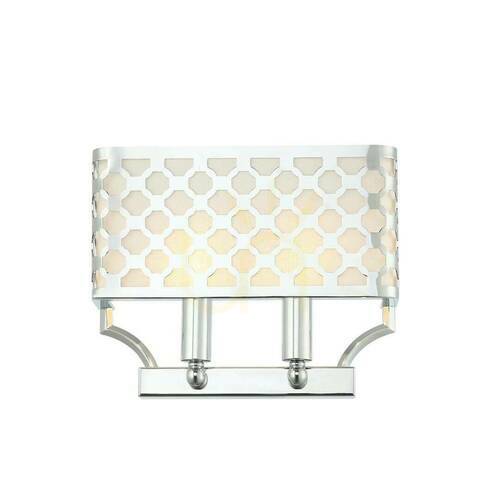
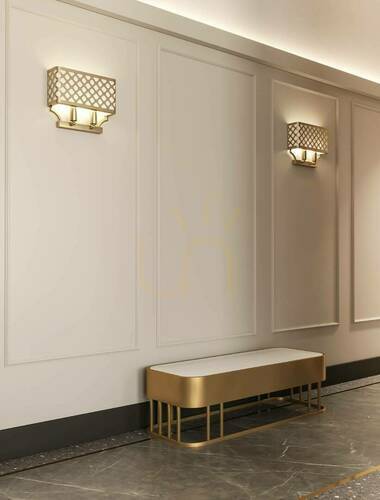
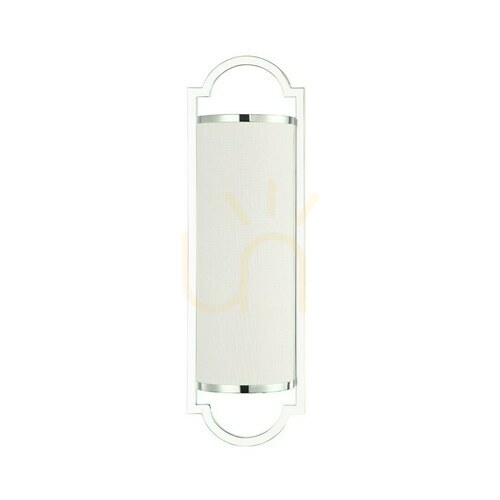
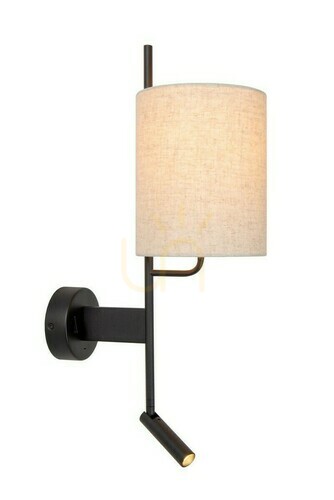
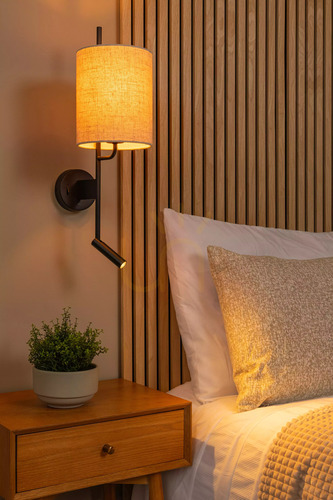
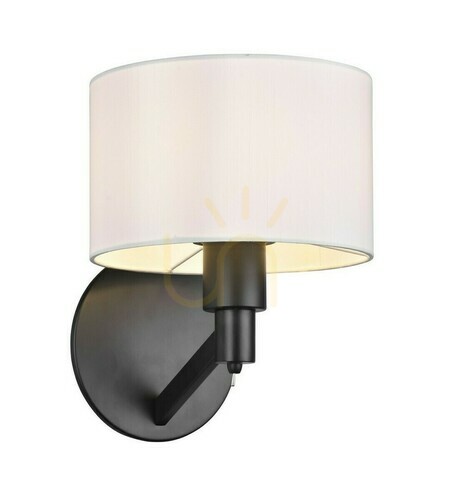
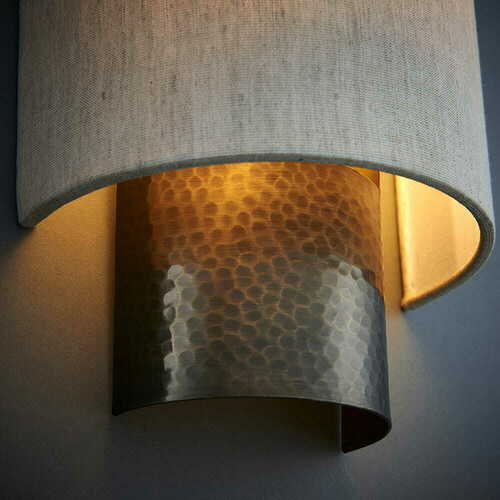
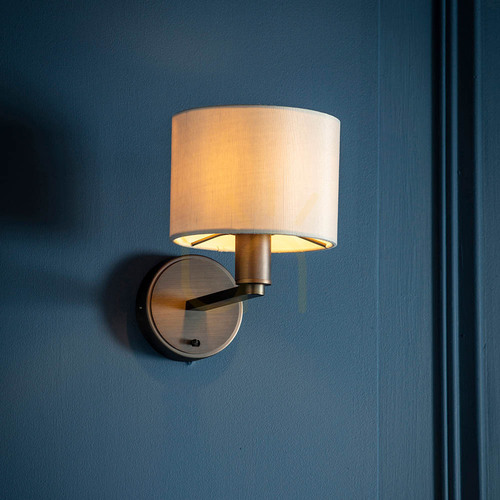
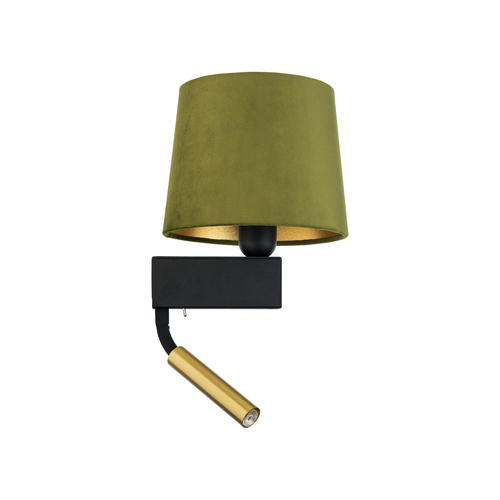
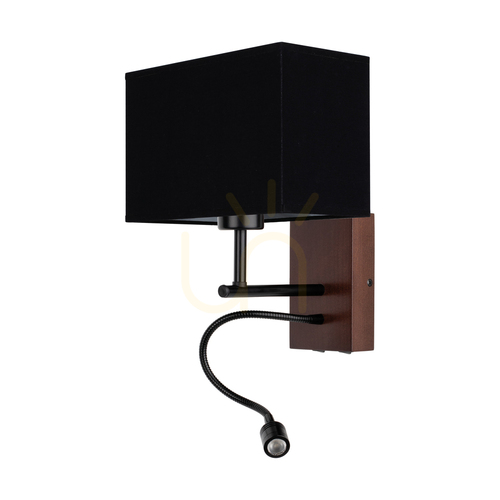
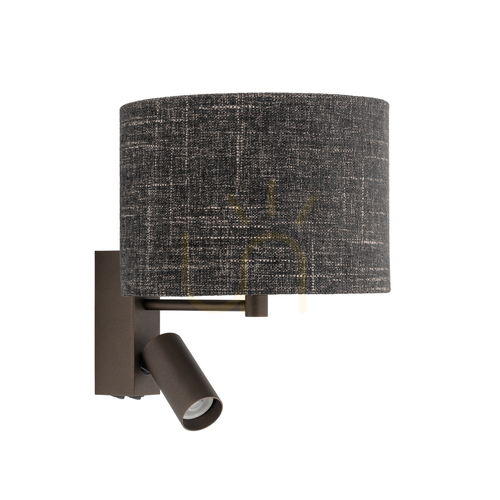
A wall light with a shade in fabric gives you soft, glare-free light: the shade hides the bulb and turns it into a gentle glow rather than a bright point. On a wall it does something extra, too. Most of the light escapes through the open top and bottom, painting two soft scallops on the plaster, so a single fitting can warm up a whole stretch of wall.
That makes fabric shade wall lights a supporting act rather than the main light in a room. They earn their keep beside the bed, either side of a sofa or fireplace, along a hallway or landing, and flanking a mirror – anywhere a ceiling light feels too harsh.
Check the fitting before you fall for the shade
In the UK you'll come across three common lamp holders on fabric wall lights. Bayonet cap (BC, B22) push-and-twist bulbs are still familiar in British homes; screw-in Edison screw (ES, E27) and the smaller SES (E14) are just as common, the latter usually under small candle-style shades. Compact designs may use G9 capsules or integrated LEDs. Knowing which one you have saves a trip back to the shop when the bulb goes.
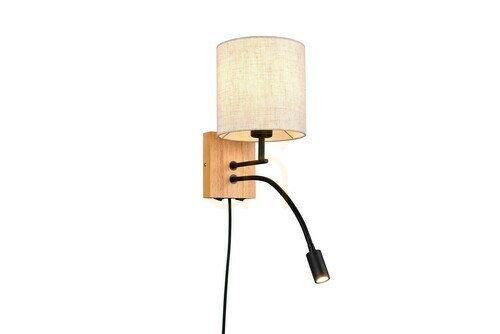
Next, how it's powered. A hardwired wall light connects to cables behind the plaster and is usually controlled from a wall switch, sometimes with a switch on the fitting itself. Metal fittings are often Class I and need an earth connection. This is a job for a qualified electrician working to BS 7671; in England and Wales some jobs, such as adding a new circuit or work in a bathroom, must also be notified under Part P of the Building Regulations. Renting, or no wiring where you want the light? A plug-in wall light with a cable and inline switch only needs screwing to the wall.
Fabric shades are almost always rated IP20, which means dry rooms only. In a bathroom, the zones around the bath and shower call for at least IPX4, so keep fabric to bedrooms, living rooms and hallways.
Choosing the shade: shape and fabric
-
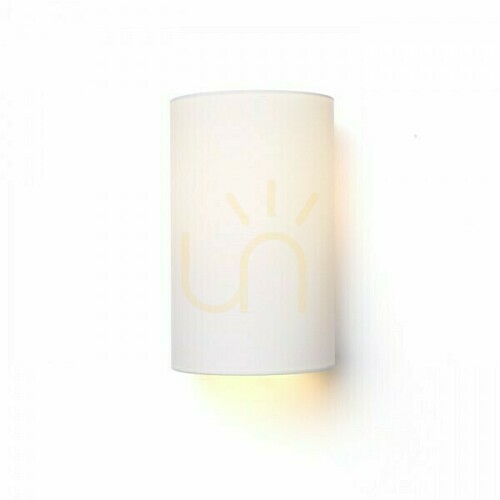
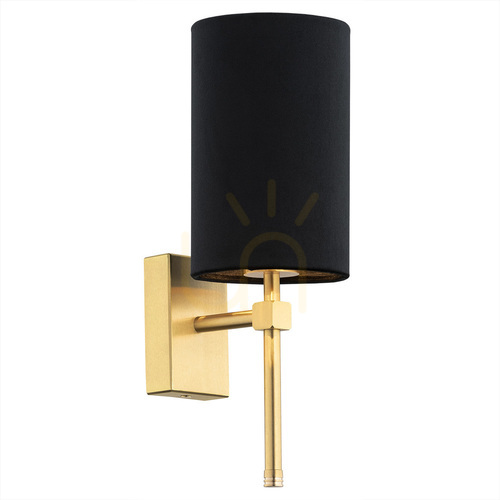
Drum shades glow evenly all round and suit modern rooms.
-
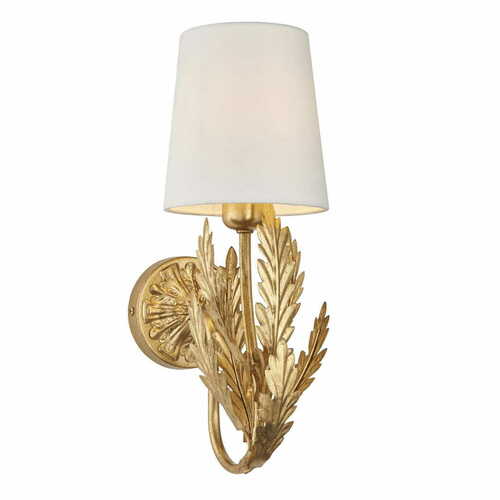
Empire or coolie shades taper outwards and push more light downwards – good beside a bed.
-
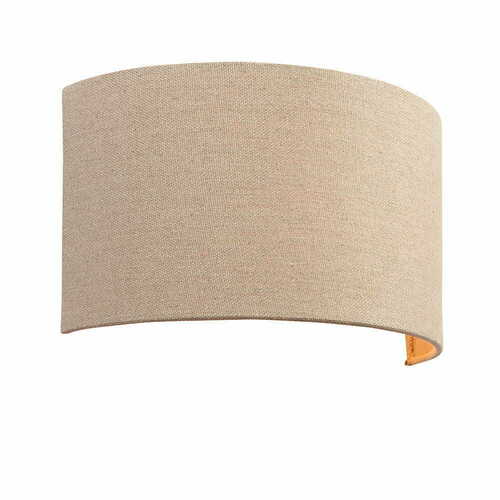
Half shades have a flat back that sits against the wall, ideal for narrow halls and stairs.
-
Candle clip shades sit on small candle bulbs and add sparkle rather than useful light.
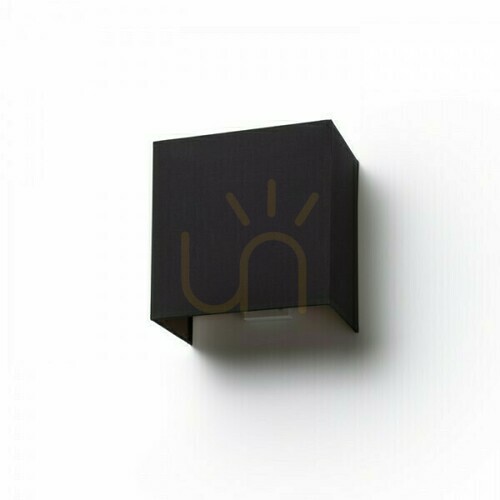
Pale cotton and linen let plenty of light through, so the whole shade glows. Velvet, dark linen or a shade lined in gold or copper lets very little through: the light leaves in tighter beams up and down and the wall pattern becomes the feature. Coloured fabric tints the light – oatmeal and rust feel warm, grey and navy cooler.
Heights and bulbs at a glance
With typical British ceiling heights of around 2.4 m, these are sensible starting points, measured to the bottom edge of the shade.
| Where |
Typical height |
Shade and bulb |
| Bedside |
30–40 cm above the mattress |
shade open at the bottom, 2700 K LED, roughly 400–500 lm for reading |
| Living room, beside a sofa or chimney breast |
1.5–1.7 m from the floor |
pale drum or empire shade, matching pair |
| Hallway |
1.6–1.8 m, one every 2–3 m |
shallow fitting projecting no more than about 15–20 cm |
| Staircase and landing |
1.7–1.9 m above the stair nosing |
half shade, so shoulders don't catch it |
| Beside a mirror |
centre of the shade at roughly face height |
one each side rather than one above |
Fit LED bulbs. They run far cooler than incandescent or halogen, so the fabric is less likely to scorch or discolour. As a guide, 470 lm replaces an old 40 W bulb and 806 lm a 60 W one. Still respect the maximum wattage printed by the lamp holder – often 40 or 60 W on fabric fittings. Choose a frosted (opal) bulb under thin fabric so you don't see a bright hotspot, and make sure the bulb doesn't touch the shade. If you want to dim, both the bulb and the dimmer need to be LED-compatible.
Caring for fabric shades
Switch off and let the bulb cool before you start. Dust regularly with a microfibre cloth, a soft clothes brush, a lint roller on smooth fabrics, or the vacuum's brush attachment on its lowest setting. Dab stains with a damp cloth carrying a little mild detergent – never rub, and never spray the shade, which leaves tide marks. Don't soak glued or laminated shades, and send silk or antique ones to a specialist cleaner. Keep white shades out of strong sun, which yellows fabric over time.
Frequently asked questions
Should wall lights point up or down?
A fabric shade usually does both: light leaves through the top and the bottom. An empire shade throws more downwards for reading, a drum spreads it evenly, and a tall narrow shade gives sharper scallops on the wall.
How high should bedside wall lights be?
Roughly 30–40 cm above the top of the mattress, so that when you sit up against the headboard you can't see the bulb under the shade.
What height should hallway wall lights be?
Around 1.6–1.8 m to the bottom of the shade, spaced every 2–3 m. In a narrow hall, how far the fitting sticks out matters more than the exact height.
How do you clean a yellowed lampshade without washing it?
Remove the dust first, then dab with a barely damp cloth and mild detergent, working evenly over the whole shade rather than one spot. Yellowing from sun, smoke or age often won't fully reverse at home; stronger detergents tend to make it worse.
What are the brown spots on my lampshades?
Usually one of two things: scorch marks from a hot bulb sitting too close to the fabric, or damp and mould marks on a shade that has stayed dusty in a humid room. An LED bulb and regular dusting prevent both.
Can you put a half shade on any wall light?
Only if the lamp holder sits close enough to the wall for the flat back to rest against it, whichever way the bulb points. Check the fixing – a ring that sits under the lamp holder or a clip that grips the bulb – and the size of the holder before buying a replacement.
Other styles of wall lighting are covered under wall lights. If there's no wiring where you want the light, have a look at plug-in wall lights as well.