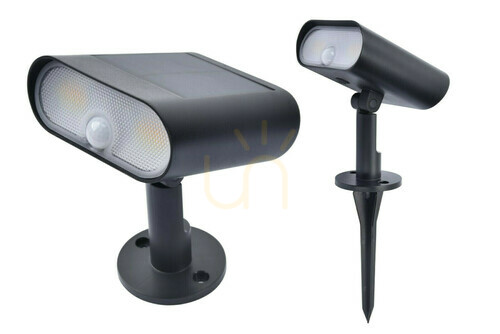
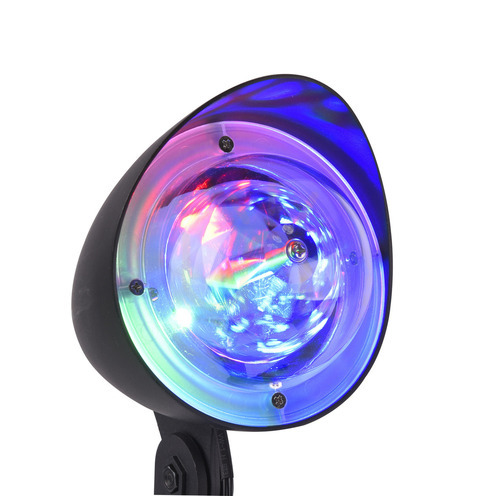
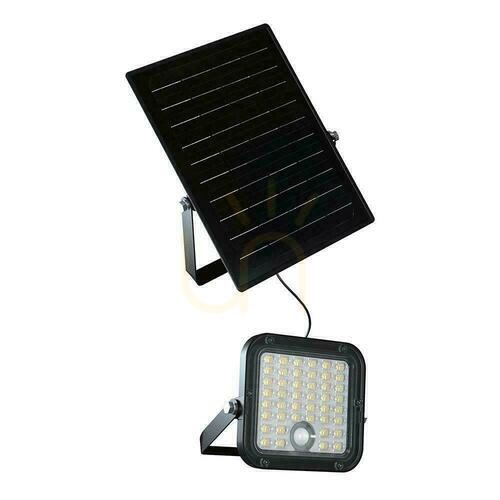
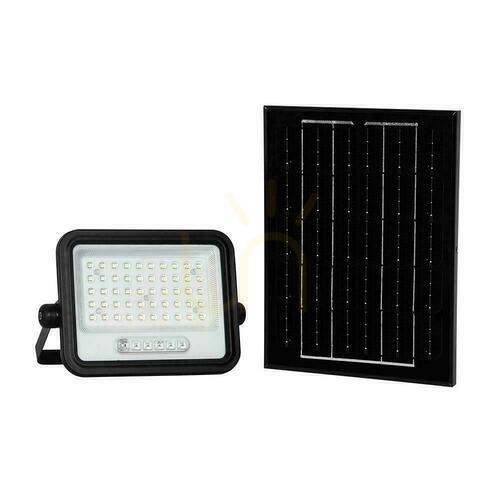
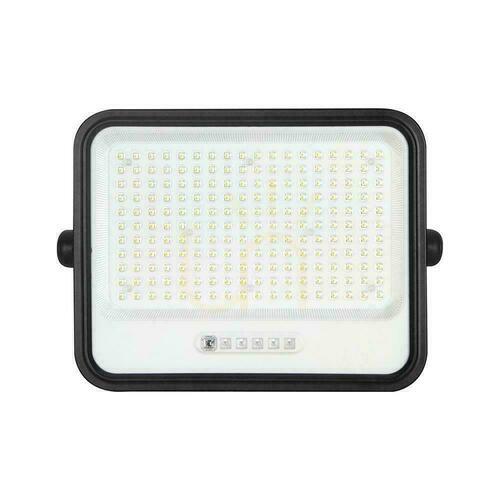
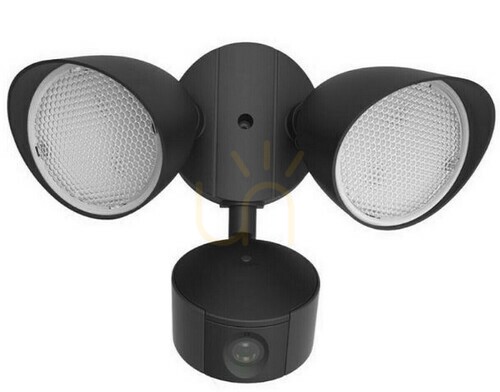
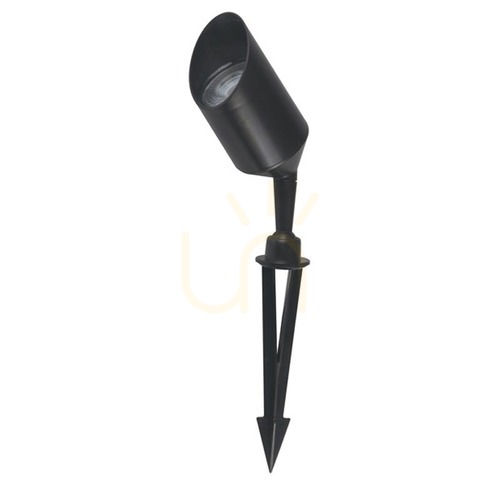
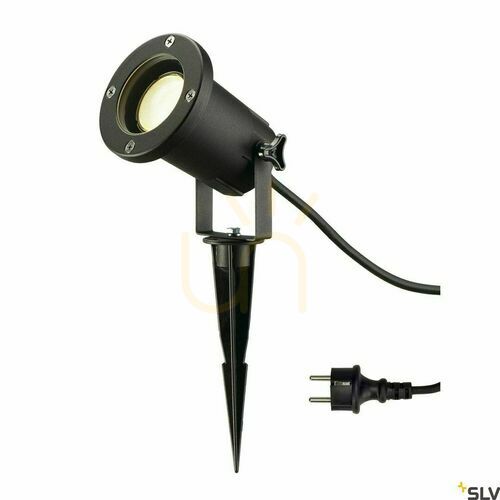
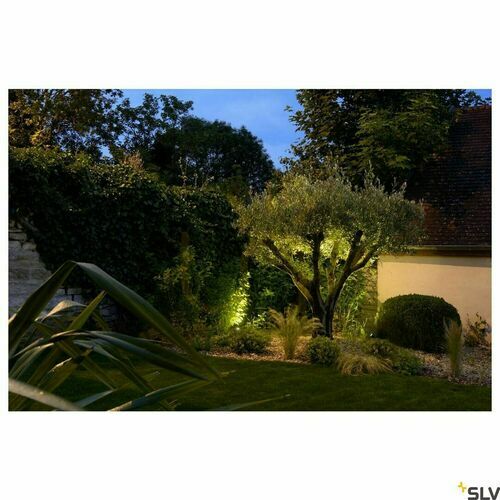
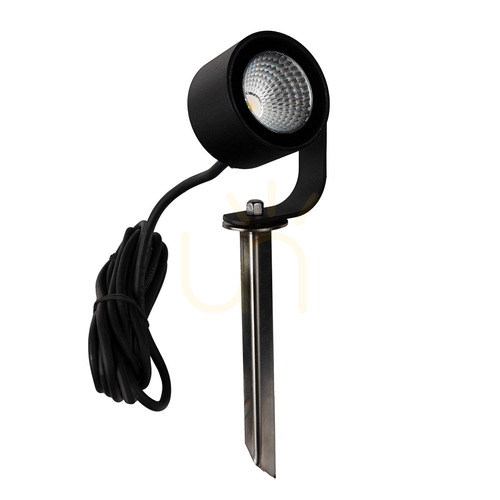
Black is the finish people reach for when they want the light and not the fitting. By day a black spotlight reads as a shadow against render, brick or planting; by night nobody sees it at all, because the eye is already fixed on the lit surface. That is the whole argument for it, and it holds up — but the finish also changes how the fitting ages, how visible dirt is, and what you should check before you spend.
Powder coat, anodised aluminium or moulded ABS
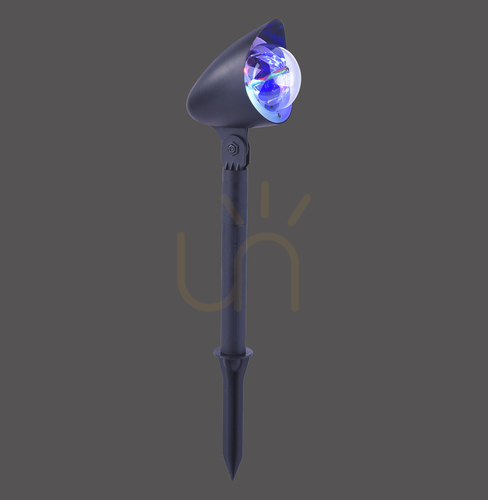
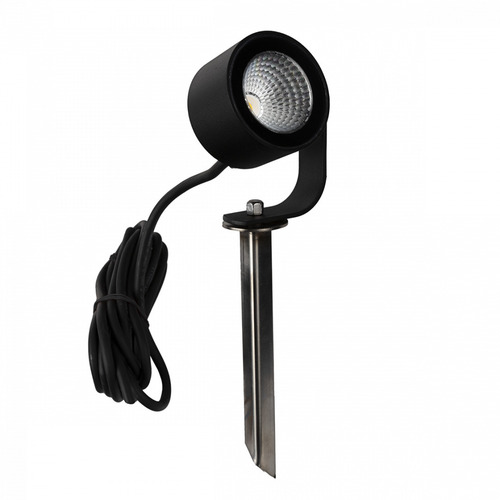
Three constructions turn up here and they behave differently. Powder-coated aluminium is the common one: tough, but a deep scratch exposes bare metal, and that is where corrosion starts. Anodised aluminium carries the colour in the surface layer rather than on top of it, so chips are far less of a problem. Moulded black ABS, typical of inexpensive spike lights with a short tail of cable, cannot corrode at all — its weakness is UV, and cheap ABS chalks to a dull grey after a few summers of direct sun. Stainless bodies also appear in black; those are the ones to look at if you are within a few kilometres of the coast or beside a road that gets salted.
Does a black housing run hot?
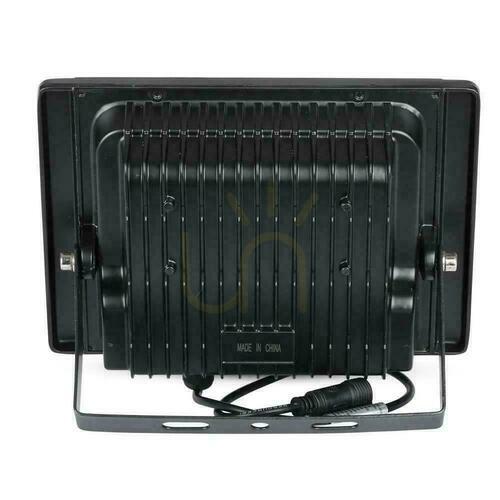
Not in any way that matters outdoors. Solar gain on a dark body is real but small next to the heat the LED itself produces, and the fins on the back of the casting are sized for that. What does matter is airflow: bury a spike light to the shoulders in bark mulch, or box a wall spot into a tight recess, and you will shorten its life whatever colour it is.
Choosing the lamp when the fitting takes one
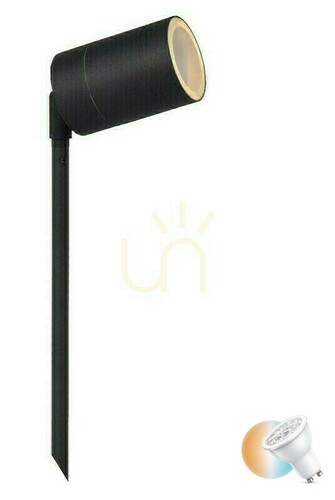
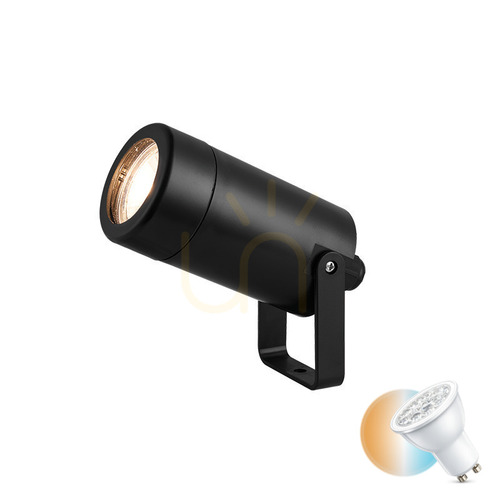
A good share of black outdoor spotlights use a GU10 socket rather than a bonded LED module, and that puts three decisions in your hands rather than the manufacturer's. Output: a 5–7 W GU10 gives roughly 400–600 lumens, enough for a shrub or a short path; a driveway wants two or three of them, or one fitting fed a brighter lamp. Beam: GU10 lamps are sold from about 24° to 120°, and swapping the lamp is the cheapest way to fix a beam that lights the fence instead of the tree. Colour: 2 700–3 000 K on brick and planting, 4 000 K where you want the light to read as functional. Respect the fitting's stated maximum wattage — many are capped around 7–12 W precisely because the sealed body cannot shed more heat than that.
A dark fitting still glares
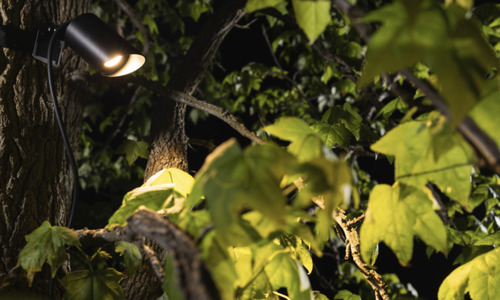
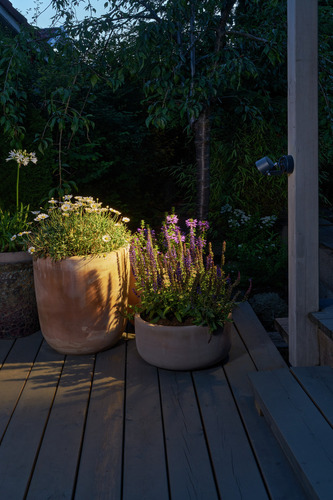
Black hides the housing, not the source. Anyone standing where they can see straight into the lens gets the full beam, and that includes the neighbour across the fence and anybody walking up your own path. Keep the tilt shallow — much past 15° above horizontal and a serious fraction of the output crosses the boundary — and use the fitting's own hood or a snoot to pull the aperture back. Uplighting a tree is the classic offender: aim at the canopy, not past it, or half the beam ends up in the sky and in the bedroom windows opposite.
Weather rating and where it sits
These run from IP44 through IP54 and IP55 to IP65, and the number should match the position rather than the ambition. IP44 is a sheltered rating, fine under a deep eave. Anything in open rain wants IP65, and anything at ground level in a bed that gets watered or where snow piles up wants IP65 as a floor, plus a body that will not sit in standing water. If the fitting is within reach of a football, a bike or a mower, look for an IK impact figure as well — IK08 upwards is the useful range.
Keeping it looking black
Pollen, hard-water spotting and road film show more on black than on grey or anthracite. A wipe with a damp cloth twice a year is the whole maintenance routine, and it is worth doing on the lens as much as the body — a filmed lens can cost a noticeable slice of output. Touch up chips in powder coat when you see them rather than after the bloom of white corrosion appears. If a purely black scheme feels too hard against pale render, outdoor lighting in anthracite or graphite sits closer to most window frames and gutters.