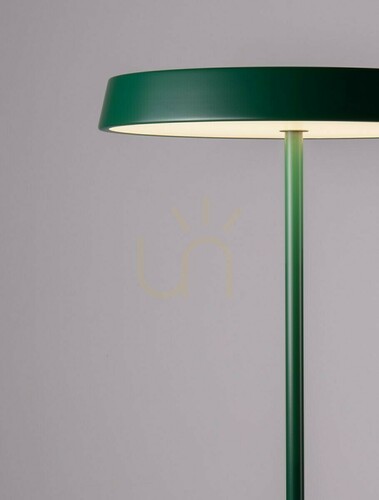
A standing lamp chosen for reading is a task light that happens to stand on the floor. That distinction decides everything about it. A lamp meant to fill a room can be judged by how the room looks; a reading lamp is judged from one seat, in one posture, with a page at a fixed distance — and a lamp that fails that test looks perfectly good from everywhere else.
Over the shoulder, not into your eyes
The geometry that works has been the same since paraffin: light arrives from behind and slightly to one side of the reader, falls onto the page, and never travels directly from the source to the eye. Put the lamp in front of the chair and you get a bright object in your field of view and a page in relative shadow, which is exactly the arrangement that makes people say the light is not bright enough when the problem is glare. Behind and to the side also keeps your own head from casting a shadow across what you are reading.
How high the light should sit above a chair
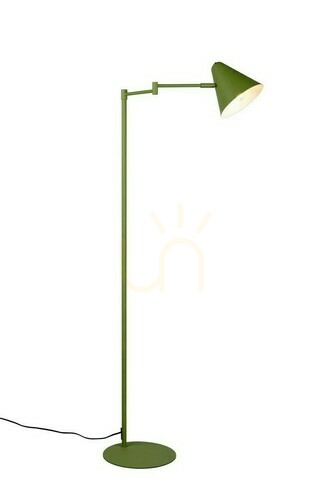
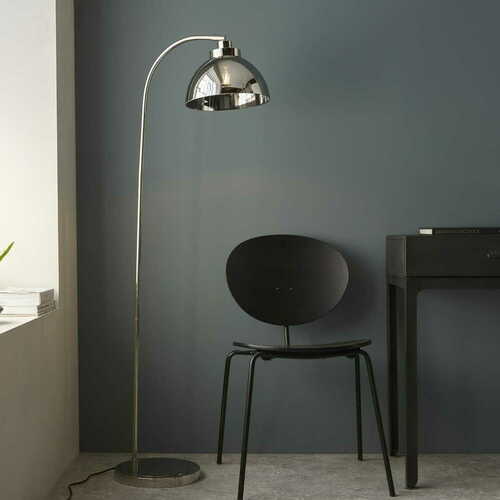
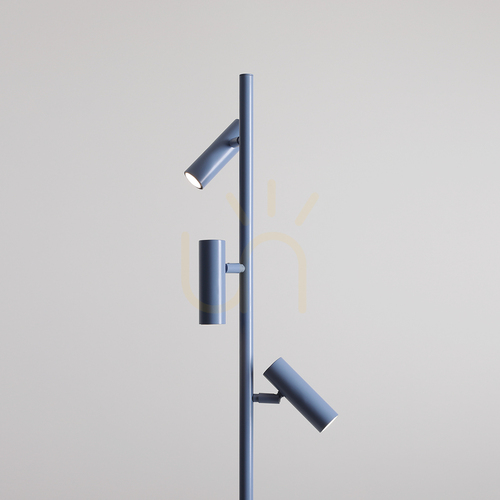
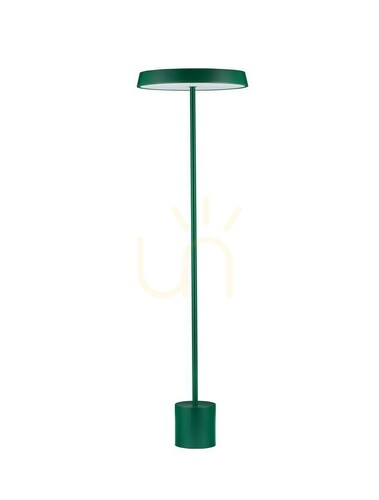
For someone sitting in an armchair, the underside of the shade wants to be roughly at or just above shoulder height — about 100–130 cm from the floor, depending on the seat. Higher than that and the light spreads out before it reaches the page; much lower and the shade is in your eye line. This is why a straight 180 cm column with a shade at the top makes a poor reading lamp however elegant it is, and why the useful models are the ones with a head that comes down and forward: swing arms, gooseneck stems, tilting heads, and the tall arc lamps that bring the source out over the seat from a base standing well clear of it.
Task head or whole-room light
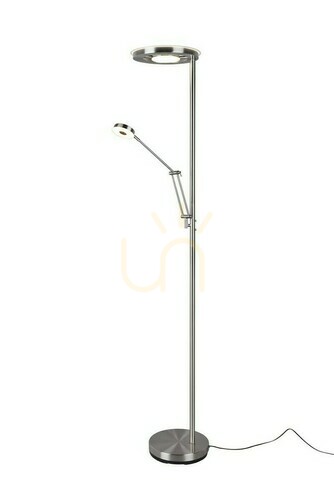
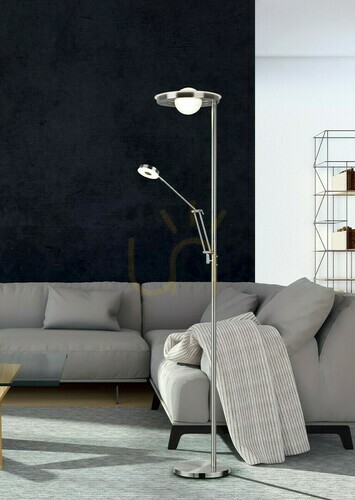
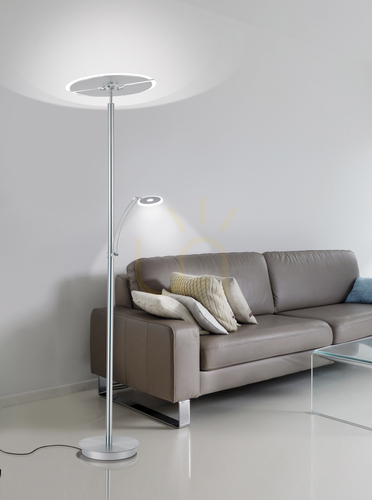
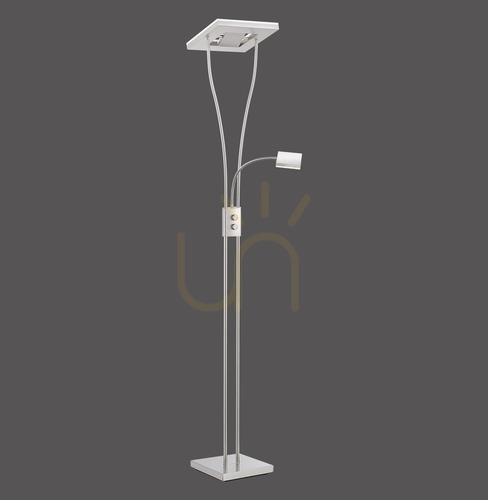
Two designs solve this differently. A dedicated reading lamp puts a small, directional head exactly where it is needed and lights almost nothing else; it is precise and it leaves the rest of the room dark, so it usually wants a second source elsewhere. The other design is an uplighter with a separate reading arm on the same stem — the column washes the ceiling for general light while a small swivelling head handles the page, each on its own switch. For a chair that is the only reading position in a living room, that second type earns its price.
How much light actually reaches the page
Comfortable reading needs roughly 300–500 lux on the page, and that figure falls away fast with distance — a floor lamp head sits perhaps 60–90 cm from a book, far further than a table lamp. In practice a directional reading head wants around 400–800 lumens, while an uplighter carrying the whole room needs 1500–2500 and dimming to be tolerable at night. Colour rendering matters more here than for ambient light: at CRI 90 and above, print stays properly black on properly white paper instead of drifting slightly grey. Dimming is worth having for the opposite reason too — reading with a screen in your lap needs less light, not more.
Which side of the chair, and the cable that follows
Right-handed readers are generally better served with the light coming over the left shoulder, and vice versa, so the writing hand and the arm do not shadow the page. That choice then decides where the cable has to run, and a reading chair is very often placed away from the wall — the exact case where a flex crosses the floor. Look for a cable long enough to reach the skirting the long way round, and a foot switch you can find without leaning out of the chair.
Common questions
Where should a reading floor lamp be placed?
Behind the chair and slightly to one side, with the head brought forward over the shoulder. Never directly in front of the reader.
Are arc floor lamps good for reading?
Yes, because the head reaches over the seat while the heavy base stays out of the way. Check the head clears a standing person and that the base is stable enough for the reach.
Is warm or cool light better for reading?
Warm white around 2700–3000 K in a living room, and it should be the same temperature as the other lamps in the room. Higher CRI helps contrast far more than higher colour temperature does.
Can one lamp do reading and general lighting?
Only if it has two separately switched heads. A single shade aimed at a chair will not light a room, and a single uplighter will not light a page.
For heights, shapes and finishes across every use, start from the full standing lamps range.