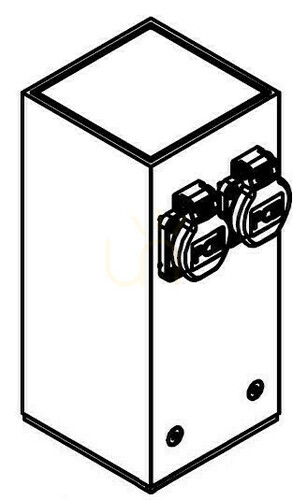
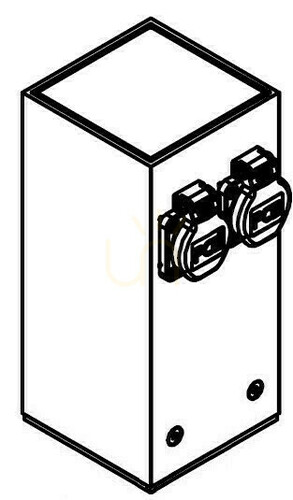
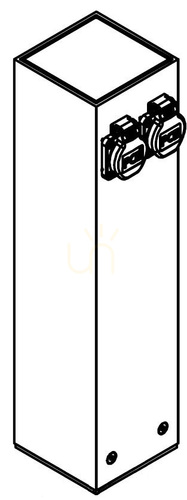
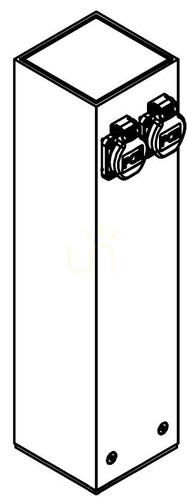
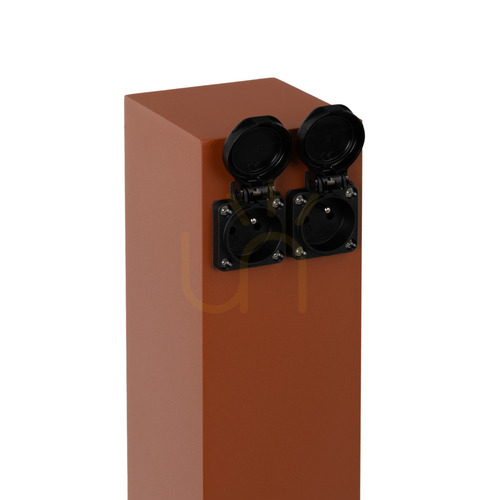
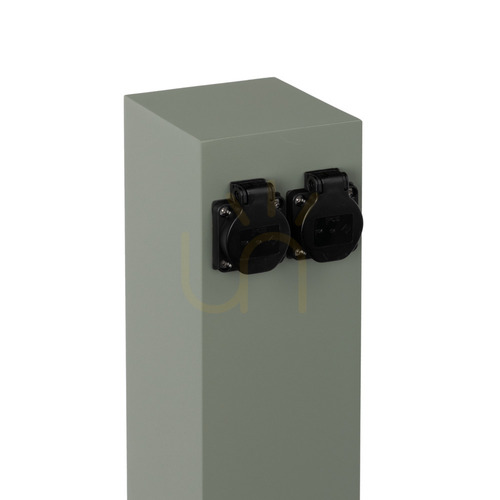
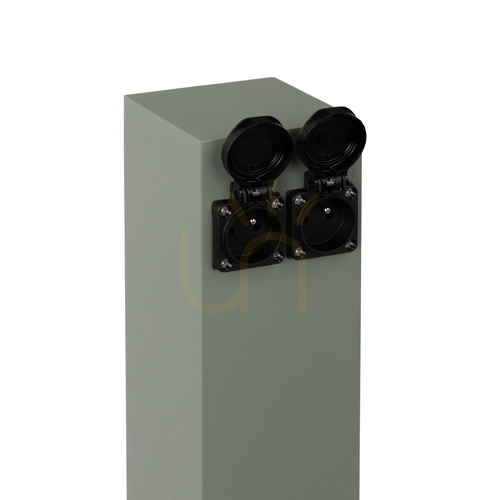
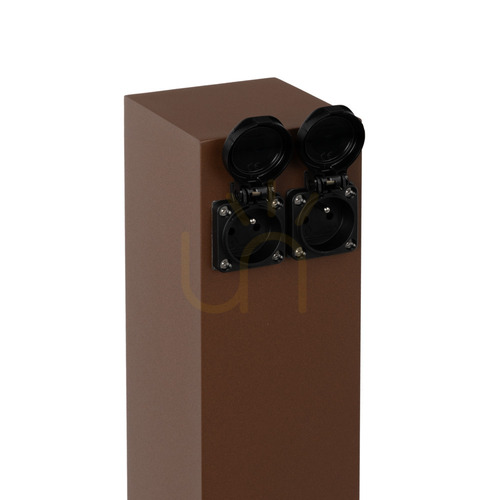
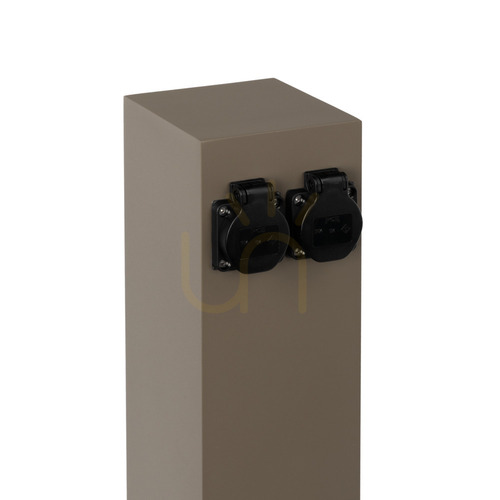
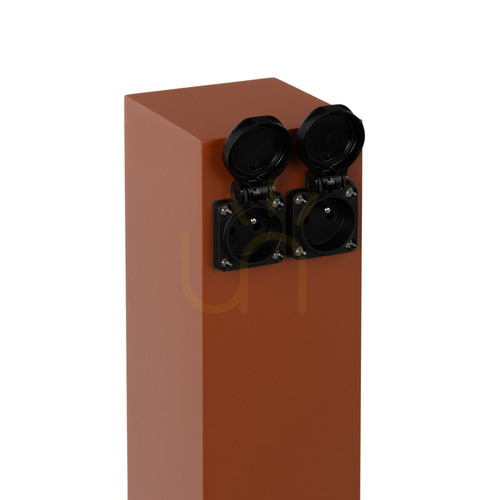
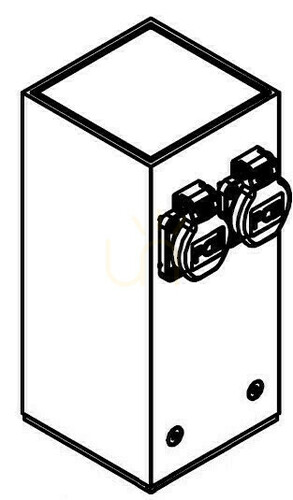
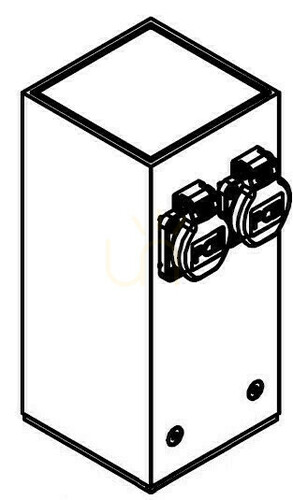
An IP54 outdoor weatherproof socket is dust-protected and stands up to splashing water from any direction, which makes it a good fit for sheltered walls, porches, garages, sheds and workshops. What it is not built for is a direct jet from a hose – fully exposed walls usually call for IP65 or IP66 – and no socket, whatever its rating, should face a pressure washer. So the real question is less "is it weatherproof?" and more "what exactly will hit it?"
What the 5 and the 4 actually mean
IP ratings come from BS EN 60529. The first digit covers solid objects and dust, the second covers water. A 5 means dust-protected: a little fine dust may get in, but not enough to affect how the socket works or how safe it is. Dust-tight would be a 6. The 4 means protection against splashing water from all directions – rain blown sideways, drips from a gutter, the odd splash when you rinse the car. A hose jet is a step further (5), and a powerful jet further still (6).
That first digit is the reason to pick IP54 over IP44. In a garage or workshop, sawdust, plaster dust and grit from tyres settle in every opening. Mixed with damp air, that layer can track current between contacts and make a socket run warm. An enclosure that keeps most of it out simply lasts longer.
Choosing the right rating for the spot
| Location |
What it faces |
Typical choice |
| Under a porch, canopy or deep eaves |
wind-blown rain |
IP44–IP54 |
| Garage, workshop, shed, outbuilding |
dust, damp, occasional splashes |
IP54 |
| Open wall facing the weather |
driving rain, hose spray |
IP65–IP66 |
| Driveway or wash-down area |
powerful jets |
IP66, mounted out of reach of the pressure-washer lance |
| Hot tub, pond pump or lights left plugged in |
water while in use |
enclosure that seals over the plug |
In the UK, most sockets sold for fully exposed walls carry IP66 and take a standard 13 A plug to BS 1363. IP54 is more common on enclosures for indoor-outdoor spaces such as garages and workshops, and on continental-style sockets. Whichever you buy, check the plug type matches the appliances you use.
Garages and workshops
Metal-clad sockets are the traditional choice in British garages, and they are tough, but they are not sealed against water or dust. Where a car comes in wet, where you cut timber or where a chest freezer, compressor or e-bike charger sits in a damp outbuilding, an IP54 enclosure is the more sensible fit. Multi-gang boxes are handy, but loads add up: a heater, a compressor and a washing machine on one ring can easily trip the breaker, and big continuous loads such as an EV charger or an electric heater belong on their own circuit.
The lid-closed catch
Almost every weatherproof socket reaches its rating only with the lid shut and the cable entry properly sealed. Plug something in and the lid can no longer close, so the protection drops. For anything that stays plugged in for weeks – a pond pump, garden lighting, Christmas lights, a hot tub – look for an "in-use" enclosure with a deep hood that closes over the plug, or a box designed for large plugs.
Fitting and safety
- BS 7671 requires 30 mA RCD protection for sockets and for circuits supplying equipment outdoors. The IP rating keeps water out; the RCD is what protects people.
- Mount the box upright with the lid hinged at the top and bring the cable in from below, so water running down the cable can't reach the terminals.
- Pierce grommets only to the size of the cable – an oversized hole undoes the rating.
- Keep it clear of downpipes, puddles and areas where snow builds up; a height of around 30–40 cm above ground or more is usual outdoors.
- Use a qualified electrician. In England, a new circuit is notifiable work under Part P of the Building Regulations.
Care and common mistakes
Once a year, open the lid and look for perished seals, corrosion or a build-up of dust. Replace a cracked lid straight away – without it, the socket is no better than one indoors. Wipe dust off the housing before opening it, never aim a hose or pressure washer at an IP54 socket, and don't leave indoor extension leads plugged into it in the rain.
Frequently asked questions
What is the best outdoor socket?
The one rated for its exact spot. Under shelter or in a garage, IP54 does the job; on an exposed wall, choose IP66 with a lid that seals while in use, double-pole switching and RCD protection on the circuit.
What's the difference between SP and DP sockets?
A single-pole switch breaks only the live conductor. A double-pole switch breaks live and neutral, fully isolating the appliance – the safer choice outdoors and in damp outbuildings.
Is there a waterproof socket?
Not in the sense of one you can submerge and use. Weatherproof sockets resist splashes (IP54) or jets (IP65–IP66); a few IP67 designs survive brief immersion with the lid shut, but no socket is meant to be used under water.
Can I put a socket lower than 450 mm?
The 450–1200 mm range comes from Approved Document M and applies to sockets inside new homes. Outdoors and in garages there is no such range, but keep sockets clear of ground water, splashback and snow.
Do I need an outdoor socket with a built-in RCD?
Only if the circuit isn't already RCD-protected at the consumer unit. Most modern installations are, but older ones may not be – an electrician can tell you quickly.
Is IP54 enough for a garden wall?
Under a canopy, yes. On an open wall that catches driving rain or gets hosed down, go for IP65 or IP66.
For sockets on exposed walls, garden posts and patios, read more about outdoor sockets; more on other socket types and plugs: electrical plugs and sockets.