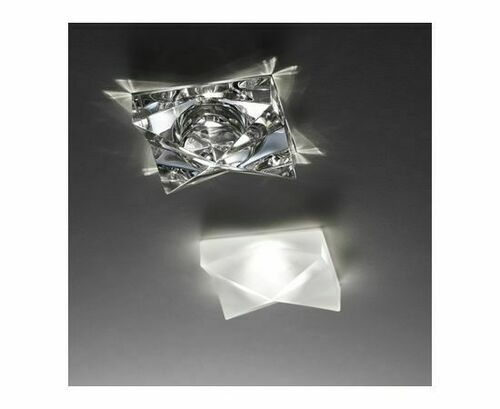
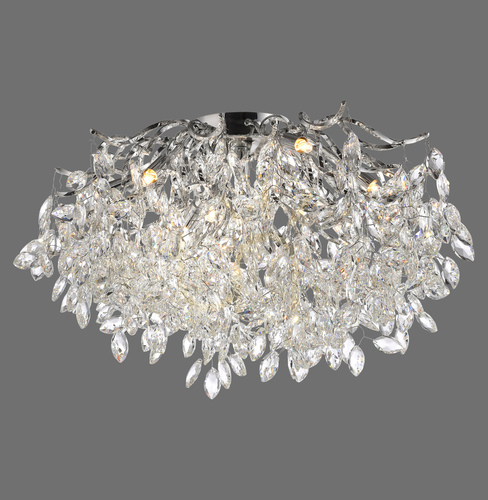
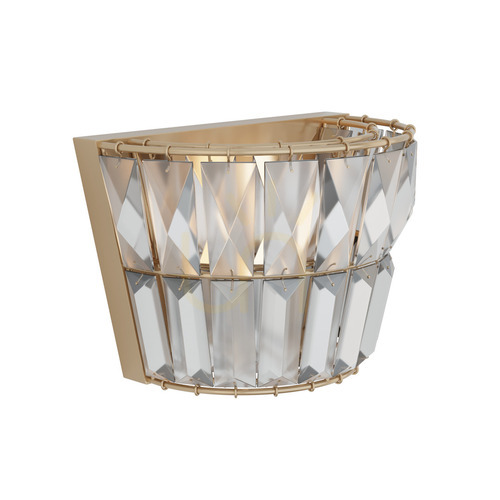
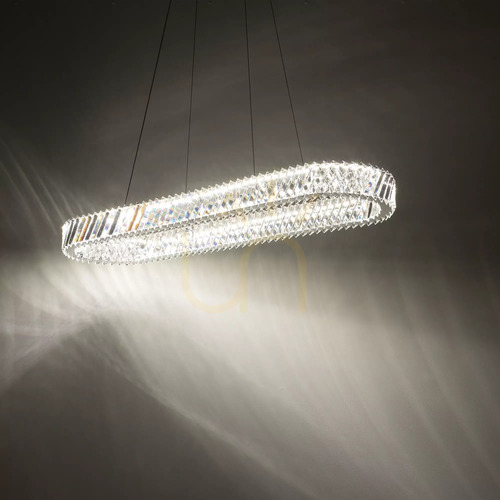
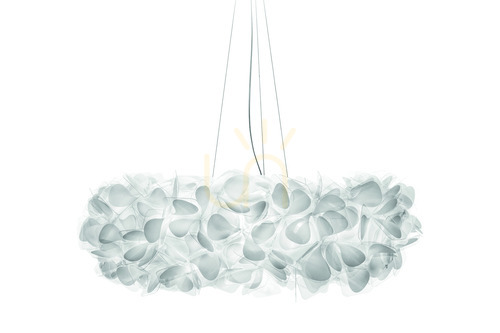
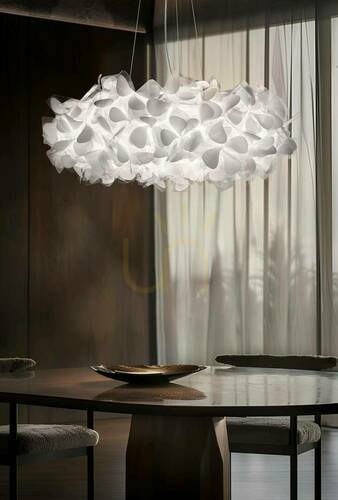
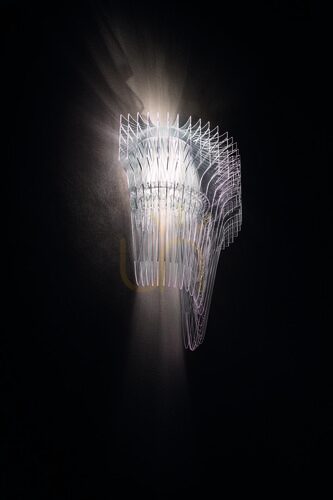
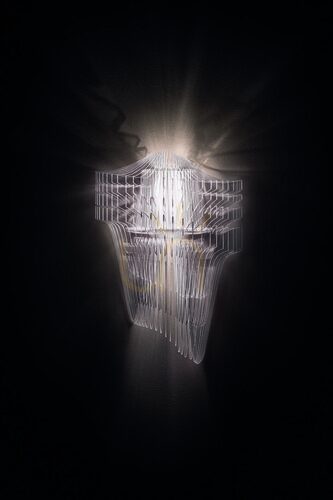
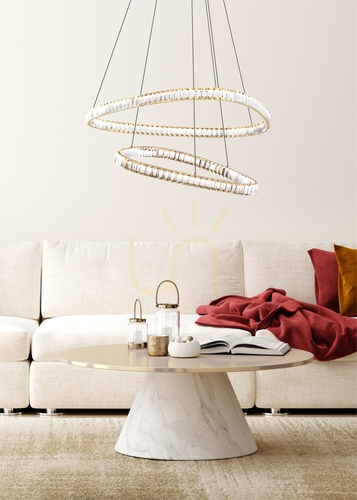
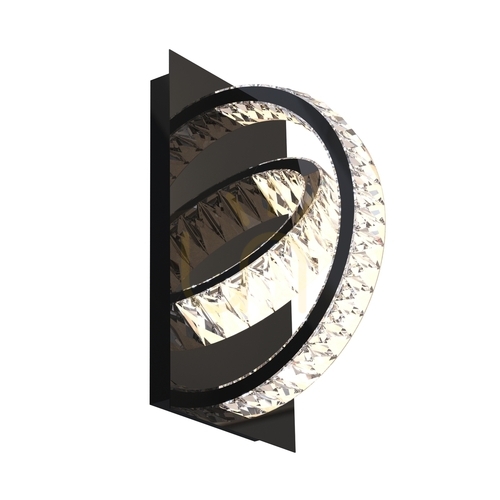
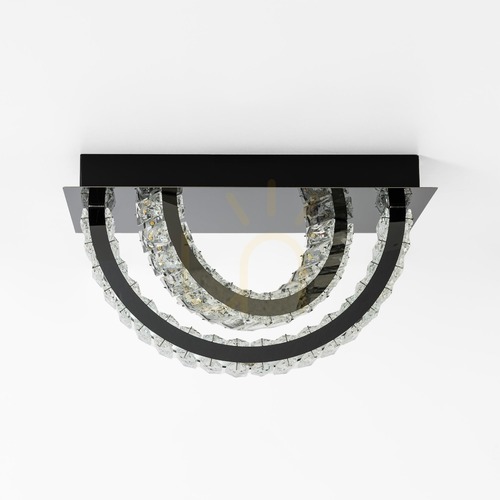
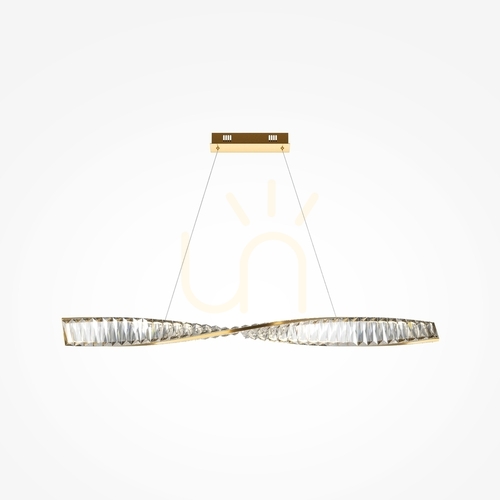
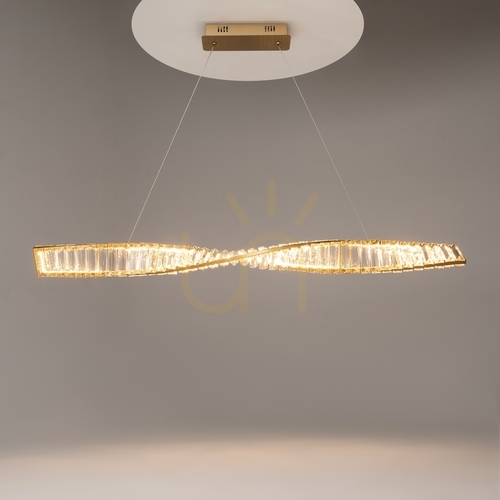
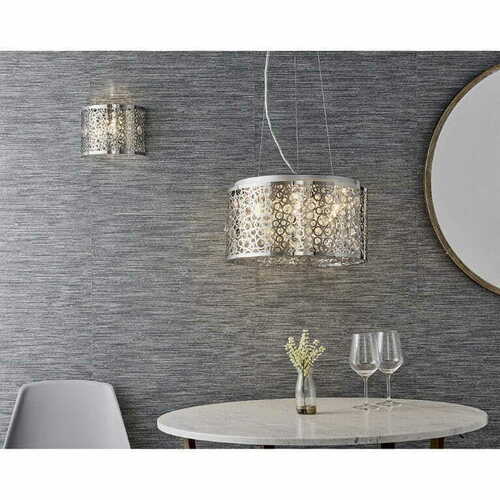
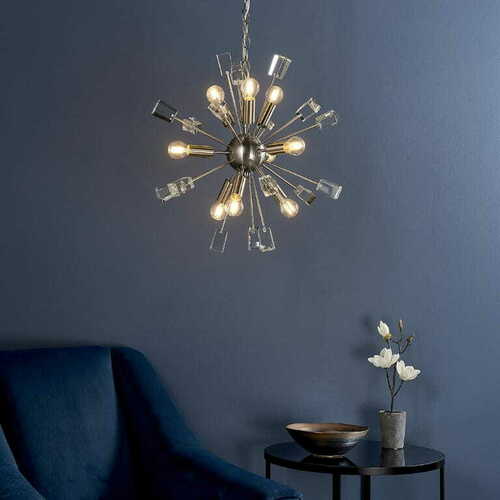
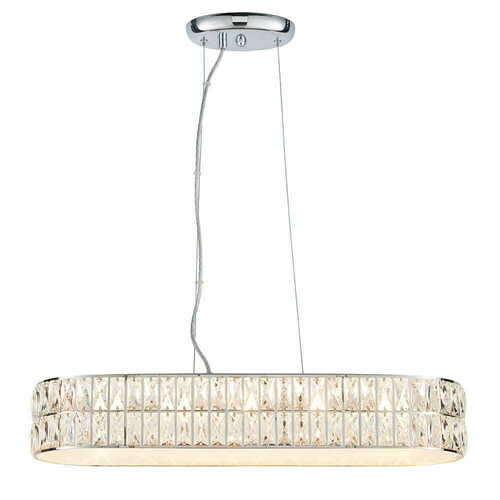
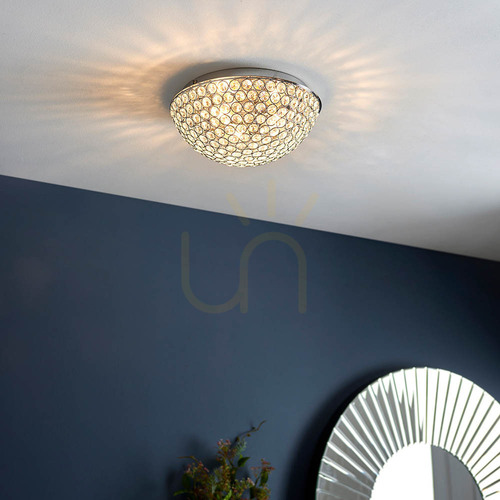
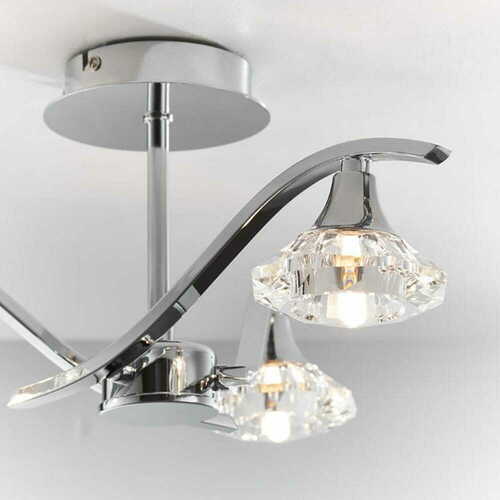
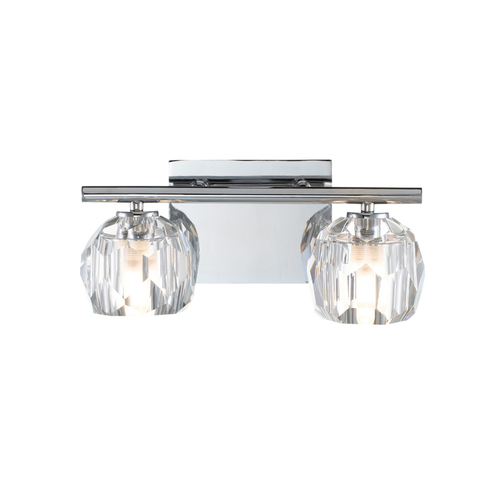
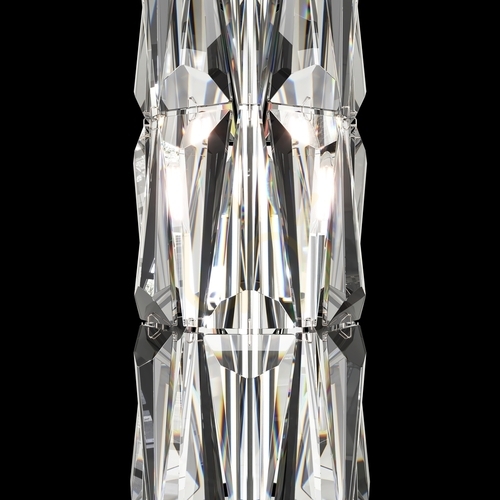
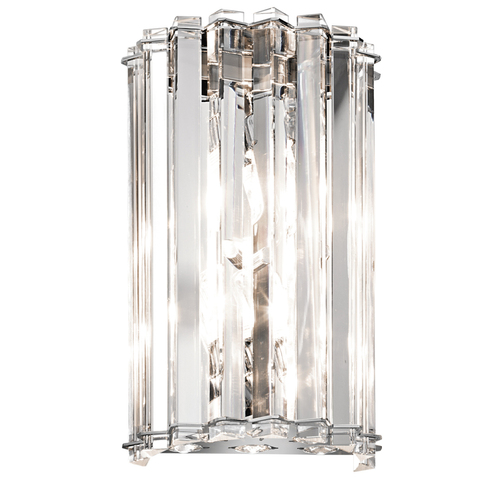
A crystal lamp does something a fabric or opal shade can’t: it breaks the light of the bulb into sharp points and small rainbows that land on the ceiling and walls. For indoor lighting, that means the crystal affects the choice of bulb, the size of fitting a room can take and how much cleaning you’re signing up for.
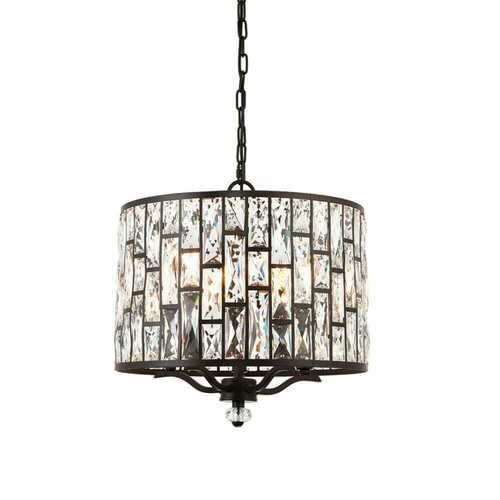
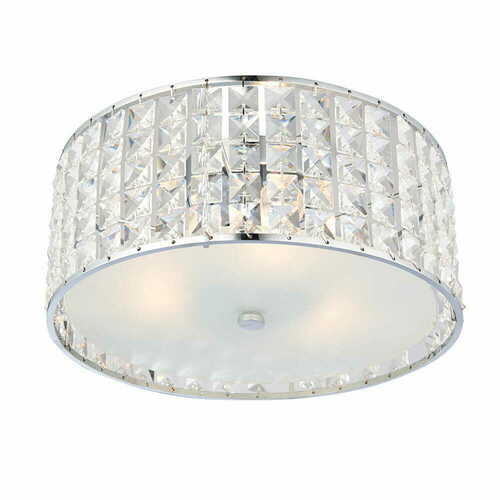
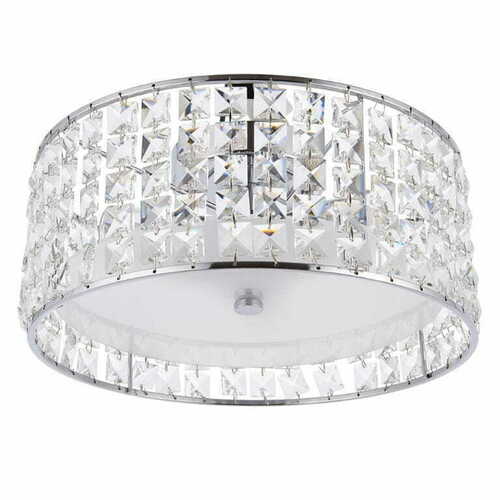
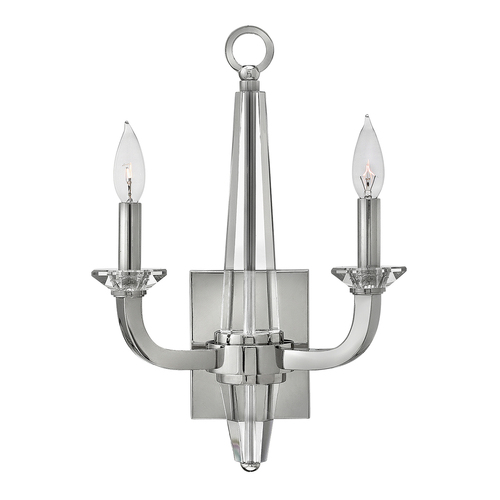
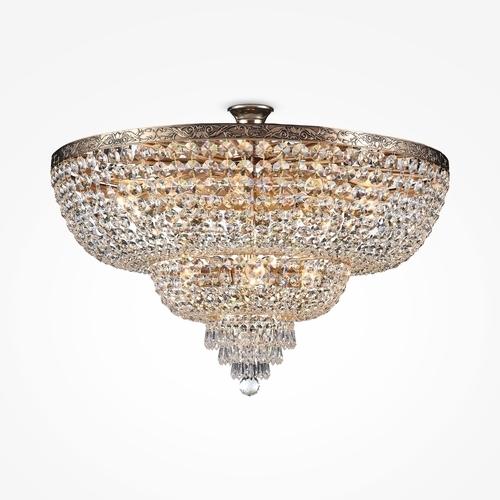
Crystal turns up across the whole range of indoor lights. There are chandeliers, of course, but also flush and semi-flush ceiling lights covered in prisms, wall lights, floor lamps, modern rings and cascades of crystal rods, and table and bedside lamps with a crystal base or column.
Lead crystal, K9 or acrylic?
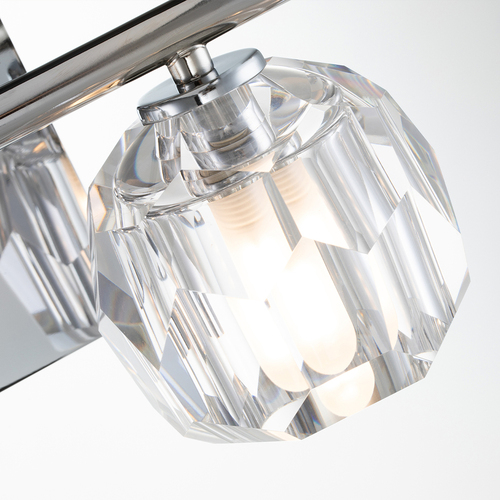
Three materials get sold as crystal, and they behave differently. Lead crystal contains at least 24% lead oxide (full lead crystal 30%); it is heavy, bends light strongly and rings for a long time when tapped. K9 is a lead-free optical glass, very clear and consistent, and it is what most modern prisms and spheres are cut from. Acrylic is light and inexpensive, but it scratches easily, builds up static that attracts dust and can yellow over the years.
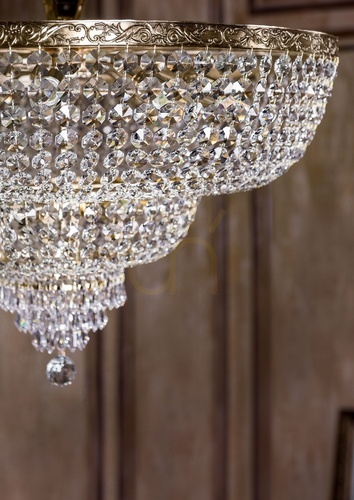
How the piece is made matters as much as what it is made of. Hand-cut facets have crisp edges and throw distinct flashes of colour. Moulded drops come out of a press with softer edges and give a gentler shimmer.
What are the parts of a chandelier called?
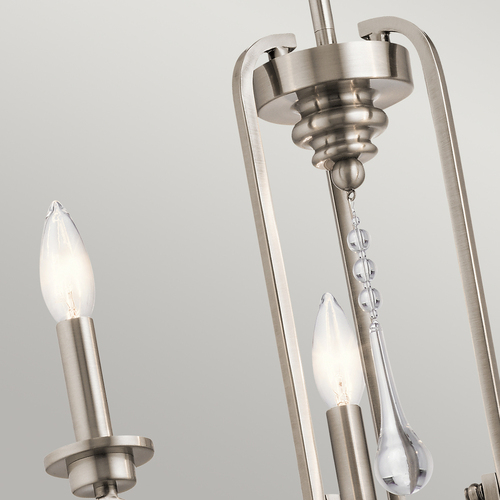
Knowing the names helps when you buy, clean or repair one. The ceiling rose or canopy hides the wiring at the ceiling. The chain or rod sets the drop. The body or stem carries the arms, which end in bobeches, the small dishes under each candle holder. Hanging from them are pendalogues (drop-shaped prisms), festoons of linked octagons or beads, and often a single larger drop at the bottom, the finial.
Sizing a crystal light for a British home
| Situation |
Typical guide |
| Living room diameter |
(room length + width in metres) × 10 = diameter in cm, so a 4 × 5 m room suits about 90 cm |
| Standard 2.4 m ceiling |
flush or semi-flush crystal ceiling light rather than a hanging chandelier |
| Period property, 3 m and above |
full chandelier on a chain, tiered or cascade |
| Over a dining table |
bottom edge 70–90 cm above the top, width about ½–⅔ of the table |
| Where people walk |
at least about 2.1 m clear headroom |
| Bulbs |
clear SES (E14) candles in classic fittings, G9 capsules in compact ones |
| Colour temperature |
2700–3000 K with gold and brass, up to 4000 K with chrome |
Clear bulbs are the whole trick. A frosted or pearl bulb scatters the light before it reaches the prism and the sparkle disappears; a clear filament LED candle keeps it. If you plan to dim, pair dimmable LED bulbs with a compatible dimmer. Most UK homes use bayonet (B22) lamps elsewhere, so buy a few spare E14 (SES) candles when you fit the chandelier.
Where crystal earns its place
Crystal shows best where you sit close to it in the evening: over a dining table, where the points of light bounce off glasses and cutlery, or in the middle of a living room with wall lights doing the lower-level work. In a hallway with a standard ceiling, keep it compact so nobody has to duck; in a stairwell with a long drop, a tall cascade fills the height nicely.
Installation and bathrooms
A large lead crystal chandelier can weigh well over 20 kg. It needs a hook or fixing rated for the load and anchored into a joist, never just the flex or a plasterboard plug. Fixed wiring should be done by a qualified electrician to BS 7671. Bathrooms follow the same standard: near the bath or shower you need a suitably IP-rated fitting (IP44 is the usual minimum), so a decorative crystal chandelier normally belongs well outside the zones. Steam also clouds crystal faster.
Frequently asked questions
Which crystal lamp works in a living room?
One central fitting scaled to the room, plus lower light from wall lights or a floor lamp. With a 2.4 m ceiling, a wide flush fitting gives the sparkle without the head-bumping.
Are crystal bedside lamps a good idea?
Yes, with a shade on top. The crystal base catches the light while the shade keeps glare out of your eyes when you read. Warm 2700 K bulbs suit a bedroom best.
What should I check on a vintage crystal lamp?
Count the drops and look for missing pins, cracked arms and old rubber- or fabric-insulated cable. Rewiring by an electrician is common and worth doing before the lamp goes back into use.
Can I buy a crystal lamp shade only?
Crystal shades and easy-fit drops exist that hang from an existing ceiling pendant. Check the maximum bulb wattage stated for the shade and the weight your pendant set can carry.
What can you do with spare chandelier crystals?
Keep a few as replacements, since matching an old cut later is hard. Others end up as window suncatchers, on Christmas trees or as drawer pulls.
How do you clean a crystal chandelier?
Switch off and let the bulbs cool. Wipe with a microfibre cloth dampened with water and a little white vinegar or surgical spirit, wetting the cloth rather than the fitting. For a deep clean, photograph the layout, remove the drops in sections, wash them in lukewarm soapy water and dry with a lint-free cloth. Cotton gloves stop fingerprints.
For crystal on a smaller scale, for a sideboard or bedside table, see crystal table lamps. Other materials and styles for the home are covered under indoor lighting.