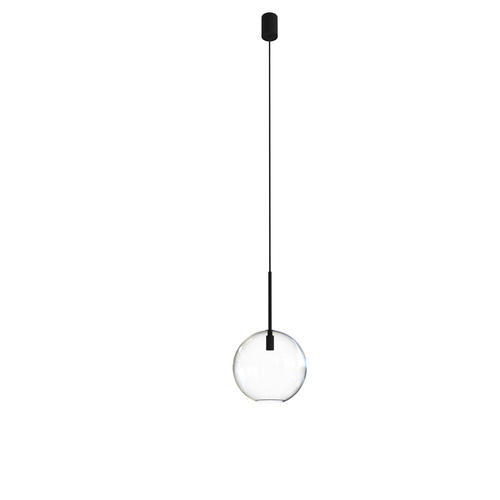
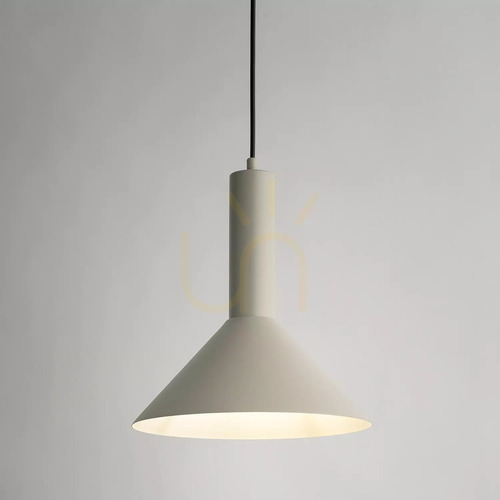
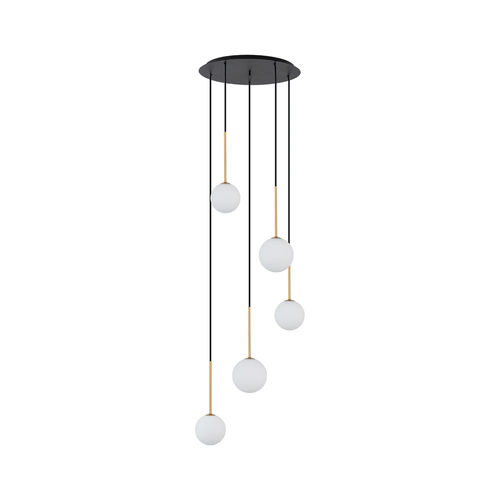
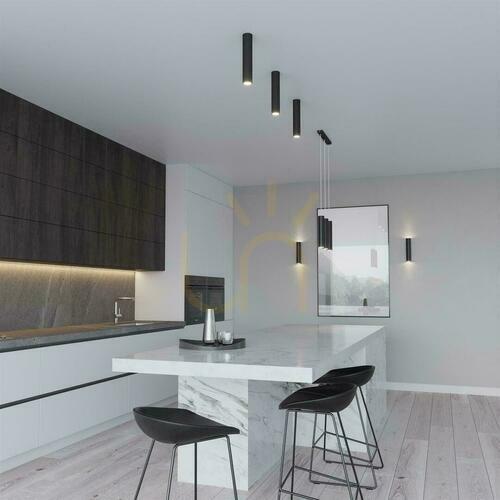
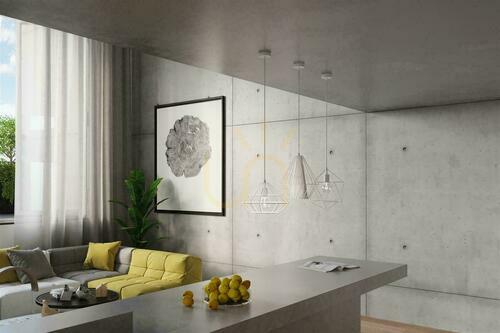
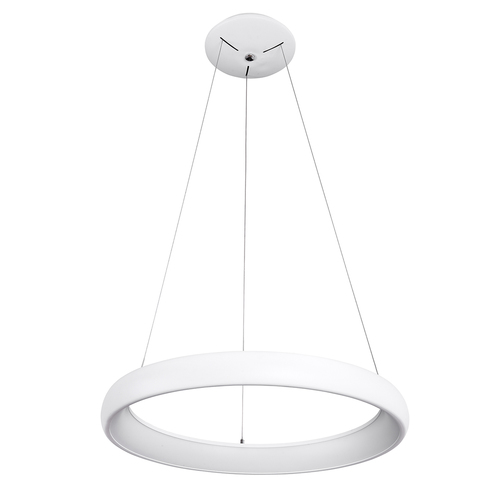
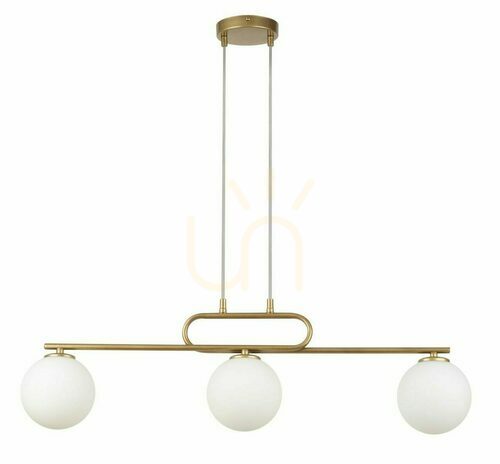
Every fitting on this page is a suspended light picked out for a kitchen, and there are 1,865 of them. Kitchen pendant lights get judged twice: once as decoration, from wherever you sit, and once as a working light, from directly underneath while you are chopping. Most of what goes wrong comes from planning only the first of those.
A kitchen pendant also hangs low, over a surface people lean across, so the worktop sets its position, not the ceiling. It lives in warm, greasy air, which decides what the shade can be made of. And it usually works in a row of two or three, which turns "which one do I like" into arithmetic. So this page is mostly numbers, counted from the products listed here or, where we say so, from British and continental European practice.
Kitchen island lighting: how many, how high, how far apart
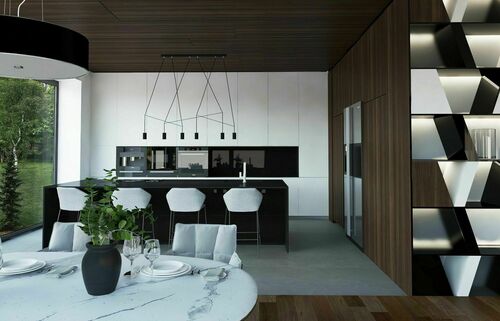
Over an island is where most of these fittings end up, and the one position with real published guidance behind it. Three decisions: how many pendants, where along the island they sit, and how high the shade hangs.
How many pendants for your island length
Work from the length of the island top, not the size of the room. British retailers agree that odd numbers read as balanced and that two or three pendants suit an island of roughly 180–245 cm (6–8 ft), but nobody publishes the arithmetic. Here it is: divide the island length by the number of pendants for centre-to-centre spacing, then halve that for the setback from each end.
Pendant count and spacing by island or bar length
| Length of the top |
Pendants |
Centre to centre |
In from each end |
| up to 120 cm |
1 wide shade or bar |
— |
centred |
| 120–150 cm |
2 |
60–75 cm |
30–37 cm |
| 150–180 cm |
2, or 3 small |
60–75 cm |
30–37 cm |
| 180–240 cm |
3 |
60–80 cm |
30–40 cm |
| 240–300 cm |
4 |
60–75 cm |
30–37 cm |
| over 300 cm |
5, or 2 bars |
60–70 cm |
30–35 cm |
The only spacing figure published anywhere in the British market is 61–76 cm (24–30 in), and every row above lands inside it or a whisker outside. Wider than 80 cm and you have too few pendants; under 55 cm and the shades collide. A row is built from single-light fittings, and 1,151 products here have exactly one light point.
How high to hang them above the worktop
Measure to the bottom edge of the shade, from the worktop surface. Not from the floor, not from the ceiling. British retailers converge hard on 76–91 cm (30–36 in), four shops publishing it. Continental European practice sits lower, at 65–90 cm, and German kitchen makers narrow it to 70–80 cm. Take 75–90 cm as the range that satisfies both: the lower end for a wide open-bottomed shade, the higher end for something small or glary. Anywhere people walk under a pendant rather than stand at it, keep the bottom around 210 cm (7 ft) up.
This is where an adjustable drop earns its place: 722 of the 751 fittings that state it can be shortened, about 96 per cent. Total height as supplied runs from 89 cm at the lower quartile to 200 cm at the top tenth, and that is a maximum, not a fixed dimension. Set it on site once the worktop is in.
Breakfast bars are not islands
A breakfast bar is narrower and used sitting down, from stools, with a raised top at 100–110 cm rather than a 90 cm worktop. Shades want to be smaller: the lower quartile of shade diameters here is 10 cm and the median 19 cm. Because the bar top starts higher, the same 76–91 cm hanging height leaves the shade bottom 180–200 cm off the floor, clear of a seated eyeline at roughly 140–150 cm. Counts come off the same table: a 150 cm bar takes two, a 180–240 cm run takes three.
The sink, the table and the worktop run
Over the sink is the second most common position, and the one place in a kitchen where water genuinely reaches a fitting. Same 75–90 cm above the worktop, centred on the bowl rather than on the window behind it. At the dining end the sums change: 75–90 cm above a tabletop that sits around 75 cm up leaves the shade bottom at 150–165 cm, and that step in level is what makes the two zones read as separate places. If the table is the main event, the pendant lights for the dining room are filtered for it.
A pendant does not belong over a run of worktop against a wall: it fights the wall units and throws your shadow onto whatever you are cutting. Light that stretch from underneath with LED strip lighting, or from above with track lighting aimed at the front edge of the counter. Something decorative on the wall itself is a job for kitchen wall lights.
How much light, and what colour
British lighting shops publish nothing at all here. Continental European practice has a settled convention worth importing: about 300 lumens per square metre of floor for the general light in a room, and about 500 over a surface you work on. A 12 m² kitchen therefore wants roughly 3,600 lm installed in total, and an island of 200 by 90 cm, 1.8 m², wants roughly 900 lm on the top. A 60 W-equivalent LED lamp gives about 800 lm and a 40 W-equivalent about 470 lm, and a shade throws some output sideways, so assume two-thirds reaches the worktop: two 800 lm lamps over that island hit the target, three 470 lm ones hit it too and spread it better.
Colour temperature splits by task: 2,700–3,000 K where you sit and eat, 3,300–4,000 K where you prepare food, because cooler light makes edges and colours easier to read. Of the 321 products stating a value, 3,000 K covers the lower half and 4,000 K the upper quarter, and nothing goes above that. The 6,500 K "daylight" lamps sometimes recommended for kitchens make food look grey. And colour rendering, which nobody quotes: Ra 80 is the floor for domestic LED lamps, Ra 90 if you care how raw meat and herbs look.
IP20 or IP44? Settling the kitchen argument
Search this and you find two well-ranked British shops saying opposite things: one that a kitchen fitting needs only IP20, the other that you should get IP44. Our own catalogue settles it. Of the 1,635 products here that declare an ingress rating, 1,628 are IP20; five are IP44 and two are IP21.
IP20 means protection against solid objects larger than 12.5 mm, fingers essentially, and no rated protection against water. That is the correct rating for a dry indoor room, and a kitchen is dry in a way a bathroom is not. The numbered zones people half-remember are a bathroom rule from the wiring regulations, with no kitchen equivalent.
The exceptions are real but narrow. Directly above a sink, where a mixer tap or rinsing spray reaches the fitting, a higher rating is worth having, and so is a word with your electrician. The other is a hob with heavy steam and no working extraction, where the issue is hot vapour condensing inside a fitting over years. In both cases the practical fix is usually to move the pendant 30 or 40 cm sideways. What you should not do is treat "IP44 for a kitchen" as a rule: applied literally it rules out about 99 per cent of the kitchen pendant lights on sale anywhere, ours and everybody else's.
Shades and materials, judged by how they clean
Frying puts a fine film of fat into the air, it settles on whatever is above the hob, and no British competitor page we could find says a word about it. Material is multi-value here, so the shares overlap.
What the range is made of, and how it lives with cooking
| Material |
Share |
Living with grease |
| Steel, powder-coated or lacquered |
59% |
Damp cloth and washing-up liquid. Safest thing over a hob. |
| Glass |
20% |
Easiest of all if smooth; ribbed and smoked glass shows a film sooner. |
| Plastic and acrylic |
17% |
Wipe only. Solvents and neat degreaser craze the surface. |
| Aluminium |
14% |
Cleans like steel, but brushed finishes hold fingerprints. |
| Fabric |
6% |
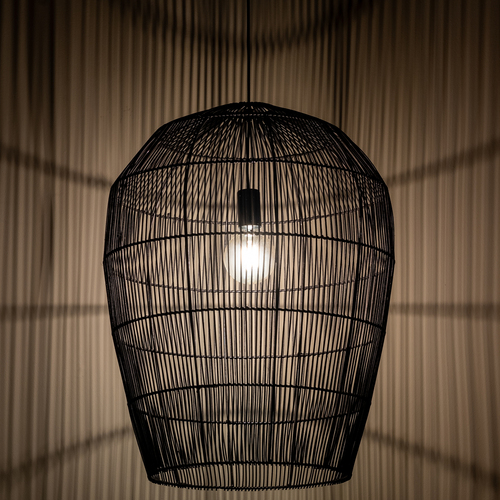
Absorbs vapour, holds smells, cannot be degreased, and rattan behaves the same. Dining end only. |
Caps, bulbs and the dimming trap
Four in five of this range ships without a lamp: 1,450 of the 1,791 products that state it, against 341 that include one. So brightness, colour temperature and colour rendering are not properties of the fitting you are buying; they are choices you make at the bulb shelf, which is why every number above is yours to hit rather than fixed.
-
E27, sold in British shops as ES – 53 per cent of the range, the standard large screw cap, with the widest choice of lamps behind it.
-
Integrated LED – 18 per cent. Nothing to change: when the module fails the fitting is finished, so check the warranty, 2 years on 663 products and 5 years on 268.
-
G9 – 13 per cent, capsule lamps common in glass globes; GU10 7 per cent, directional twist-lock; GX53 5 per cent; E14, the British SES 2 per cent.
And "dimmable" is almost never a property of the pendant. Of the 391 products that answer, 193 say yes with a dimmable lamp fitted, 31 through an external dimmer, and 79 say no. A dimmable result needs three things to agree: the fitting, a lamp sold as dimmable, and a dimmer suited to LED loads, usually a trailing-edge one. Pair one with an ordinary LED lamp and you get flicker and a useless range.
Sizing it to the ceiling
Over a row the combined shade width should come to roughly a third of the island length, and ceiling height constrains the drop from the other end. A 240 cm ceiling over a 90 cm worktop, shade bottom 76 cm above it, leaves 74 cm for the whole fitting including its canopy, and shade height alone has a median of 23 cm here. Below a 230 cm ceiling the sums get tight, and under a sloped or beamed one they stop working, which is where flush ceiling lights for the kitchen beat a shortened pendant.
Kitchen pendant questions people actually ask
Is it a good idea to put pendant lights over my kitchen island?
Yes, and by some distance the most common position for one: an island is the one surface with no wall units above it, so a pendant has clear air. Hang the bottom of the shade 75–90 cm above the worktop, out of an unextracted hob plume.
How many kitchen island hanging lights do I need?
Divide the island length by the number of pendants and check the answer lands between 60 and 80 cm: two up to about 150 cm, three up to 240 cm, four beyond. Odd numbers read as balanced, which is why three is the most-recommended answer in British shops.
What is the best pendant light for my kitchen island?
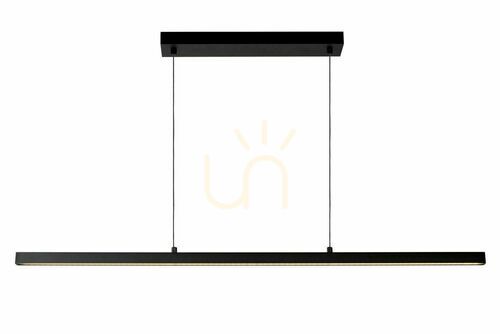
Answer it by island length, not by product. Under about 150 cm, one wide shade or a single linear bar. Between 180 and 245 cm, three pendants at 60–80 cm centres with shades around 19–30 cm across. Longer than that, five smaller ones or two bars.
Can you have a pendant light in a kitchen?
Yes. A kitchen is a dry room and IP20 is the correct rating for it: 1,628 of the 1,635 fittings here that declare a rating are IP20. The numbered IP zones you may have read about are a bathroom rule. The two spots worth a second thought are over a sink and in an unextracted hob plume.
What is the best lighting to have in a kitchen?
Three layers. Pendants over the island or table for the light you see by, something under the wall cabinets for the worktop run, and a general ceiling light so the room is not lit only in patches. Aim at roughly 300 lumens per square metre overall and 500 over a working surface.
What lights are best for a kitchen ceiling?
It depends on ceiling height and what sits underneath. Over an island or table, pendants 75–90 cm above the surface. Under a ceiling below about 230 cm, or in a walkway, a flush fitting. Over a worktop run against a wall, track or spots aimed at the counter edge.
What lights look best in a kitchen?
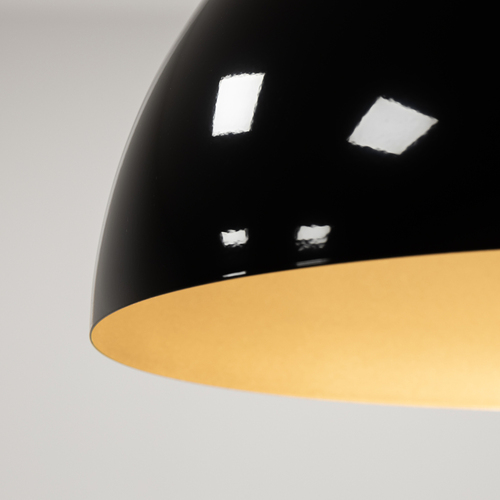
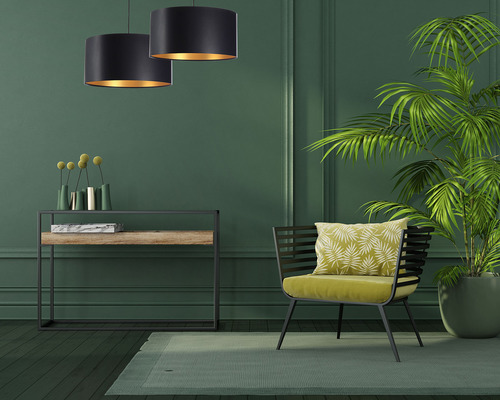
Going by what this range holds, black at 37 per cent and gold at 18 per cent are the dominant looks, usually steel with a glass diffuser, and white takes another 17 per cent. Match the metal to your tap and handles rather than to the units.
What are hanging kitchen lights called?
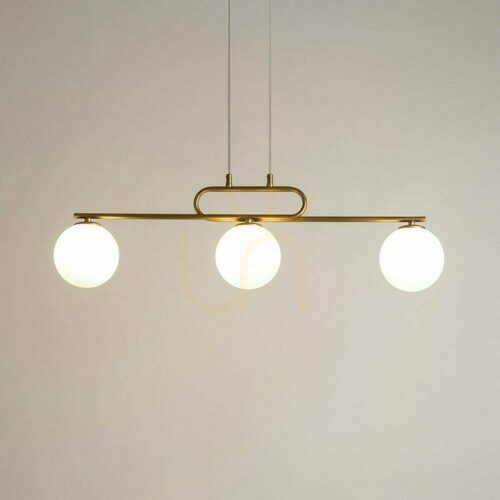
Pendant lights, in the trade. Also hanging lights, drop lights and suspension lights, and bar pendant or linear pendant when several lamps share one body. In British usage the suspension length is the drop, the plate at the ceiling is the ceiling rose, and the height is the distance from the worktop to the bottom of the shade.
What is trending in kitchen pendant lights?
Read it off what the range holds rather than off a trend list. Black is 37 per cent of it, gold and brass 18 per cent, glass 20 per cent, and 62 per cent of fittings carry a single light point, which is what a row of three needs. Ribbed and smoked glass and warm metals against wood are where the newer designs sit.
Filter by drop, shade diameter, cap and colour and 1,865 kitchen pendant lights come down to a shortlist of a dozen in a minute. If you are planning the whole room rather than one fitting, start from kitchen lighting: the ceiling layer first, the pendants over the island second, the worktop lighting last.