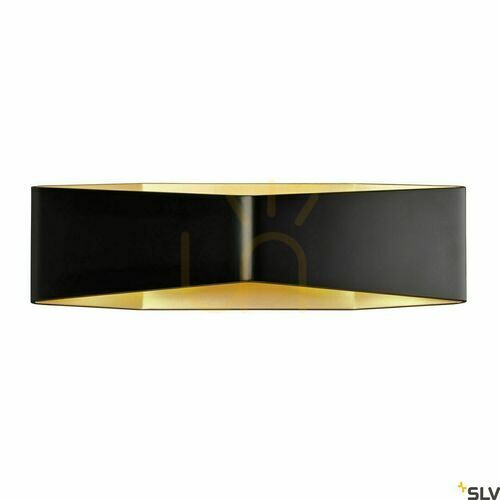
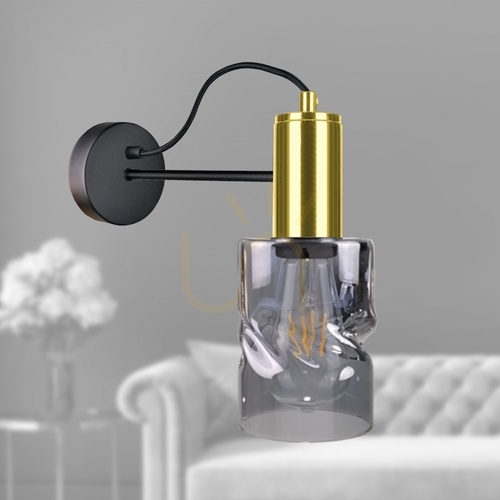
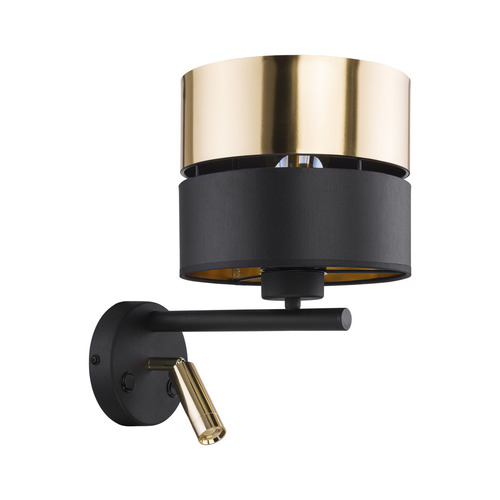
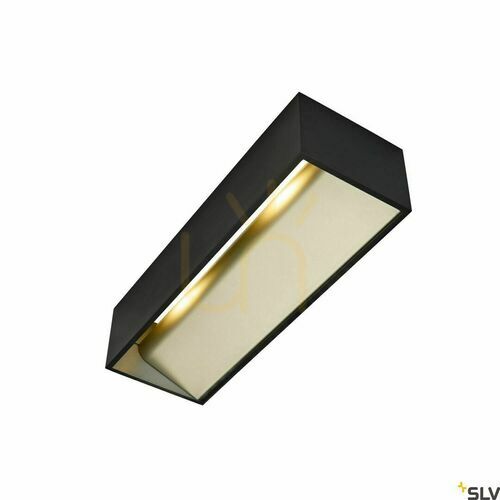
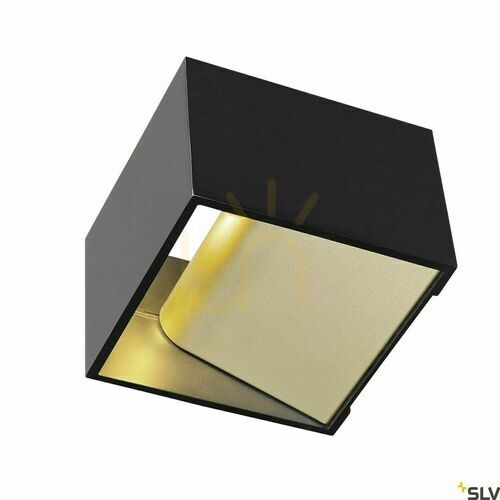
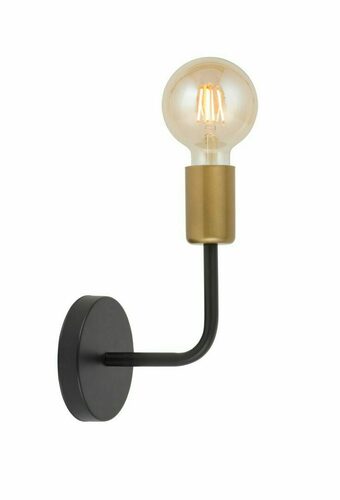
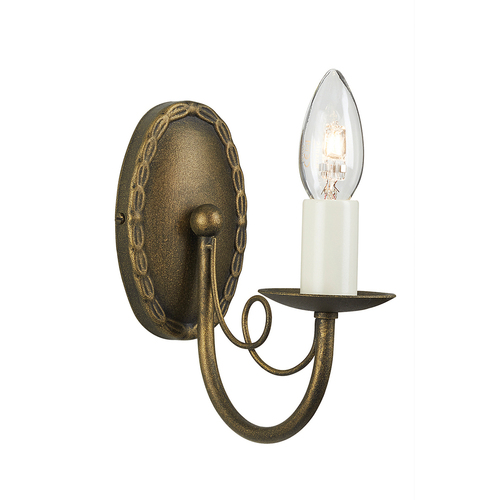
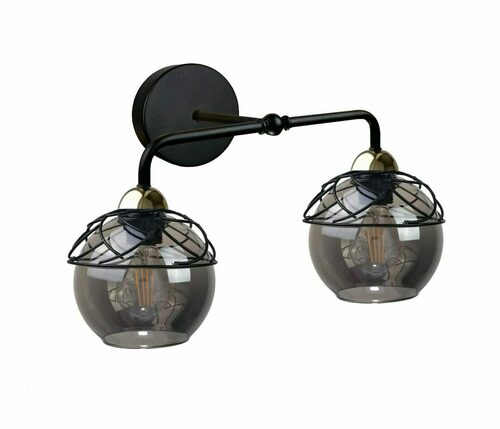
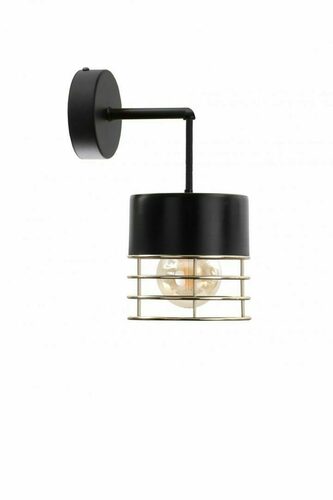
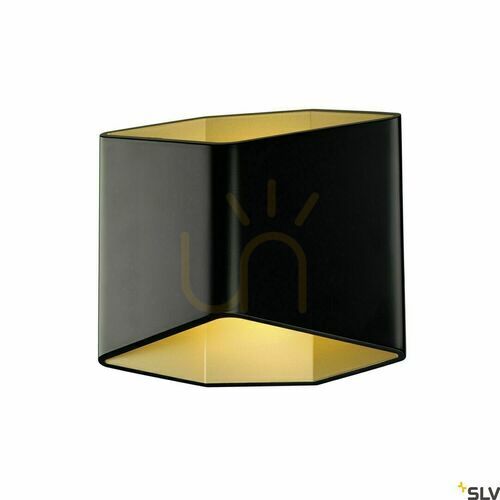
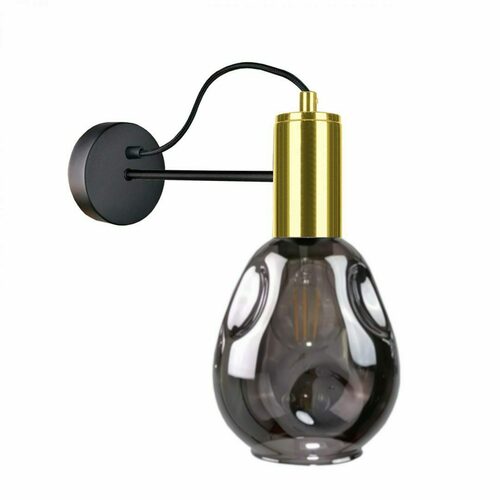
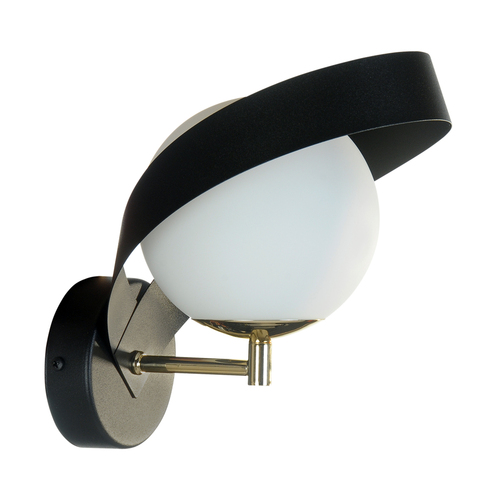
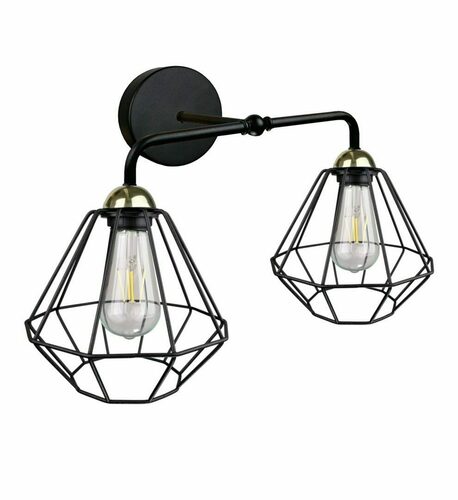
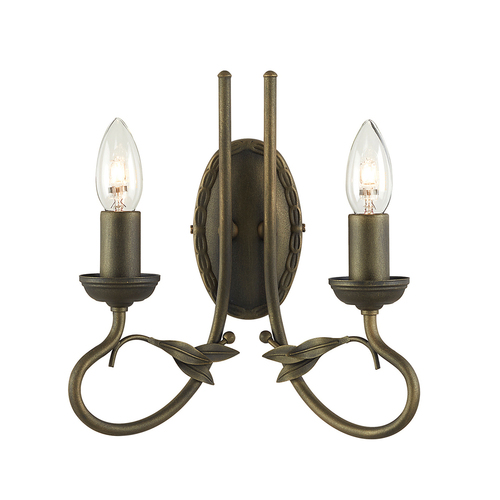
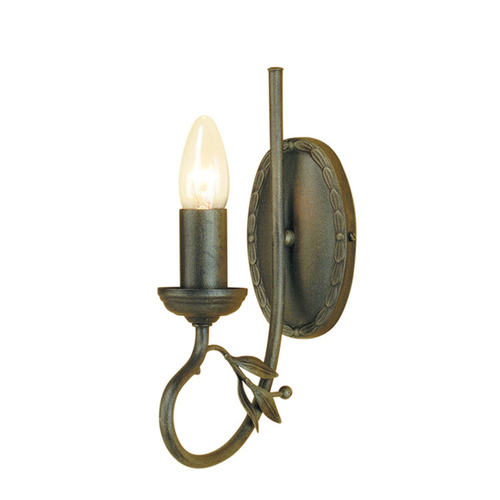
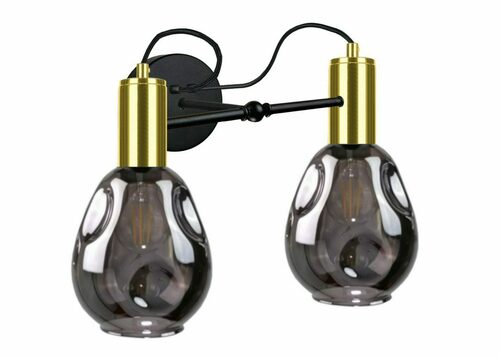
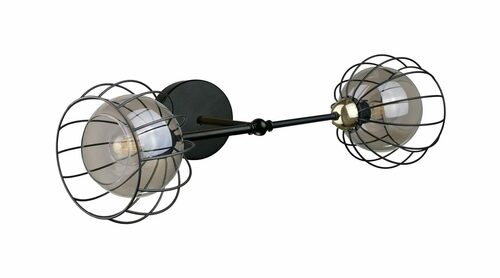
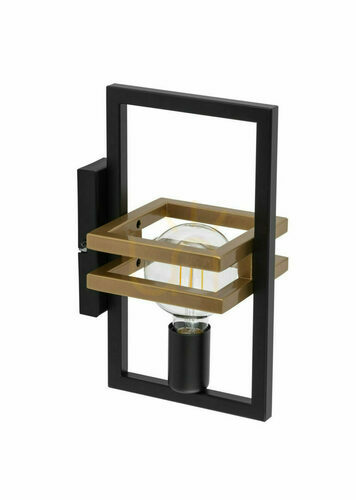
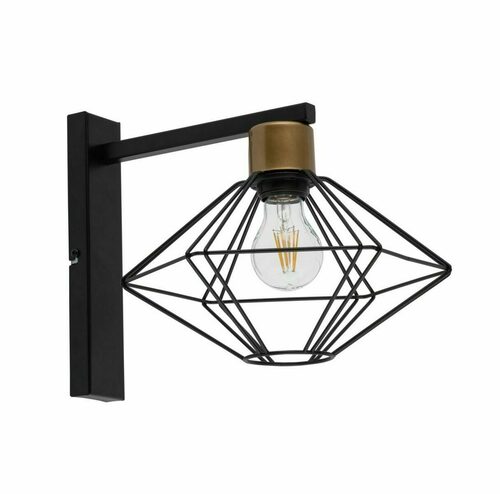
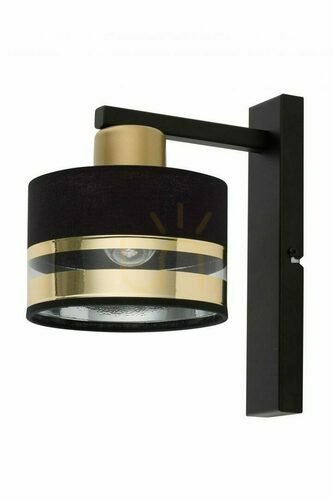
Black and gold wall lights pair a dark, crisp silhouette with a metallic finish that catches the light. What matters most is where the gold sits: a gold-lined shade warms the light itself, while a gold arm or ring mainly adds sparkle to the fitting during the day.
Because a wall light sits at eye level, you see it up close and from the side. The finish, the joints and the backplate are all on show, so the quality of the gold counts for more here than on a pendant hung well above your head.
How the gold changes the light
Inside a black shade, a gold or brass lining reflects the light and tints it noticeably warmer. A plain 3000 K bulb takes on a honeyed glow, and the pool of light on the wall turns soft and golden – lovely in a snug or bedroom, less useful where you need true colours. Up-and-down cylinders with a gold interior throw two warm beams that look striking in pairs along a hallway or either side of a chimney breast.
When the gold is on the outside – a swing arm, a backplate, a frame around ribbed or opal glass – the colour of the light stays as the bulb makes it. The black then does the quiet work, tying the light to black window frames, curtain poles, picture frames or matt black taps.
Choosing the gold finish
‘Gold’ on a light can mean several quite different surfaces. They age differently and need different care, so it pays to know which one you are buying.
| Finish |
Look |
How it ages |
Cleaning |
| Brushed or satin brass |
warm, soft sheen, hides fingerprints |
stable if lacquered |
dry microfibre cloth |
| Polished gold |
bright and reflective, suits Art Deco and glam |
shows dust and fine scratches sooner |
dry cloth, no abrasives |
| Antique brass or gold |
darker, slightly patchy tone, period feel |
very forgiving |
dust only |
| Painted or matt gold |
even, flat colour |
a deep scratch shows the base metal |
barely damp cloth |
| Unlacquered brass |
bright at first |
darkens into a natural patina |
brass polish if you want the shine back |
| Gold leaf |
rich, hand-finished, slightly uneven |
delicate on edges |
soft brush, never wet |
On the black side, matt black looks the most modern but shows greasy fingerprints; satin or textured ‘sand’ black is more practical on lights you touch every day, such as swing-arm reading lights.
Room by room
-
Living room – fit at roughly 150–180 cm from the floor, so the shade sits just above eye level when you are standing. Pairs flanking a fireplace, mirror or sofa are a British classic and work especially well in period homes.
-
Hallway and landing – about 160–180 cm high and 2–3 m apart. Choose slim fittings in narrow halls so nobody catches a shoulder.
-
Bedroom – mount bedside lights roughly 50–70 cm above the top of the mattress, ideally with a switch you can reach lying down. Warm 2700 K keeps the room restful.
-
Dressing table or mirror – lights either side at face height light the face evenly; opal glass prevents glare in the mirror.
Bathrooms, wiring and safety
In the UK, bathroom lighting follows the zones set out in BS 7671. Zones 1 and 2 – above the bath or shower tray and the area just around it – need a fitting rated at least IPX4, and IP44 is the usual spec for bathroom wall lights. Outside the zones a standard IP20 light is acceptable. New wiring or alterations around the bath or shower are notifiable under Part P in England and Wales, so leave them to a registered electrician.
Elsewhere in the house, most wall lights are hardwired to a wall point and may be Class I (earthed) or Class II (double insulated) – check this matches your wiring. Plug-in versions with a switched cable avoid chasing walls, and rechargeable lights need no wiring at all, though they give less light and need regular charging.
Common mistakes
- Mixing a bright yellow gold with a pinkish or antique one right next to each other. Keep one tone dominant.
- A small light on a large, empty wall disappears. Go bigger, or use a pair.
- Cleaning gold with alcohol, ammonia-based sprays or cream cleaners – they can strip lacquer and painted finishes. Switch off, let it cool, then dust.
- Choosing a cool 4000 K bulb: gold turns flat and slightly greenish. Stay at 2700–3000 K.
FAQs
Do wall lights have to match the ceiling light?
No, but they should share something – the same gold tone, a similar shade shape or the same black finish. One shared detail is enough to make a room feel planned rather than bought as one matching set.
Are black and gold wall lights suitable for bathrooms?
Yes, if they carry the right IP rating for their zone, usually IP44. Plated gold and powder-coated black cope well with humidity; unlacquered brass will darken faster in a steamy room.
What suits a modern living room?
Simple forms in matt black with a single gold accent – a ring, a gold-lined shade or a brass arm. Use them as accent lighting alongside the main ceiling light and lamps, ideally on a dimmer.
Do vintage black and gold wall lights work with a filament bulb?
They do. An amber filament bulb at around 2200–2500 K complements brass beautifully, but it is mood lighting rather than light for reading.
How large should a wall light be?
As a rough guide, larger walls and high ceilings in period properties take taller fittings or pairs; in a standard room with a 2.4 m ceiling, a light of about 20–35 cm usually looks in proportion.
Which bulb do black and gold wall lights take?
Slim designs often use G9 capsules, classic candle arms E14 and industrial styles E27; minimalist and up-and-down fittings often have integrated LED, where the module rather than a bulb is replaced.
For more on wall lights in general – types, fitting and planning – see wall lights. To carry the same colour pairing onto the ceiling, have a look at black and gold ceiling lights.