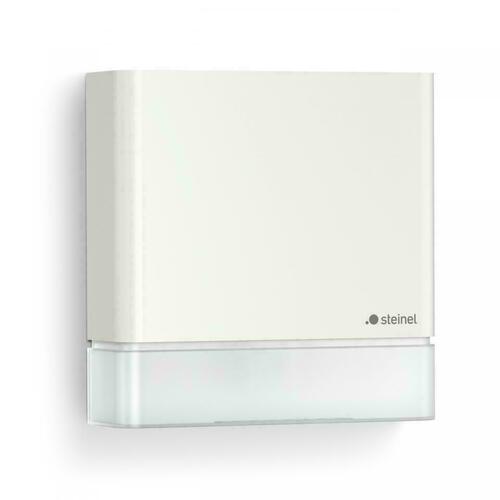
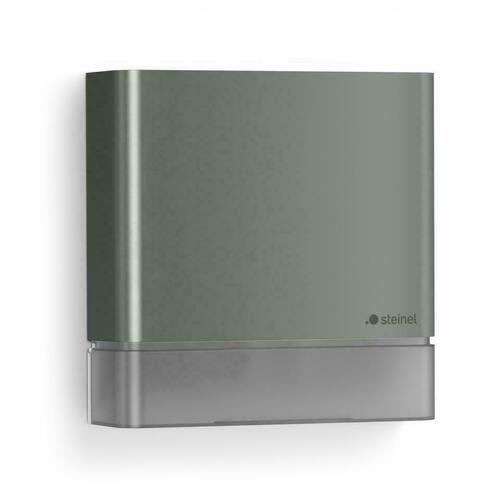
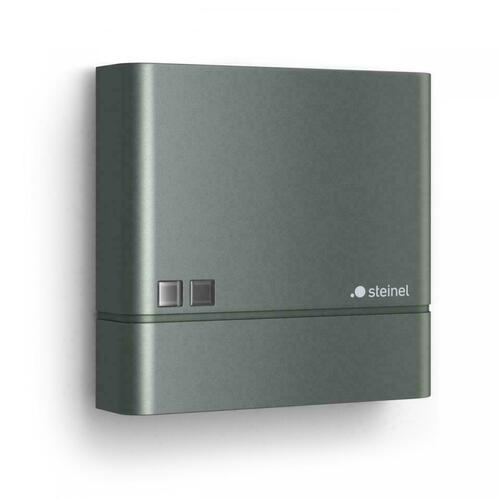
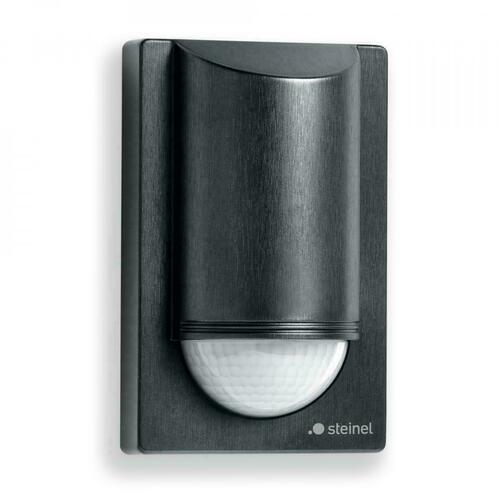
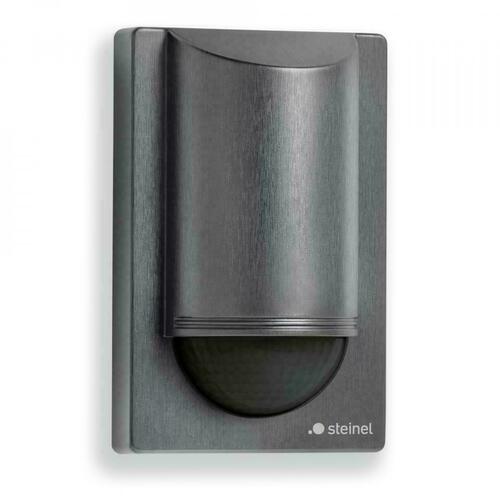
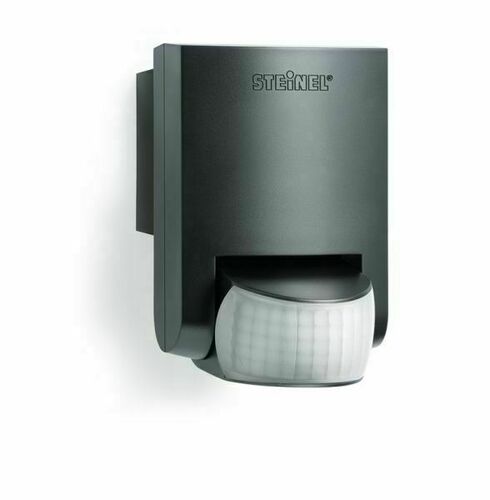
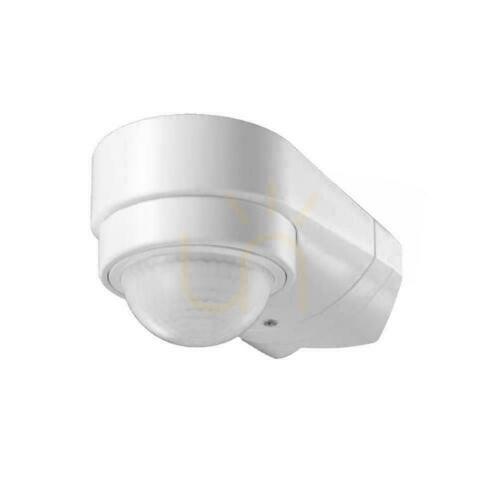
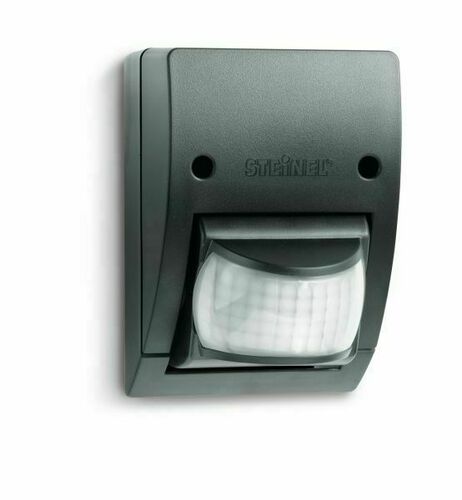
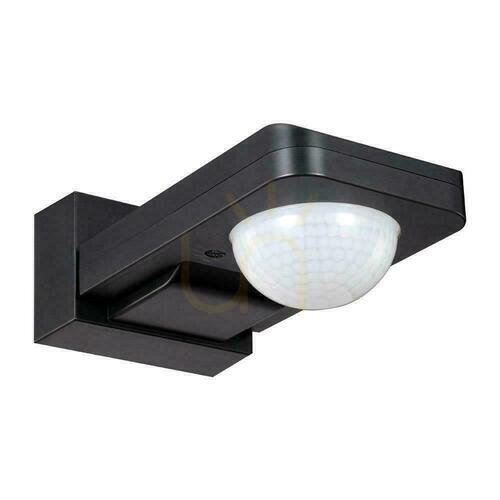
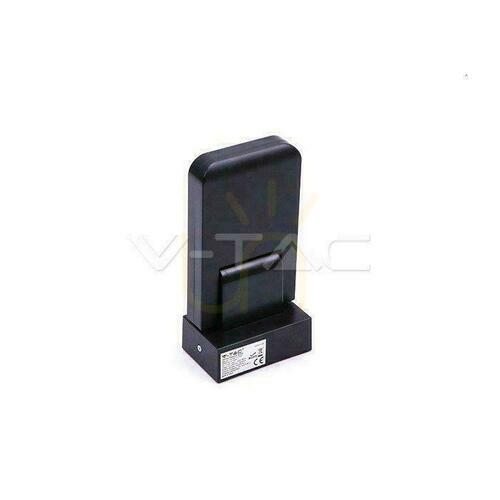
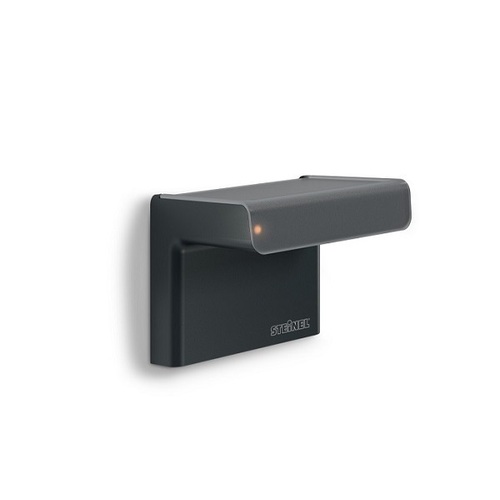
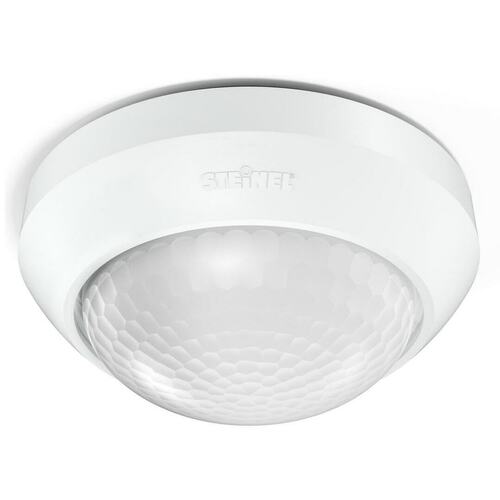
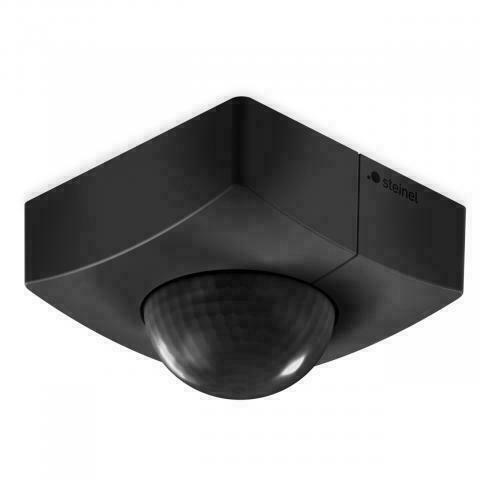
An outdoor PIR sensor turns on the porch, driveway or path light when someone walks into its field and switches it off again a set time after they have gone. Compared with a sensor for a hallway or stairwell, it has a weatherproof housing, copes with frost, driving rain and summer sun, and watches a far bigger area, often well over ten metres.
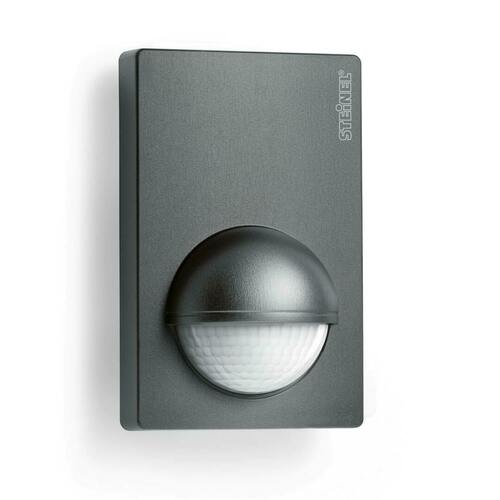
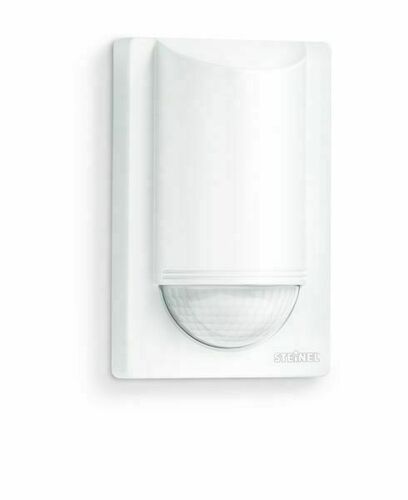
Most are standalone units fixed to a wall, a soffit or the corner of a house, wired to switch one or more lights. That makes them the simplest way to add motion control to lights you already own, rather than replacing them with fittings that have a sensor built in.
What is a PIR sensor for, and how does it work?
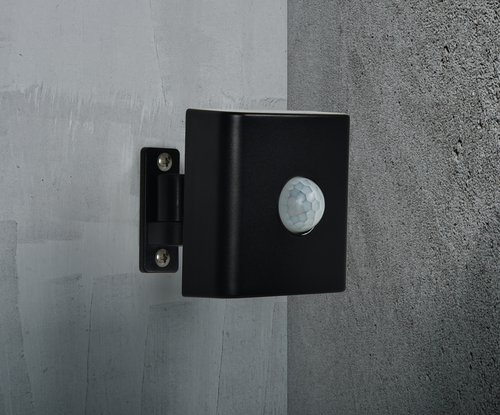
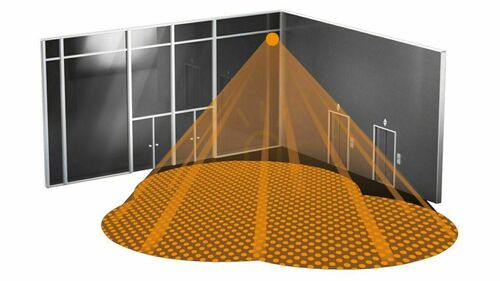
PIR stands for passive infrared. The sensor sends nothing out: behind a faceted lens it watches heat, and it switches when a warm body crosses from one lens zone to the next. That is why it picks up someone walking across the garden long before someone walking straight towards it, and why it can be a little less responsive on a hot afternoon, when the background is close to body temperature.
Microwave sensors work the other way round. They emit a low-power radio signal and react to any movement, even behind thin glass or plastic, which suits concealed installs under a canopy. Heat does not bother them, but turned up too high they will respond to branches moving in the wind. For most British gardens and driveways, PIR remains the sensible default.
Choosing the right sensor
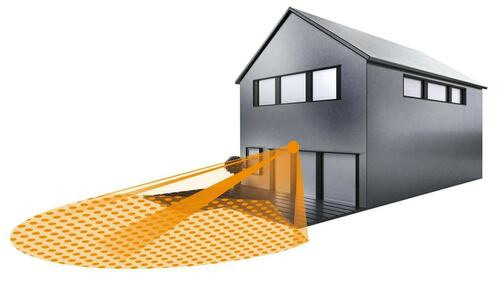
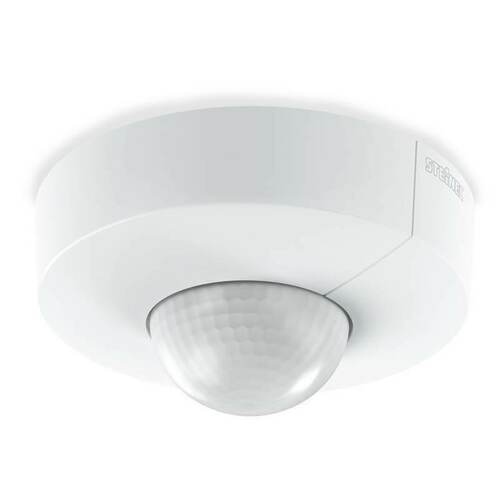
Start with where people actually approach from. A flat wall needs a 180–240° field; a corner unit of around 270° covers two elevations; a ceiling-mounted 360° sensor under a porch roof sees the door from every side and stays out of the rain. If running a cable is impractical, a wireless PIR sensor and receiver pair, powered by batteries or a small solar panel, can trigger a light some distance away.
| Feature |
Typical outdoor values |
What to check |
| Detection angle |
180–240° wall, about 270° corner, 360° soffit |
A wide field also catches the pavement beyond your hedge |
| Detection range |
usually 8–12 m, larger units up to about 20 m |
Real-world range is a few metres shorter than the box claims |
| Mounting height |
roughly 2–2.5 m |
Too low and cats set it off; too high and it misses movement right below |
| IP rating |
IP44 under cover, IP54–IP65 on an exposed wall |
The cable gland must seal as well as the housing |
| Time on |
a few seconds up to several minutes |
Every new movement restarts the countdown |
| Maximum load |
listed separately for incandescent and LED |
Use the lower LED figure: LED drivers draw a high inrush current |
Fitting and setting it up
A typical mains sensor has three terminals: permanent live (L), neutral (N) and switched live (L') out to the light, with the earth carried through. Work on 230 V wiring outdoors should be done by a qualified electrician to BS 7671; in England and Wales, adding a brand-new circuit is also notifiable under Part P of the Building Regulations.
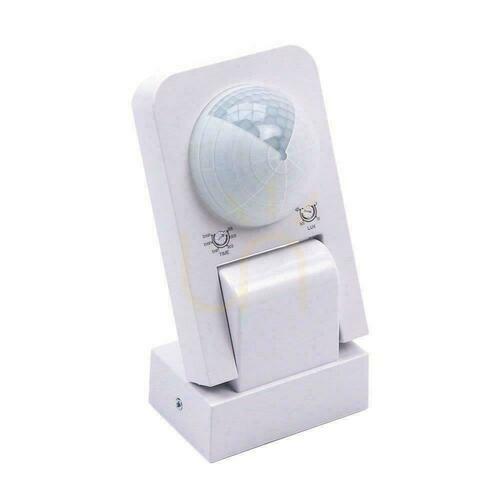
Once powered, the sensor usually needs up to a minute to settle. Set the lux dial to daylight, the time dial to minimum and walk the area. Aim the head so the main approach runs across its field rather than straight at it. When coverage is right, turn the lux dial back towards night and choose the run time: about a minute at a gate, two or three over a drive.
False triggers and upkeep
- Keep the field off the street and next door's garden; clip-on lens masks blank out the segments you do not need. Nobody thanks you for a security light that flashes into their bedroom all night.
- Steer clear of extractor and boiler flues, a heat pump's outdoor unit, and shrubs right in front of the lens.
- Do not let the controlled light shine straight onto the sensor, or its photocell decides it is daytime and the light cycles on and off.
- Wipe the lens with a damp cloth, no solvents. Spider webs in autumn and frost or snow in winter are the usual culprits when it starts misbehaving.
FAQ
Can I install a motion sensor to an existing light?
Yes, provided the light's supply is rerouted through the sensor's switched live. The light needs no sensor of its own; its wattage just has to sit within the sensor's rated load.
Can a PIR sensor be connected to any light?
Almost any mains light, as long as the total load is within the LED rating. Several fittings can share one sensor, and several sensors on the same phase can be wired in parallel to one light.
Is a wireless PIR sensor and receiver reliable outdoors?
For occasional use, such as a shed or a far corner of the garden, yes. On a well-used path a hard-wired sensor is more dependable, because batteries flag in cold weather.
Do I need an IP65 sensor?
On a wall exposed to wind-driven rain, IP54–IP65 is worth having. Under a porch roof IP44 is normally enough.
How do I keep the light on permanently?
Many sensors have a manual override: switch off and on again quickly at the wall switch feeding the sensor and the light stays on; how it returns to automatic varies, so check the instructions. A switch wired across the sensor output does the same job.
Why does my outdoor sensor keep coming on at night?
Foxes, cats, moving branches, warm flue air or passers-by at the edge of the field. Lower the sensitivity, tilt the head slightly downwards and mask the stray zones.
For sensors used indoors as well as out, see motion sensors. If you simply want lights to come on at dusk and go off at dawn, read about dusk to dawn sensors.