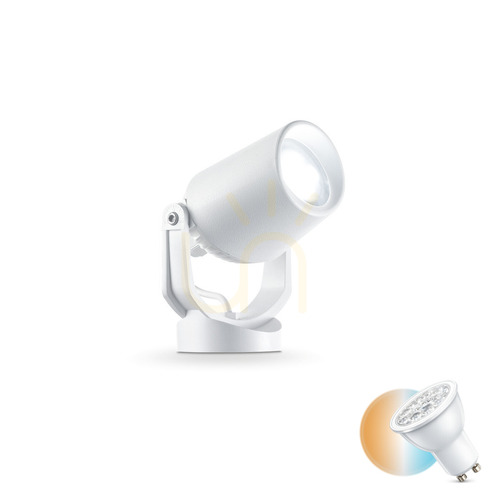
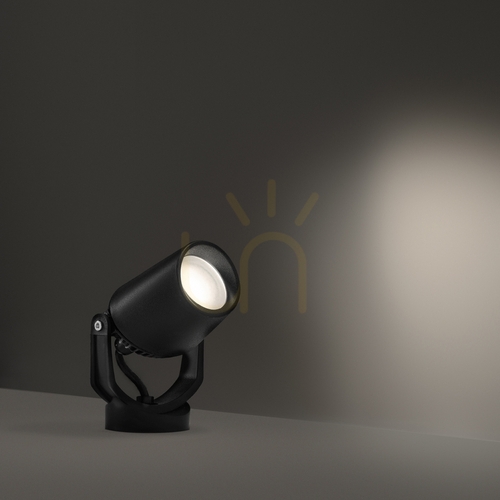
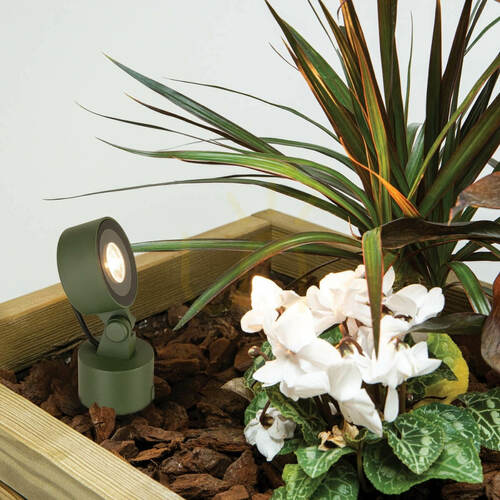
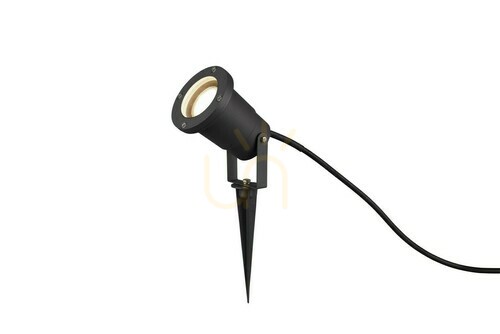
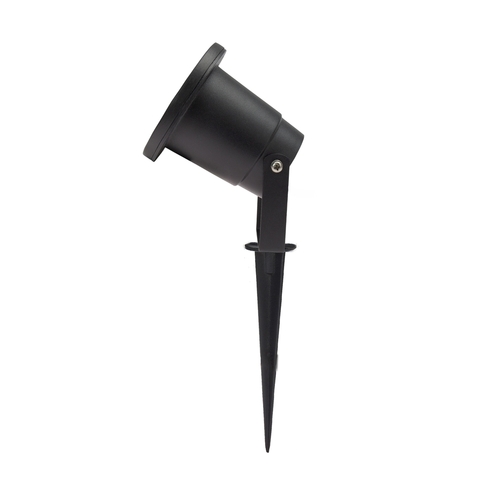
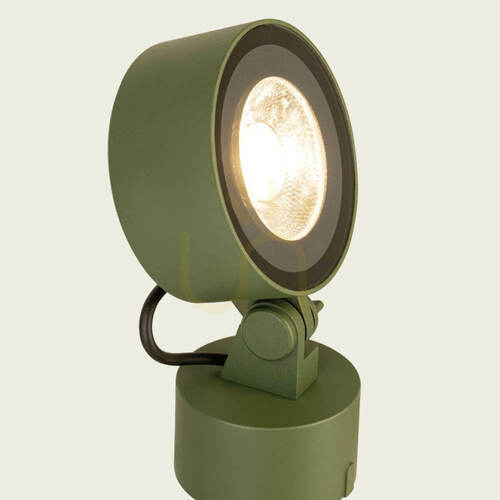
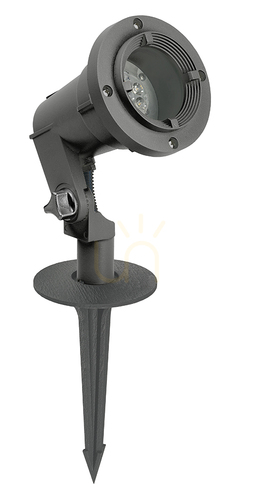
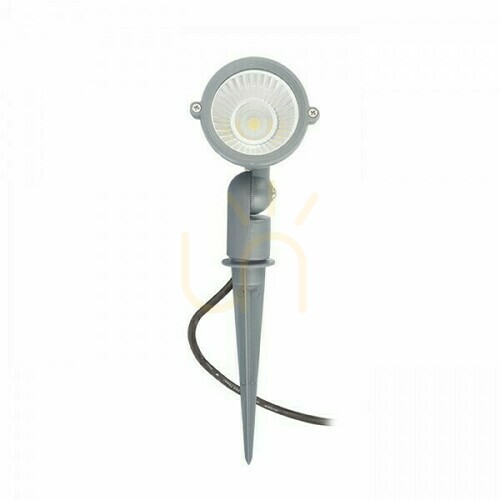
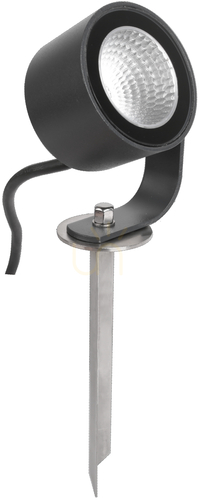
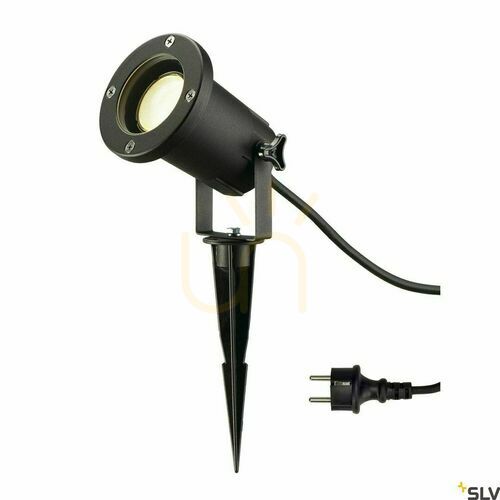
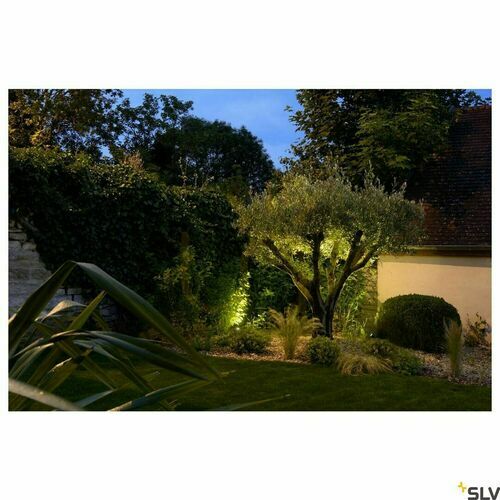
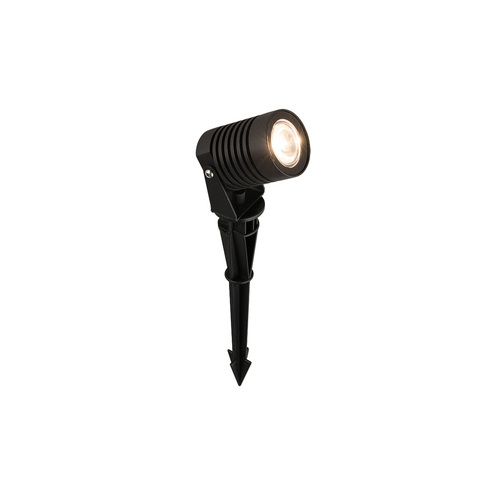
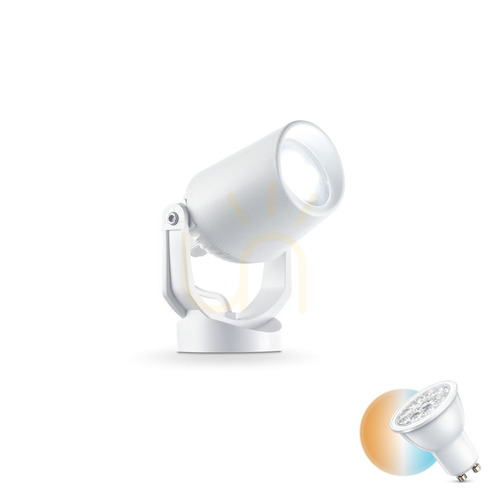
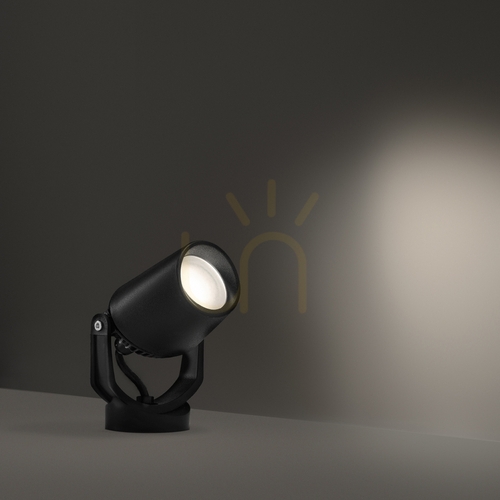
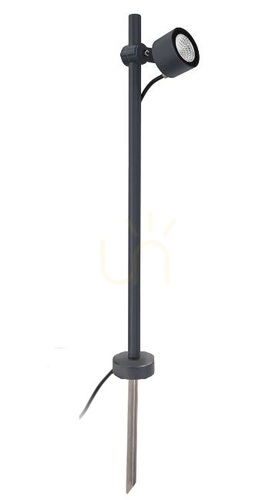
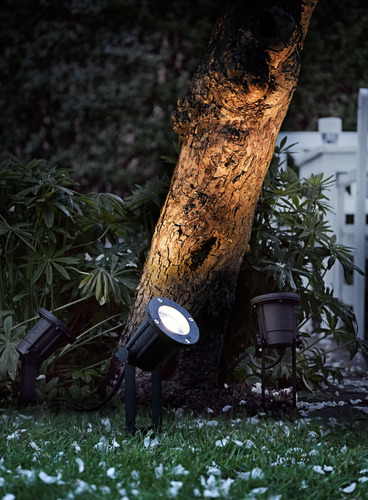
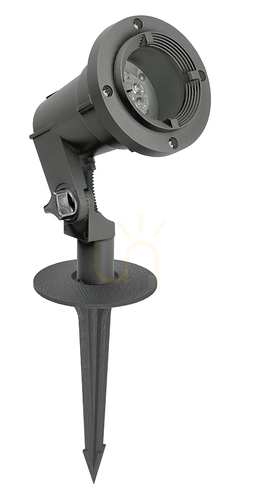
Tree uplighters are low, adjustable garden spotlights that sit at the foot of a tree and throw a focused beam up through the trunk and canopy. One well-aimed uplighter under a silver birch or an acer turns it into the view from the kitchen window after dark – and what makes it work is beam angle, brightness and position rather than the fitting itself, which you barely see at night.
Most are spike-mounted spotlights you push into a border or lawn edge, or buried uplights set flush with the ground. You will also come across floodlights for very large canopies, small downlights fixed high in a tree, and solar spikes for shrubs and young trees.
Spike or buried: which uplighter suits your garden?
A spike uplighter is the easy option. It goes in without digging, the head tilts and swivels, and you can move it when the tree fills out or when you realise the effect looks better from the patio than from the lawn. Being freestanding in rain and sprinklers, it wants at least IP65.
A buried uplight (sometimes called a well light or recessed ground light) disappears into lawn, gravel or paving. The mower runs straight over it, nobody trips on it, and it suits busy areas and minimalist schemes. The trade-offs: it needs IP67 or better because it can sit in standing water after a downpour, a free-draining bed of gravel beneath it, and a little more thought about where it goes, since moving it means lifting it.
How bright, how wide, how many?
Beam angle shapes the result as much as brightness does. A narrow spot stretches a slim tree and picks out bark; a wide flood fills a broad, spreading crown. Remember the beam keeps widening as it travels, so even a 15° spot lights a circle roughly 2 m across by the time it is 8 m up the tree. The figures below are typical starting points for LED fittings.
| Tree |
Light output per fitting |
Beam angle |
Fittings |
Distance from trunk |
| Shrub or small topiary up to 1.5 m |
around 200 lm |
45–60° |
1 |
30–50 cm |
| Small ornamental tree under 4.5 m, e.g. Japanese maple, magnolia |
300–600 lm |
30–45° |
1 |
30–90 cm |
| Medium tree 4.5–7.5 m, e.g. silver birch, rowan |
600–1,000 lm |
24–36° |
2–3 |
0.5–1 m |
| Large tree over 9 m, e.g. oak, beech, sycamore |
1,000 lm and up |
10–30° for height, 60° for canopy |
3–4 or more around the base |
1–2 m |
| Columnar conifer, e.g. Irish yew, cypress |
300–600 lm |
10–15° |
1 |
20–40 cm |
In watts, LED tree uplighters typically run at about 3–5 W for small ornamentals and 7–12 W for large shade trees. Two moderate fittings from different sides nearly always look better than one powerful one aimed from the front.
Placing and aiming
Start the first fitting a short step from the trunk, not pressed against it, and tilt it towards the first big fork in the branches. Pointing straight up tends to flatten the canopy. Grazing – a narrow beam right at the base – brings out the texture of bark, and works beautifully on birch, plane and old Scots pine. For a silhouette, put the light behind the tree and wash a wall or hedge instead. And if you want that soft, dappled “moonlight” on the lawn, a small downlight fixed high in the canopy does the job.
Whichever you choose, test at night before you bury anything. A torch or a spare spike light is enough to try positions, and check the view from the house as well as from the garden.
Wiring: 12 V low-voltage or mains
Many people go for a 12 V plug-and-play system: a transformer plugged in near the house, thin cable run through the borders, and fittings that connect without tools. Size the transformer at roughly 20–25% above the combined wattage of all fittings. Mains (230 V) uplighters need buried cable, typically steel-wire armoured, on a circuit with RCD protection, installed by a qualified electrician to BS 7671. It is more work up front but suits long runs and higher outputs.
Common mistakes and upkeep
- Overlighting – a tree should glow, not look floodlit for a football match.
- Glare: uplighters visible from the terrace or shining into a neighbour’s window. A hood or glare cowl helps.
- Mixing colour temperatures. Pick warm white (2700–3000 K) or a cooler 4000 K and stick with it across the garden.
- A narrow beam blocked by a heavy low branch.
Clear leaves and soil from buried uplights in autumn, check seals once a year and re-aim heads after mowing or storms. A timer or dusk sensor switches them on at nightfall; turning them off late in the evening saves energy and is kinder to moths and bats.
Tree uplighting FAQs
How do you light up an outdoor tree?
Place one or two spotlights at the base, angled towards the main branches, in warm white light. Small trees need one fitting; larger ones look best lit from two or three sides.
How many lumens do I need to uplight a tree?
As a guide: around 200 lm for a shrub, 300–600 lm for a small tree, 600–1,000 lm for a medium one and 1,000 lm or more per fitting for a large tree. Less is often more.
Are solar tree uplighters any good?
For shrubs and young trees, yes. In a British winter the panel gathers little charge, though, and a mature tree needs more light than most solar spikes can give, so mains or 12 V is more dependable.
Are LED uplighters better than halogen?
LED fittings use a fraction of the power, run far cooler – so leaves brushing against them will not scorch – and last for many seasons. Older halogen uplighters typically drew 20–50 W for a similar effect.
What colour light is best for trees?
Warm white suits bark, autumn foliage and most gardens near the house. A cooler 4000 K flatters conifers, blue-green foliage and the white bark of birch.
Can I install outdoor tree uplighters myself?
A plug-in 12 V system, yes. Any new mains wiring in the garden should be done by a qualified electrician.
For path, wall and post lights to go with your uplighters, see outdoor lights. More on energy-saving fittings for beds and borders: LED garden lights.