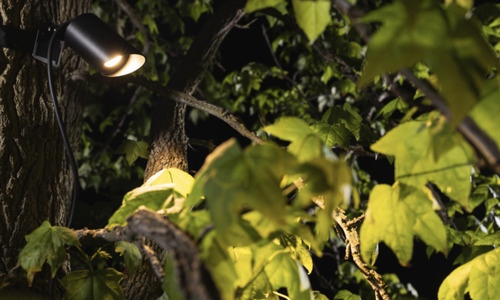
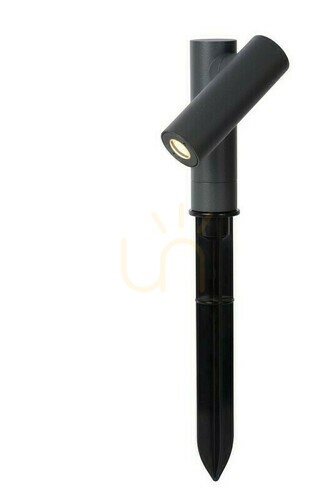
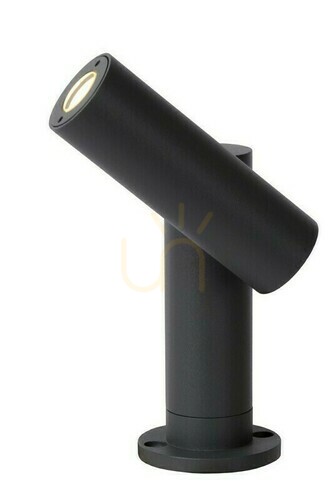
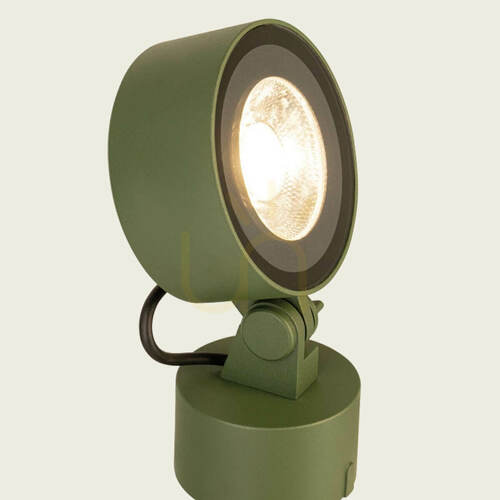
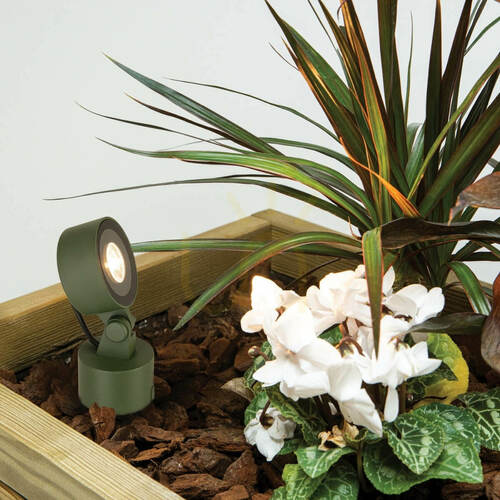
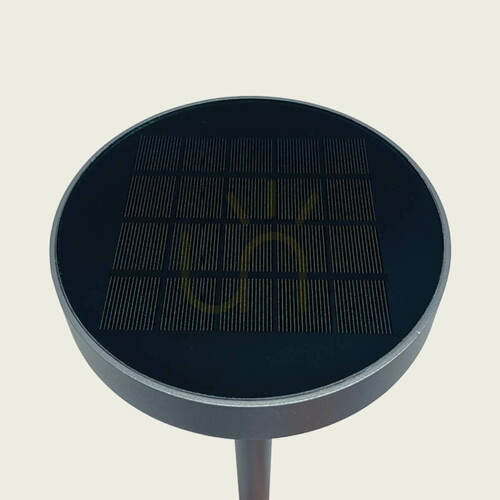
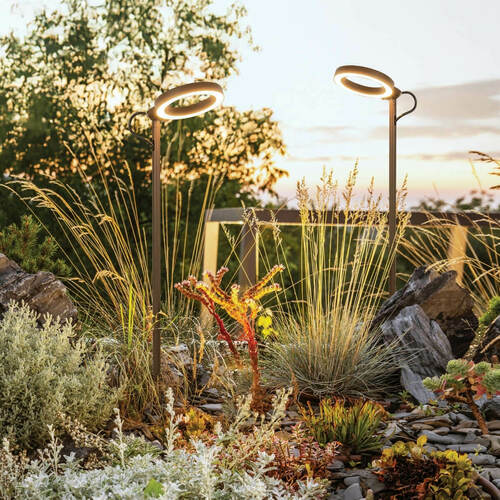
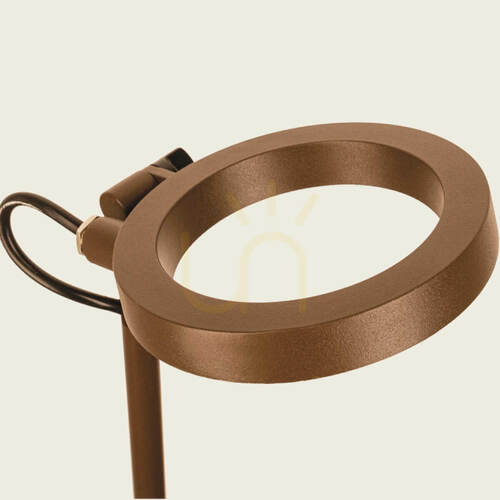
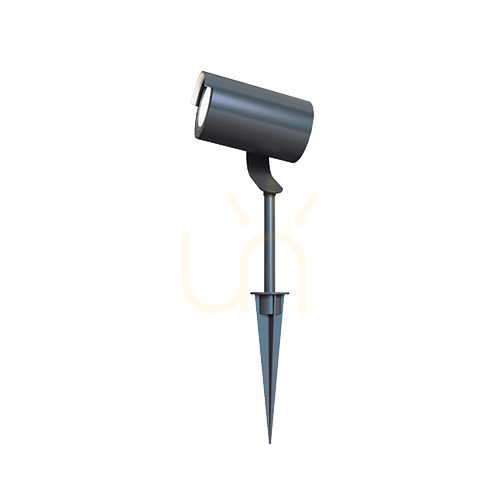
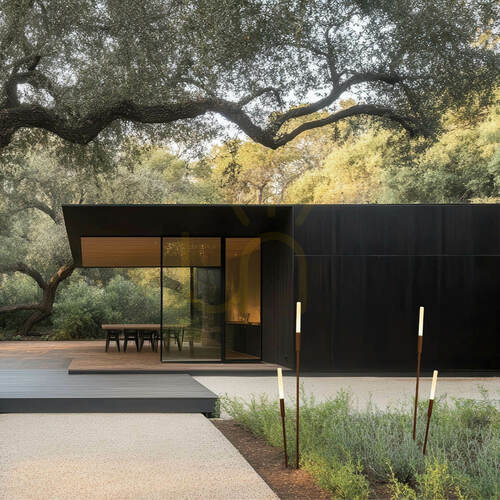
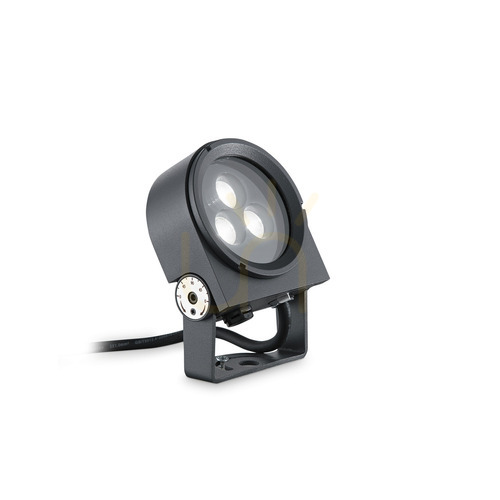
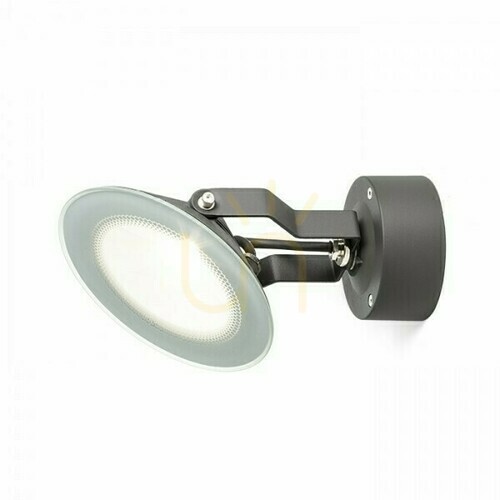
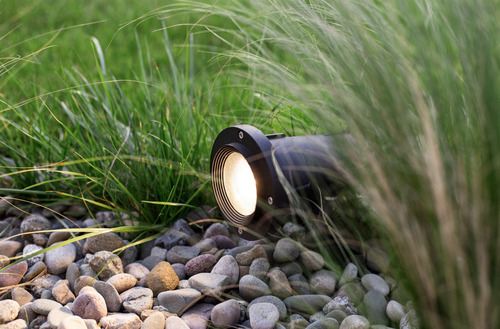
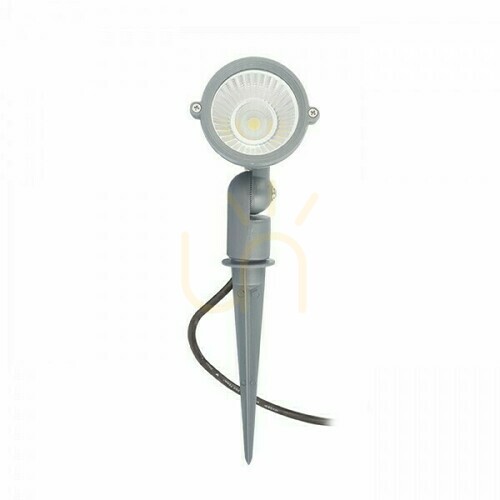
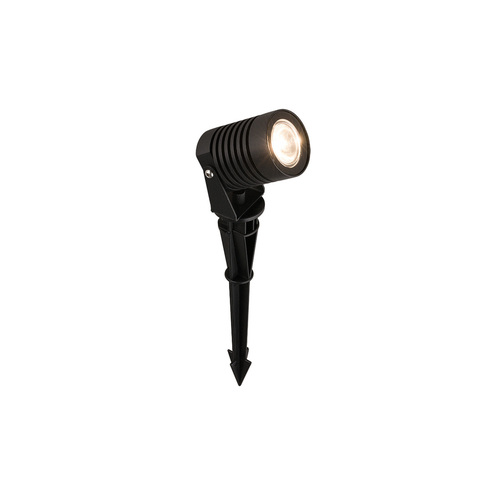
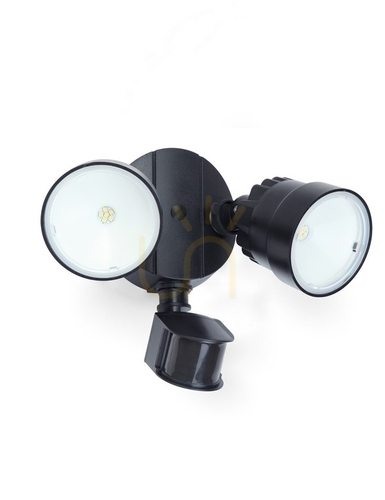
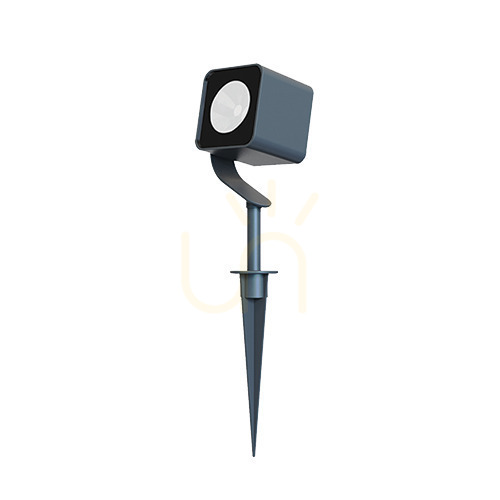
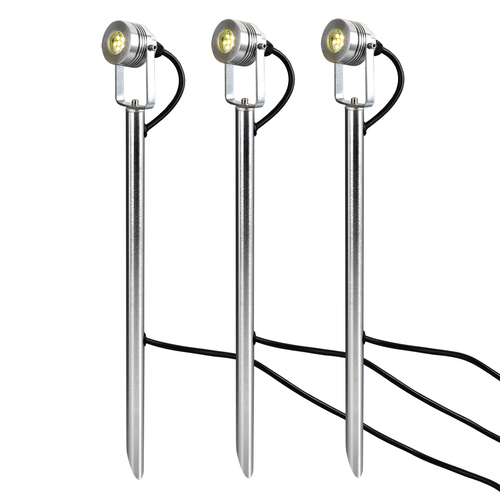
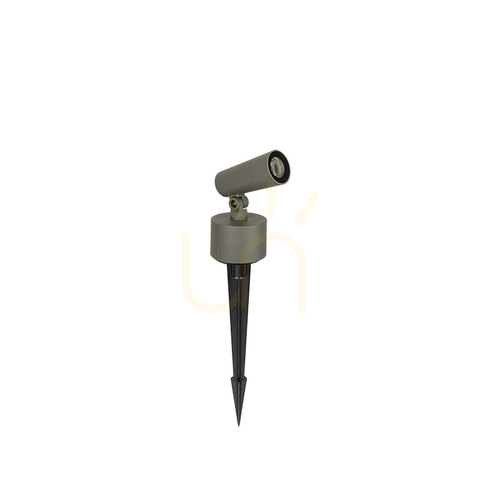
Every fitting on this page carries an LED light source, and on an outdoor spotlight that changes what you are actually buying. There is no lamp behind the glass to swap out in three winters. The diodes, the optic and the driver were designed together, sealed together, and are rated together — so the numbers printed on the box are the numbers you live with for the life of the fixture.
Read the lumens, then look at the watts
Wattage on an LED floodlight tells you what it costs to run, not how much light it throws. A 30 W outdoor LED spot in this range puts out around 2 800 lumens; the old halogen that drew 30 W managed roughly a fifth of that. If you are replacing a halogen floodlight, match the lumens and ignore the wattage entirely — a 20–30 W LED comfortably replaces a 150 W halogen, and a 5 W spike light replaces a 35 W low-voltage bulb.
For a domestic plot the honest numbers are lower than most people expect: 400–800 lumens lights a path or a planting bed, a driveway wants 1 500–3 000, and anything above 5 000 lumens on a suburban garden is floodlighting rather than lighting.
Beam angle does more work than brightness
A narrow beam of 15–30° is a grazing tool: it climbs a wall, picks out a tree trunk, or throws a column of light up a chimney breast. Wider optics of 50–60° wash a façade evenly or cover a yard. Fittings here run from tight 24° optics through 30° to 50°, and choosing wrongly is the most common mistake — a wide beam on a single tree just lights the fence behind it, and a narrow beam across a driveway leaves two dark strips either side of a bright stripe.
Colour temperature and how a house takes it
Warm white at 2 700–3 000 K flatters brick, render, timber and planting, and it is what most garden spotlights here are built around. Neutral 4 000 K reads cleaner on grey render, concrete and metalwork. Cool white at 5 000–6 500 K is a working light: correct on a yard, a workshop wall or a loading area, and unflattering on the front of a house, where it turns warm brickwork grey and makes the building look institutional.
Keeping the light on your own land
Glare and light trespass are what turn a good floodlight into a neighbour dispute. Two habits solve most of it. Aim downwards — tilting a floodlight much beyond 15° above horizontal sends a large share of its output over the boundary and straight into somebody's bedroom window. And mount low enough to control: a spot at 2.5–3 m aimed at a wall does a better job than the same fitting at 5 m aimed across the garden. Shields, snoots and asymmetric optics exist precisely so the source is not visible from the angles people stand at.
Weather, mounting and cable
IP65 is the working minimum for anything exposed to rain and hose water; IP54 is acceptable only under a soffit or a deep eave. Where a fitting sits at ankle height beside a path, look for an impact rating too — IK08 and above survives a stray football or a lawnmower. Mains 230 V runs need ducted or armoured cable and an RCD on the circuit; low-voltage 12/24 V can sit in shallower cable, which is the sane option in a bed you will be digging in. Near the coast or a salted road, stainless and powder-coated aluminium last; bare steel does not.
Questions people ask
Can I replace the LED when it fails?
On an integrated fitting, no — the module is bonded into the housing to keep the seal intact. Look instead at the rated life, usually quoted as L70 at 30 000–50 000 hours, which is the point at which output has dropped to 70% of new.
Do these dim?
Only if the fitting or its driver says so. An integrated LED without a dimmable driver will flicker or simply refuse to run on a mains dimmer. Where dimming matters, check the driver spec rather than the lamp.
What about a motion sensor?
Some models include a PIR; most do not, and an external sensor on the circuit is often the better answer because you can site it away from the light. Set the lux threshold so it ignores daylight, keep hold time short at one to three minutes, and point it across the approach rather than straight down it — a PIR detects movement crossing its field far more reliably than movement coming towards it. Heat sources, washing on a line and next door's cat are the usual causes of false triggers.
Is a spotlight the right fitting at all?
Not always. For light beside a door, outdoor wall lights give a softer, less directional result. Spotlights earn their place when light has to reach a specific surface from a distance.