
Circadian lighting: evening and morning light
Circadian lighting at home means warm, dimmed light of 2200–2700 K in the evening and a bright, cooler white of 4000–5000 K in the morning. The colour alone is not enough, because your body clock also reacts to how much light reaches your eyes. How much light is acceptable, and from what time, is set out in expert recommendations published in 2022. You can follow them without rewiring the house: with a colour-adjustable bulb, a schedule in an app or an ordinary dimmer.

Contents
- Circadian lighting at a glance
- Light and sleep: how does a lamp affect your body clock?
- Kelvins are not everything: the amount of light at the eye matters
- What light colour in the morning?
- During the day: light for work and study
- What light colour in the evening?
- Night: orientation light and night lights with as little blue as possible
- Screen or lamp – which is worse in the evening?
- How to do it at home: tunable white, smart scenes and dimmers
- Common mistakes
- Frequently asked questions
- Where to start
Circadian lighting at a glance
In the morning and during the day you want plenty of light, ideally daylight. Circadian lighting in the evening means a warm colour from dimmed lamps placed low. At night, leave only a faint orientation light. The table gives the values for each time of day:
| Time of day | Colour | Brightness | Where the light comes from |
|---|---|---|---|
| Morning | daylight; indoors 4000–5000 K | bright | window, going outside, a bright kitchen and bathroom |
| Day | daylight; about 4000 K at the desk | bright, about 500 lx on the desktop | desk by the window, desk lamp |
| Evening (about 3 hours before bed) | 2200–2700 K | low, dimmed | table and floor lamps with shades, below eye level |
| Night | amber or very warm white up to 2200 K | minimal | night light near the floor, motion sensor |
The whole idea fits into four words: bright days, dark nights. Your body reads the time of day mainly from how much light, and of what spectrum, reaches your eyes. That is why the same lamp can help at 7 am and get in the way at 11 pm. One colour-adjustable (CCT) bulb covers both modes. You will find such bulbs, alongside warm filaments, in our Light Bulbs category.
Light and sleep: how does a lamp affect your body clock?
Bright light in the evening can delay your body clock and suppress the release of melatonin, while bright light in the morning shifts the clock earlier and makes it easier to wake up. This works through cells in the retina that measure the amount of light rather than form images.
These are ipRGCs (intrinsically photosensitive retinal ganglion cells), which carry the pigment melanopsin. They pass their signal to the suprachiasmatic nucleus in the hypothalamus, the body’s master clock. Melanopsin is most sensitive to blue-cyan light at around 480 nm. Once filtering by the eye’s lens is taken into account, the peak sits at about 490 nm, the value used by the CIE S 026 standard. Melanopsin responds only very weakly to red light above roughly 600 nm.
The pineal gland releases melatonin in the evening and at night; the hormone signals night-time to the body. In its 2018 opinion on LEDs, the EU Scientific Committee on Health, Environmental and Emerging Risks (SCHEER) found some evidence that late-evening light, including from LED lighting and screens, may affect the circadian rhythm. It is not yet clear whether this disruption harms health.
People differ in their sensitivity to light by more than tenfold. Expert recommendations led by Timothy Brown and published in PLOS Biology in 2022, which this guide relies on, cite studies showing this. Young children tend to respond more strongly and older adults less strongly, because the lens of the eye yellows with age and lets through less blue light.
Designing lighting with these non-visual effects in mind is called human centric lighting (HCL). It is the broader term and also covers good vision and comfort. Circadian lighting is the related term that focuses on the daily rhythm itself. In offices, schools and hospitals it means control systems that change the colour and intensity of light throughout the day. At home, circadian lighting comes down to the right colour and brightness at the right time.
This is a lighting guide, not medical advice. Sleep also depends on regular hours, caffeine, stress and illness. If sleep problems go on for weeks, talk to a doctor – no light bulb cures insomnia.
Kelvins are not everything: the amount of light at the eye matters
Colour temperature describes the shade of white, but not how strongly the light acts on the body clock. For that, the International Commission on Illumination introduced a quantity in the CIE S 026 standard in 2018: melanopic equivalent daylight illuminance (melanopic EDI), given in lux. It answers the question: how many lux of standard daylight (D65) would give melanopsin the same stimulus as this lamp? It is measured at the eye, in the vertical plane – where you are looking, not on the tabletop.
The second figure is the light source’s melanopic ratio (melanopic DER): melanopic EDI divided by the ordinary illuminance in lux. For standard daylight it is 1 by definition. According to the 2022 recommendations, many common warm-white domestic LEDs of 2700–3000 K have a ratio below 0.35, while an example tunable LED set to 6500 K comes in at 0.83. Two lamps with the same colour temperature can still have different ratios, because the full spectrum decides, not the kelvins alone. Roughly: melanopic EDI ≈ lux at the eye × melanopic ratio.
So a dimmed cool light can have a weaker effect than a bright warm one. Take assumed ratios of 0.35 and 0.83. A 2700 K lamp giving 150 lx at the eye means about 50 melanopic lux; a 6500 K lamp dimmed to 20 lx means about 17. Warm evening light only helps once it is dimmed as well.
The 2022 recommendations cover indoor light for healthy adults. Experts agreed them as a consensus at an international scientific workshop in 2019:
- during the day, at least 250 lx melanopic EDI at the eye (vertical plane, about 1.2 m above the floor, i.e. the eye height of a seated person),
- in the evening, starting at least 3 hours before bedtime, no more than 10 lx,
- at night in the bedroom, no more than 1 lx, and no more than 10 lx if you need light to move around.
In practice, 250 melanopic lux with 4000 K light (a ratio of typically around 0.5–0.6) means roughly 450 lx at the eye. Most homes are not lit that brightly, so the day is best “topped up” with daylight. The evening limit of 10 lx with a warm LED at a ratio of about 0.35 works out at roughly 30 lx at the eye. At that level the room is lit by dimmed, shaded lamps rather than a ceiling light at full power. These are expert recommendations, not a standard or a diagnostic threshold.
What light colour in the morning?
In the morning the amount of light matters most: daylight first, then a neutral or cooler white of 4000–5000 K in the kitchen and bathroom. You do not need 6500 K, and on a dark December morning a very cold white in a small room can simply be unpleasant.
December is the hardest month for morning light. In London the sun rises at around 7:40–8:05 and sets before 4 pm, so many people leave home in the dark and come back in the dark. Plan the morning in this order:
- Daylight first. Open the blinds as soon as you get up, have breakfast by the window and, if you can, walk part of your journey. Even on an overcast day it is usually many times brighter outdoors than in a lit home.
- Then bright light where you spend the first hour. Light on your face matters, not just light on the worktop. A pendant over the breakfast table or wall lights on either side of the mirror light your face better than narrow downlights aimed at the floor.
- A gentle wake-up. A smart bulb or a lamp on a schedule can start brightening the bedroom 15–30 minutes before the alarm; this is called dawn simulation. There is little research on it, but many people find getting up easier this way, and it is easy to try for yourself.
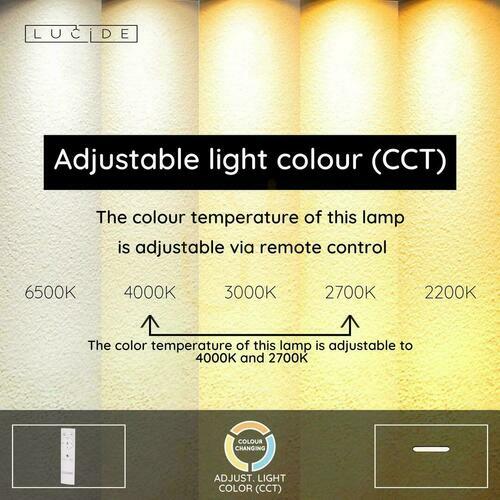
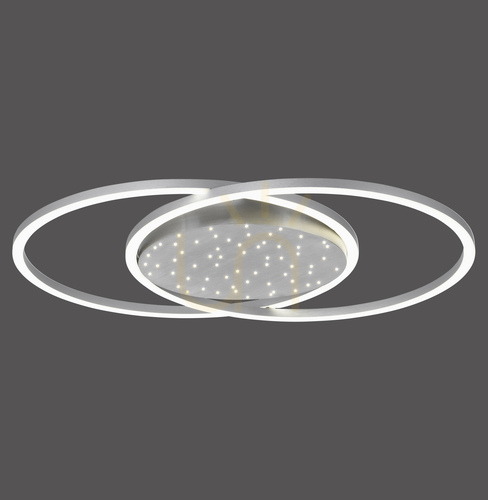
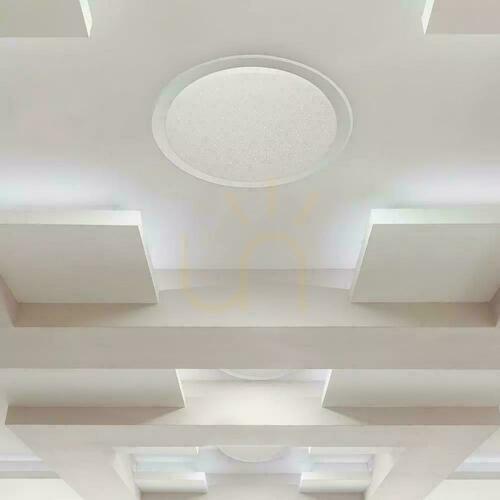
A ceiling light or lamp with adjustable colour temperature (CCT) handles both ends of the day: 4000–5000 K at full power in the morning, 2700 K and dimmed in the evening. Light therapy lamps, used for seasonal mood problems, are a separate subject. Talk to a doctor before buying one.





During the day: light for work and study
If you work or study at home, the workplace lighting standard EN 12464-1 makes a useful benchmark. For reading, writing and computer work it requires 500 lx on the task area, i.e. the desktop. It is not mandatory at home, but it shows the scale: an ordinary ceiling light puts far less than that on a desk.
Three rules for the day:
- Desk side-on to the window. You get plenty of daylight and the screen does not pick up reflections. A desk in a dark corner is a common home-office mistake.
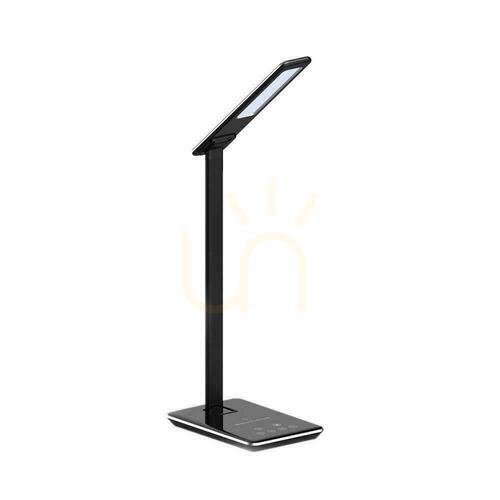
- About 4000 K, a CRI of at least 80 (90 is better) and flicker-free light. A desk lamp with adjustable colour gives neutral white during the day and switches to warm in the evening.
- Brightness around the desk too. The lamp lights the desktop, but your eyes “collect” light from the whole field of view. A light-coloured wall in front of the desk and the main light switched on on a grey day help more than a single strong lamp in a dark room.
Some research indicates that people who get more light during the day may respond less to light in the evening. That is the first half of the “bright days, dark nights” rule. The 2022 recommendations also note that older people may benefit from even more daytime light.
In winter dusk falls mid-afternoon. When it gets dark outside but work goes on, keep the bright light on the desk and start gradually dimming the rest of the home.




What light colour in the evening?
In the evening, choose a colour of 2200–2700 K and keep the lamps dimmed and below eye level. 2700 K is the warm white of a classic incandescent bulb; 2200 K is more amber, close to candlelight. If you read in the evening, 3000 K at the reading lamp is a practical compromise.
Count the evening back from your planned bedtime, not from sunset or the end of work. According to the 2022 recommendations it starts at least 3 hours before sleep, so if you go to bed at 11 pm, switch to “evening mode” at about 8 pm. Shift workers and people being treated for circadian rhythm disorders need individual advice from a doctor. Light at the wrong time can shift their body clock in an unwanted direction.
- Low brightness. Instead of a ceiling light at full power, use several smaller sources dimmed to 30–50%. The roughly 30 lx at the eye mentioned above is a room where you can comfortably talk and watch a film, but not hunt for crumbs on the floor.
- Light below eye level. Table lamps on a sideboard, floor lamps with shades that direct light downwards, under-cabinet lighting in the kitchen instead of the overhead light. A ceiling light brightens the walls, the ceiling and your whole field of view. Light aimed at a worktop or the floor reaches your eyes mainly by reflection, so it acts more weakly, provided the bulb itself does not shine into your eyes.
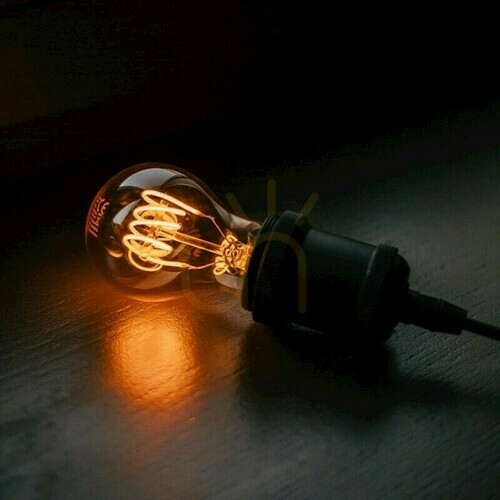
- A shielded source. A fabric shade or a frosted diffuser spreads the light and reduces glare, as long as it hides the bulb from where you sit. If you use exposed decorative bulbs in the evening, choose 1800–2200 K and a low output.
After dinner, under-cabinet lighting is enough in the kitchen. In the bathroom just before bed, use a softer light rather than a 4000 K mirror light at full power. For reading in bed, a directional 2700–3000 K lamp works best with the overhead light off. Aim it at the book, not at your face or towards your partner. You will find lamps for the bedside in our Bedside Lamps category.



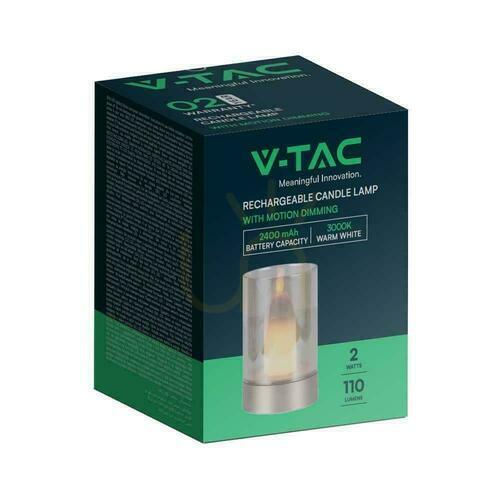


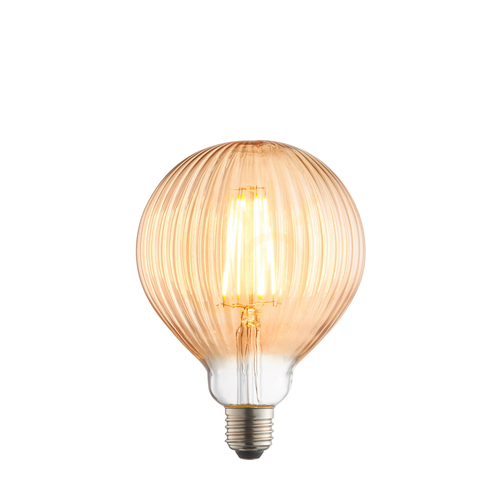
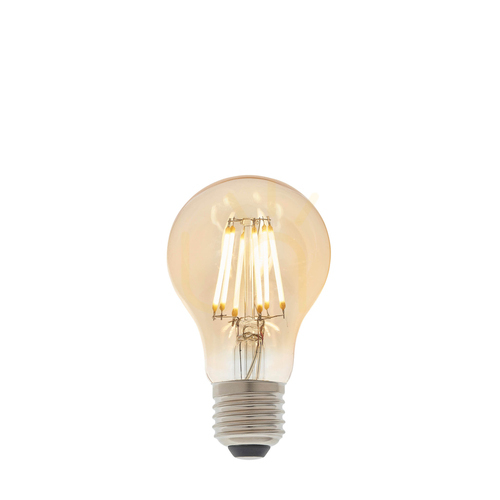
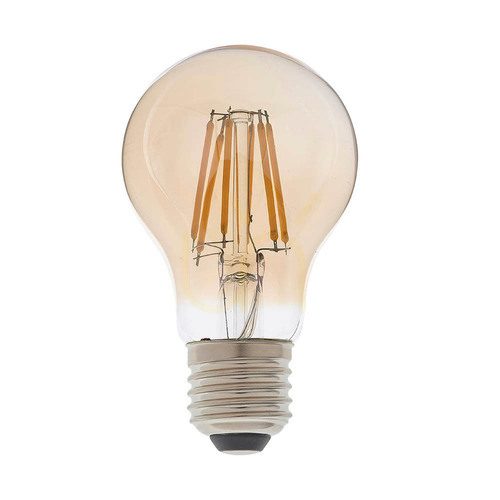
The simplest way to get an evening colour without an app is a very warm bulb, such as an amber or smoked 1800–2200 K filament. In a lamp with a shade it gives a candle-like light, and its output (often around 150–300 lm) is several times lower than that of a typical bulb for a ceiling light. Pick the shape and base from our LED filament bulbs.





Night: orientation light and night lights with as little blue as possible
At night the bedroom should be as dark as possible. In practice that means blackout blinds if a street lamp shines outside, and switching off the standby LEDs on chargers, the TV or a power strip. If the settings do not allow it, cover the LED, but do not block ventilation openings or sensors. A blue or white LED right next to the bed shines straight into your face.
When you do need light, such as on the way to the bathroom or when getting up to a child, four features of a night light matter:
- Amber, reddish or very warm white up to about 2200 K. Melanopsin is almost insensitive to red, so a dim red or amber light has a negligible melanopic effect. A smart RGB bulb set to a dimmed red or deep orange is a ready-made “night scene”. A 2200 K white still contains some blue, though, and an “amber” mixed from RGB channels also contains green.
- An output of no more than about 15 lm. That is enough to find your way in the dark, because eyes adapted to darkness need very little light.
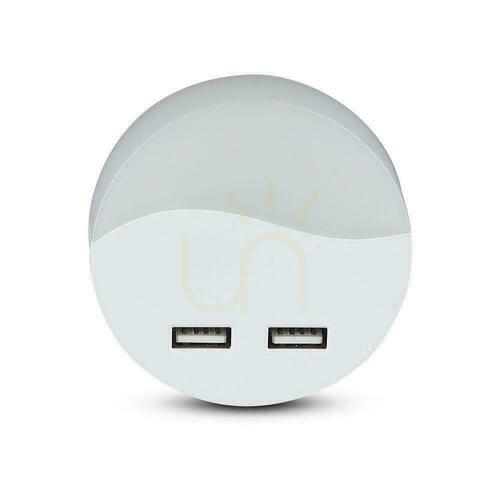
- Low down, with light directed downwards. A plug-in night light near the floor or a strip under the bed lights the floor, not your eyes.
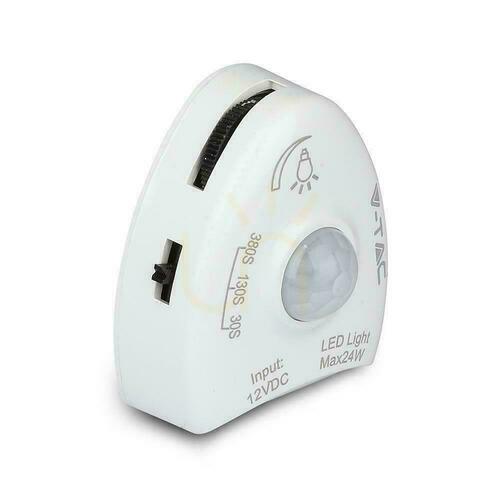
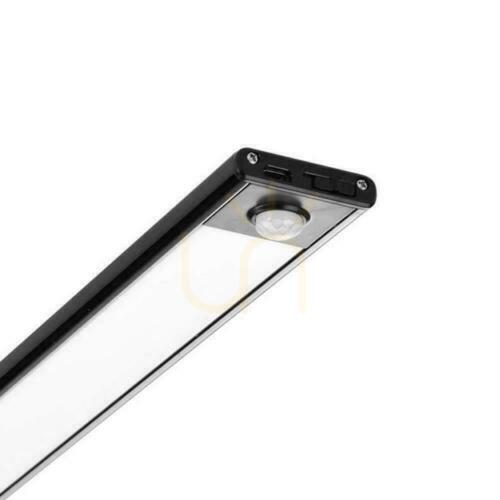
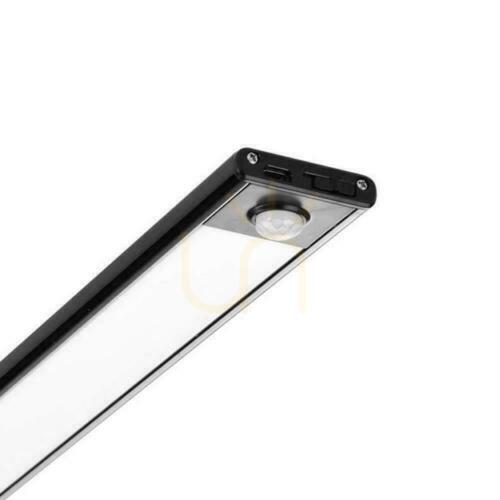
- Motion and dusk sensors. The light comes on only when you get up, switches off after a short time and does not shine during the day.
In hallways and on stairs, safety comes before physiology: an older person going downstairs at night must clearly see the edges of the steps. Low, warm-coloured step lights are a good compromise. Recessed 230 V fittings must be connected by an electrician, whereas plug-in night lights or rechargeable motion-sensor strips you can install yourself. In the bathroom at night, a night light or the lowest setting of a dimmable fitting is usually enough instead of the mirror light, as long as it lets you see safely.
Children may react to light more strongly than adults. A night light in a child’s room should therefore be as dim and as warm as possible, ideally switching itself off after the child falls asleep (a timer). Models designed for the youngest are collected in our Children's Night Lights category.







Screen or lamp – which is worse in the evening?
Both get in the way, and the balance depends on the situation. According to the 2022 recommendations, a screen in a dark room can deliver more than 60 lx melanopic EDI at the eye, six times the evening limit. A bright 4000 K ceiling light at full power gives your eyes as much as a phone or more, only for the whole evening.
Changing the screen’s spectrum (night mode, a blue-light filter) cuts this effect by only about half, according to the authors. Combine it with dimming the screen and a low, warm light in the room. Then there is a factor you cannot measure in lux: content. News, games or work are stimulating regardless of the light colour. The American Academy of Sleep Medicine (AASM) advises switching off electronic devices 30–60 minutes before bed.
A practical evening set-up:
- night mode and dark mode switched on automatically after sunset, with screen brightness turned down manually,
- an e-reader with a warm front light at its lowest setting instead of a tablet,
- for evening work on a laptop, a warm desk lamp rather than total darkness, because the strong contrast between a bright screen and a dark room tires the eyes.
A low, warm backlight behind the TV instead of the ceiling light makes viewing more comfortable, but it does not protect your sleep.
How to do it at home: tunable white, smart scenes and dimmers
Circadian lighting at home needs neither a renovation nor an elaborate control system. There are five tools to choose from, and you can combine them.
Tunable white, i.e. adjustable white (CCT)
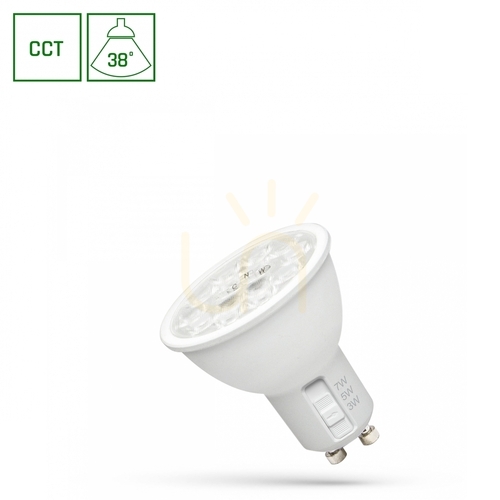
Inside such a lamp or bulb there are two LED channels: a warm one (usually about 2700 K, sometimes 2200 K) and a cool one (about 5000–6500 K). The driver mixes them in different proportions, so the colour changes smoothly. It only moves within the range set by the two channels, though: a 2700–6500 K lamp will not go down to an amber 2000 K. In simple two-channel designs the in-between shades may drift slightly towards pink; better products correct this with an additional channel. The colour is changed in steps (3 or 5 colours selected with the wall switch or a switch on the fitting), with a remote control or in an app. On the product page, check the kelvin range, whether brightness and colour can be adjusted independently, and the luminous flux in lumens.
Dim to warm
This is a different solution from tunable white: the light source sets its own evening colour, because it gets warmer as it is dimmed. It goes, for example, from about 2700–3000 K at full power to about 1800–2200 K at a low level, much like an old halogen bulb. It needs no app or remote, just a compatible dimmer. It works well in the living and dining room.
Smart bulbs and lamps with scenes
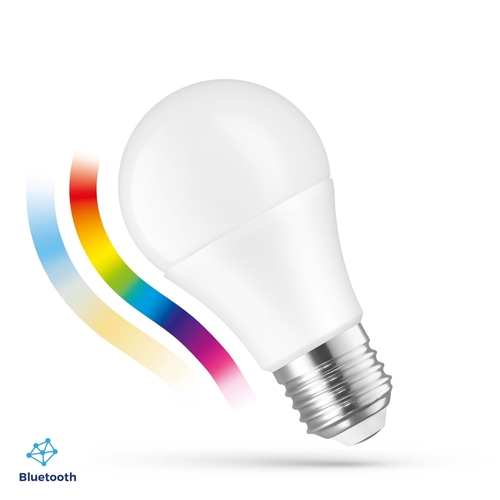
Wi-Fi connects directly to your router. Bluetooth works without a hub but has a shorter range (some systems form a mesh network). Zigbee needs a hub, but reliably handles many devices. You set the rhythm of the day in a schedule, for example:
- morning (6:30): 4500 K, 100%,
- day: 4000 K where you work,
- evening (from 20:00): 2700 K, 30–40%,
- night (from 22:30): 2200 K or RGB amber, 5–10%.
Some apps also have a mode that changes the colour automatically during the day. A smart bulb needs constant power: the wall switch stays on, and such a bulb must not be connected to a conventional dimmer. You will find fittings and bulbs you can control from your phone in our Smart home lamps category. How Wi-Fi, Zigbee, Bluetooth and Casambi differ, and which system suits a home, is explained in our post on lighting control systems.
Dimmers
This is the cheapest way to get evening light from the lamps you already have. The bulb must be marked as dimmable, and the dimmer must be suitable for LEDs, usually trailing edge with a low minimum load. Ideally, choose one whose compatibility with that particular bulb is confirmed by the manufacturer. Wall dimmers and back-box modules are in our Dimmer switches category. Installing them in the wiring, like swapping switches for smart ones or connecting recessed fittings, is a job for a qualified electrician.
Separate evening lamps
Leave the colour-adjustable ceiling light for the daytime, and for the evening add two or three table or floor lamps with 2200–2700 K bulbs. Plug them into a smart plug or a simple timer: they will switch on by themselves at 8 pm and off at midnight. A smart plug only switches the power on and off, so it will not turn an ordinary fixed-colour bulb into an adjustable one.








Common mistakes
- “Daylight” 6500 K in the living room or bedroom “because it’s brighter”. Brightness comes from lumens, not kelvins. In the evening, a cool colour at full power is one of the strongest-acting settings of the same lamp.
- A warm colour, but the ceiling light at 100% until midnight. 2700 K does not excuse you from limiting brightness.
- Smart bulbs without a schedule. Set once, they shine the same all day, so their biggest advantage goes to waste.
- A dark day. Closed curtains, a desk in the corner and no time outdoors blur the difference between a bright day and a dark evening.
- Random colours in one room. Mixing 2700 K and 6500 K without a plan looks chaotic, and tunable white sets every source to the same value.
Frequently asked questions
What light colour for the bedroom?
For the bedroom, choose a warm 2700 K as the main light, ideally dimmable or able to go down to 2200 K. In the morning, at a dressing table or wardrobe, a brighter 4000 K is useful, and if the bedroom also serves as a home office, tunable white covers both modes.
Does warm light help you fall asleep?
Warm, dimmed light can reduce the stimulating effect of lamps in the evening, but it does not treat insomnia or guarantee falling asleep faster. It works as one part of an evening routine, alongside regular bedtimes and putting the phone away.
Is 6500 K better than 4000 K in the morning?
Not necessarily, because in the morning the amount of light reaching your eyes matters more than the colour, and daylight gives the most. At home, 4000–5000 K at full power in the kitchen and bathroom is a more pleasant compromise than a very cold white on a dark morning.
Is a red night light best?
In terms of melanopic effect, yes: a dim red or amber light acts on the body clock the least. Contrast is harder to see in red light, though, so on stairs a very warm, low-brightness white works better. A sensible compromise is amber or 2200 K.
Is night mode on my phone enough?
No, because changing the spectrum reduces a screen’s effect only partly. Combine night mode with dimming the screen, a warm low light in the room and putting the phone away before bed; putting it away makes the biggest difference.
Is blue light from LEDs harmful to the eyes?
In normal use there is no evidence of direct harm: the EU committee SCHEER found none for the general population in 2018. The photobiological safety of lamps is assessed under EN 62471. The committee also pointed to glare and flicker and, with regard to sleep, to light late in the evening.
What is human centric lighting, and do I need it at home?
It is lighting designed with the effect of light on the circadian rhythm in mind, not just on vision. Professional HCL systems are installed mainly in offices and institutions. At home, tunable white or warm bulbs, dimmers and a schedule are enough.
How can I tell whether it is too bright in the evening?
Without specialist equipment, only roughly: ordinary lux meters and phone apps do not measure melanopic EDI, and the percentages in a smart app are not lux. If a ceiling light is on at full power in the evening, or you can see a bare, bright bulb, it is probably too bright. You should be able to read by the lamp while the rest of the room stays in semi-darkness.
Where to start
The cheapest step makes the biggest difference: in the evening, switch off the ceiling light and switch on one or two shaded lamps with warm bulbs, placed below eye level. If the ceiling light has to stay on, add a dimmer. Buy a colour-adjustable bulb when the same lamp has to give bright light in the morning and warm light in the evening. Put an amber night light with a motion sensor by the bed. In the morning, open the blinds before you reach for the switch.
Patryk Polus


Maybe you will be interested in products from these categories?
Light Bulbs, Smart Home, Bedside Lamps
Tags & Blog Categories