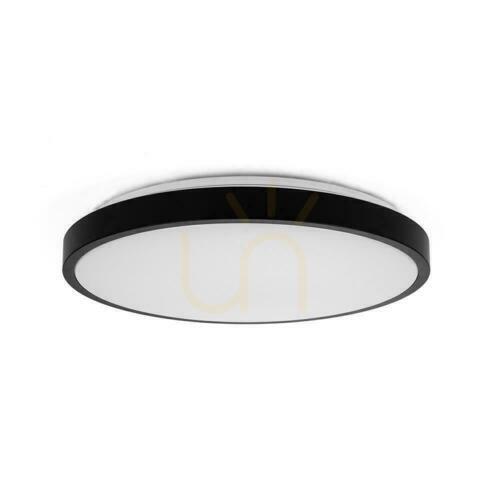
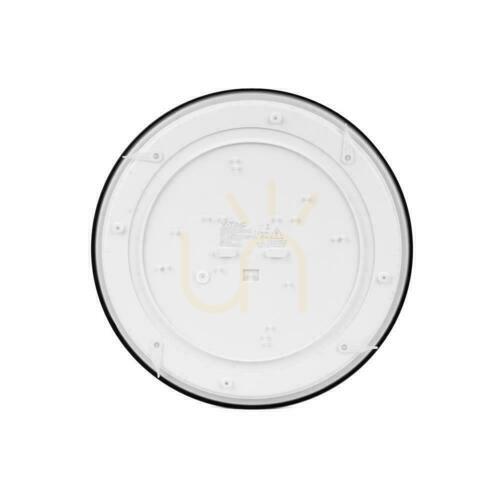
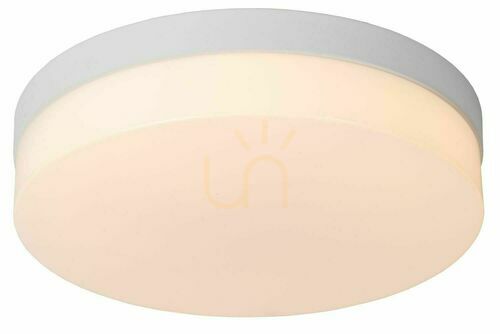
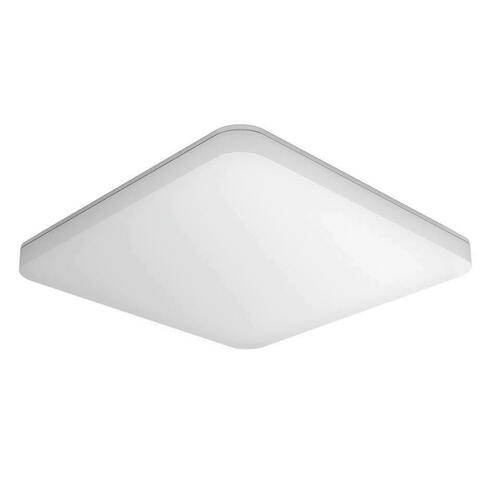
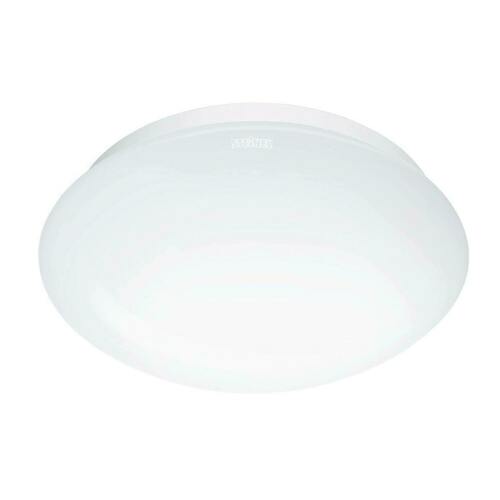
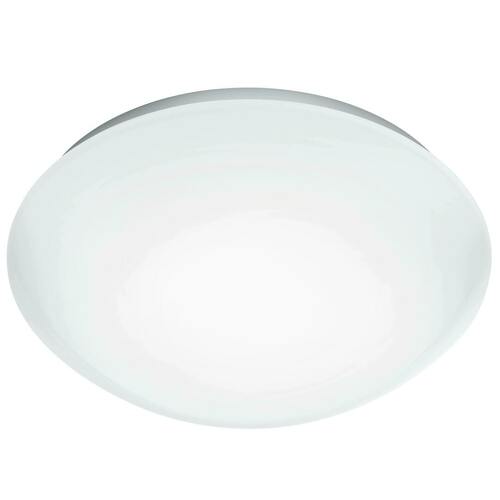
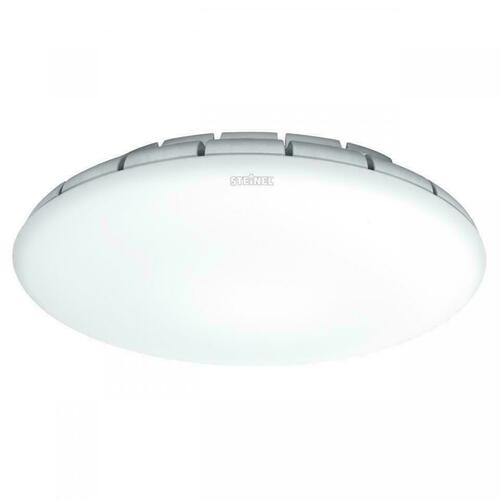
A motion sensor ceiling light switches itself on when someone walks into the room and off again once the space has been empty for a set time. Because the sensor sits on the ceiling and looks down, it covers the whole floor area rather than the strip in front of a wall switch – which is why the ceiling is where this kind of automation works best.
It earns its keep in the places you pass through with full hands: the hallway, the landing, the under-stairs cupboard, the utility room, the garage. In a sitting room or a home office, where people stay still for long stretches, a light that goes out mid-sentence soon becomes a nuisance.
Are motion sensor lights a good idea indoors?
In the right rooms, yes. Nobody leaves the landing light burning all night, children stop fumbling for switches in the dark, and the bathroom light comes on for a 3 am visit without a pull cord. The trade-off is that the light decides for you. Set it up badly and it either switches off while you are standing still or refuses to switch off at all – both are covered further down.
What kinds of ceiling light come with a sensor
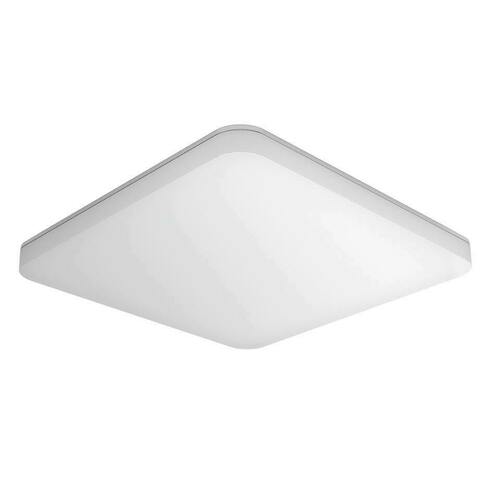
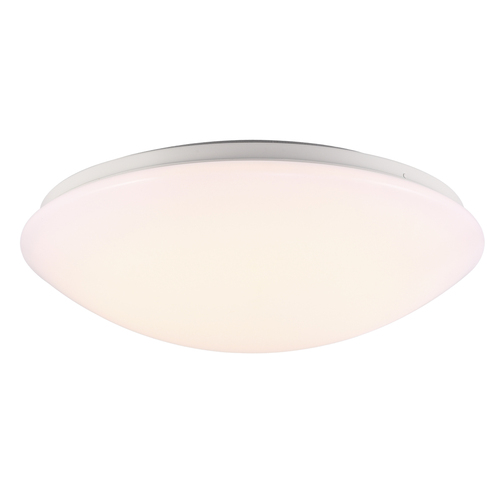
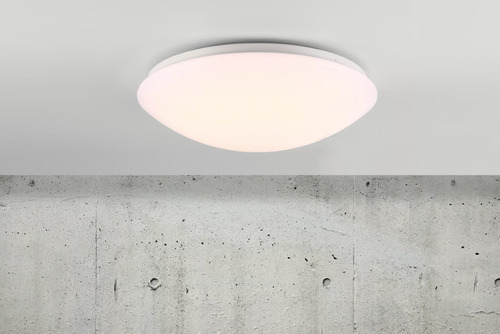
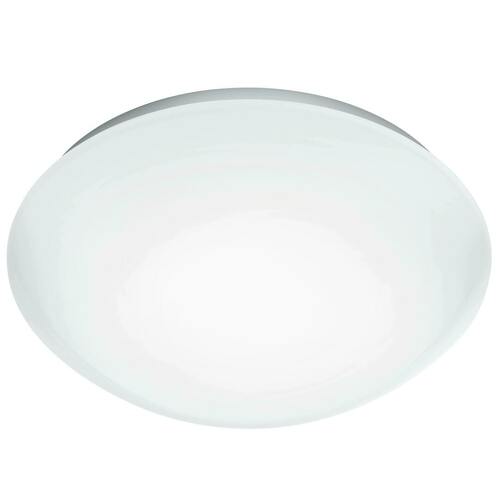
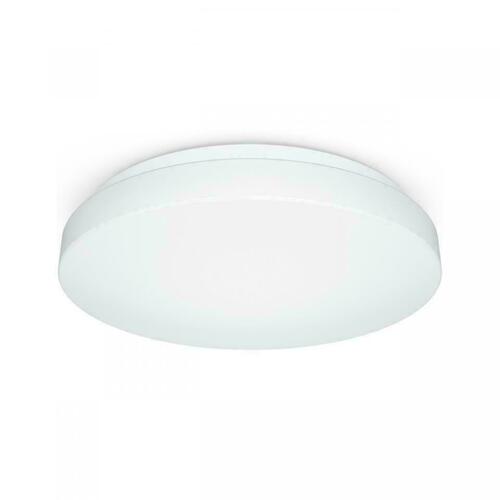
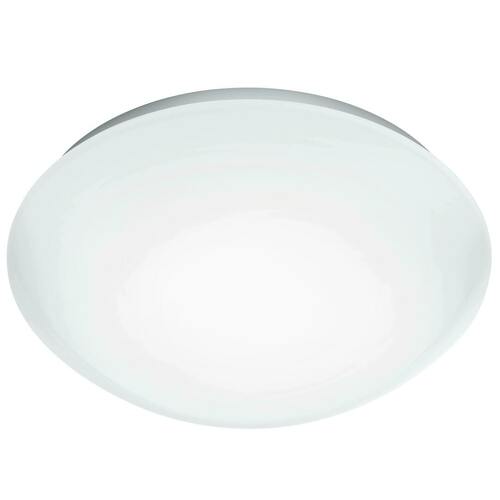
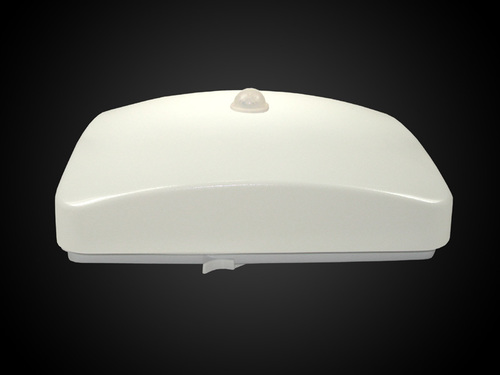
The most common form is a flush fitting, round or square, with the sensor hidden behind the diffuser or showing as a small lens in the centre. Beyond that you will meet:
-
surface-mounted LED panels for larger rooms that need even, bright light;
-
sealed battens (tri-proof style) for garages, workshops and cold outbuildings;
-
fittings with an E27 lampholder, where the sensor is in the base and the bulb is replaceable;
-
fittings with a corridor or standby function, which drop to a low glow instead of switching off – handy on a long landing at night.
Pendants and decorative fittings rarely carry a sensor. If you want one to switch itself, a separate 360° ceiling detector can switch the existing light instead.
PIR or microwave?
A PIR (passive infrared) sensor reacts to body heat crossing its field of view. It needs a clear line of sight, cannot see through glass and is less sure of someone walking straight towards it. A microwave sensor, often sold as HF or radar, sends out its own signal and picks up very small movements – even through glass, thin doors and plasterboard. That makes it the better choice for a bathroom, where you stand fairly still at the basin, but it can trigger from movement in the next room unless its range is turned down. Metal blocks it completely.
Choosing by room
With a ceiling-mounted sensor the detection zone is usually 360°, and at a standard UK ceiling height of around 2.4 m most units cover a circle of roughly 5–10 m. Typical choices look like this:
| Space |
What matters most |
Sensor |
IP rating |
Light output |
| Hallway, landing |
Catching people from both ends and the stairs |
PIR or microwave |
IP20 |
about 800–1500 lm |
| Bathroom, en suite |
Not switching off while you wash |
Microwave |
IP44 or higher |
about 1000–2000 lm |
| Under-stairs cupboard, walk-in wardrobe |
Short, quick bursts of light |
PIR |
IP20 |
about 500–1000 lm |
| Utility room, cellar |
Steam, dust, cooler air |
PIR or microwave |
IP44–IP54 |
about 1000–2000 lm |
| Garage, workshop |
Range, cold starts, damp |
Microwave with adjustable range |
IP54–IP65 |
about 2000–4000 lm |
Warm white at 3000 K suits hallways that open onto living rooms; cool white at 4000 K is easier to work under in the garage or utility room. Most fittings are rated for mounting heights from about 2.2 m up to 4 m.
The three dials worth knowing
Almost every sensor fitting has small dials or DIP switches. TIME sets how long the light stays on after the last movement – anything from a few seconds to around 15 minutes, restarting with each new movement. LUX sets the daylight threshold, so a hallway with a window does not light up at midday. SENS, found mostly on microwave units, shrinks the detection range. Start with a long time-out, then shorten it until it stops feeling wasteful.
Wiring and placement
A ceiling light with a built-in sensor connects to the existing lighting circuit like any other fitting; no separate detector is needed. The wall switch has to stay on, because the sensor needs a constant supply. On many models, switching off and quickly on again puts the light into permanent-on mode for cleaning or decorating. In a bathroom, BS 7671 sets the IP rating required in each zone around the bath and shower, so have a qualified electrician do the job. Keep the fitting away from radiators, cooker hoods, air-conditioning vents and direct sunlight, which all cause false triggers.
FAQ
How do you connect a motion sensor to an existing light?
Either replace the fitting with one that has a sensor built in, or keep your light and add a separate ceiling detector wired between the supply and the fitting. Both are jobs for an electrician; the second may need an extra cable run.
Are there motion detector bulbs?
Yes – some bulbs have a small sensor built into the tip of the bulb. They suit a single pendant in a cupboard or porch, but their field of view is narrower than a dedicated ceiling sensor and a lampshade can block it.
Is there a wireless motion sensor ceiling light?
Rechargeable and battery units stick or screw to the ceiling without wiring. They work as orientation lights in wardrobes and lofts, but give far less light than a mains fitting.
Can I fit a motion sensor ceiling light in a bathroom?
Yes, provided its IP rating matches the zone – IP44 is the usual minimum near a bath or shower. Choose a microwave sensor and a time-out of 5–10 minutes.
Why won’t my sensor light switch off?
Something keeps triggering it: a radiator, a curtain in a draught, a pet, or movement behind a thin wall. Lower the range, shorten the time-out and check the light has not been left in permanent-on mode.
Does the sensor use power when the light is off?
A little – typically well under a watt on standby, far less than a light left on overnight.
For the full picture on fittings, shapes and finishes, see our guide to ceiling lights; if you have already settled on a slim, close-to-ceiling design, read more about flush ceiling lights with a built-in sensor.