A staircase pendant light is really a long-drop light: it hangs from the top-floor ceiling down into the stairwell void, so it has to cover a height of around 5 m in a typical two-storey house rather than the 2.4 m of an ordinary room. That changes almost everything about choosing one – the cable length, how it is fixed, how it is switched and how it looks from the hall, the stairs and the landing above.
Get the drop and the headroom right and a single fitting can light the whole flight, frame the landing window and become the first thing people notice when they walk through the front door.
Measure the void before anything else
Start with three numbers: the height from the ceiling point to the landing or half-landing below, the width and length of the opening, and where the landing window sits. Those decide the drop and the format far more than the style does.
| Your stairwell |
Usual format |
Typical drop |
| Standard stairs off a hallway, one storey, about 2.4–2.7 m |
flush or semi-flush fitting; a short pendant only over the hall floor beside the flight |
keep 2.0 m clear above the pitch line, usually 0.2–0.3 m at most |
| Two-storey void with a galleried landing, about 5 m |
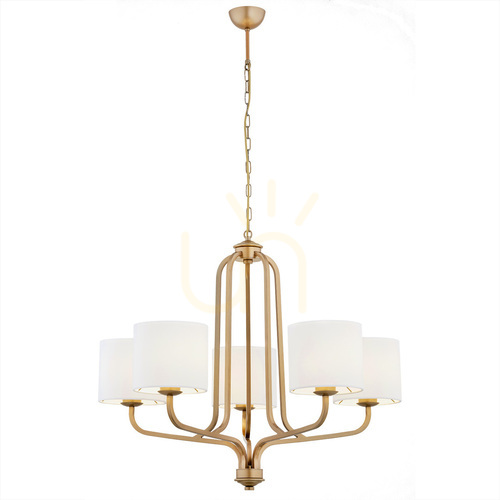
long single pendant or small cluster |
1.5–2.5 m |
| Three-storey townhouse or tall void, 7 m or more |
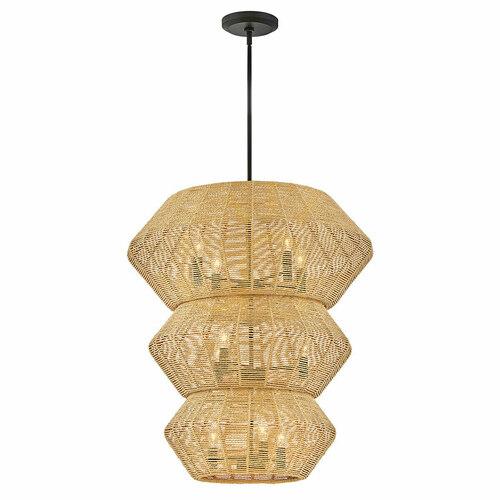
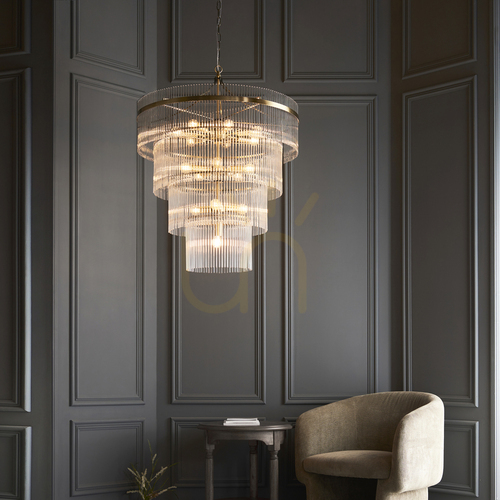
extra long drop cluster or tiered rings |
3–6 m |
| Narrow opening, under about 1 m across |
one slim pendant, tube or globe |
ending near the landing window |
| Open void of roughly 2 × 2 m or more |
cluster of 6–12 or more shades |
staggered heights, larger shades higher up |
A good rule of thumb is that the fitting should fill about two-thirds of the clear height, with the bottom roughly level with the landing window or the gallery balustrade. Most long-drop cables can be shortened on installation, so buying slightly too long is safer than too short.
Headroom, reach and building rules
Approved Document K asks for at least 2.0 m of clear headroom above the pitch line of a staircase in a new home, and a pendant that dips into that zone becomes something to walk into. Keep the lowest shade comfortably above it, and keep the whole fitting out of arm's reach from the banister or gallery – children will try to touch it, and so will anyone carrying a box up the stairs.
Fixing matters just as much. A standard plastic ceiling rose is not made to carry a heavy glass cluster, which can easily weigh more than 10 kg. The ceiling plate needs to go into a joist or a timber noggin fitted between joists. Wiring a new light at height is a job for a registered electrician working to BS 7671, ideally with a scaffold tower in the stairwell.
Modern, classic and cluster styles
-
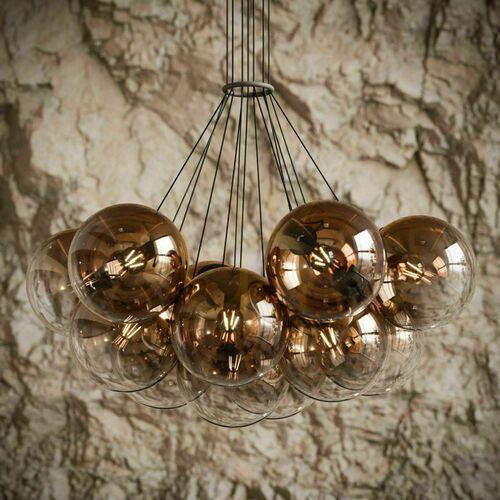
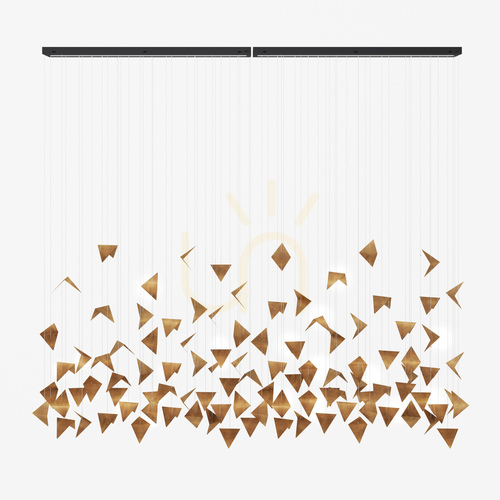
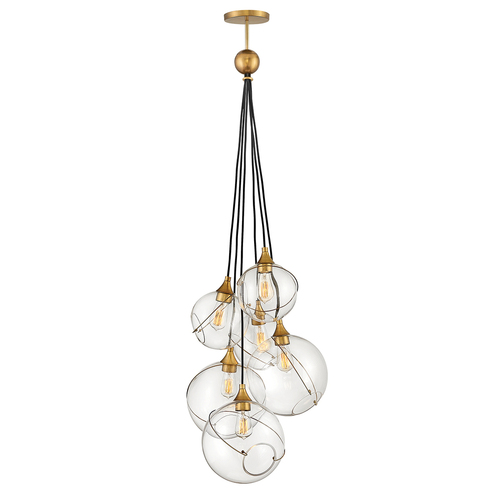
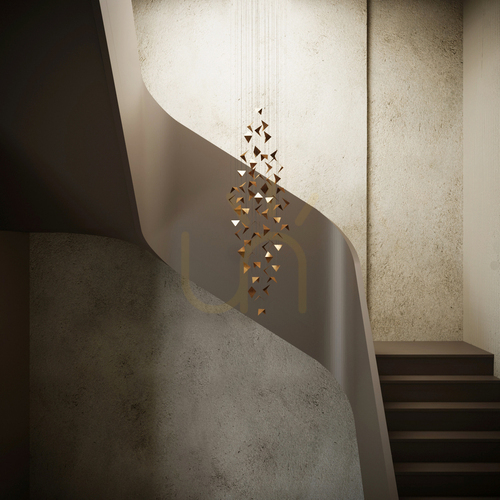
Globe and bubble clusters – many glass shades on one canopy, falling at different heights. They read well from every floor and suit open, square voids.
-
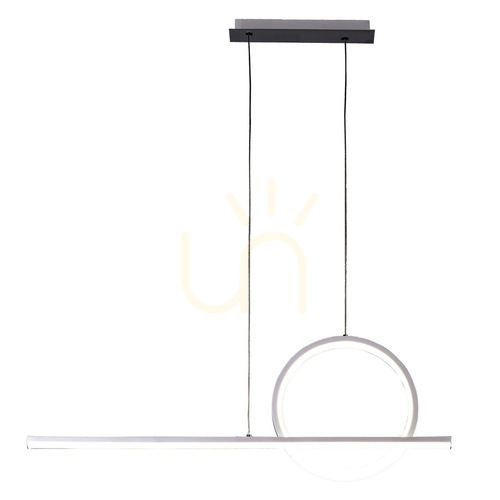
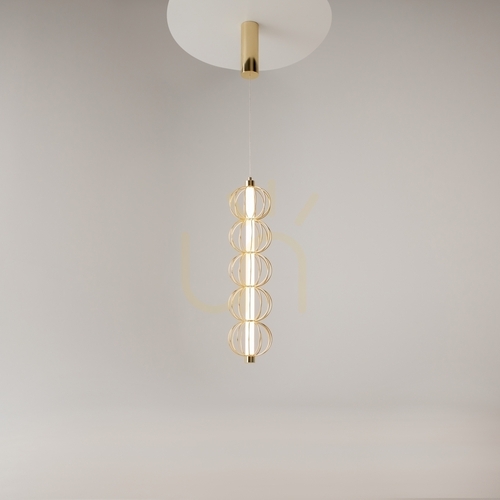
Tiered LED rings – two or more illuminated rings stacked vertically, often dimmable ring by ring. A clean modern choice for oak and steel staircases.
-
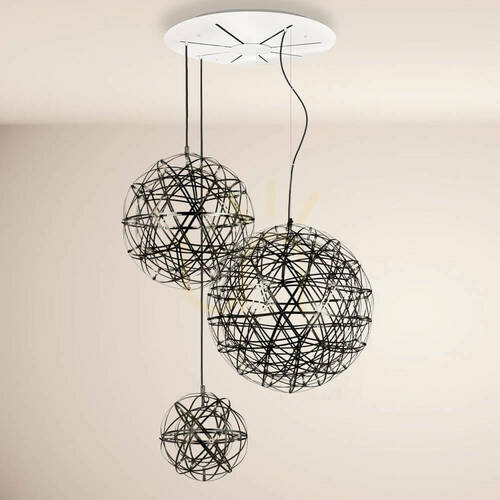
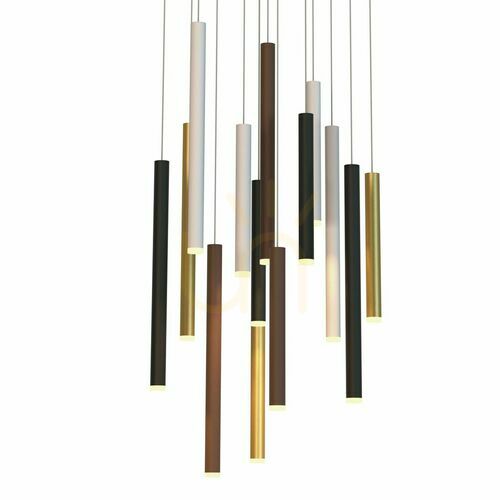
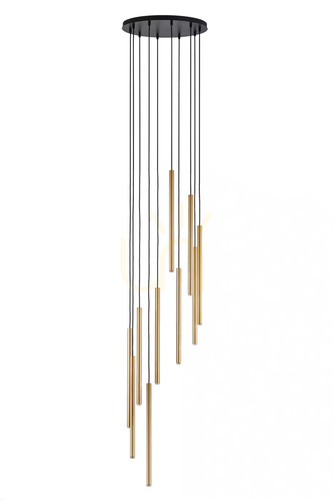
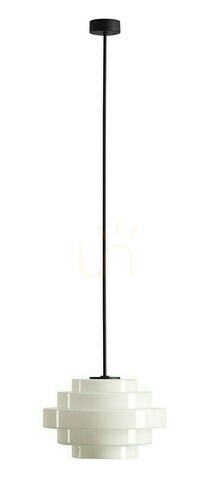
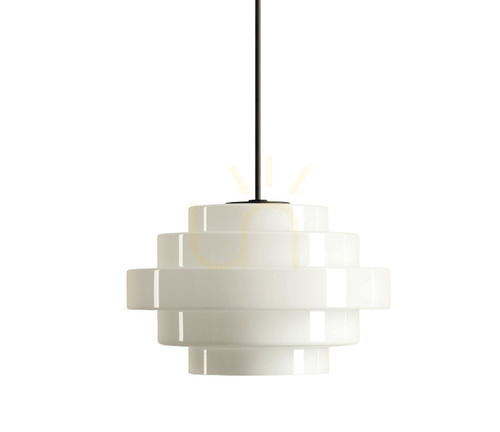
Long single pendants – one statement shade, a slim tube or an oversized globe for narrow and spiral stairs.
-
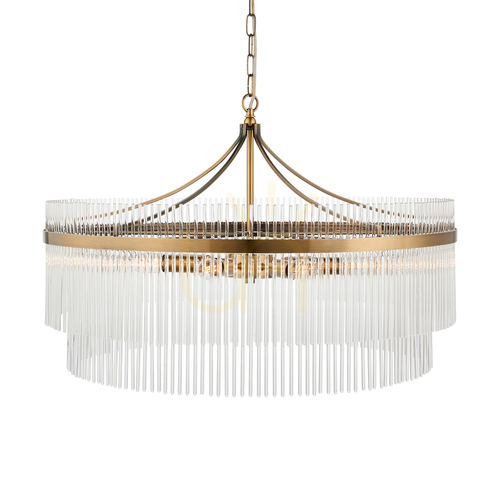
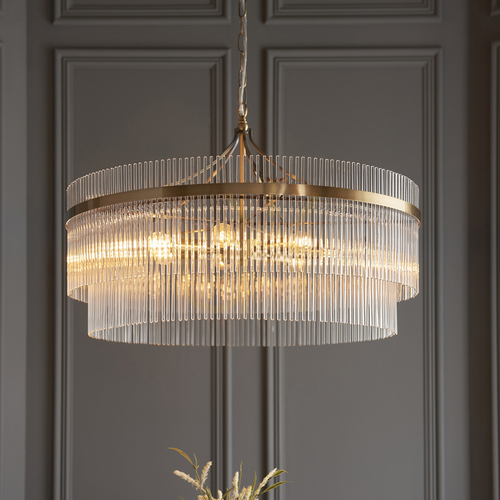
Lanterns and crystal drops – period homes with a tall landing window often take a traditional long lantern or a chandelier, which catches daylight as well as lamplight.
Match the canopy to the opening: a round plate for spiral stairs and square voids, a linear bar over a straight flight so the shades can step down with the stairs.
Light, glare and switching
Warm white of about 2700–3000 K feels right in a hallway, and around 100–150 lux on the treads keeps every nosing clearly visible. The catch on stairs is glare: climbing up, you look straight into the underside of the shades, so clear bulbs in open shades can dazzle. Opal glass, frosted lamps or shielded sources sort that out.
You will want to switch the light from both the hall and the landing. That means two-way switching, with an intermediate switch added for a third point such as a loft landing. A pendant can be put on a dimmer as long as the LED lamps are dimmable and the dimmer suits them.
Bulb changes and cleaning
Every lamp change in a 5 m void means a stair ladder or a tower, so long-life LED lamps are worth it. Fittings with integrated LEDs avoid bulb changes altogether, though a failed module or driver has to be replaced instead. Dust collects on the top of the shades and shows from the landing; pendants with adjustable cables can be lowered for cleaning.
Questions people ask
How long should a long drop stairwell light be?
Take the height from ceiling to landing, subtract about 2 m for headroom, and let the fitting fill around two-thirds of what remains. In a 5 m void that usually means a drop of 1.5–2.5 m.
When do you need an extra long drop?
Drops of 3–6 m are for three-storey stairwells, barn conversions and tall voids. Check whether the quoted length is the cable alone or the overall height of the fitting.
What makes a modern staircase pendant work?
Simple forms that look good from below and above: rings, globes or slim tubes in black, brass or clear glass, with diffused light that does not glare on the way up.
Pendant or ceiling light for the stairs?
Under a normal one-storey ceiling a flush or semi-flush fitting is safer for headroom. A pendant earns its place once there is an open void above the stairs.
Can a staircase pendant work with a motion sensor?
It can, but sensors suit LED stair and wall lights better. A pendant is the main light, while sensor-controlled step lights handle night-time trips to the kitchen.
What are good staircase ceiling lighting ideas for a galleried landing?
Hang the main pendant in the centre of the void, end it near the window line and add wall lights along the flight so the stairs stay lit when the pendant is dimmed.
For drop heights, shade shapes and lamp types in general, see our main pendant lights category. If the stairs rise straight from the entrance, the guide to hallway pendant lights is the natural next read.