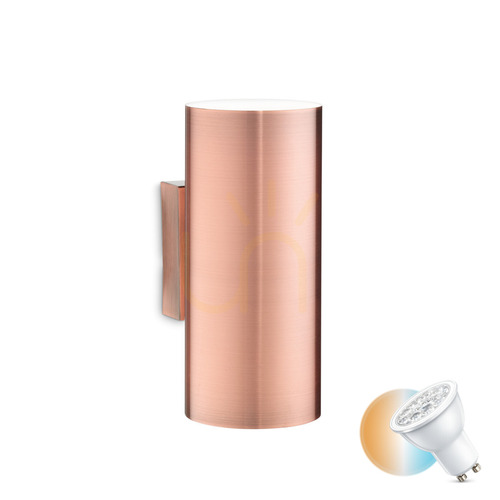
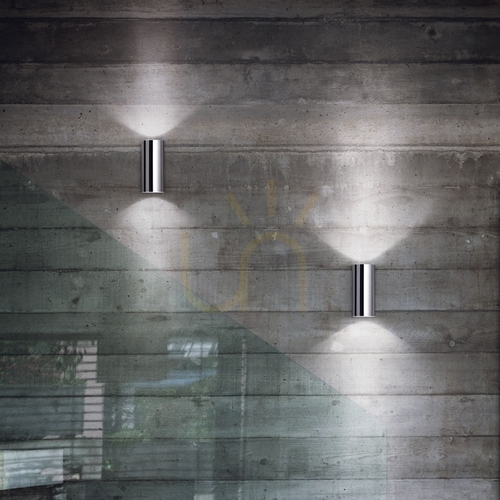
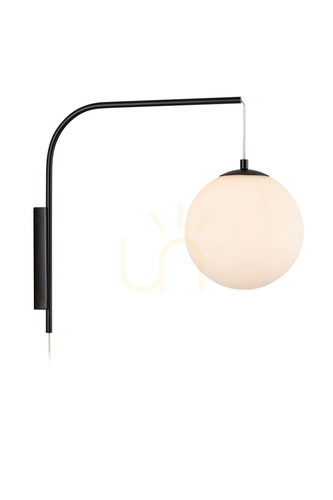
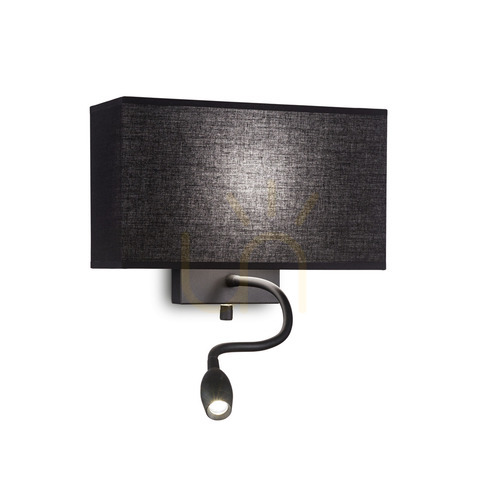
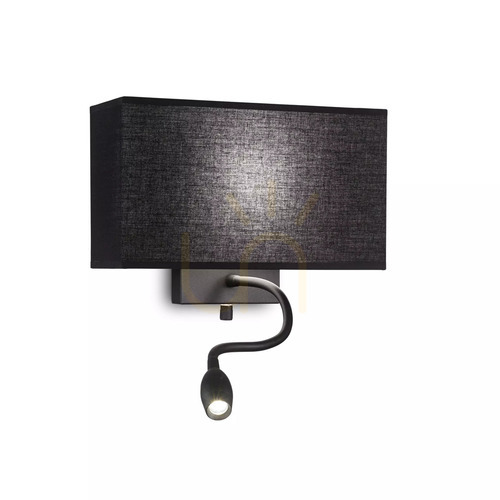
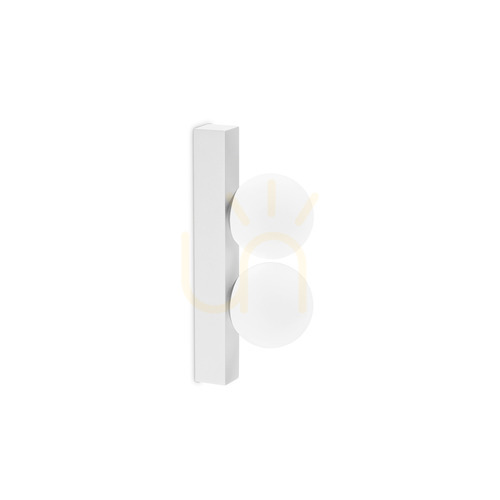
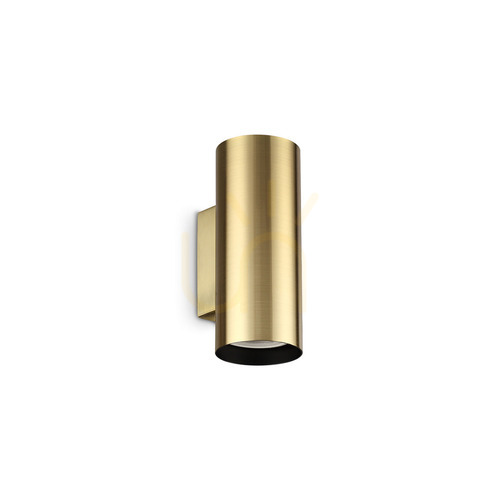
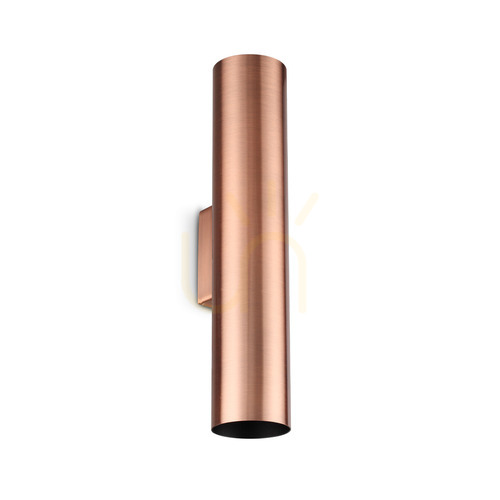
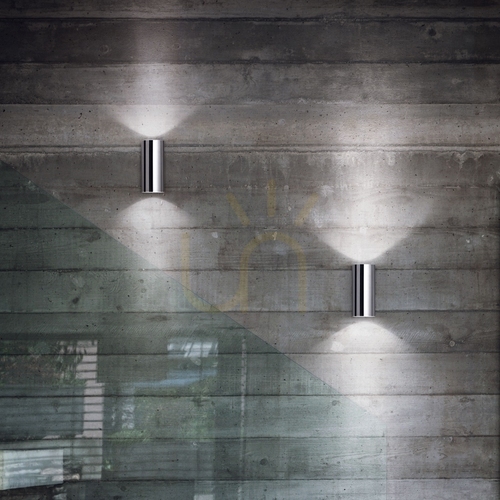
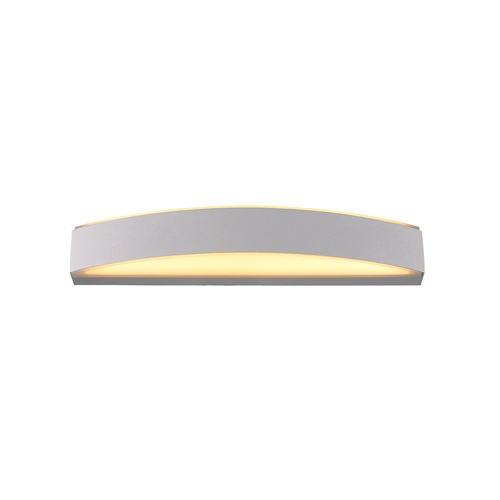
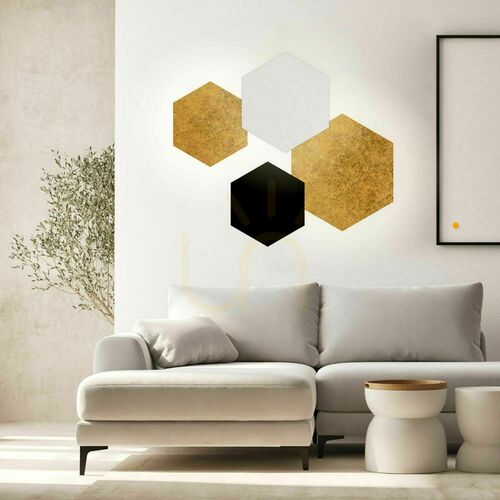
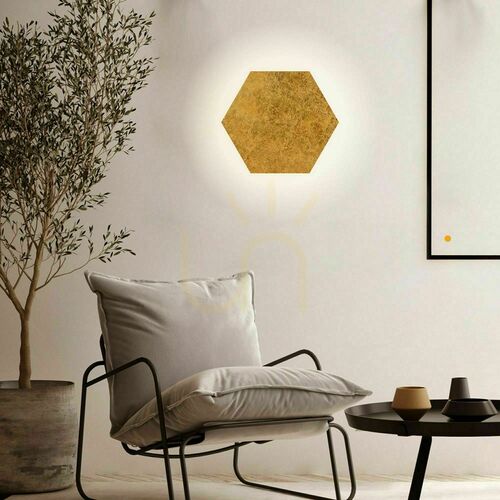
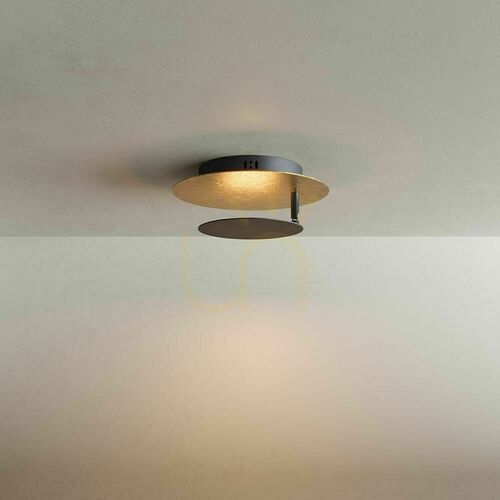
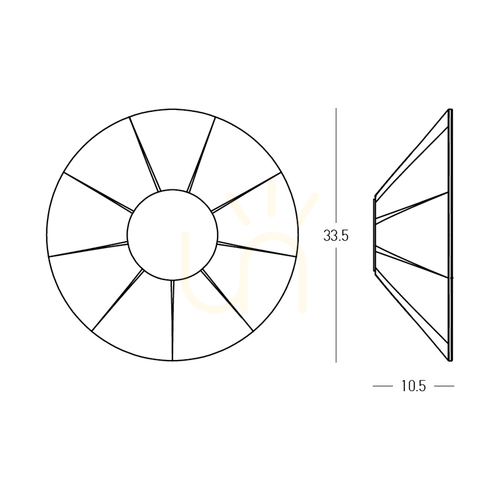
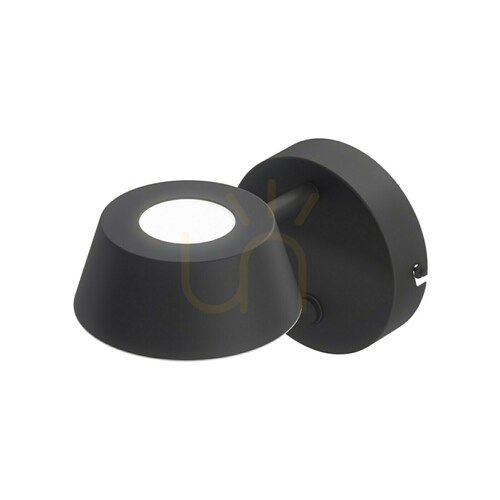
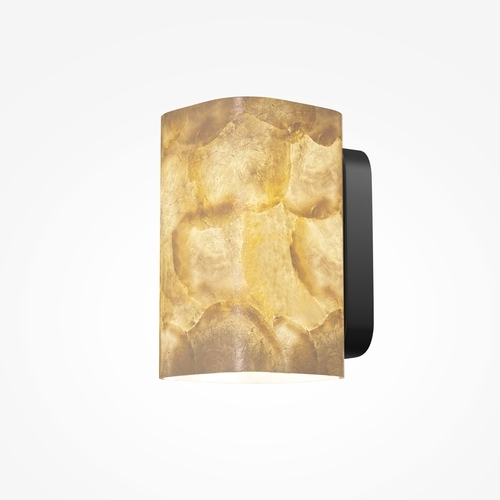
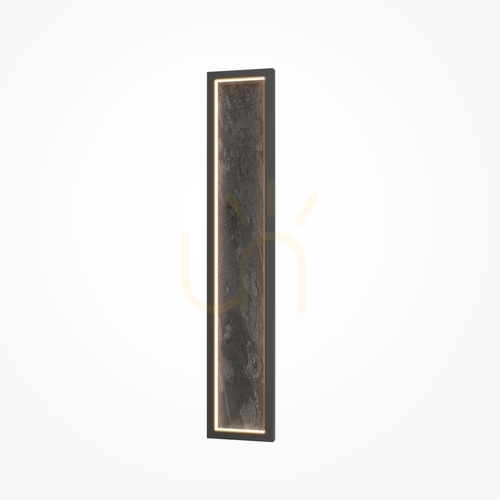
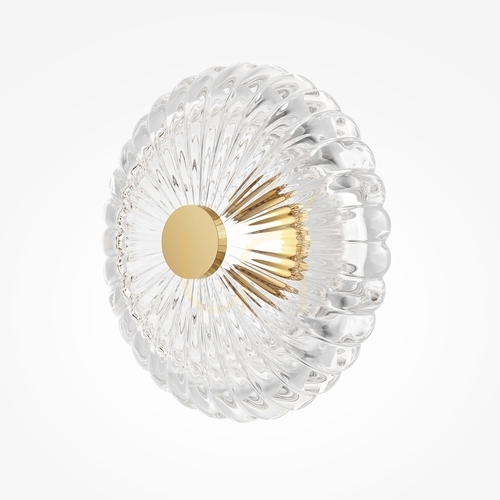
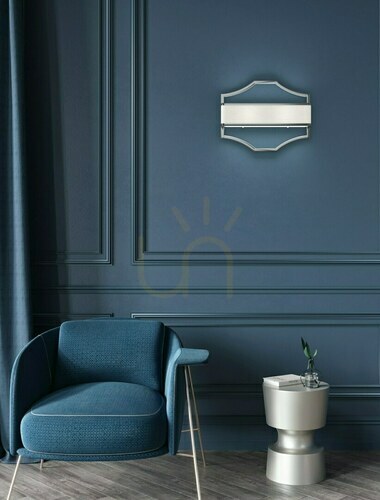
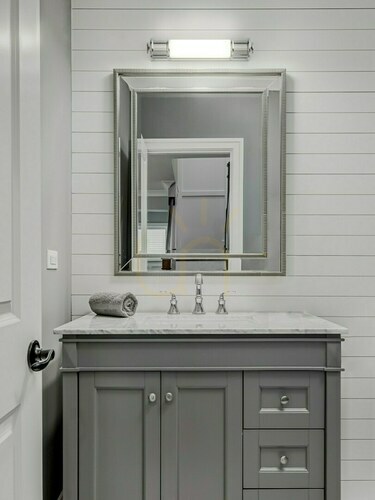
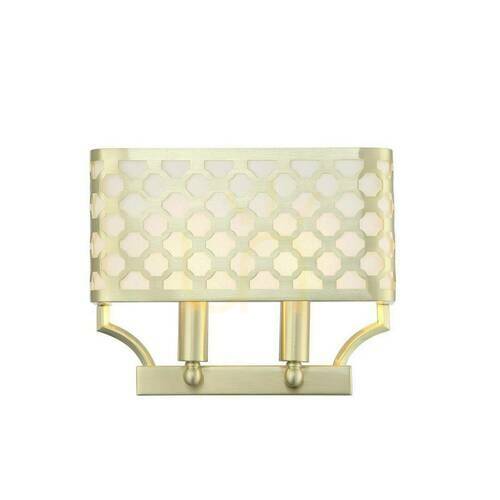
In a wall light, metal does the structural work long before it does anything decorative. It holds an arm cantilevered 20 cm off the wall, carries heat away from an LED board, and lets a fitting sit in a profile barely two centimetres deep — something plaster or glass cannot manage on their own. This selection runs to more than 2,200 metal wall lights, from plain tubes under €30 to Italian pieces past €2,000. Half of them cost less than €140.
Which metals wall lights are actually made from
"Metal" covers several quite different raw materials, and the choice shows up later in the weight of the fitting, its price, and where you are allowed to hang it.
MaterialWhat it bringsWhere you'll find it
Powder-coated steelRigid, inexpensive, takes any colour, and the coating resists knocks and scratchesThe largest group here — modern, industrial and minimalist designs
AluminiumLight, and conducts heat well enough to act as a heatsink for the diodesIntegrated-LED fittings, slim bars and linear profiles
BrassHeavier, and darkens into a patina as it agesClassic and art deco pieces — gathered separately under
brass wall lights
Stainless steelHandles damp air without corrodingBathroom fittings and higher-sealed enclosures
Metal with glassMetal frame, glass shade to soften the beamOver 700 designs here combine the two
Finishes change the same shape completely
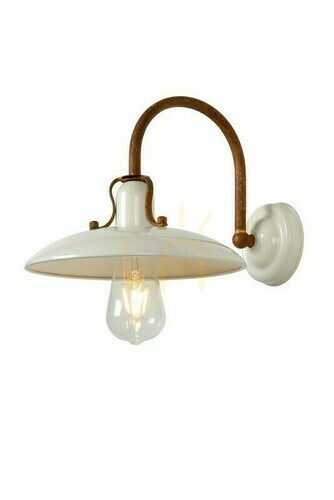
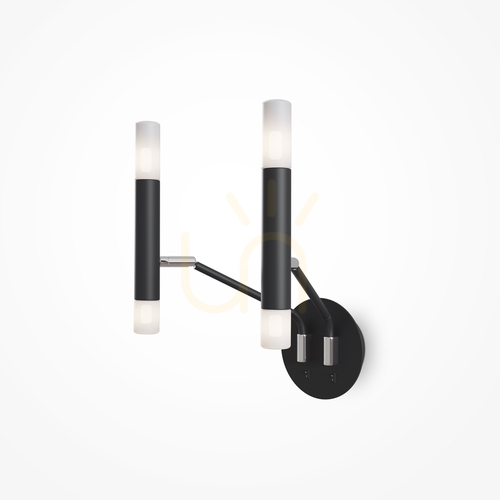
One casting can read very differently once the coating changes. Black is the most common here by some distance (close to 700 fittings), then white, gold, chrome and silver. Powder coating gives a flat, faintly textured colour; brushing leaves fine directional lines that catch the light; polishing turns the surface into a mirror — striking, and quick to show every fingerprint. If you already know the colour you want, start from the black, gold or chrome lists.
Bathrooms need the right IP rating
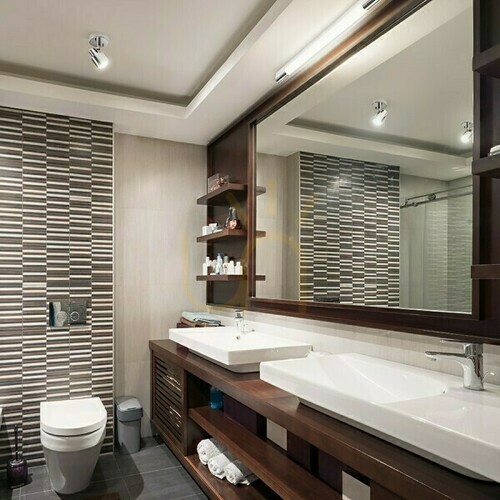
Most fittings in this selection are IP20 — dry rooms only. Over 200 carry IP44, the minimum for Zone 1 and Zone 2 in a UK bathroom under BS 7671; a handful go further to IP54 and IP65. Worth being clear about this: metal does not make a light damp-proof by itself. Sealing and gaskets do, and the rating on the spec sheet is the only thing that counts. For mirrors and washbasins, work from the bathroom wall lights list, where that figure is stated on every product.
Lamps and installation
Roughly 700 fittings have LEDs built in permanently; the rest take a replaceable bulb. The caps break down like this:
-
E14 (SES) — the small screw cap, most common in compact shades and classic designs
-
G9 — capsule lamps for narrow, decorative bodies
-
E27 (ES) — the full-size screw cap, often industrial styling with the bulb on show
-
GU10 — spots and adjustable directional fittings
Almost everything runs on 230 V from a fixed wall point, so a back box or a junction behind the plate is assumed; plug-in flex-and-switch models are the exception here rather than the rule. Mount at 150–170 cm from the floor as a general rule, or 15–20 cm above the mattress beside a bed so the light lands on the page instead of in your eyes. Colour temperature across this selection is mostly warm, around 3000 K.
Looking after metal fittings
Switch off at the wall and take dust off with a dry or barely damp soft cloth. Keep cream cleaners and anything ammonia-based away from powder-coated and brushed surfaces — they dull the finish and strip the thin protective layer. Brass is meant to darken; holding it at its original brightness means a non-ferrous metal polish every few months, which is a commitment rather than a one-off.
Frequently asked questions
Which wall lights don't require wiring?
Look for plug-in models with an inline switch, or battery and rechargeable fittings that mount on a bracket. They are a small minority of what you see here — most metal wall lights in this range are designed for a fixed 230 V connection and an electrician's second fix.
Can you paint a metal wall light?
Technically yes, after keying the surface and using a metal primer. Two caveats: touching the coating voids the manufacturer's warranty, and factory powder coating is harder than any aerosol you can buy.
What is the best wall light for a living room?
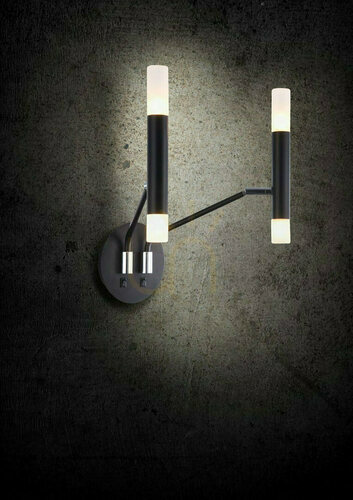
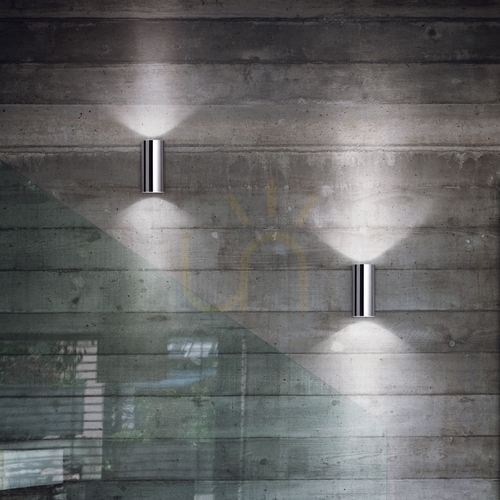
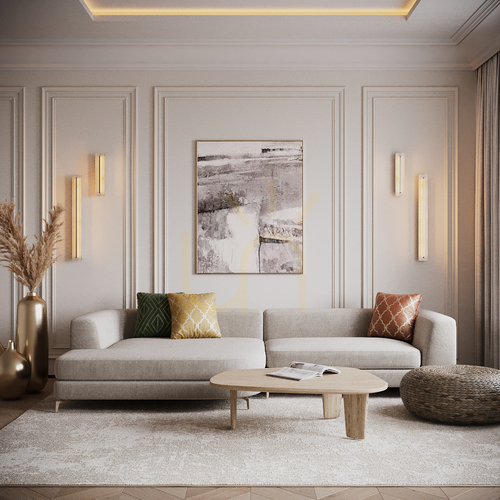
An up-and-down fitting that throws light onto the wall rather than into the room reads best beside a sofa, because it lifts the ceiling line without glare. Pairs either side of a sofa, spaced 180–220 cm apart, are the usual arrangement; along a longer wall, one every 2–2.5 m keeps the light even.
Do metal wall lights get hot?
The body warms to the touch, and that is the design working — on LED fittings the aluminium is deliberately carrying heat away from the driver and diodes. A burning smell or discoloured coating around the lamp is a different matter and worth investigating.
Can I use one outdoors?
Only where the manufacturer states IP44 or better and rates the fitting for exterior mounting. An IP20 light left in the rain corrodes from the inside no matter how solid it looks.
Steel or aluminium — does it matter?
Steel is heavier and stiffer, so it holds long arms and substantial shades better. Aluminium wins where cooling the diodes and keeping weight down matter most, which is why it dominates slim LED profiles.
Isn't the light from a metal shade too harsh?
An opaque metal shade sends the beam up and down and leaves defined scallops on the wall. If you want soft, diffused light instead, choose a model with a glass shade or an opal diffuser.
Narrow the list with the filters in the sidebar — by colour, cap, IP rating and brand. Ideal Lux, Zuma Line, Maytoni, UMMO, Nordlux and Lucide are all represented here. If the metal is really just a frame for a decorative shade, the crystal wall lights are worth a look too.