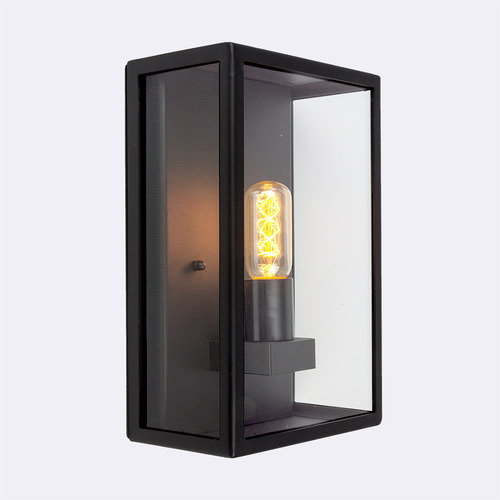
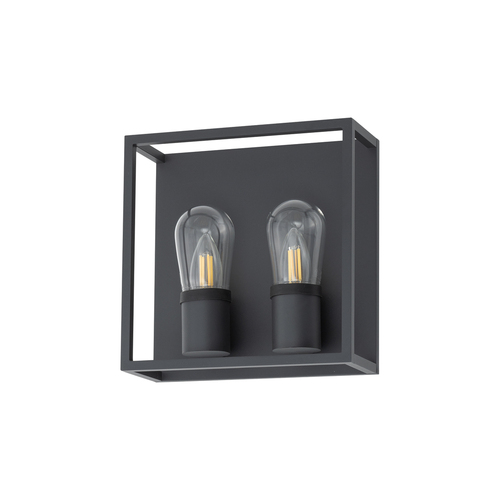
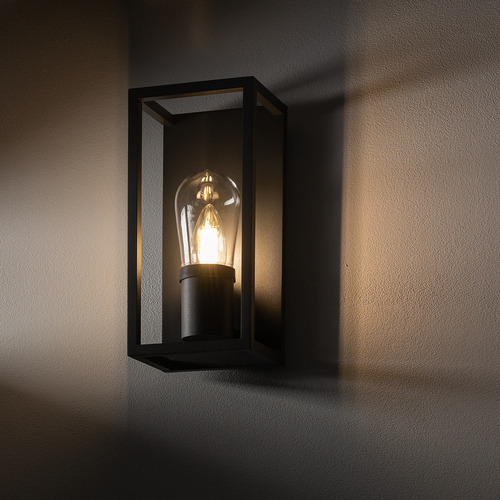
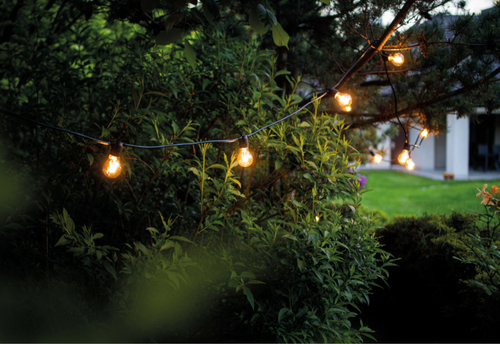
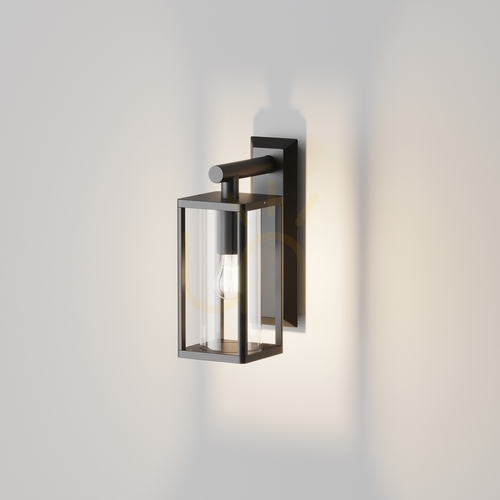
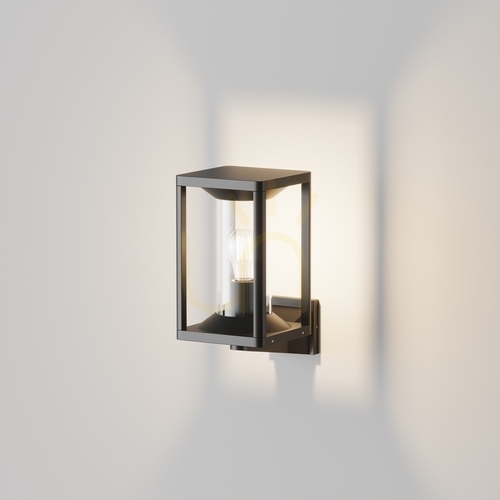
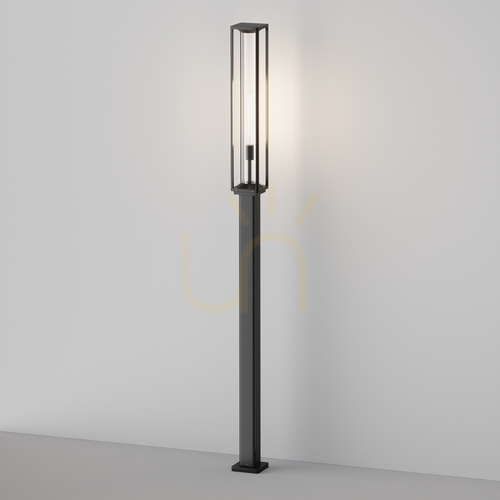
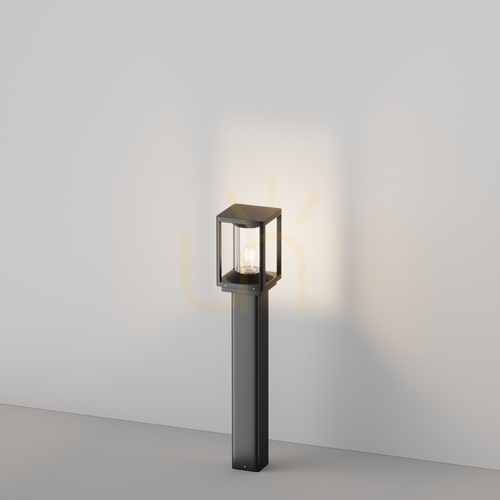
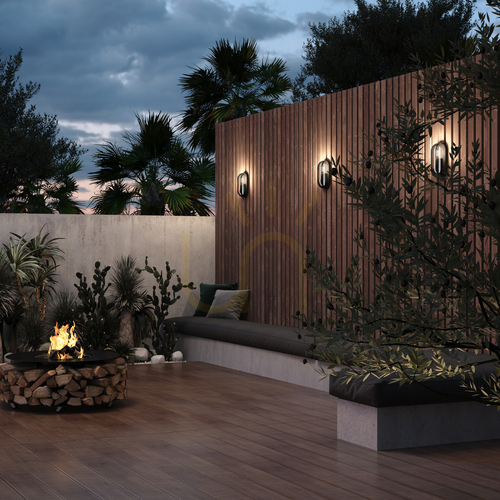
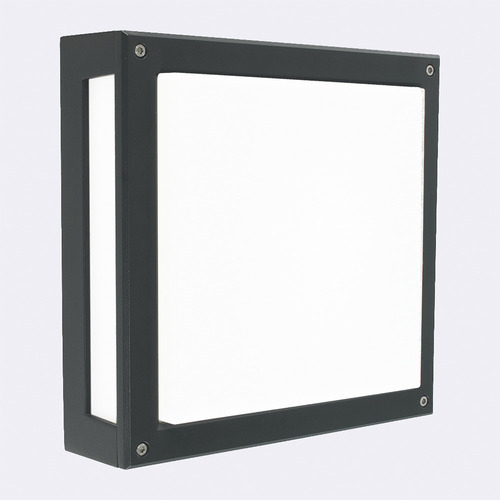
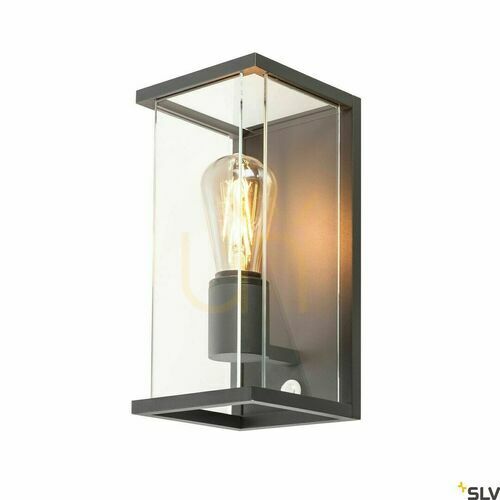
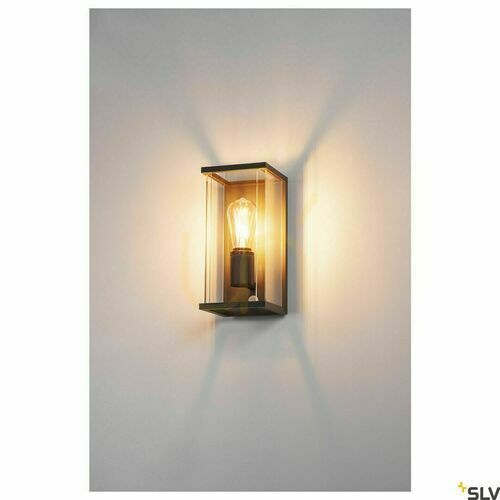
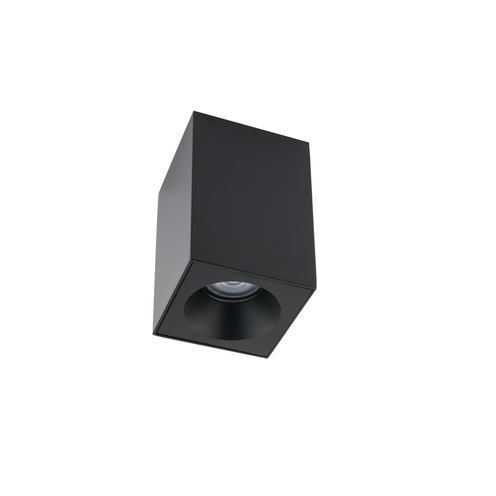
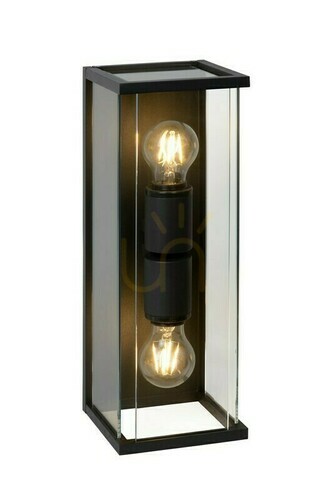
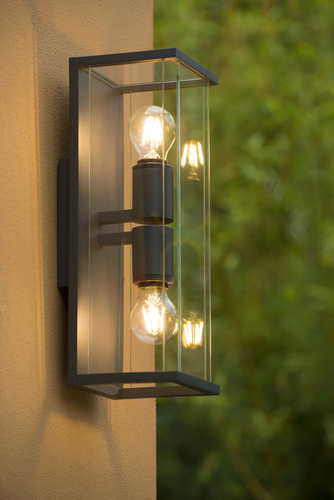
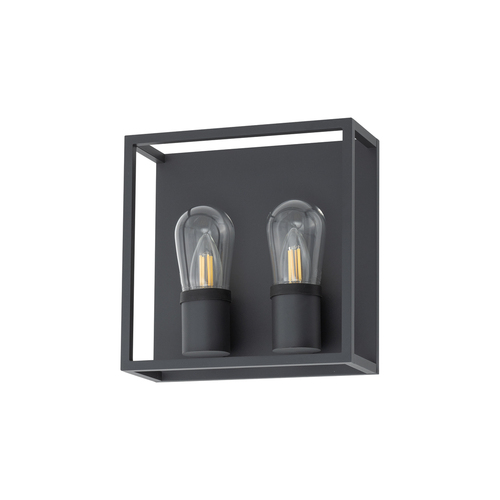
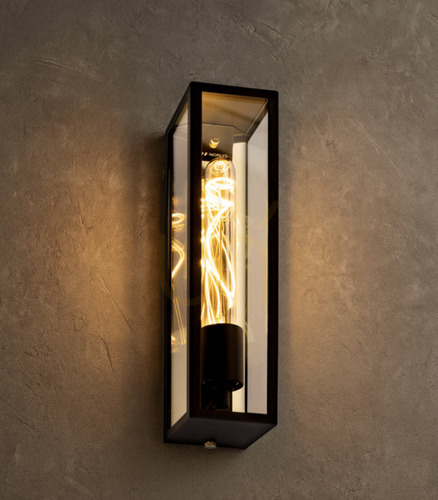
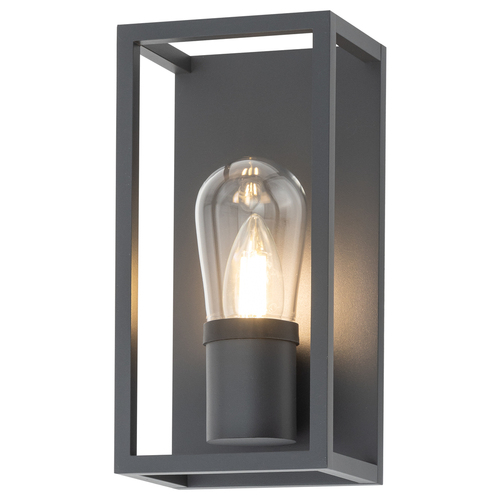
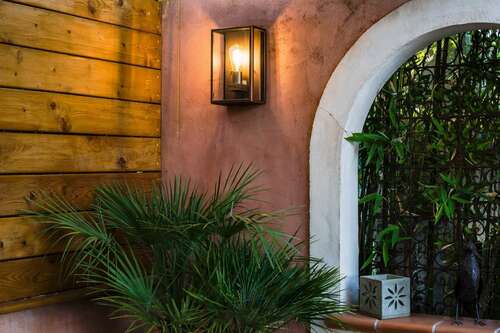
The Loft filter gathers the outdoor lights that borrow from a converted factory floor: black or rust-finished metal, plain tubes and boxes, a visible bulb behind clear glass. The largest groups here are outdoor wall lights and tall floor lamps, joined by garden lanterns, bollards, pendants for over a terrace table, porch ceiling lights and festoon strings.
Loft outdoors is warmer than industrial
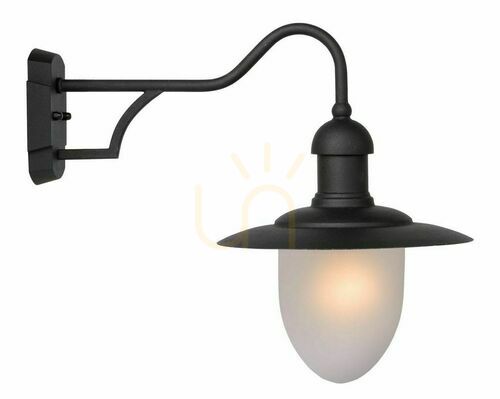
The look grew out of flats built inside old halls, so it is more domestic than pure industrial design: less galvanising and cage, more matt black, a brass detail and glass you can see the filament through. On a wall that means a simple shape that never reads as technical — a cylinder with its bracket on show, a rectangular box with glass, a lantern stripped back to its frame. If you want the harder version in bare metal, the industrial filter is the better place to look.
Black, rust and brass in the rain
Black powder coat on aluminium is the common choice and the easy one: it will not rust, and a matt surface takes regular washing. The rust finish that belongs to this style comes two ways — as a lacquer imitating patina, or as genuinely oxidised steel that stains whatever sits beneath it for the first few seasons. Against pale render or white gravel, that shows. Brass and copper patinate unevenly, which is part of the appeal, but a fitting under an eave will age differently from one in open rain.
A visible bulb: cap, colour and glare
Clear glass with a decorative lamp is the signature of this group and its biggest trap. An exposed filament shines straight into the eye, so at head height frosted glass or a downward shield is the better answer. Loft lighting wants a warm 2200–2700 K, close to an old incandescent; at 4000 K the effect disappears. Check the cap as well: E27 leaves output and colour up to you, GU10 narrows the choice, and an integrated LED fixes the colour temperature for the life of the fitting.
Tall outdoor floor lamps by the terrace
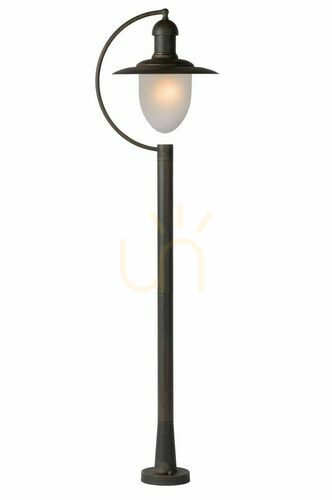
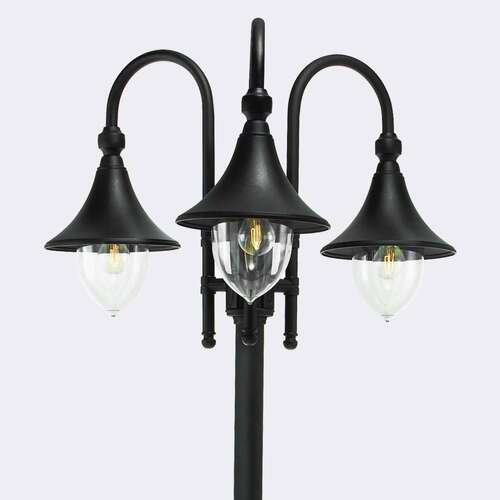
Floor lamps in this group run surprisingly tall — from a few dozen centimetres in a border to well over two metres at the corner of a terrace. A slim, tall fitting works as a vertical line in the composition and organises a space better than several low points of light. Two practical points when you place one: the base needs a solid slab or a ground anchor, and the supply cable should disappear into the ground where nobody will find it with a mower.
Festoon strings over the table
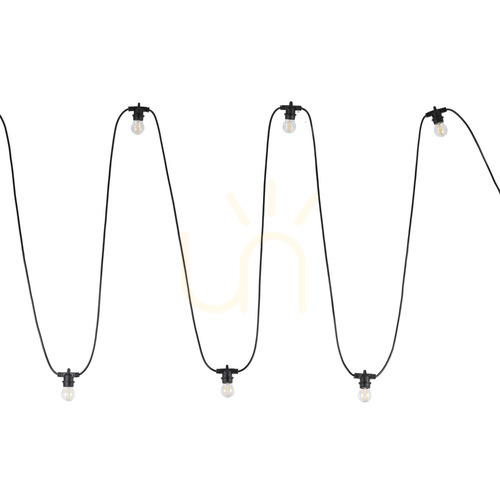
A festoon string is the quickest route to a loft mood on a terrace, and the one part of this group that hangs in mid-air. Look for a rubber cable rated at least IP44, and IP65 if it stays up all year, plus a clear statement about whether lengths can be linked end to end. Hang it from a steel catenary wire rather than from the cable itself — wind and ice loads are heavier than people expect. Open lampholders need lamps intended for outdoor use.
IP ratings for these mounting positions
| Position |
Minimum |
Note |
| Wall under an eave |
IP44 |
Enough even for a lantern open at the bottom |
| Exposed facade |
IP54 to IP65 |
Rain driven sideways, wall washing |
| Floor lamp standing in grass |
IP65 |
Irrigation and splash from the mower |
| Year-round festoon |
IP65 |
Holders must drain and dry, not hold water |
Switching: dusk, movement, dimming
Many loft wall lights take a conventional lamp, so the simplest place for control is the circuit rather than the fitting: a photocell in the consumer unit brings the whole facade up at sunset, and a PIR at the gate and door adds light only when somebody arrives. Dimming pays off with decorative lamps in particular — turned down they look better and last longer. A 230 V garden circuit is work for a qualified electrician, on an RCD with the cable ducted.
Questions worth asking first
Does a black fitting get too hot in the sun?
It warms up more than a pale one, but with LED the heat path through the body matters far more than the colour. The practical nuisance is different: matt black shows hard-water marks.
Will a loft wall light work over a garage entrance?
Yes, provided the IP rating suits the position and the light goes downward. Across a wide door, two fittings at the sides usually beat one bright fitting in the middle.