Lighting a gazebo with solar has one obvious catch, and it is worth saying out loud before anything else: the structure that makes the gazebo pleasant to sit under is also a roof over the panel. Every good decision in this category follows from that single fact.
The roof is the constraint
A solar cell in permanent shade collects a small fraction of what the same cell collects in the open, and the difference is not made up by a bright afternoon. So a lamp with the panel bonded to its own lid belongs on the sunny edge of the structure, on a post beside it, or somewhere it can be carried out to charge. Anything that has to live under the canopy needs either a remote panel on a lead, or a battery you top up another way.
What actually works under a canopy
-
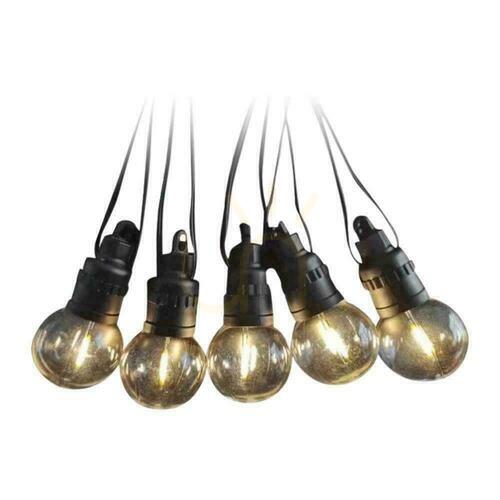
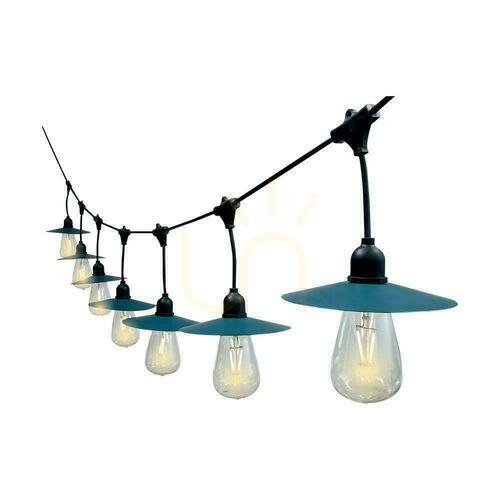
String lights along the rafters. The panel goes on the roof ridge or a nearby post in the sun, the cable runs back under cover, and the bulbs hang where you want them. Filament-style solar garlands in five, twelve and fifteen metre lengths cover most gazebo frames in a single run.
-
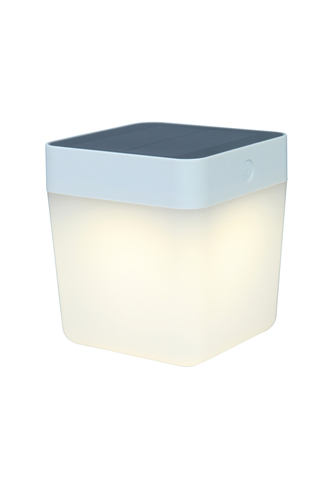
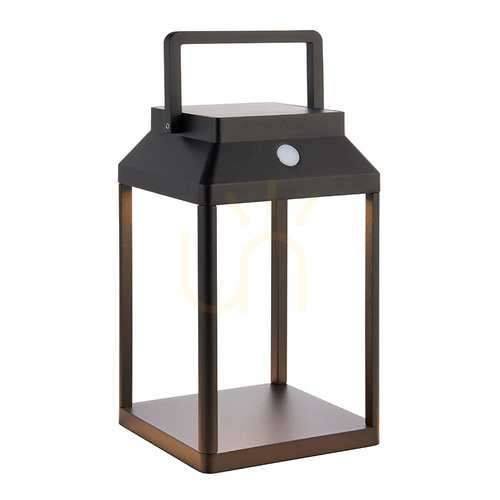
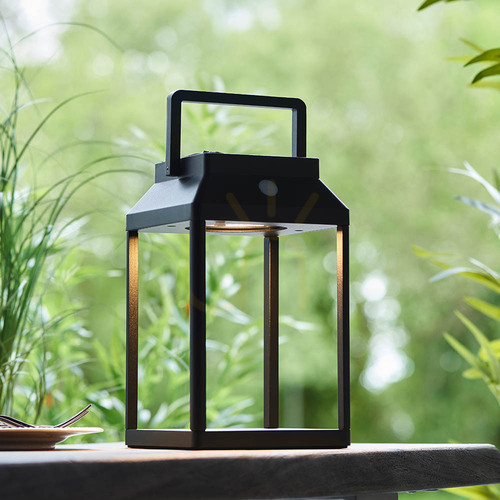
A portable table lamp. Charges on the lawn or a windowsill during the day, sits on the table at night, comes indoors when it rains. The Lutec Table Cube is the archetype.
-
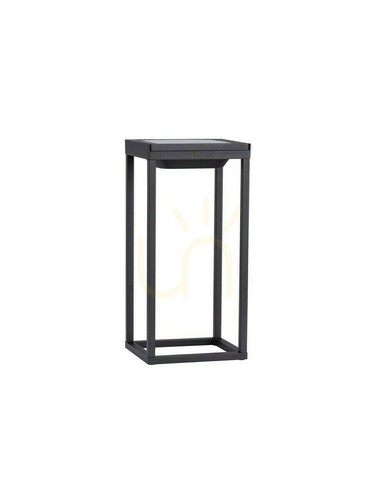
Bollards at the perimeter. Placed just outside the drip line, they catch full sun and light the steps and the path in, which is where people actually trip.
-
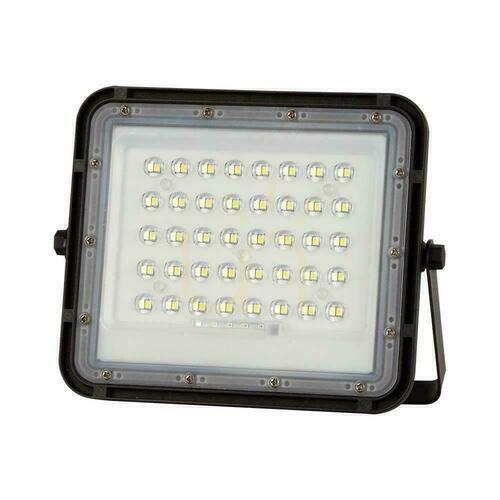
A solar floodlight on a post. Aimed back at the structure from outside, it lights the whole footprint without a single fitting under the roof.
Charging a lamp that lives in the shade
Look for three things on the specification. A separate panel with two to five metres of cable, so it can be sited independently. A monocrystalline cell rather than amorphous, because you are already short of light and cannot afford a 7 % efficient module. And a battery you can reach, ideally a replaceable pack, so a shaded season does not end the lamp's life. A USB-C charging port — increasingly common on smaller solar wall lights — is quietly the best feature of all for a gazebo: after a fortnight of rain, you charge it indoors and carry on.
Light level, colour and mood
A gazebo wants low, warm, glare-free light. Somewhere around 2700–3000 K reads as candlelight and flatters both food and faces; 6000 K reads as a bus shelter. Aim for many small sources rather than one bright one — a garland at 50 to 100 lumens per run plus a table lamp will feel better lit than a single 800 lumen floodlight pointed at the table, and it will draw far less from the battery. If a fitting has a dimmed standby mode, use it; the full setting is for the path outside.
Weather, wind and packing down
Under a solid roof, IP44 is enough. On an open pergola or a canvas-topped frame, go to IP54 or IP65, because rain arrives sideways. Fix garlands with UV-stable cable ties rather than staples, and leave a little slack — a taut run across a timber frame will chafe through a season of wind. At the end of autumn, take the strings down, coil them loosely and store the lamps indoors with the battery around half charged, topping them up every couple of months. Leaving a lithium cell flat through a frosty winter is the most common reason a solar light does not wake up in spring.
Common questions
Will solar lights work under a gazebo roof?
Only with the panel outside the roofline, or with a lamp you carry out to charge. A self-contained lamp left in the shade will not hold a night.
How long do solar string lights run?
On a full summer charge, a typical garland manages six to eight hours. In October expect two or three; in midwinter, in Britain, often nothing at all.
Can they stay up all year?
Weatherproof ones survive it, but the batteries do not enjoy it. Taking them down costs half an hour and adds years.
Is solar bright enough for eating outside?
For atmosphere, yes. For reading a menu or chopping something, add a mains-powered or rechargeable lamp on the table.
For the surrounding garden and the route back to the house, see the solar lights made for streets and driveways.