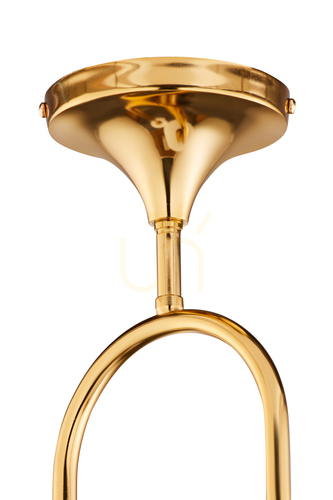
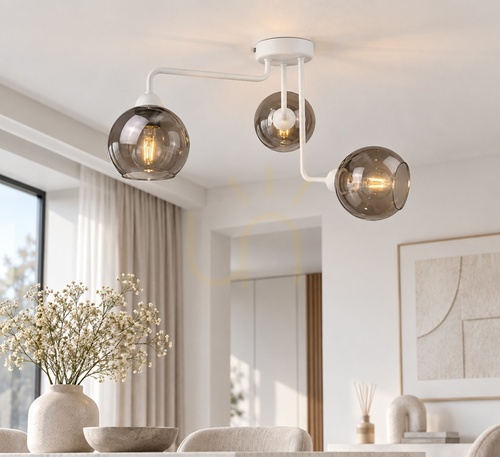
A chandelier works as a hallway ceiling light when it leaves clear headroom – its lowest point usually needs to sit at least 2.0–2.1 m above the floor – and when it spreads light across the walls rather than dropping a single pool onto the doormat. Get those two things right and a narrow entrance hall gains the focal point that a plain flush fitting rarely gives it.
Hallways are awkward rooms to light. They are passed through rather than lived in, they are often long and narrow, many have no window of their own, and the front door swings straight into the space. So the questions that matter are less about style and more about drop, diameter, light spread and how quickly the thing gathers dust.
Terraced house, new build or flat?
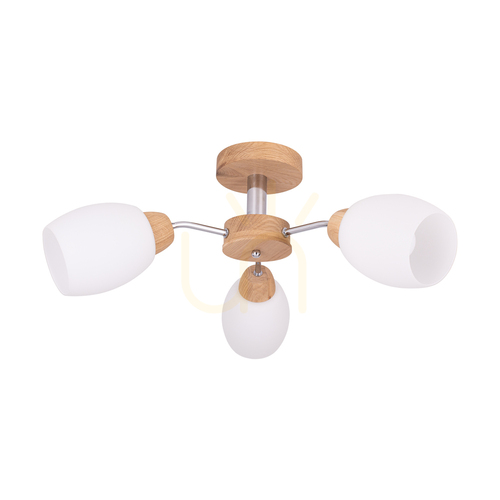
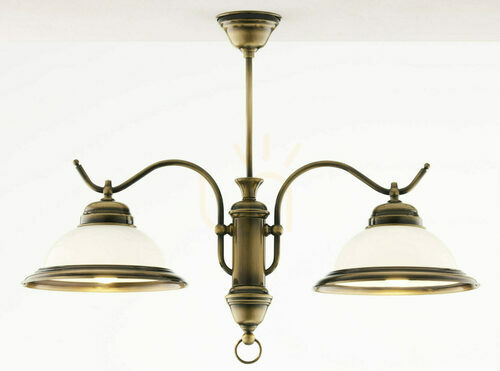
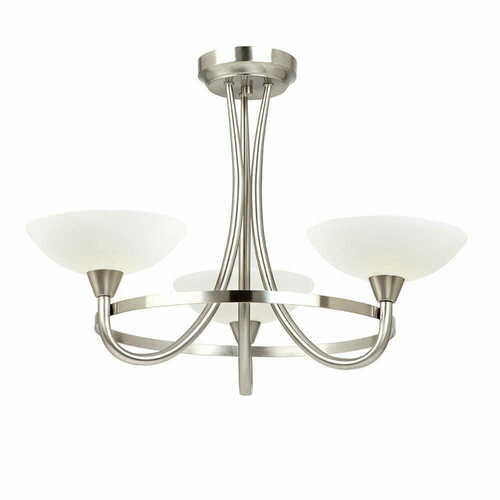
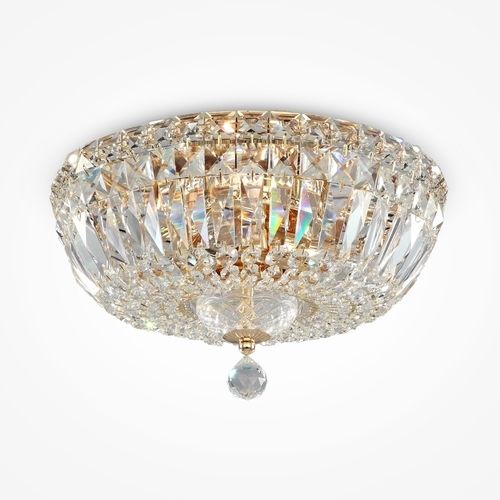
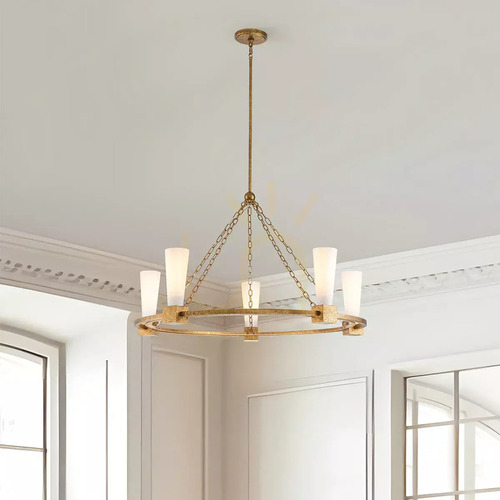
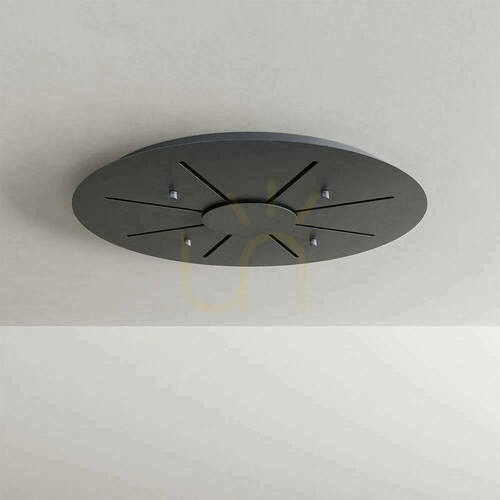
Ceiling height decides most of it. A typical new build or modern flat has ceilings of around 2.4 m, which leaves very little room for anything hanging. Here a semi-flush or flush chandelier, with its arms and shades tucked right under the ceiling, gives the decorative effect without the risk of tall visitors catching it. Victorian and Edwardian terraces are a different story: ceilings of 2.7–3.3 m and long, narrow halls suit a chandelier on a rod or chain, and a single low fitting would look lost. Where the hall opens into a stairwell, a longer drop can hang through the void, as long as about 2.1 m stays clear above every tread beneath it.
| Hallway |
What to check |
Typical answer |
| New build, ceiling about 2.4 m |
headroom |
flush or semi-flush chandelier, overall height up to 30–40 cm |
| Period terrace, ceiling 2.7–3.3 m |
proportion |
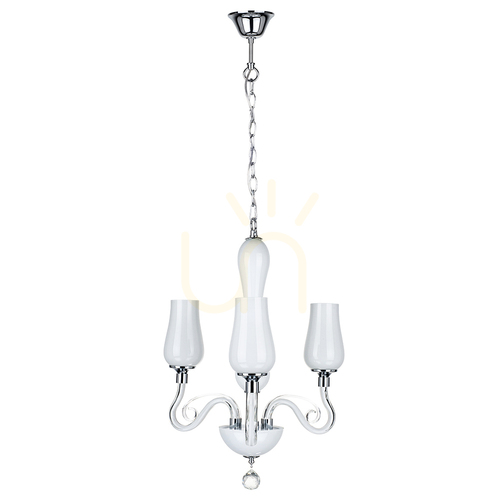
chandelier on a rod or chain, bottom edge at 2.1–2.3 m |
| Narrow hall, 0.9–1.2 m wide |
diameter |
roughly a third of the width, 30–40 cm |
| Long hall, over 4 m |
even light |
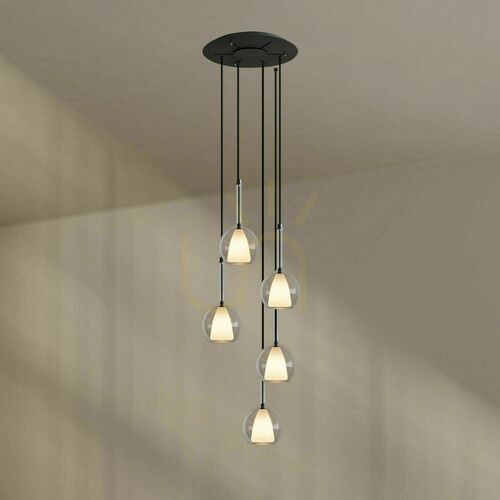
two or three smaller fittings, 2–3 m apart |
| Hall and landing |
switching |
two-way switch at the bottom and top of the stairs |
| Hall with no window |
brightness |
about 100 lm per m² of floor, more with dark shades |
Light spread matters more than wattage
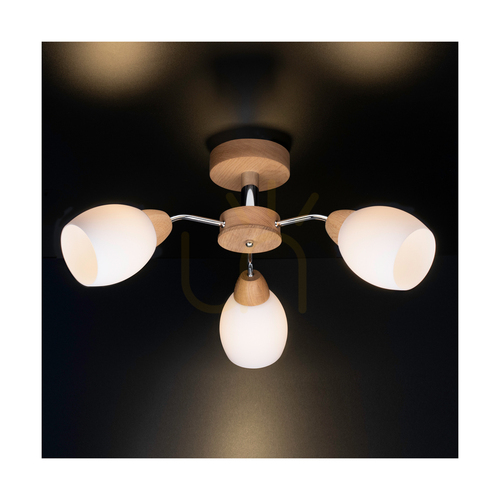
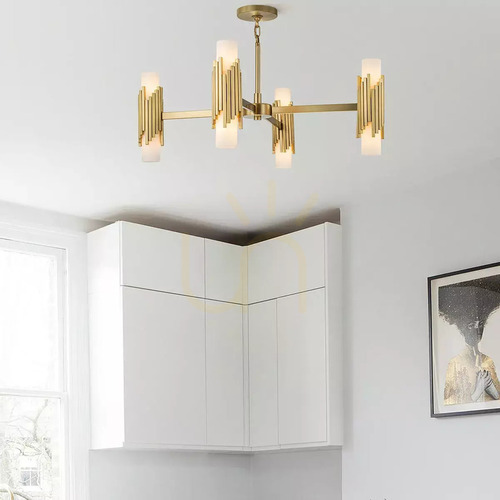
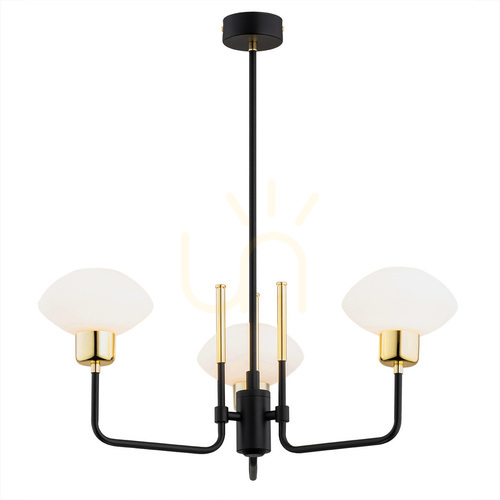
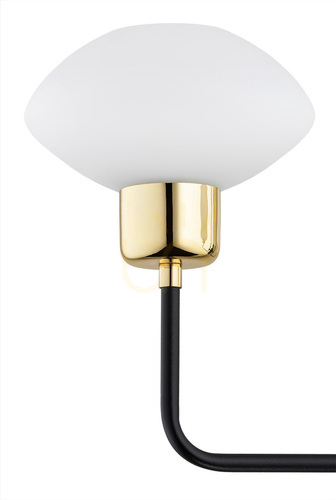
A single shade pointing down turns a corridor into a tunnel: bright floor, dark ceiling, gloomy corners. Fittings with several arms, opal glass that glows all over, or shades open at the top bounce light off the ceiling and walls, which makes a narrow hall feel wider. If the hall is longer than three or four metres, plan two or three matching fittings in a line rather than one large one in the middle.
The mirror needs its own light. A chandelier overhead casts shadows under the eyes and chin, so a pair of wall lights either side of the hall mirror is the usual fix.
Bulbs, colour and switching
-
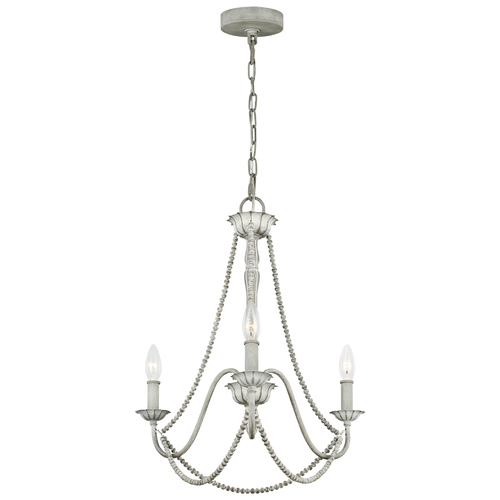
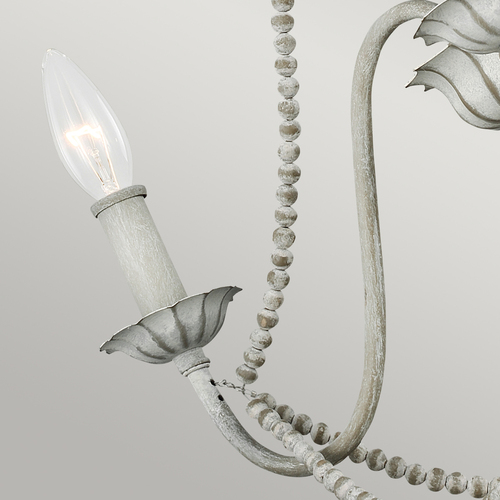
Lamp holders – chandeliers commonly take E27, E14 or G9 bulbs; others have integrated LED. With integrated LED, check lumens and colour temperature before buying, as the light source usually cannot be swapped.
-
Colour temperature – warm white at 2700–3000 K is the usual choice for a welcoming hall; 4000 K suits a windowless space where you check clothes before going out. A CRI of 90 or more is kinder at the mirror.
-
Dimming – a low level at night doubles as a landing light, but the LED bulbs must be dimmable and matched to the dimmer.
-
Two-way and intermediate switching – a switch at each end of a long hall, or at the top and bottom of the stairs; a third switching point needs an intermediate switch.
Fitting and care
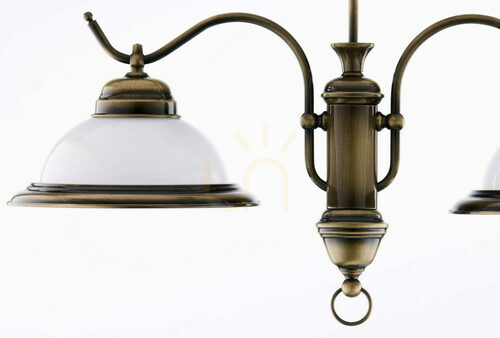
Heavy crystal or metal chandeliers need a secure fixing into a joist or a proper ceiling anchor; plasterboard on its own will not carry them. Have the connection made by a qualified electrician working to BS 7671, especially for metal fittings that need an earth. Check before fixing that the front door and any tall cupboard doors clear the fitting when opened. Hallways collect more dust than most rooms, brought in on shoes and coats, so open glass cups and hanging crystals need cleaning more often than closed shades. Switch off and let it cool, wipe with a microfibre cloth, and wash glass shades in lukewarm soapy water, drying them fully before refitting.
Questions people ask
What colour light is best for a hallway?
Warm white, 2700–3000 K, for most homes. It feels welcoming and does not dazzle when you come in from the dark. Choose neutral 4000 K only if the hall has no daylight and you want true colours by the mirror.
What ceiling lights suit a small hallway?
Flush or semi-flush chandeliers with a modest diameter, usually 30–40 cm, combined with a wall light by the mirror. Avoid anything wider than half the hall's width.
Can one fitting light both the hallway and the landing?
Rarely well. A fitting in the stairwell void can help both, but most homes need one light on each level, linked by two-way switching so you are never climbing the stairs in the dark.
What is the trend for hallway chandeliers?
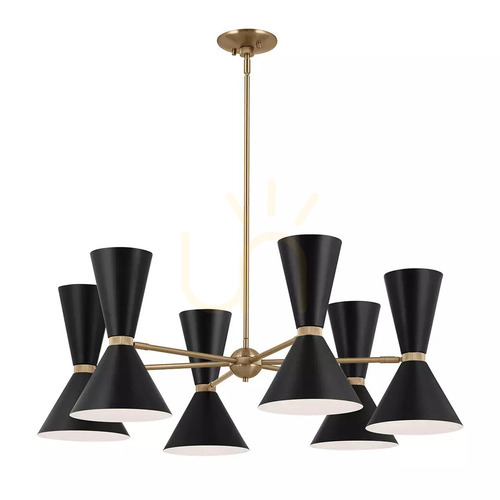
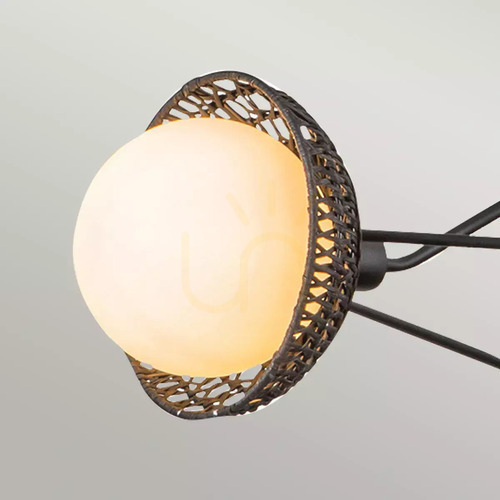
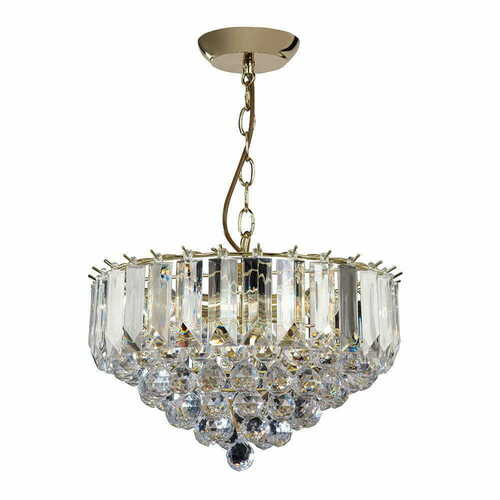
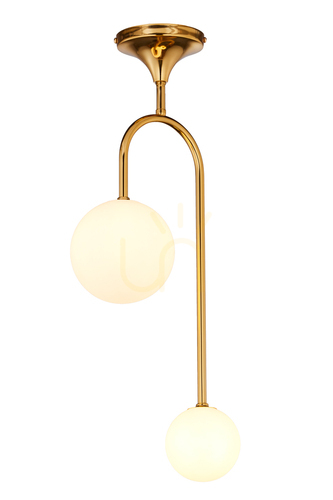
Simpler shapes rather than heavy crystal: hoops, opal glass globes, slim metal frames and natural materials such as rattan. Classic crystal chandeliers still suit period homes with high ceilings.
How bright should a hallway chandelier be?
Plan around 100 lumens per square metre of floor. A 6 m² hall needs roughly 600 lm in total, more if the shades are dark or fabric.
Is a chandelier too much for a narrow hallway?
Not if the scale is right. Keep the diameter to about a third of the width and choose a semi-flush design; the effect stays decorative without crowding the space.
For shapes, materials and styles in general, start with chandeliers; if your ceiling is low, read on about flush mount chandeliers.