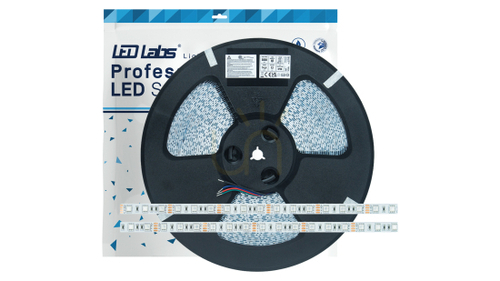
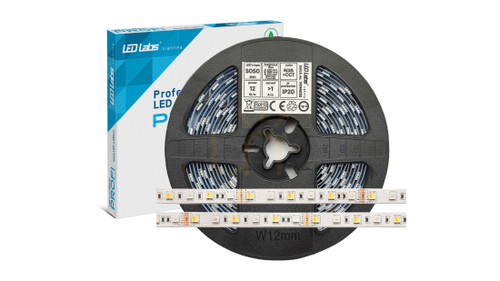
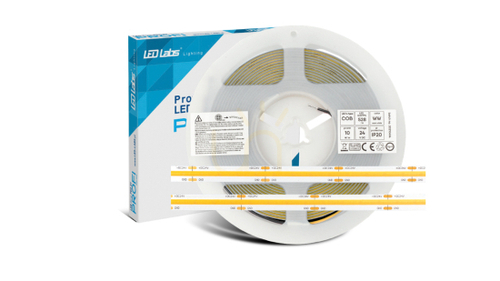
Living room LED strip lights are at their best when you see the glow and never the strip: a warm wash across the ceiling from a coving, a soft line under alcove shelves, a halo along the floor beneath the sofa. In a lounge the strip is rarely the main light. It is the dimmable background layer you switch on in the evening, so the choice is about colour, smoothness and control rather than raw brightness.
That is what sets it apart from a kitchen or bathroom strip. Those need bright task light and a high IP rating. A living room strip needs a warm white, an even line without visible dots, and a position where it never reflects in the TV screen or shines straight into someone's eyes.
How to light a lounge with LED strips
Think in layers. A typical living room needs around 200 lux of general light for everyday use, and a strip hidden in a cove will not get there on its own. Let a ceiling light or floor lamps do the heavy lifting, put reading lamps where people actually read, and use strips for the mood layer. Wire each zone separately – coving on one switch, shelving on another – and you can set the room for a film or for guests in a couple of seconds.
Where strips work in a living room
-
Coving or a plasterboard bulkhead: light bounces off the ceiling and the room feels taller. Paint the inside of the cove white so less light is lost.
-
Pelmet above the window: one box hides the curtain track and the strip, and the light falls down the fabric.
-
Alcoves and shelving: short runs under each shelf pick out books and ceramics on either side of the chimney breast.
-
Plinth, skirting, under the sofa or sideboard: a low glow that makes furniture appear to float and doubles as a night light.
-
The TV wall: strips behind slatted panels or above a media unit. Lighting the screen itself is its own subject – see TV LED strip lights.
Choosing the right strip: typical values
| Position |
Typical output |
Colour temperature |
Watch out for |
| Ceiling coving or bulkhead |
9–15 W/m |
2700–3000 K |
usually 10–15 cm gap below the ceiling |
| Window pelmet |
7–10 W/m |
3000 K |
aim the light at the curtain, not the room |
| Alcove shelves, display cabinet |
4–8 W/m |
3000 K |
dots reflect in glass and gloss – use a diffuser |
| Plinth, under the sofa |
4–6 W/m |
2700–3000 K |
dust at floor level – a channel keeps it clean |
-
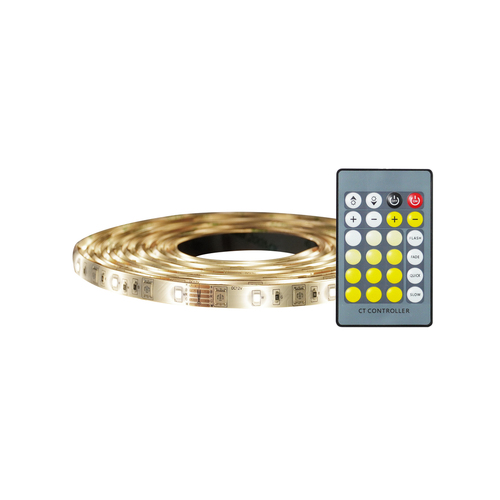
Colour: warm white, 2700–3000 K, feels relaxed after dark. 4000 K can look clinical in the evening. If you want both, a CCT (tunable white) strip lets you switch.
-
CRI: 80 is the minimum, 90+ makes timber, fabric and skin tones look right.
-
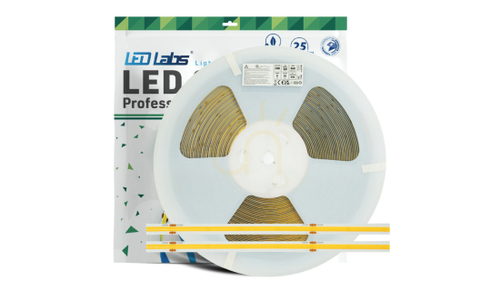
LED density: at 60 LEDs per metre you will see dots in a shallow channel. 120 LEDs/m or a COB strip gives an unbroken line.
-
Voltage: 12 V suits short runs, typically up to about 5 m from one feed. For a long cove, 24 V or a feed at both ends stops the far end looking dimmer.
-
Driver: allow 20–30% headroom. 6 m at 10 W/m is 60 W, so a driver of around 75–80 W.
Low-voltage, plug-in or mains?
Most living room strips are 12 V or 24 V and run from a driver. For shelves or a sideboard, a driver with a standard UK plug is the simplest route – no wiring at all. For a cove on the wall switch, the driver is connected to the lighting circuit, and that part is a job for a qualified electrician working to BS 7671. Mains 240 V strips skip the driver, but they can only be cut in long sections and carry mains voltage along their whole length, which makes them a better fit for commercial runs than for a shelf you dust every week.
Dimming and smart control
Plan the dimmer at the same time as the strip, because the two have to match. A low-voltage strip is usually dimmed after the driver, with a small PWM controller worked by remote, wall panel or app. If you want to dim from an existing wall dimmer instead, the driver itself must be a dimmable type designed for it – a standard driver will flicker or buzz. Smart controllers add schedules and scenes, so the coving can fade up at dusk and switch off when you go to bed.
Common mistakes
- A strip you can see from the sofa: the eye goes to the dots, not the glow.
- Cool white on the ceiling – the lounge ends up feeling like a waiting room.
- No dimmer. In the evening 20–30% brightness is usually enough.
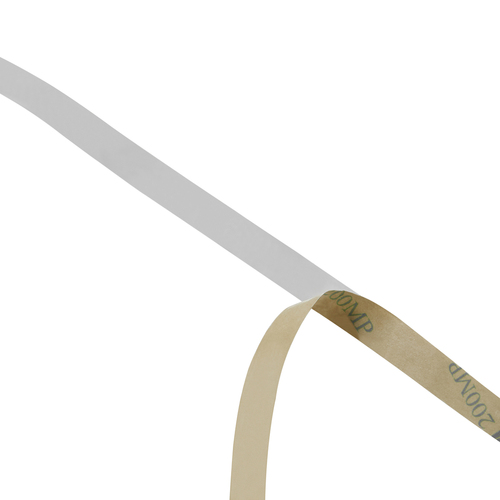
- Sticking tape to dusty or textured paint; it peels within weeks. Clean with isopropyl alcohol, or fix an aluminium channel and stick the strip to that.
- Burying the driver behind plasterboard. It is the part most likely to need replacing, so keep it reachable.
Living room LED strip FAQs
Do LED strip lights make your light bill high?
No. A 5 m run at 10 W/m draws 50 W. Four hours a night comes to about 0.2 kWh – less than boiling a kettle a few times.
Are LED strip lights good for a living room?
Yes, as the ambient layer. They give soft, even light, run cool and last for years, but they are not a replacement for a proper reading lamp.
Can I put LED strip lights on the ceiling?
Yes – ideally in coving or a bulkhead so the strip is hidden and the ceiling is lit. Stuck flat on the ceiling with no channel, the dots are visible from below.
Can I plug LED strip lights into a normal socket?
Many low-voltage kits come with a plug-in driver, which is ideal for shelving and furniture. Fixed installations on a light switch should be wired in by an electrician.
How do I stop LED strip dots showing?
Use a dense strip (120 LEDs/m or COB) and set it in an aluminium channel with an opal diffuser. The deeper the channel, the smoother the line.
Can you leave LED strips on all evening?
Yes. Good strips in an aluminium channel stay only slightly warm. Keep the driver ventilated and away from insulation.
More on strip types, voltages and accessories for any room: LED strip lights.