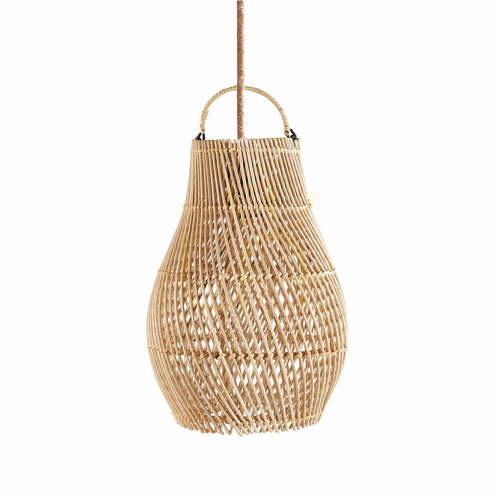
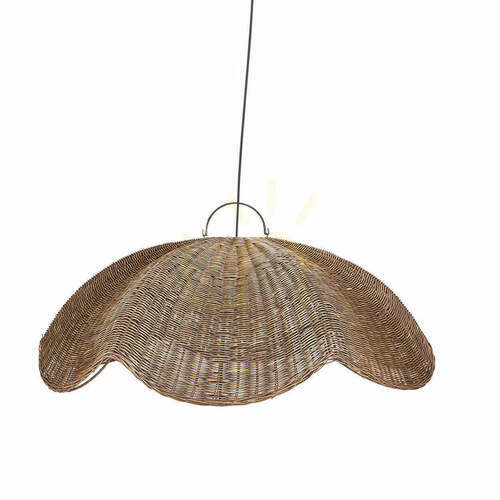
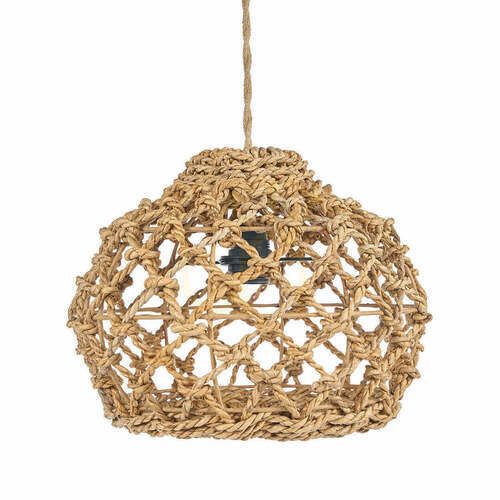
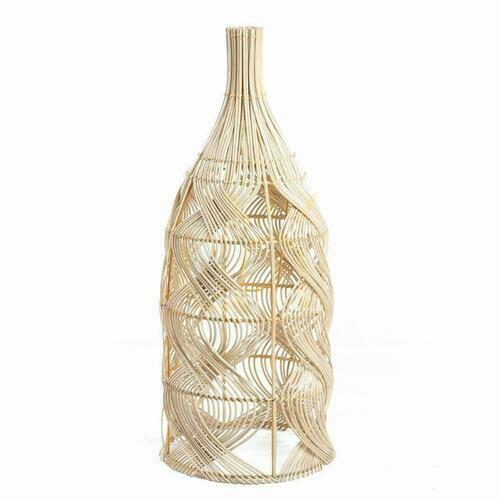
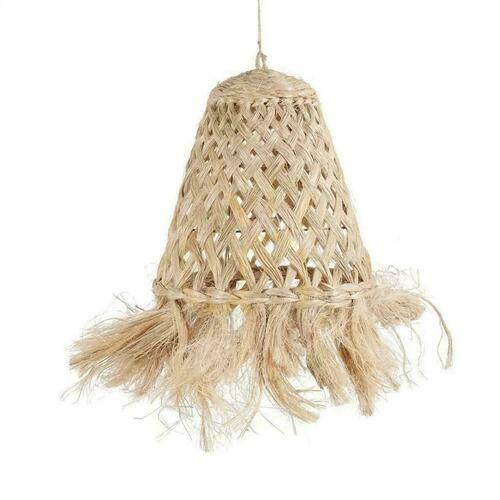
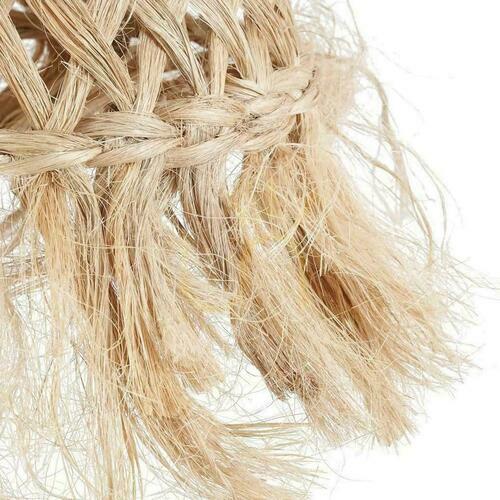
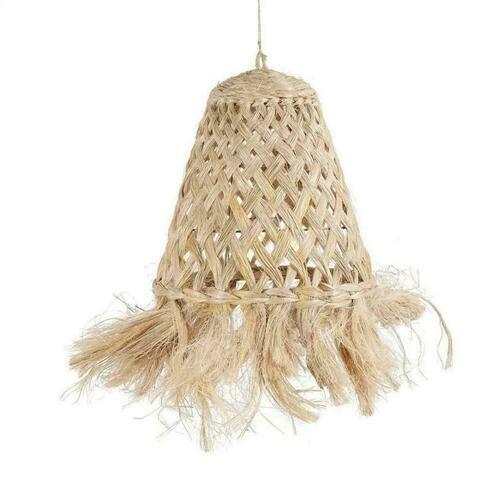
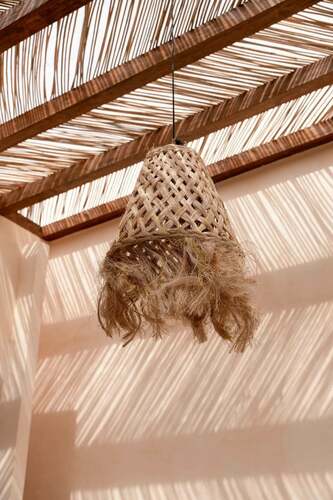
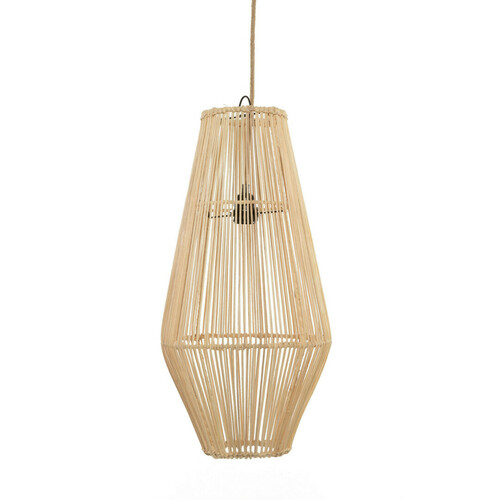
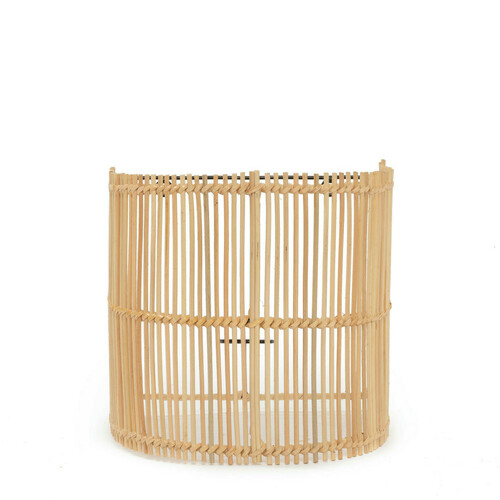
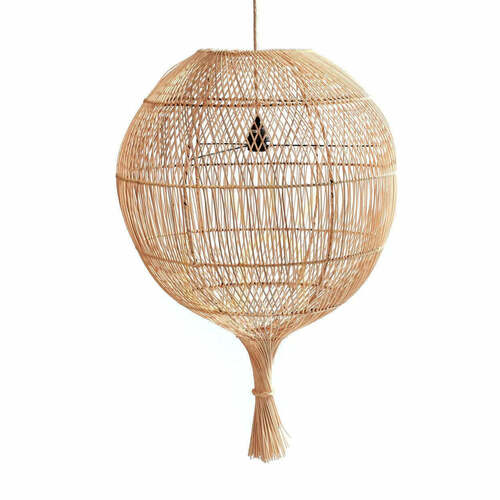
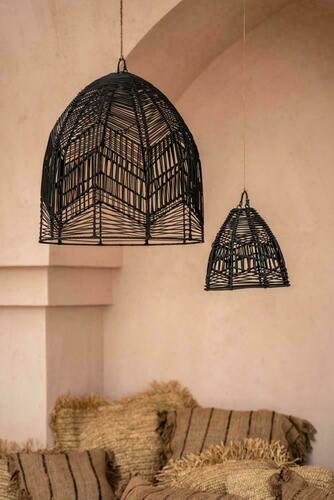
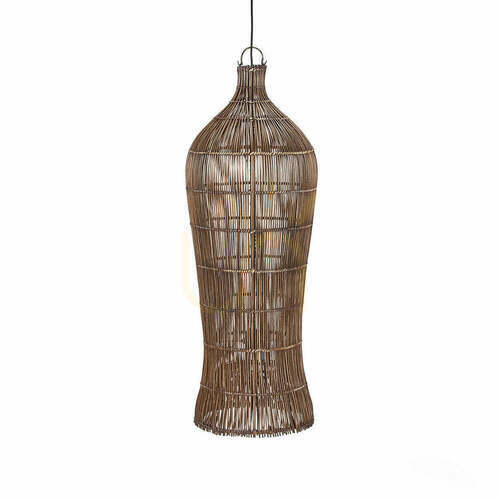
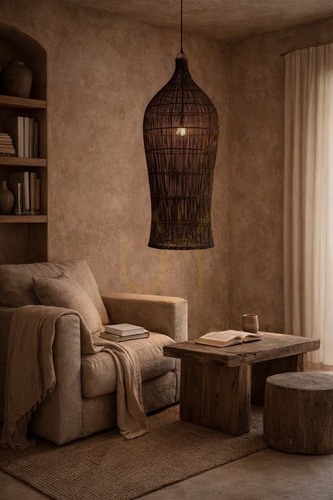
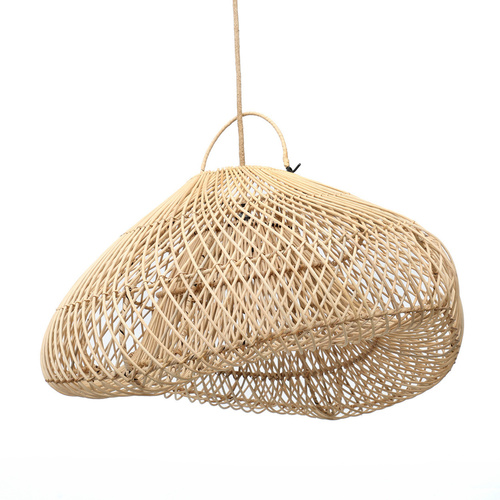
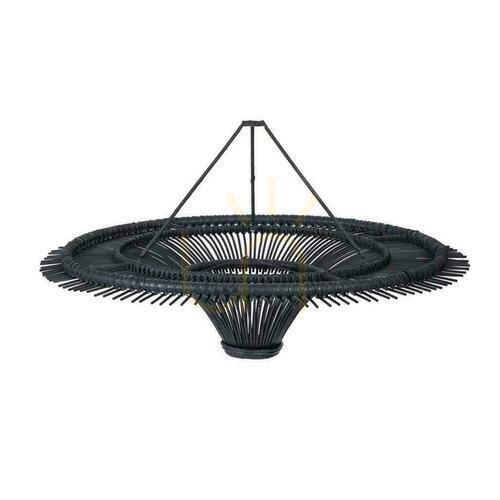
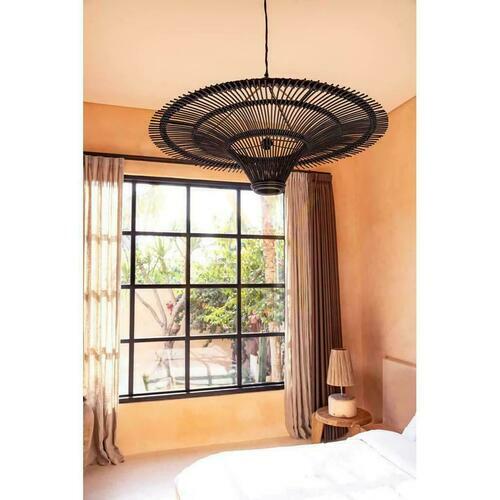
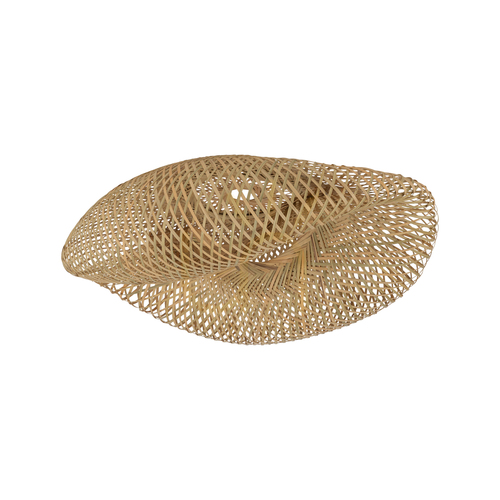
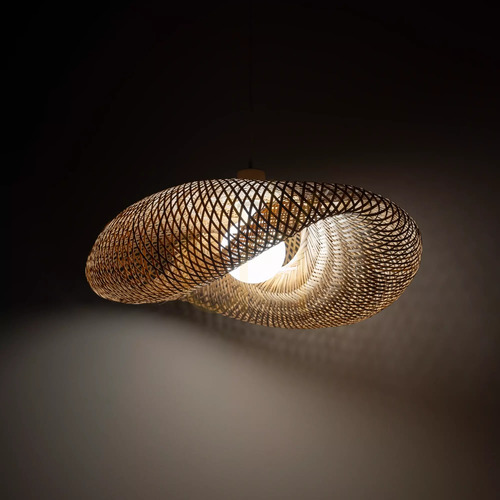
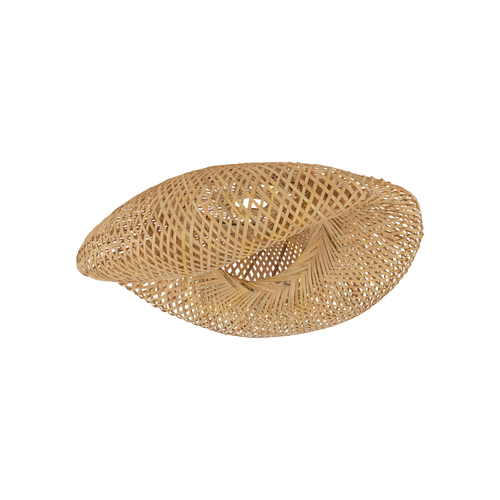
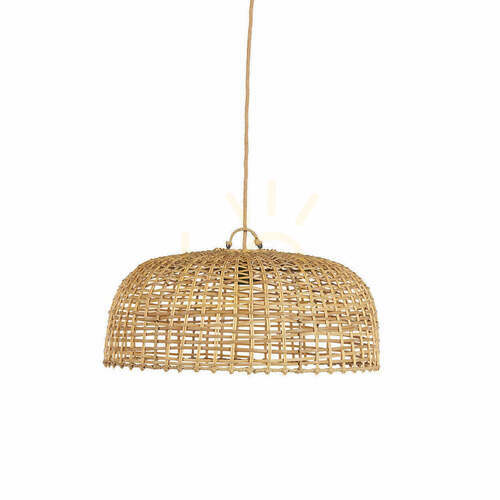
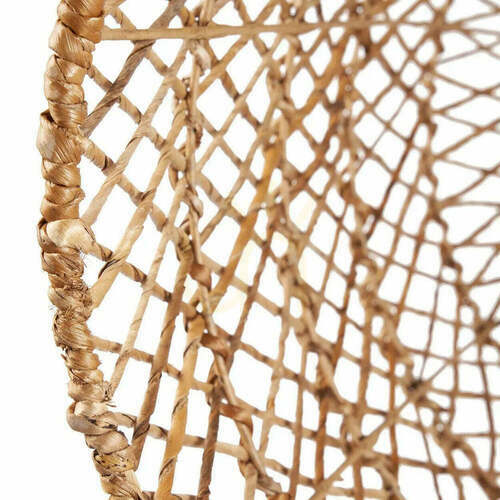
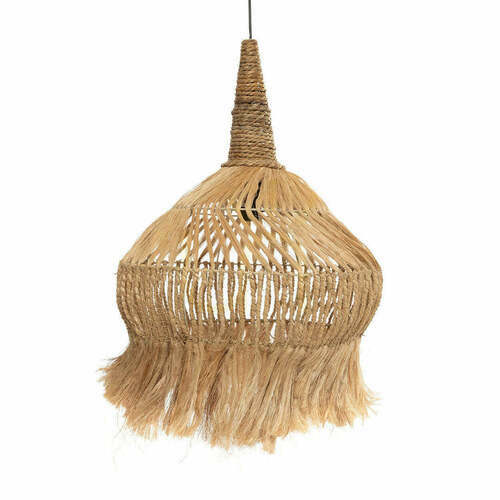
A rattan lampshade is the quickest way to bring boho warmth into a room: a hand-woven shade that softens the bulb and, once it is switched on, scatters a lattice of light and shadow across the ceiling and walls. Rattan is the classic, but the same look comes in bamboo, seagrass, jute, wicker and macramé cord – what makes a shade boho is a natural fibre you can see and feel.
Most of these shades hang from a ceiling pendant, though woven designs for table and floor lamps are just as common. Before you choose a weave, it pays to check three things: the fitting, the size and the kind of light you want.
Why woven shades behave differently
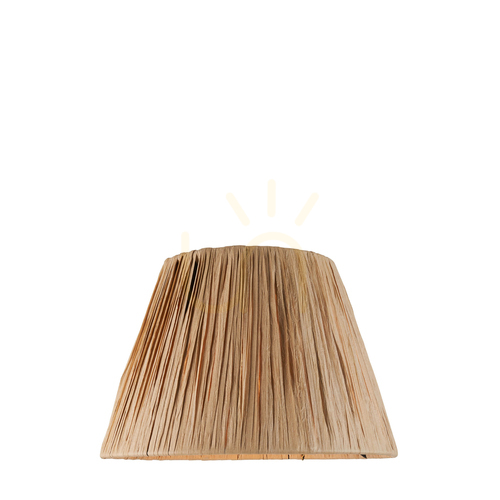
A fabric drum is designed to spread light evenly. A woven boho shade is designed to be looked at. An open weave lets light escape in small beams, so the pattern on the walls gets sharper the closer the shade sits to a surface. A tight weave in jute or seagrass does the opposite and gives a hazy, golden glow that suits bedrooms and snugs.
Rattan comes from climbing palms native to tropical Asia, Africa and Australia. The canes are strong yet flexible, so they can be bent into domes, bells and wide hats. Most shades are woven by hand over a slim metal frame, which means no two are quite identical. Expect small variations in shape and colour; that is the material, not a fault.
Fittings: B22, E27 and duplex shades
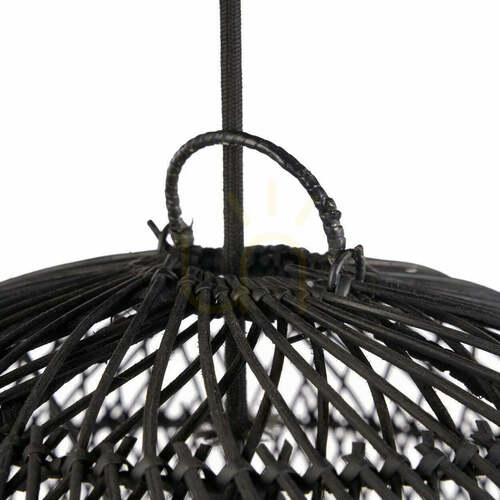
UK homes still use a lot of B22 bayonet lampholders, while woven shades made for the European market are usually built around E27 screw holders. Many pendant shades simply rest on the shade ring of the lampholder, so check the size of the hole in the top of the shade against your holder rather than assuming it will fit. Shades sold as duplex can be used either on a ceiling pendant or on a lamp base. A small reducer ring adapts a shade to an E14 lamp.
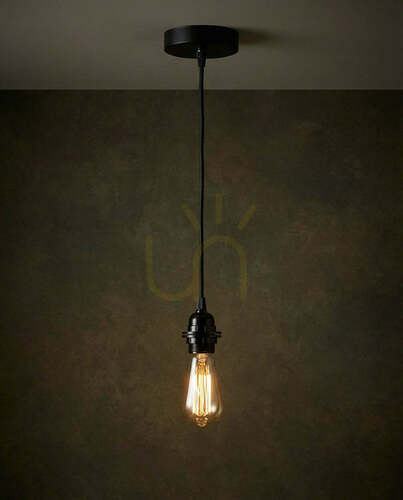
Shades usually come without a bulb, cable or holder. Swapping a shade onto an existing pendant is a quick job; installing a new pendant or ceiling rose should be done by a qualified electrician, with wiring to BS 7671.
Sizing guide
| Where it goes |
Typical shade diameter |
Weave |
Bulb |
| Bedside or side table lamp |
20–30 cm |
tight seagrass or jute |
LED, 2700 K, around 400 lm |
| Floor lamp by an armchair |
35–45 cm |
medium, open at the bottom |
LED, 600–800 lm |
| Pendant over a dining table |
40–60 cm |
open rattan or bamboo |
clear LED filament |
| Main ceiling light, living room |
50–70 cm |
wide dome or hat shape |
LED, 1000 lm or more |
| Hallway or landing |
25–40 cm |
medium bamboo |
LED, 2700–3000 K |
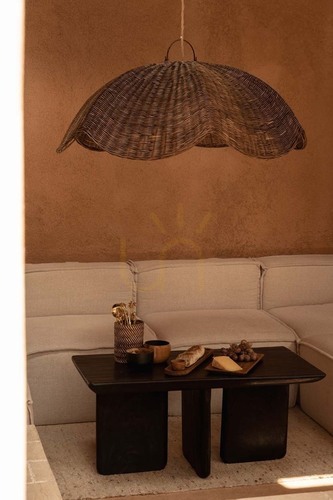
Over a dining table, hang the shade so its lower edge sits roughly 65–80 cm above the tabletop, and keep its diameter to about two thirds of the table’s width. With typical UK ceiling heights of around 2.4 m, a broad, shallow shape keeps head room clear; tall, narrow shades are better left to period rooms with higher ceilings.
Choosing the bulb
Natural fibre likes LED bulbs. They run far cooler than old incandescents, so the canes do not dry out or scorch, and woven shades often carry a maximum rating of around 40 W for traditional bulbs. A clear filament bulb gives crisp, graphic shadows; a frosted one blurs them into a softer glow. Warm white at 2700 K brings out the honey tone of rattan, while cool white makes the same weave look flat and grey.
Where they work – and where they don’t
Living rooms, bedrooms, dining rooms and hallways suit natural weaves best. Bathrooms are a poor match, and so is a shade left out on an open patio: damp makes the fibres swell, sag and eventually mould. A covered porch in summer is fine; for permanent outdoor use, choose lights made from synthetic rattan.
Keep a woven shade away from the hob, where grease settles into the weave, and from radiators, which dry it out. Dust it every few weeks with a soft brush or the brush attachment of your vacuum on low suction, and spot-clean with a barely damp cloth, letting it dry fully before switching on.
Frequently asked questions
Are rattan lights still in style?
Woven shades have moved from trend to staple. They sit comfortably in Scandi, Japandi, coastal and cottage interiors as well as boho, because they pair so easily with pale wood, linen and plants.
Can I dye or paint a rattan lampshade?
You can, with a stain or spray paint made for natural fibres. Test it on a hidden spot first and let it dry thoroughly. Bear in mind that a darker shade lets through less light.
Will a rattan lampshade work on a table lamp?
Yes, as long as it has a lamp-base fitting or is a duplex shade. Choose a tighter weave and a depth that hides the bulb from the side, so it does not dazzle when you sit next to it.
What size rattan lampshade for a floor lamp?
Usually 35–45 cm across. An open-bottomed shape throws more light down onto a chair or book than a closed globe does.
Is an extra large rattan lampshade a good idea?
Over a long dining table or in a room with a high ceiling, yes. In a standard-height room, anything over about 60 cm can feel heavy, and two medium pendants often look better.
Does natural rattan change colour?
Slowly, yes. Exposure to light deepens it to a richer honey tone over time, which most people see as part of its charm.
For shades in other styles and materials, see lampshades. If you would rather start from a complete lamp in the same mood, have a look at boho table lamps.