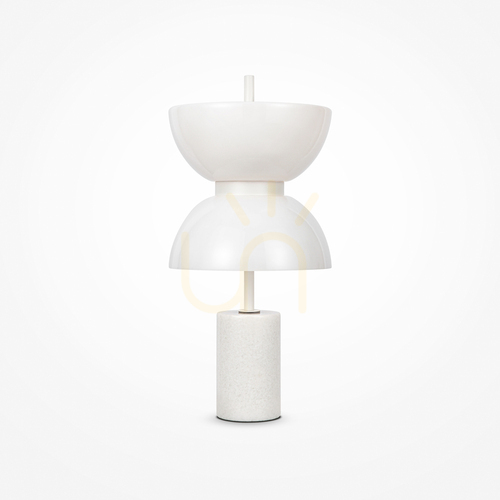
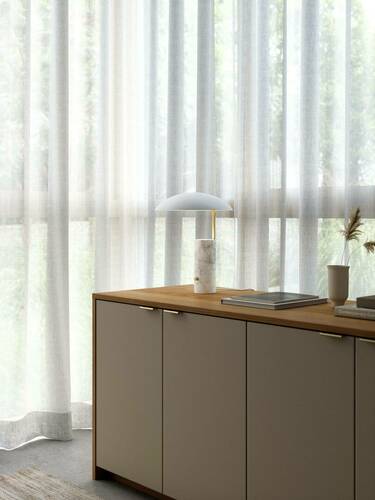
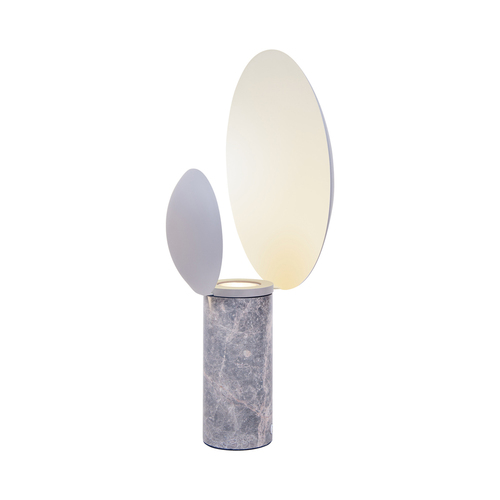
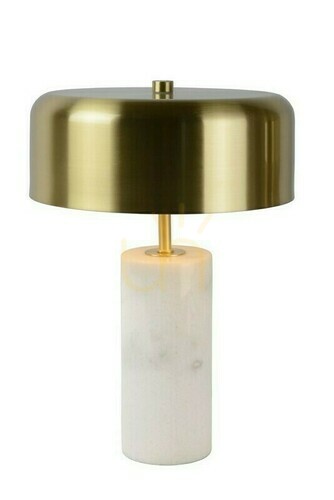
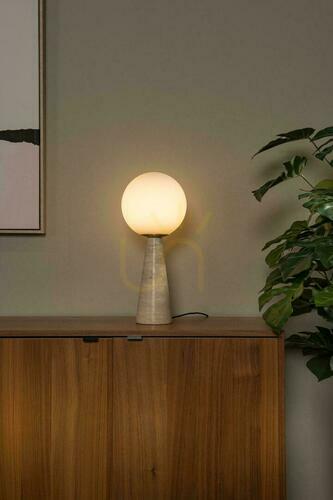
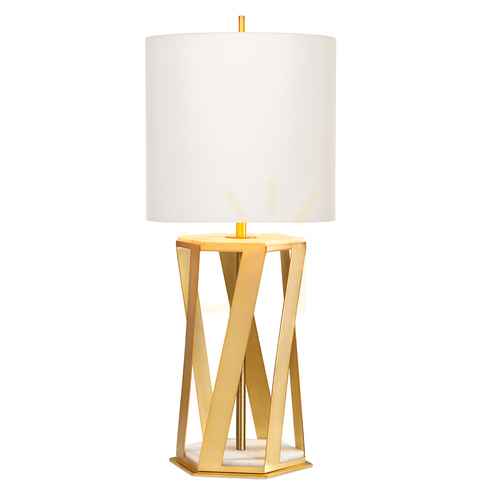
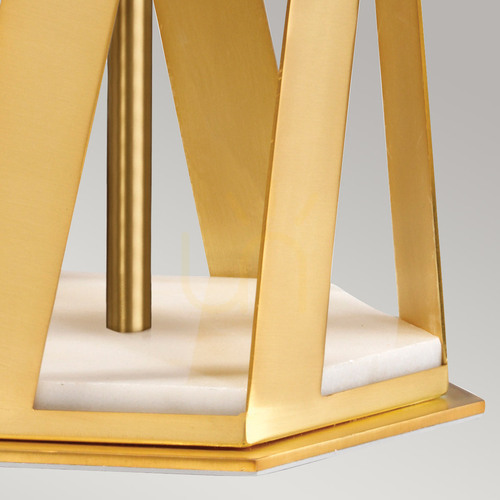
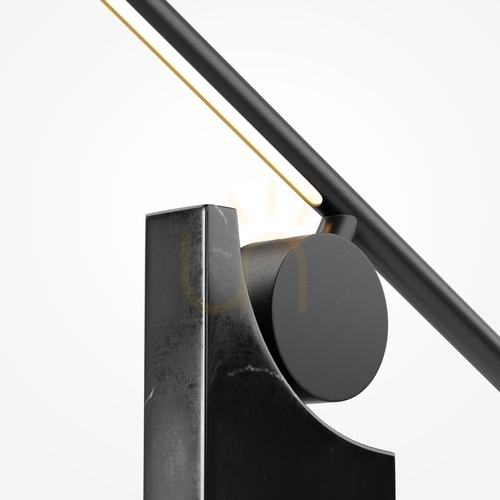
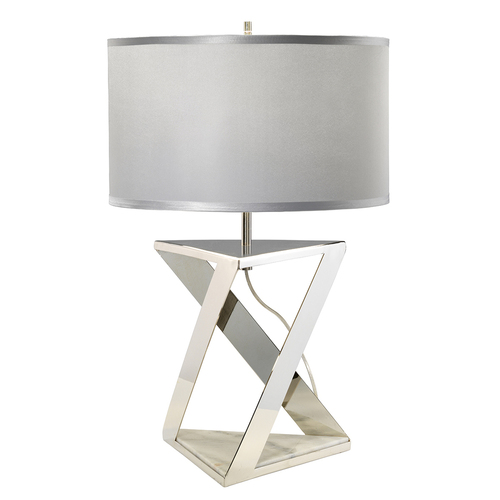
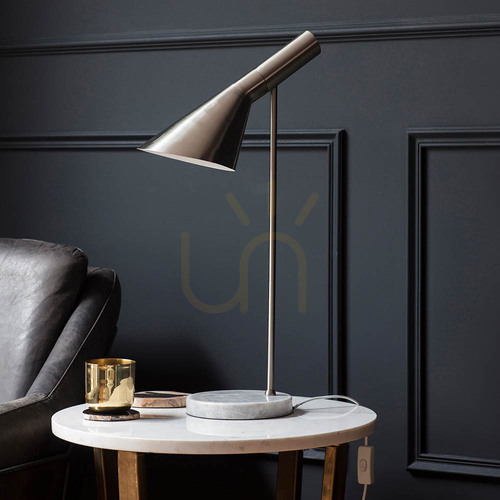
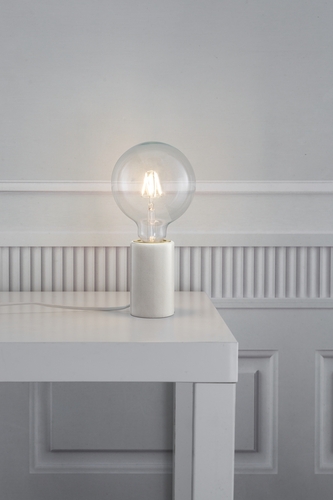
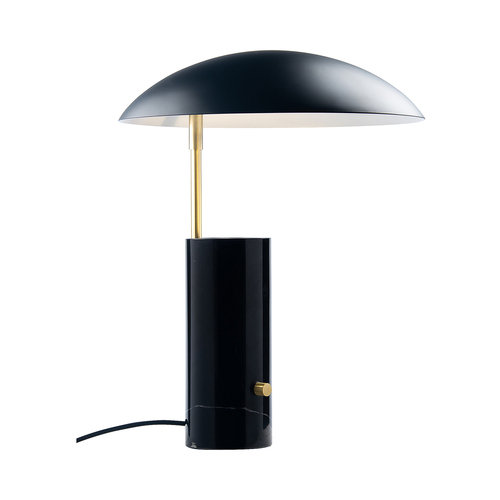
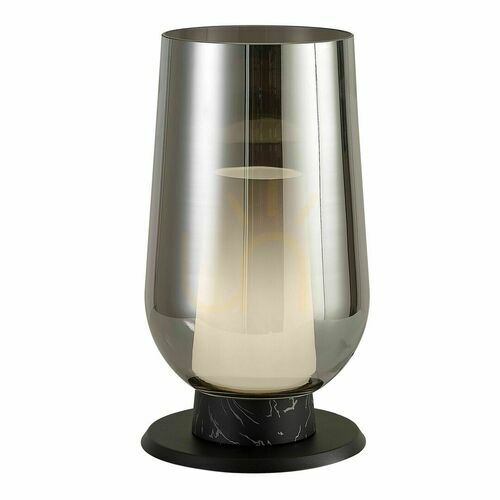
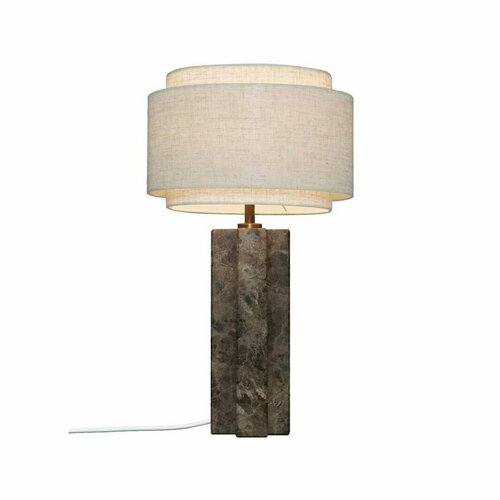
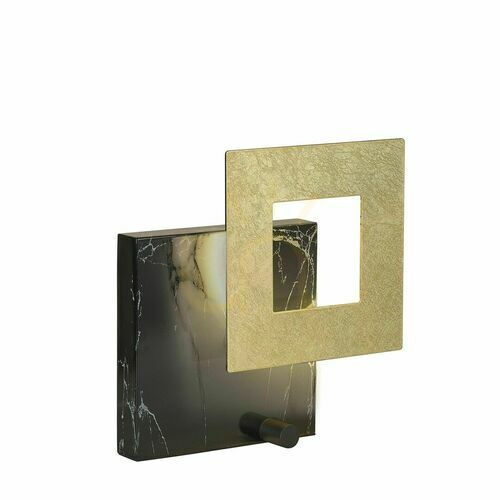
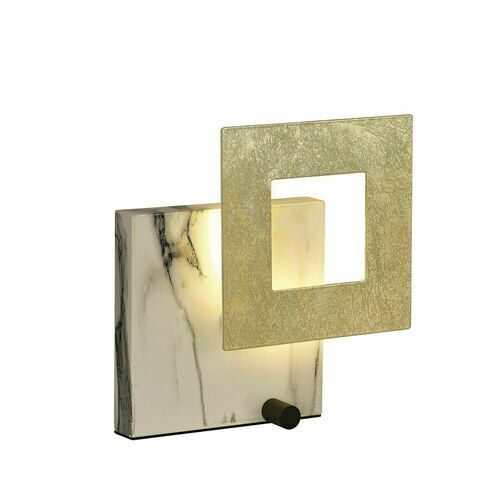
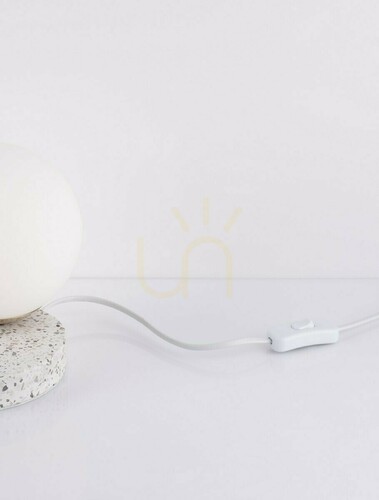
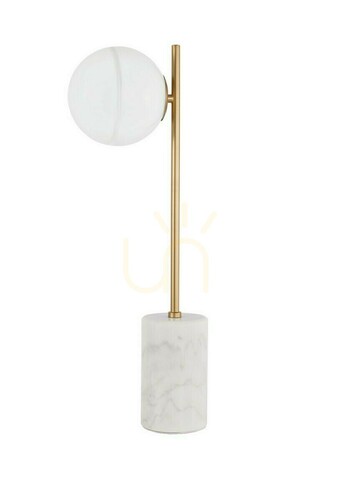
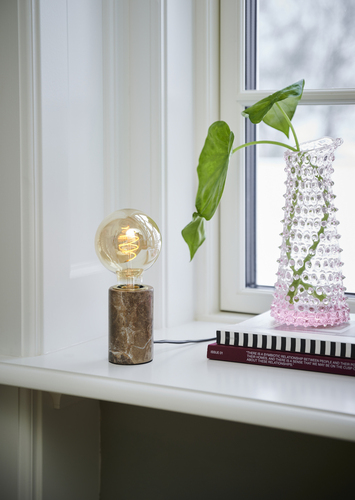
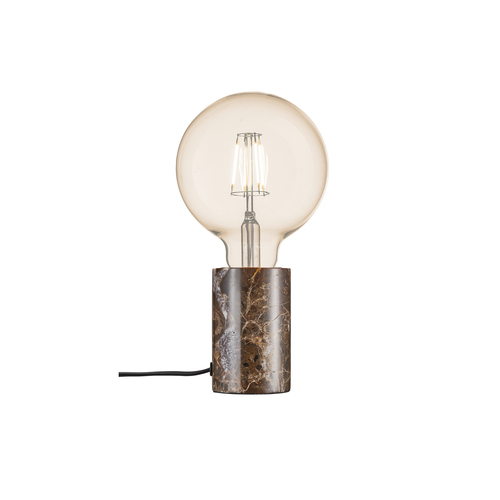
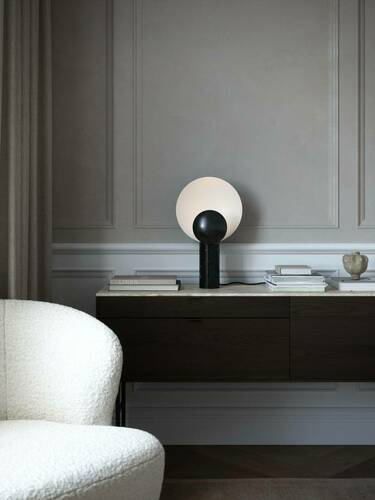
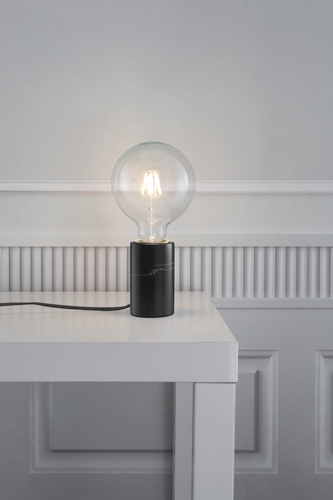
A marble table lamp is, in most cases, a lamp whose base is cut from natural stone, topped with a fabric, metal or glass shade; on some designs the whole column is marble. The stone gives the lamp real weight and a pattern of veining that no two pieces share, so it tends to be the first thing people notice in a living room or on a bedside table.
That weight is also the practical argument. A marble base sits firmly, carries a tall shade without wobbling and doesn't topple when someone catches the flex. What you trade for it: the lamp is heavier to move, and the stone needs a little more thought when you clean it.
Real marble or marble effect?
Search for marble lamps in the UK and a good share of what comes up is ‘marble effect’ – ceramic, glass, resin or painted metal with veining printed or glazed on. It's a different material, not a lesser version of the same thing, and it's worth knowing which one you're looking at:
-
Weight: marble weighs about 2.7 g per cubic centimetre. A small bedside base is usually 1–3 kg; a large lamp with a solid plinth can be 6–10 kg. Effect finishes are noticeably lighter.
-
Touch: real stone feels cool, even in a warm room. Resin and ceramic feel closer to room temperature.
-
Veining: in natural marble the veins run irregularly and carry on over the edges. A printed pattern often stops at a seam or repeats.
-
Care: effect finishes shrug off lemon juice and cleaning sprays; real marble doesn't (more on that below).
The product description should always state the base material. ‘Cultured marble’, by the way, is resin mixed with stone dust – again, not solid stone.
Choosing the right size and shade
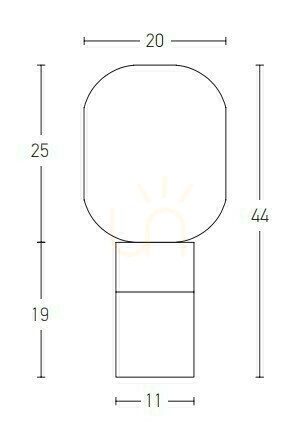
A marble base looks best when the shade is in proportion with it. A common rule of thumb is a shade about two thirds of the height of the base, and roughly as wide as the base is tall. Typical starting points:
| Where it goes |
Overall height |
Shade |
Bulb |
| Bedside table |
usually 40–55 cm |
opaque or lined, so light falls on your book rather than your eyes |
around 470 lm, 2700 K |
| Living room side table |
about 55–70 cm |
linen or cotton drum or empire; bottom edge near eye level when seated |
470–806 lm, 2700 K, dimmable if possible |
| Hallway console or sideboard |
about 60–75 cm, larger bases |
wide drum, or a pair of lamps either end |
806 lm or more |
| Desk |
about 40–50 cm |
metal or mushroom shade aimed at the work surface |
806 lm or more, 3000–4000 K |
Check the bulb cap before you buy bulbs: larger lamps usually take E27 (ES, Edison screw), smaller ones E14 (SES), and many lamps made for the UK market use a B22 bayonet (BC). Slim modern pieces may have a G9 capsule or a built-in LED module. Warm 2700 K light flatters cream, beige and brown stone; a neutral 3000–4000 K brings out the grey veining in white marble.
In the living room and beyond
White marble with grey veining, the classic Carrara look, suits pale Scandinavian-leaning rooms and pairs well with brass and a white linen shade. Black marble, such as Nero Marquina with its white veins, works with gold tones and art deco shapes. Green and brown marble are warmer and sit happily with wood, velvet and darker walls. A matching pair either side of a sofa or bed looks calm and ordered, and because the veining always differs slightly, the pair never looks mass-produced.
Looking after marble
Marble is metamorphosed limestone – calcium carbonate – so acids etch it. Vinegar, lemon, limescale removers, wine and some perfumes leave dull marks on a polished base that won't wipe off, and oils and coffee soak into the pores. Unplug the lamp, wipe the stone with a soft, barely damp microfibre cloth and a drop of pH-neutral soap if needed, then dry it straight away. A stone sealer helps against stains but not against etching. Stick felt pads under the base so it doesn't scratch veneer or glass, and keep the flex out of reach of small children and pets: a heavy lamp rarely tips, but when it does, it lands hard.
FAQs
Is a marble table lamp a good choice for a living room?
Yes, especially on a side table or console where its weight keeps it steady and the stone is on show. Choose a fabric shade and a warm, dimmable bulb for evening light.
What's the difference between marble and marble effect lamps?
Marble is natural stone: heavy, cool, with unique veining, but sensitive to acids. Marble effect is ceramic, glass or resin with a printed or glazed pattern – lighter and easier to clean.
Can I buy a marble lamp base and choose my own shade?
Many bases are sold that way. Measure the base height and pick a shade roughly as wide as that, check the fitting (shade carrier or harp) and keep the bulb within the stated maximum wattage.
Is an antique marble lamp safe to use?
Old lamps often have perished flex, brittle lampholders or no earth where one is needed. Have it checked and, if necessary, rewired by an electrician before plugging it in. A UK plug for a table lamp is normally fitted with a 3 A fuse.
How heavy is a large marble table lamp?
A big lamp with a solid stone plinth commonly weighs 6–10 kg. Make sure the shelf or console can take it and doesn't have the lamp sitting right at the edge.
Are there rechargeable marble lamps?
Yes, mostly compact cordless lamps with a small marble base, charged over USB. They suit dining tables and shelves without a socket nearby.
For other shapes and styles, see our guide to table lamps; for pendants, floor lamps and wall lights in stone, read more about marble lamps.