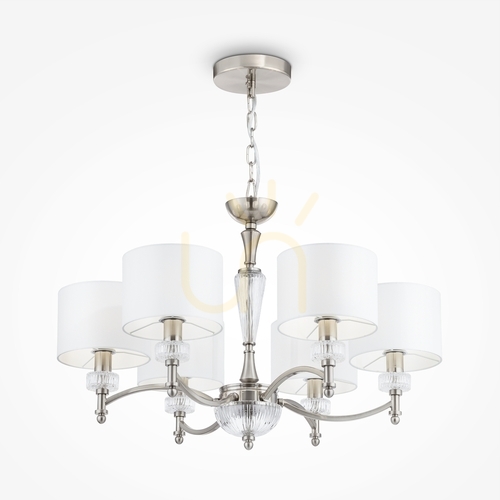
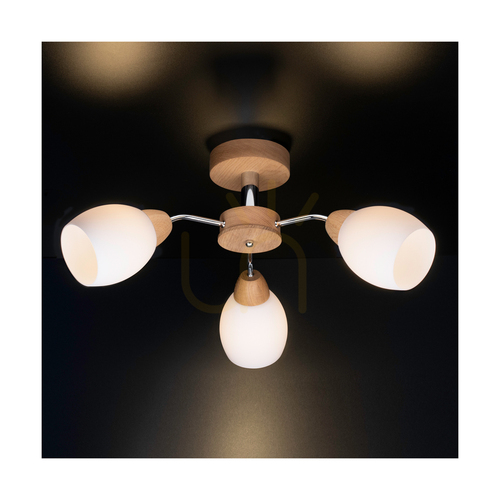
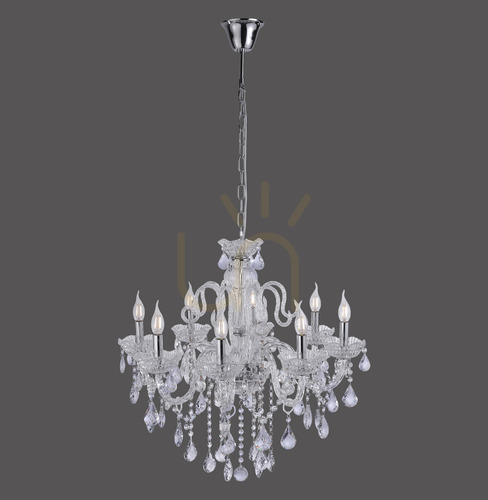
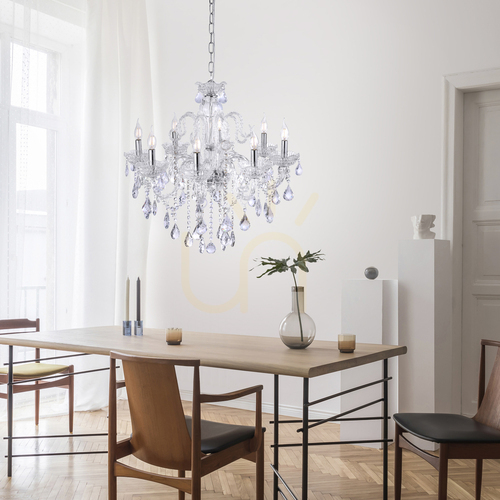
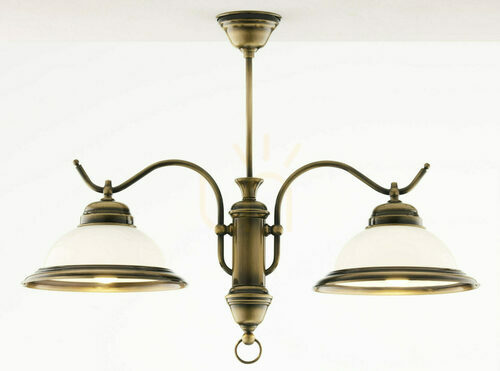
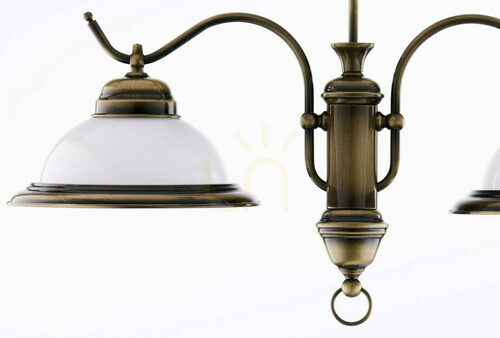
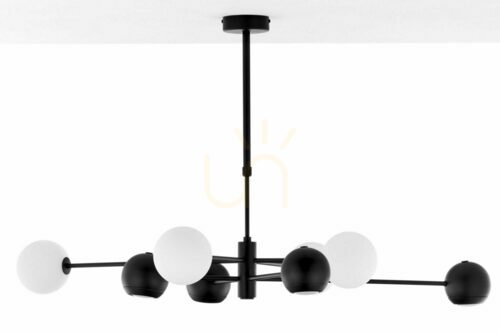
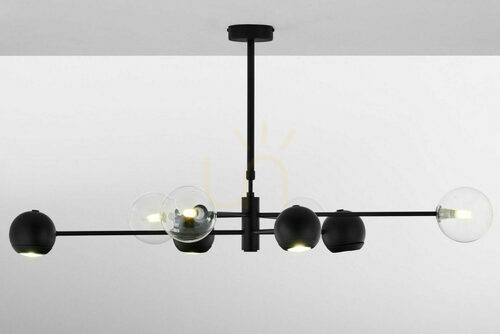
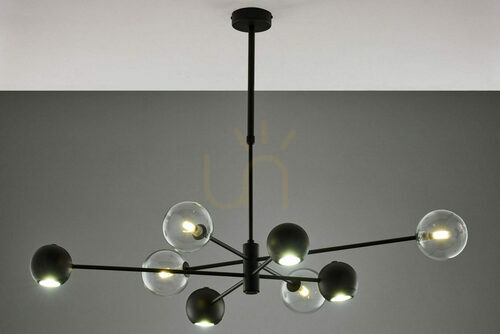
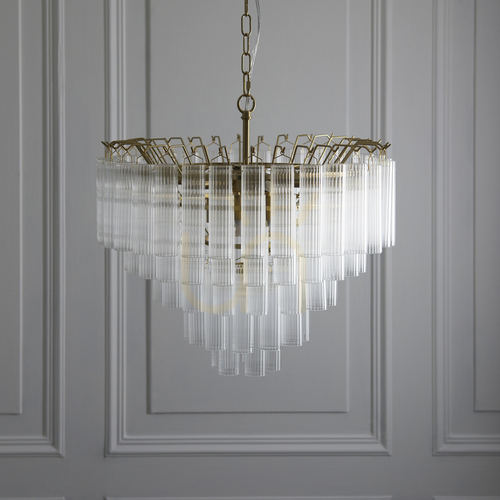
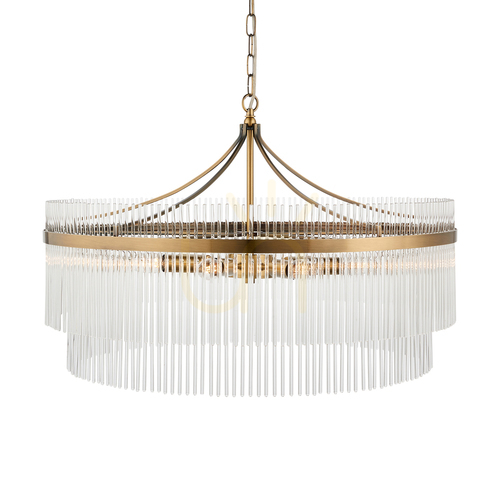
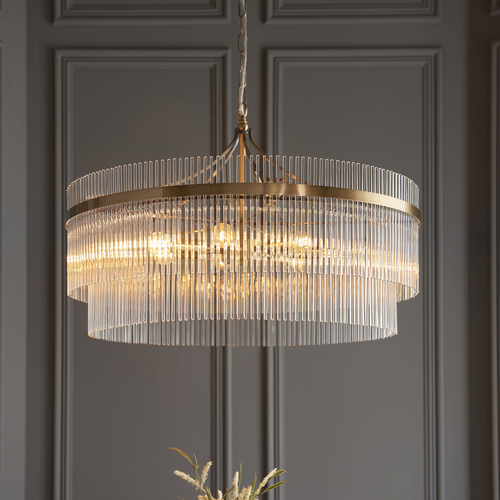
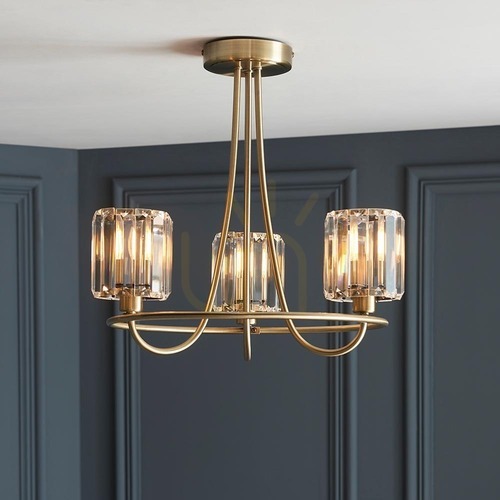
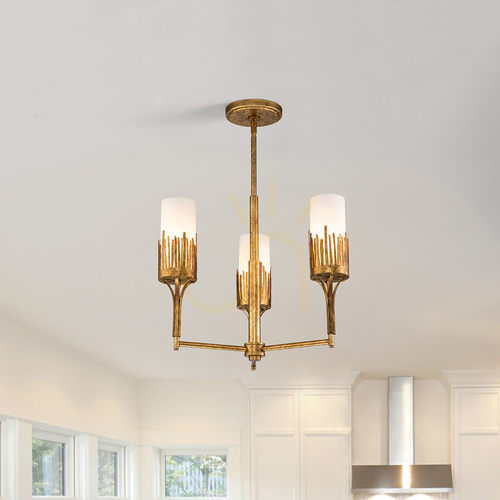
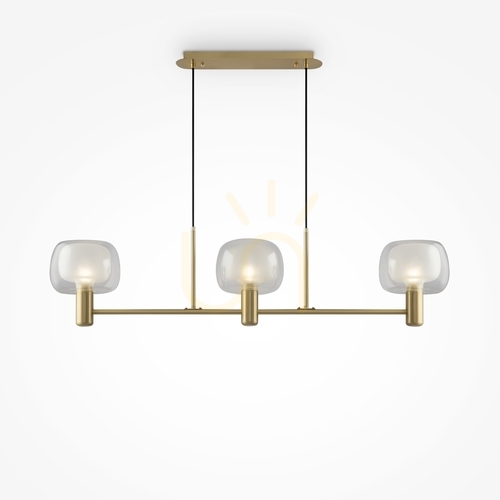
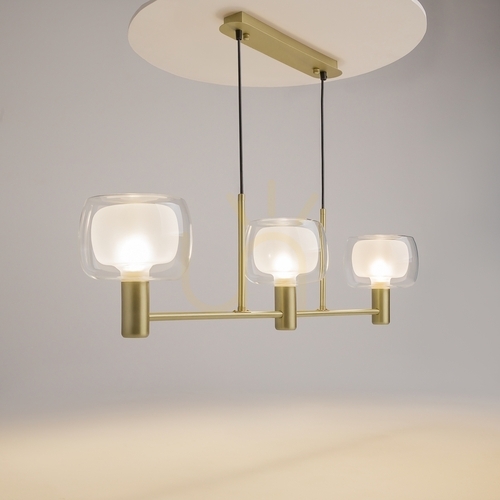
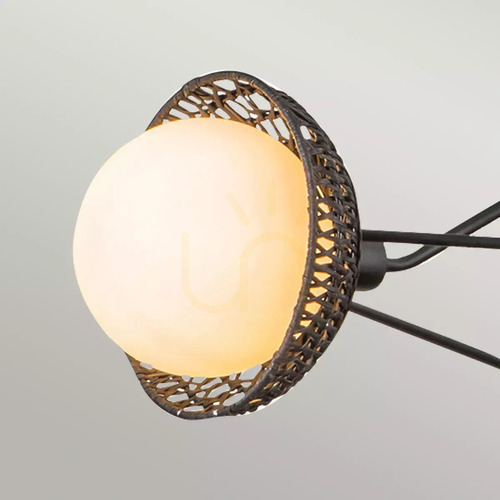
Glass chandeliers cover a much wider range than crystal ones, because the material is doing a different job. Here the glass is usually a shade or a diffuser rather than a faceted reflector, so it shapes the light instead of scattering it. That changes what you should look at: the finish of the glass, how much light it lets through, and how easy a single shade is to replace.
Clear, opal, smoked and ribbed
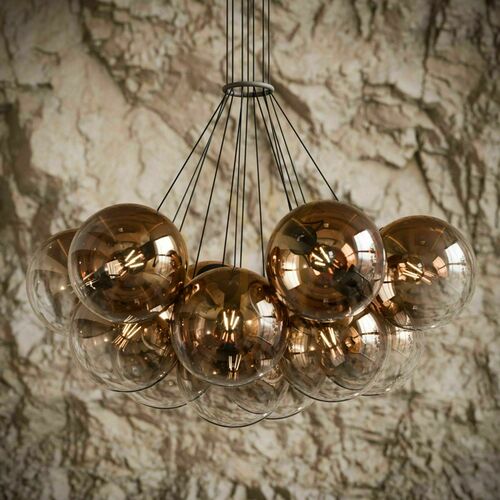
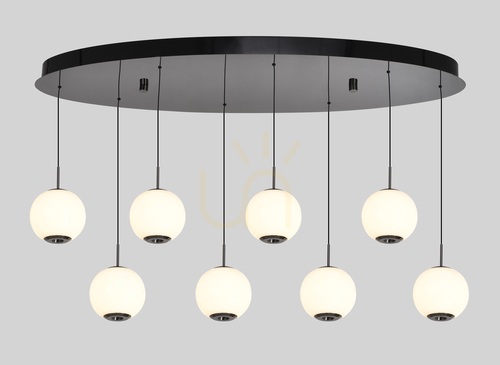
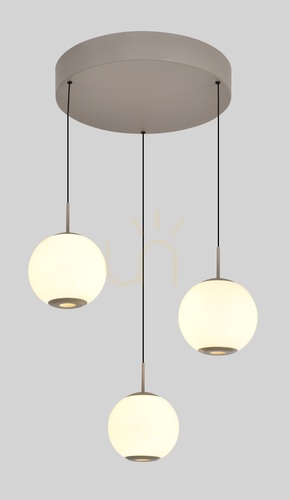
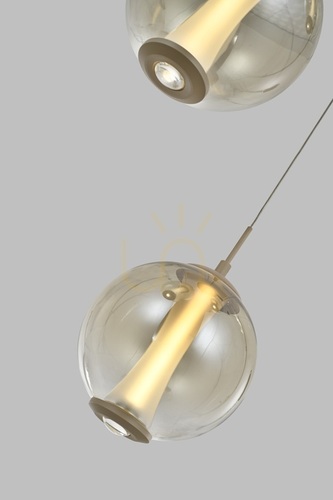
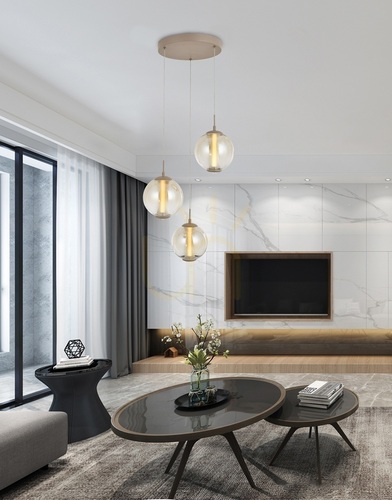
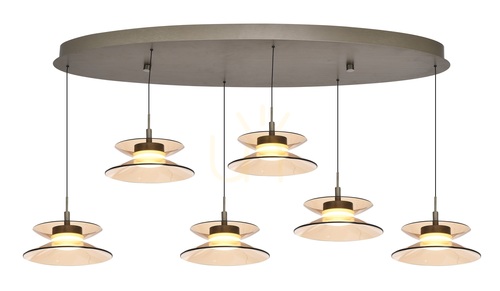
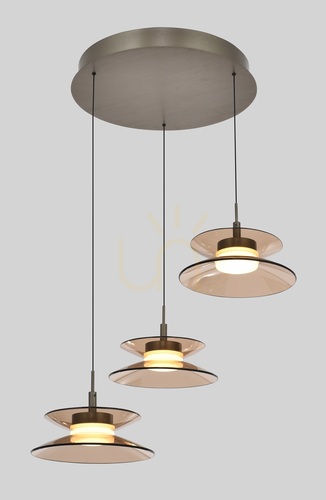
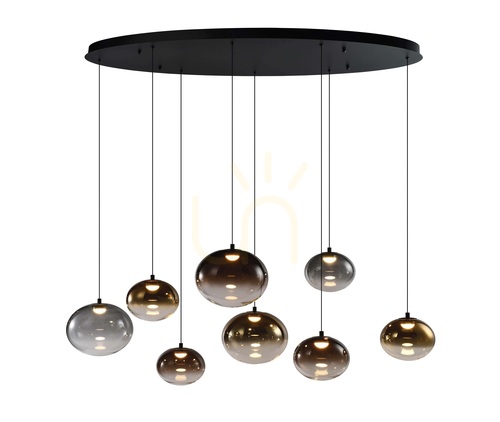
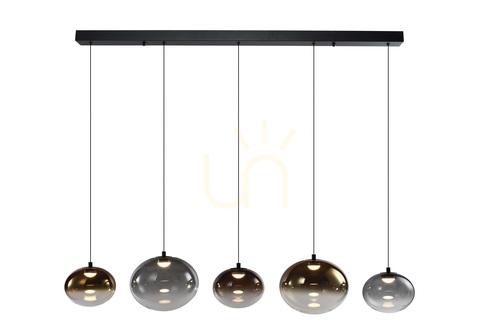
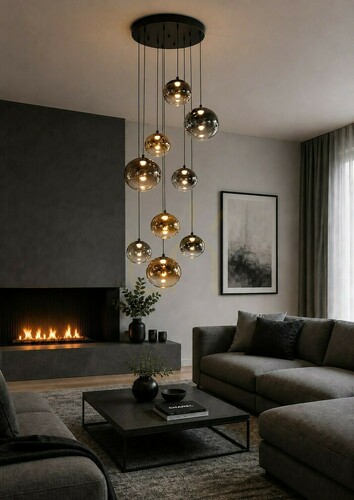
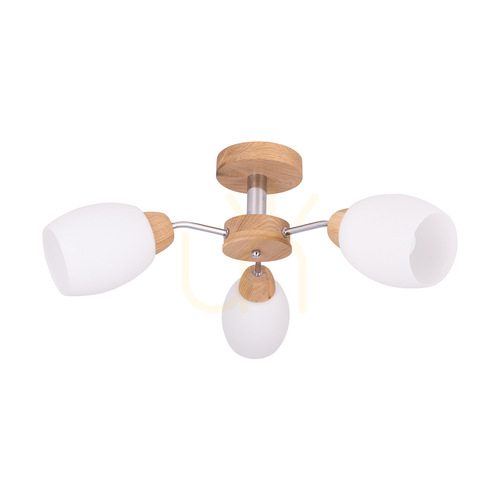
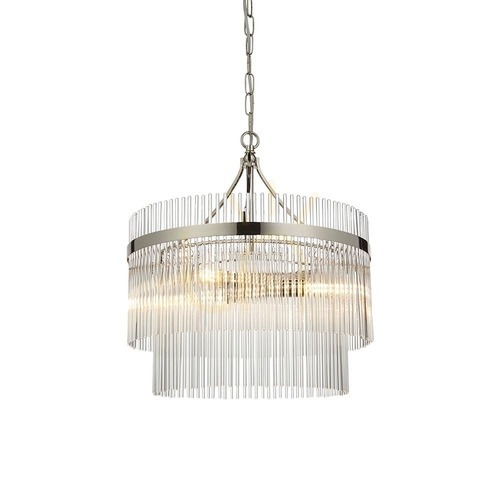
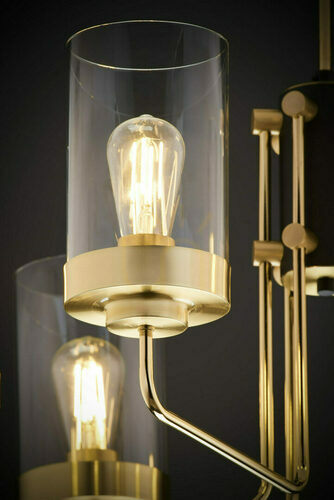
Clear glass hides nothing. The lamp inside is part of the design, so a decorative filament bulb is not optional - it is the visible element. Opal glass is white through the body rather than painted on the surface, which gives an even glow with no bright spot and no visible filament. Smoked and amber glass cuts output noticeably, sometimes by a third, and warms the colour of what comes through. Ribbed or reeded glass sits in between: it breaks the source into vertical stripes, so you get some sparkle without the hard glare of clear glass.
What the glass does to the light in the room
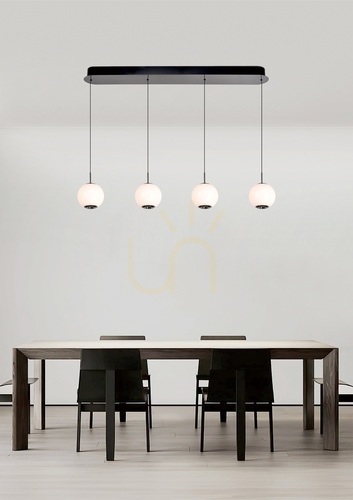
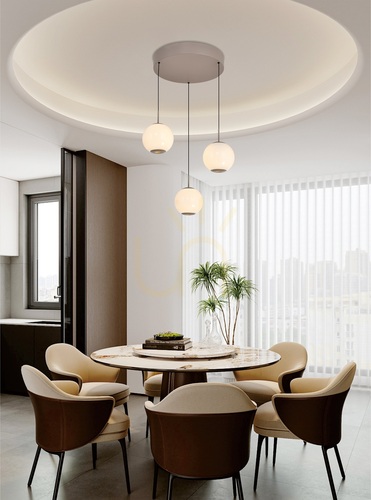
A chandelier hung with clear glass throws sharp shadows and gives a room contrast. The same frame in opal glass produces flat, even light and almost no shadow. Neither is better in the abstract, but they suit different rooms: contrast reads well over a table where the light is decorative, and flat light reads better in a space you actually work in. If a room already has downlights, clear glass adds the character they lack. If the chandelier is the only light source, opal is the safer choice.
Weight, fixing and the practical advantage
Glass shades are lighter than a comparable weight of cut crystal, which matters when the ceiling is plasterboard. A six-arm glass fitting often lands between 3 and 6 kg, well within what a good cavity anchor will hold, whereas the crystal equivalent can be double. It also comes apart more easily. Shades usually thread onto the lampholder or clip into a gallery, so a broken one can be swapped without touching the wiring.
Sizing and hanging
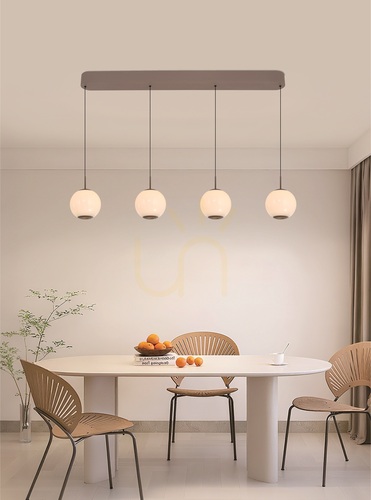
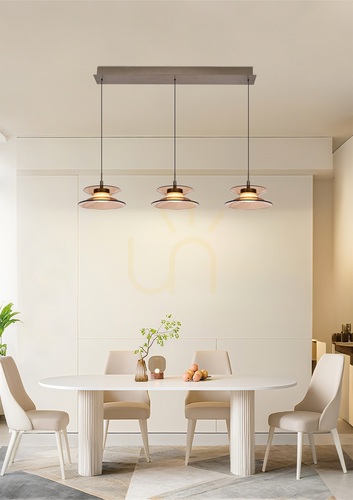
Measure the room, add length and width in metres, and read that number as centimetres of diameter - it gets you close. Over a dining table use the table instead: half to two thirds of its width, with the lowest point of the glass 70-85 cm above the surface. Keep the underside above 210 cm anywhere people walk. Chain suspension shortens by removing links; rod suspension only adjusts in the segments supplied.
Bulbs and care
E14 is the usual socket on multi-arm frames, with E27 on larger ones and G9 where the shade is small. In clear glass, choose the bulb for its looks as well as its output. In opal glass, a plain LED at 2700 K is invisible and fine. Cleaning is straightforward: warm water and a little washing-up liquid on a cloth, dried before it can spot. Opal glass collects dust on the inside over years, so a shade that unscrews is worth having.
Common questions
Will smoked glass make the room too dark?
It can. Assume you lose a third of the output and pick lamps with more lumens than you would otherwise, or keep smoked glass for a room with other light sources.
Can I replace one broken shade?
Usually yes, if the fitting is a current model and the shade threads on. Measure the fitter diameter - the hole size - before ordering, because that, not the outer size, is what has to match.
Is hand-blown glass worth it?
Hand-blown shades vary slightly in wall thickness and shape, which shows as small differences between arms. Some people buy them for exactly that; if you want six identical shades, pressed glass is more consistent.
What about cut crystal instead?
Different material, different effect - see crystal chandeliers.