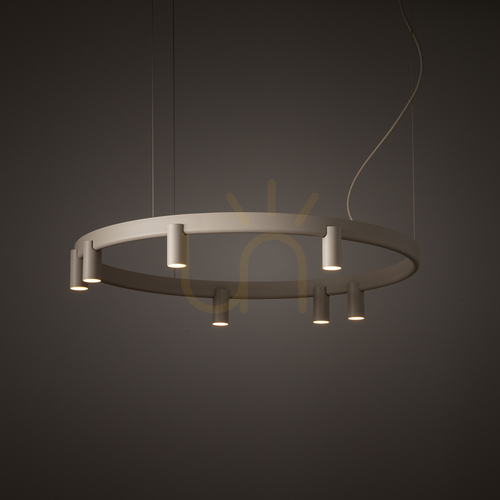
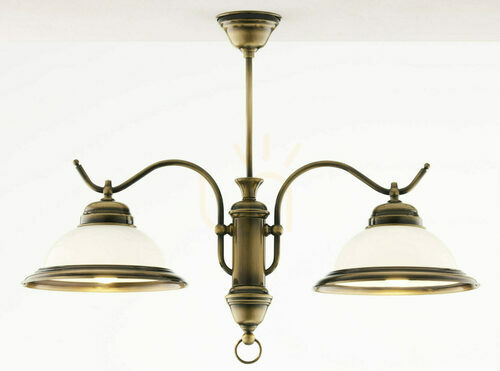
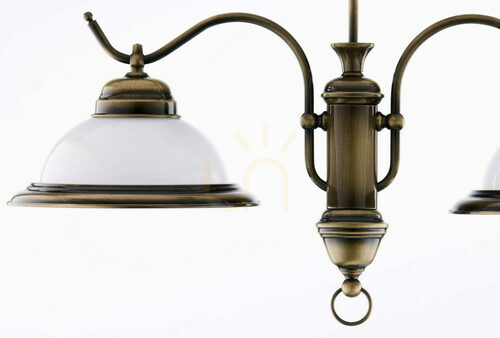
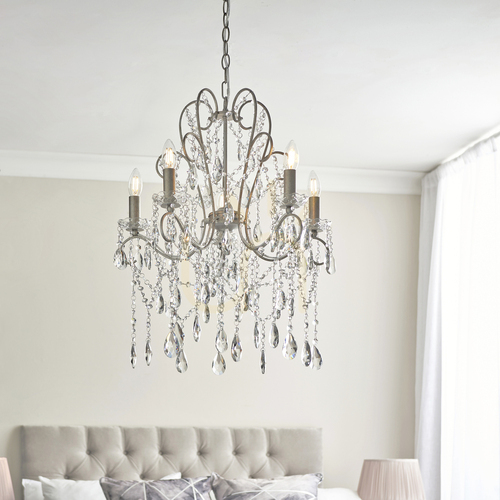
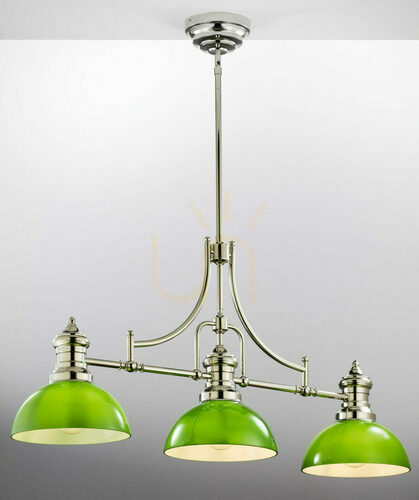
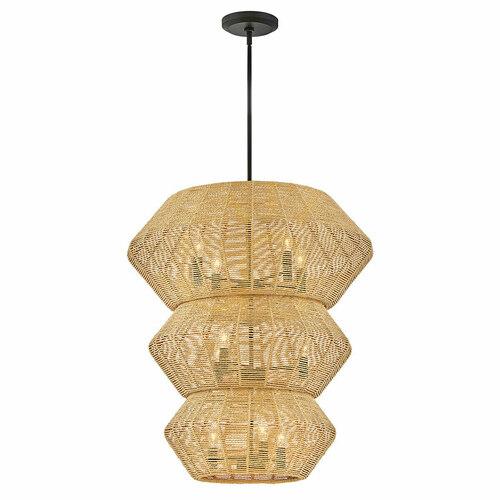
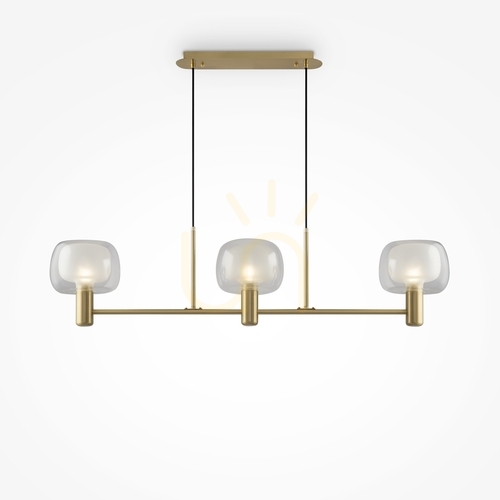
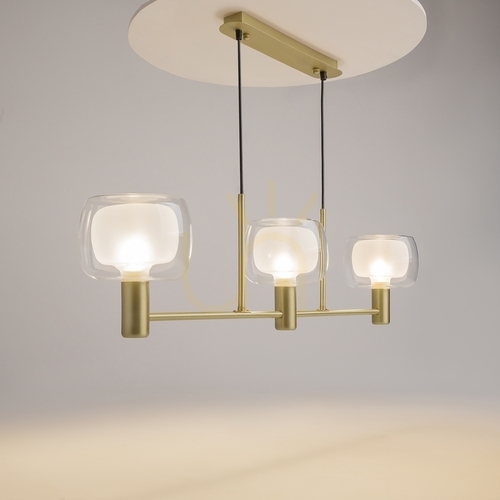
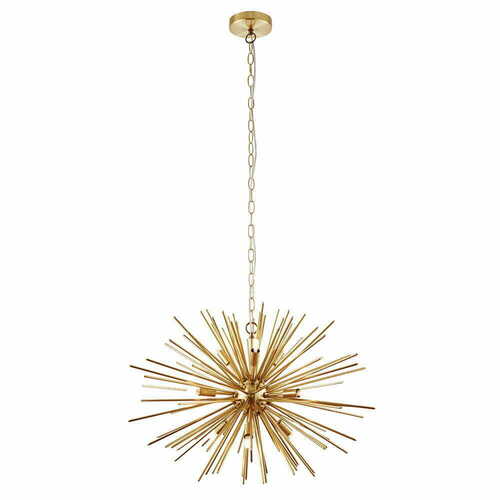
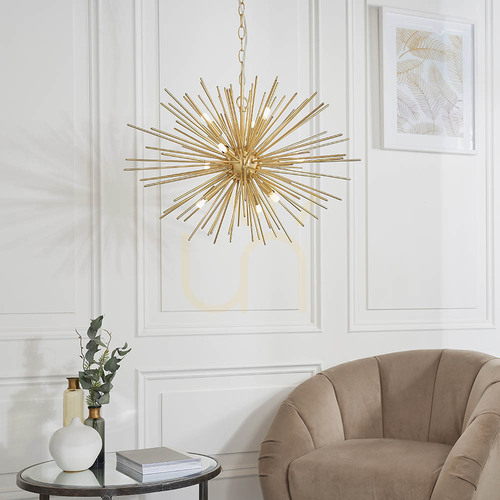
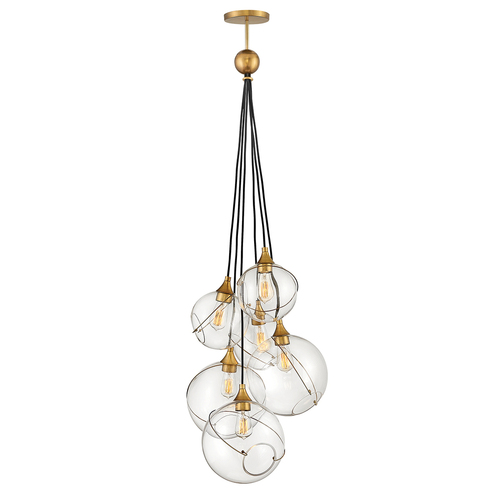
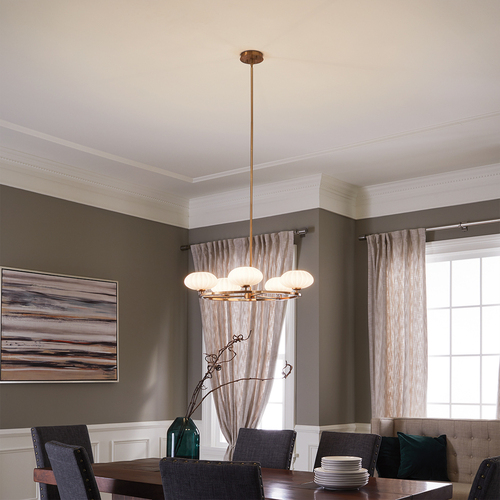
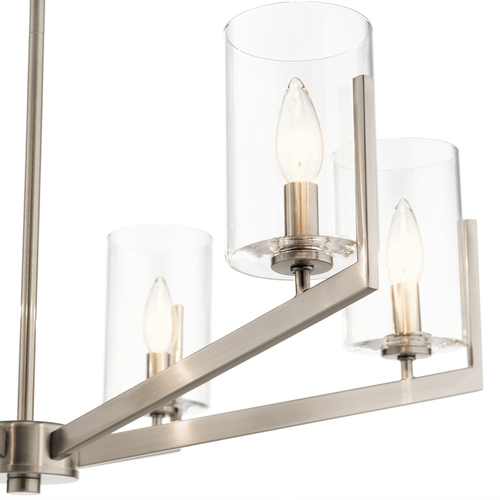
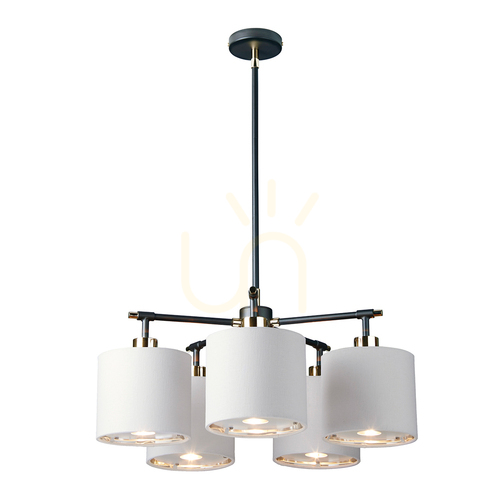
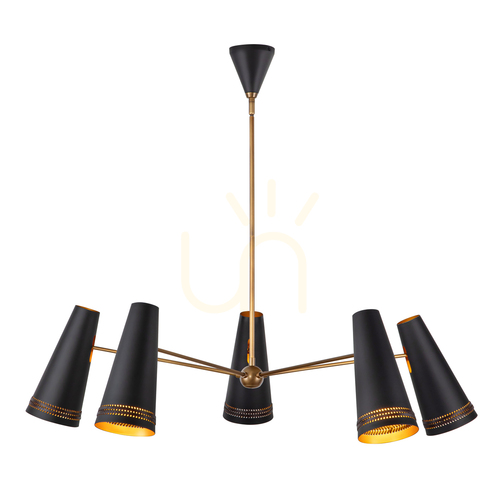
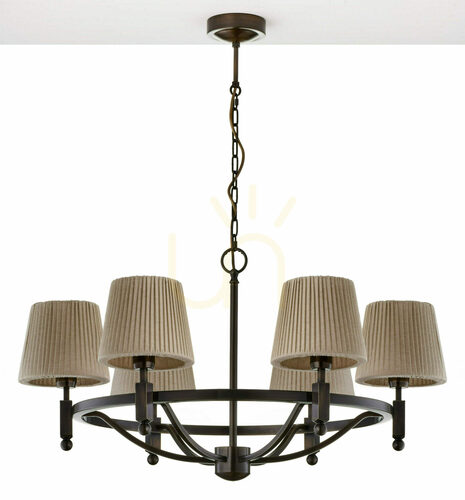
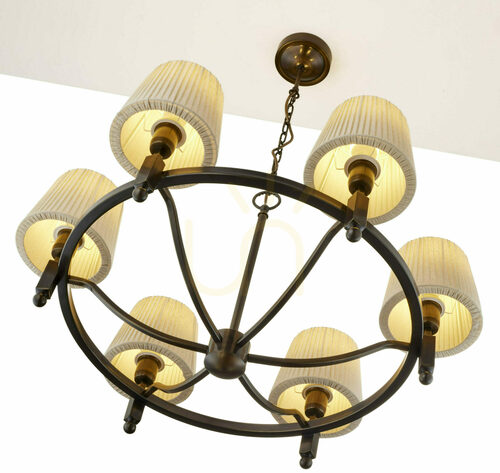
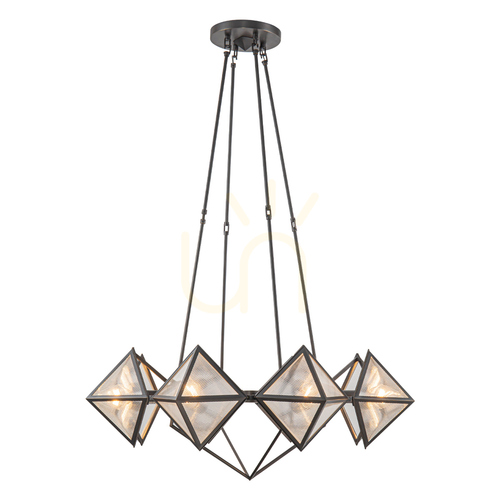
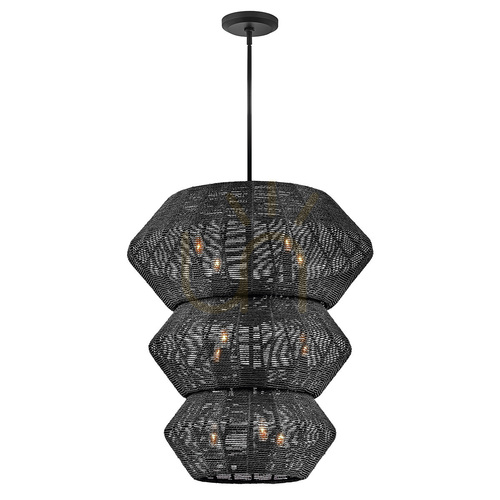
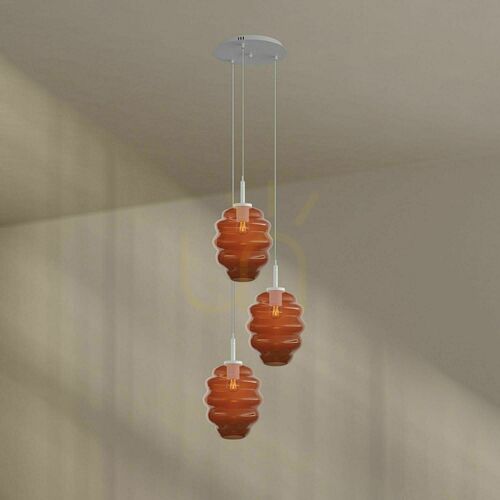
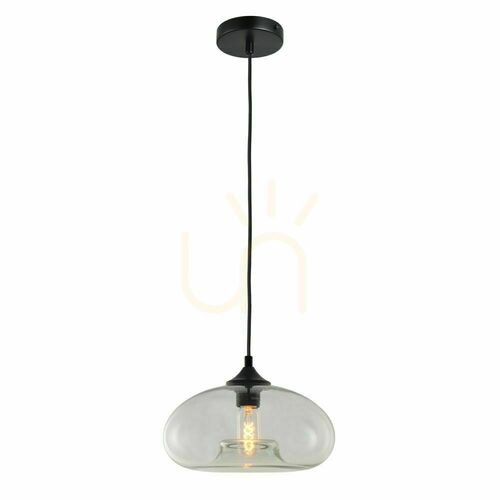
Retro chandeliers are new fittings drawn to an old silhouette. The word describes an intention rather than an age: a designer has taken the outline of a 1920s tiered frame, a 1960s cluster of blown glass globes or a 1970s cascade of smoked glass, and rebuilt it with current wiring, current lampholders and glass made this year. Nothing about a retro fitting is pretending to be old — there is no false patina, no chipped enamel, no artificially aged brass. That is what separates it from vintage, and it is the reason a retro frame sits comfortably in a room where a genuinely aged piece would look out of place.
Which period is being reproduced
Period silhouettes and how to recognise them
| Period reproduced |
Signature outline |
Glass and finish |
Where it lands well |
| 1900s tiered frame |
Two or three rings of candle arms, symmetrical, stepped |
Polished or antique brass, clear glass sleeves |
Tall halls and stairwells, period flats with deep cornices |
| 1920s and 1930s geometry |
Stepped tiers, fluted stems, fan and sunburst motifs |
Frosted and etched glass, chrome or brushed brass |
Dining rooms with a strong architectural line |
| 1950s and 1960s globe cluster |
Many spheres on thin stems at staggered heights |
Amber, smoked and clear blown glass on slim metal |
Over a dining table, and in double-height voids |
| 1970s cascade |
A dense vertical fall of glass on a compact frame |
Smoked and bronze-tinted glass, gold-toned metal |
Stairwells, entrance halls, anywhere seen from two levels |
| Workshop and factory forms |
Bare arms with cage guards or enamel cones |
Blackened steel, clear pressed glass |
Kitchens and open-plan rooms with hard surfaces |
What this filter actually holds
40 models sit behind this page, and the composition is unusual enough to be worth reading before choosing. Every figure below is a floor rather than a share — catalogue attributes are filled in unevenly — so each number means "at least this many models".
-
Glass leads, and it leads by a lot. 34 models are recorded in glass and 32 in metal, with 8 specifically in steel and small numbers using fabric, alabaster, aluminium, leather and acrylic.
-
Multi-globe designs dominate. 26 models carry eight light points, 6 carry one, 3 carry five and 2 carry ten. That is the glass-cluster form almost exactly, and it changes how the fitting has to be lit and hung.
-
Tinted glass, not clear. 8 models are recorded amber, 8 smoked and 8 transparent, with 6 multicoloured — so the majority of the range works by colouring the light, not merely by shaping it.
-
Standard sockets. 32 models take E27 and 6 take E14, all on 230 V, and 38 arrive without a lamp.
-
Dry rooms. 32 models are recorded IP20.
s.luce accounts for most of the range, with Quintiesse, AS-LIGHT and Elstead Lighting contributing the remainder.
Eight lamps is a dimmer problem, not a brightness solution
An eight-globe cluster with a standard 470 lumen lamp in every socket delivers close to 3800 lumens from a single point. In a 20 m2 dining room that is roughly double what the room wants in the evening, and the glass turns from a warm glow into eight bright spots you cannot look at. Two corrections, and the first is better:
-
Lower-output lamps. 250 to 300 lumens per globe on a cluster of eight gives about 2200 lumens total — comfortable, and the glass still reads as lit rather than blasted.
-
A dimmer. Worth wiring in on any multi-lamp fitting. With tinted glass the difference between full and half output is the difference between a showroom and a room.
Where the glass is amber or smoked, warm lamps are the only sensible choice. Amber glass under a 4000 K lamp goes a dull ochre and smoked glass goes grey; at 2700 K both do what the designer intended. A colour rendering index of 90 or above keeps the tint from flattening out.
Sizing, drop and the staggered cluster
For a room, add the length and width in metres and read the answer as centimetres — a 4 by 5 metre room takes a fitting around 90 cm across. Over a table, the frame should be half to two thirds of the table width and never closer than 30 cm to either edge.
A staggered glass cluster changes the drop question, because the fitting has a lowest globe and a highest one. Measure from the lowest globe: 75 to 85 cm above a tabletop, and 210 cm above the floor anywhere people walk. In a stairwell, the cluster is meant to be seen from the side, so hang it so the middle of the composition sits level with the first-floor landing rather than centring it on the ceiling.
Weight, glass and installation
Eight blown-glass globes on a metal frame is a heavy assembly and a fragile one, and the two problems interact. Fix into a joist, a noggin between joists or an anchor set into a concrete slab; the load is not a plasterboard load. Wire and hang the frame first and fit the glass afterwards, one globe at a time, with the ladder in its final position — most breakages happen while a half-glazed fitting is being moved. Keep the packaging for the globes until the installation is finished and the room is clear.
Common questions
Is retro the same as vintage?
No. Retro reproduces a period shape in new materials; vintage is about age and patina and can be applied to any silhouette. Side by side the difference is obvious in the finish — the retro piece has an even, unblemished surface. The comparison is set out on vintage chandeliers.
How is it different from mid-century?
Mid-century is a narrow period — 1950s and 1960s furniture design with its cones, opal globes and splayed thin legs. Retro is broader and includes 1920s, 1930s and 1970s silhouettes as well. Where the two overlap, on the glass-globe cluster, they describe the same object. Mid century chandeliers covers that narrower window.
Can I replace a broken globe?
On most cluster designs yes, since the globes are a stock part held by a threaded collar or a grub screw. Note the diameter and the neck fitting before ordering, because two globes of the same diameter can have different necks.
Will a big cluster work under a 250 cm ceiling?
Over a table, yes, if the lowest globe clears the tabletop by 75 cm. Anywhere people walk, no — a staggered cluster needs height to be read as a composition, and shortening the drops until it fits destroys the arrangement.
Does the same reproduction logic apply outdoors?
It does, with weather ratings added to the decision. Retro outdoor wall lights covers period lantern shapes built to modern sealing standards, and which IP rating each mounting position needs.