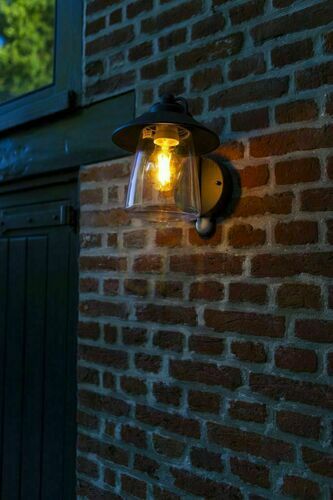
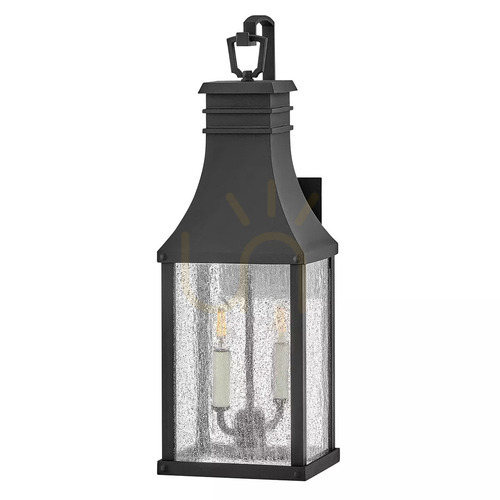
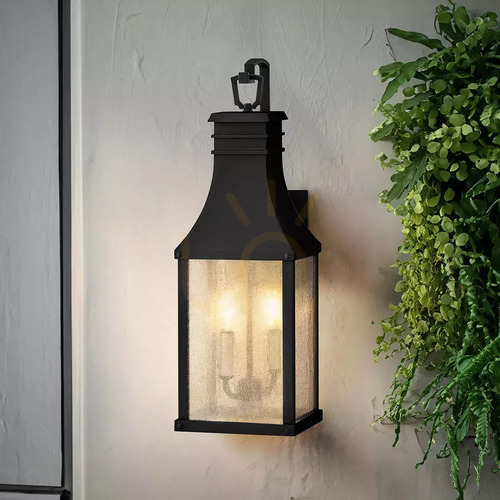
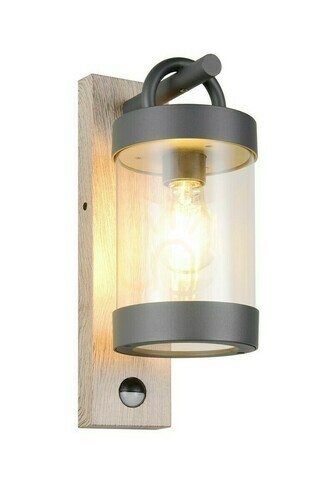
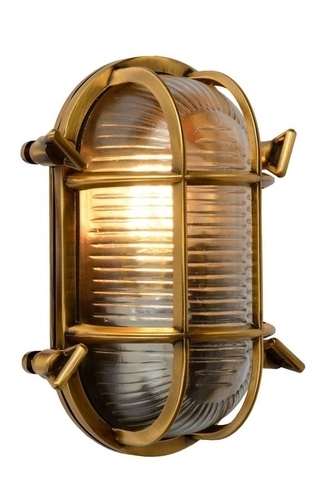
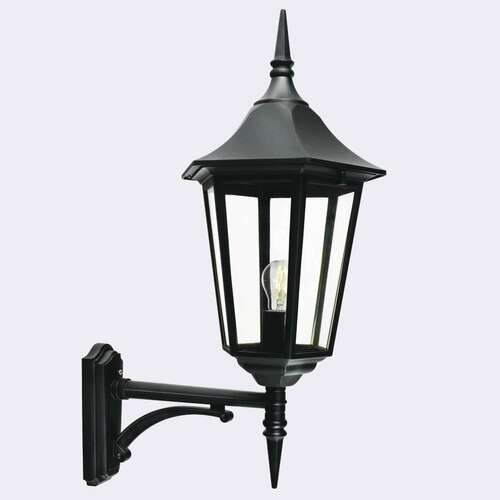
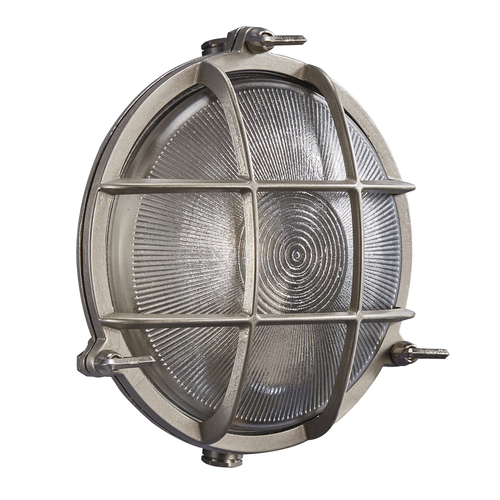
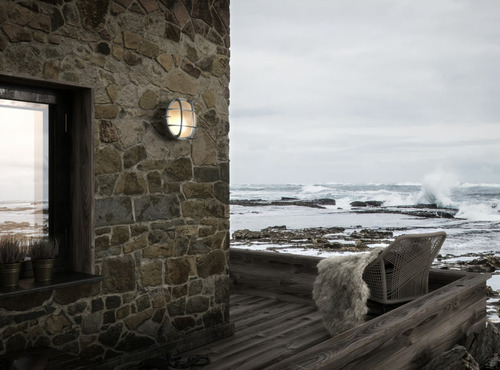
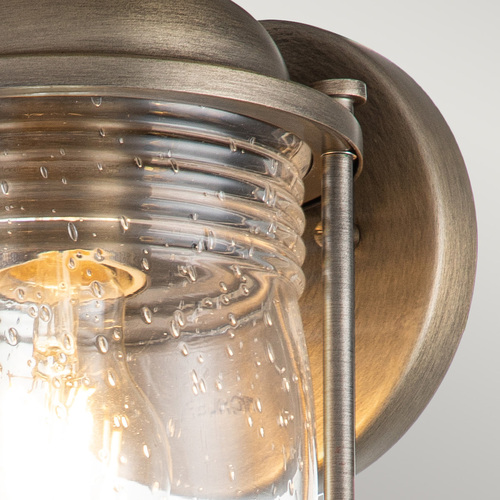
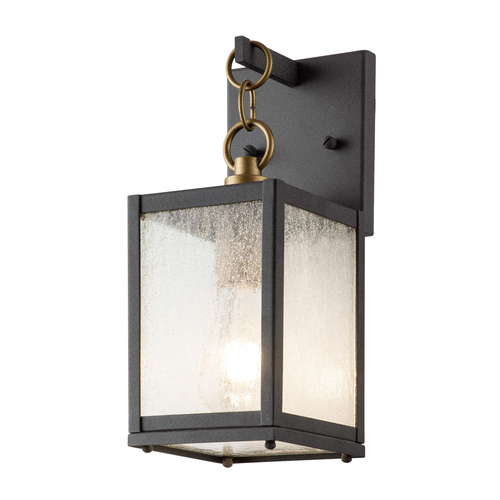
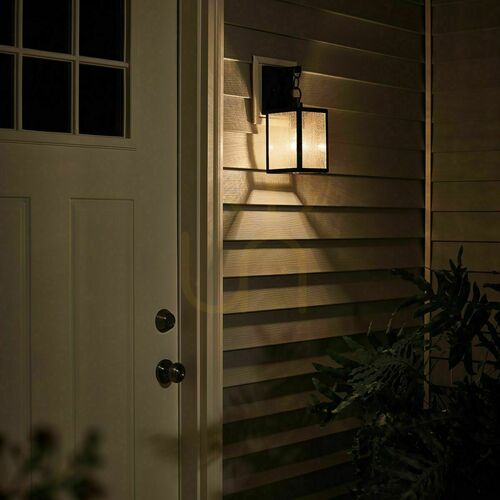
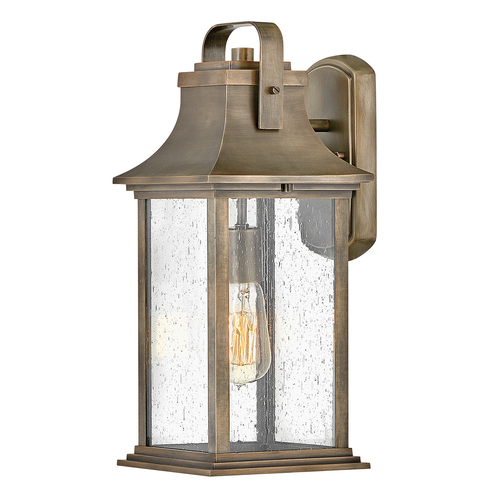
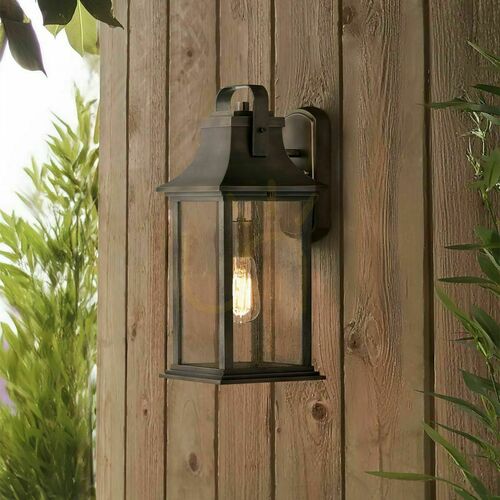
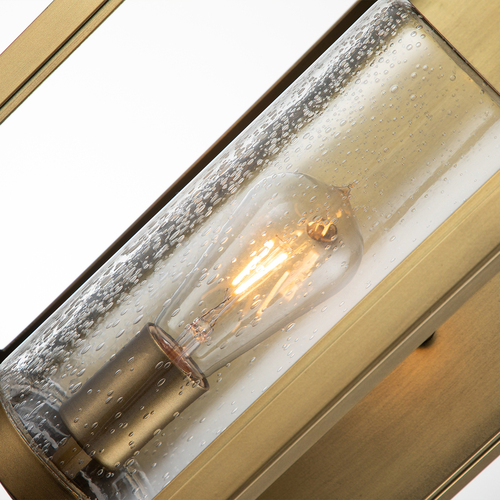
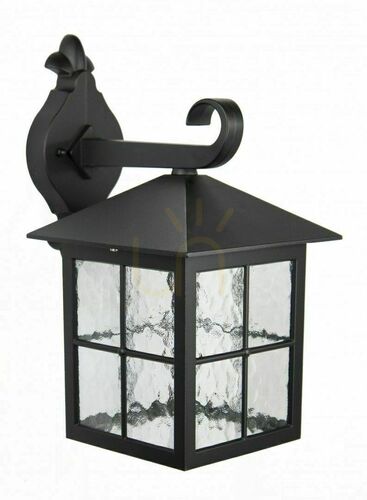
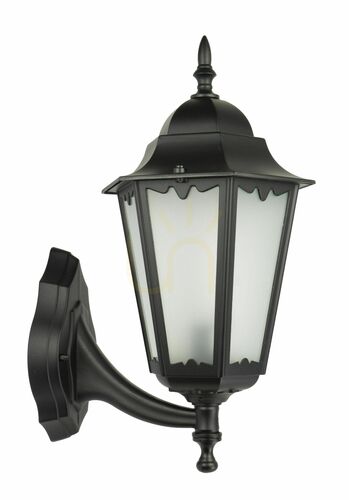
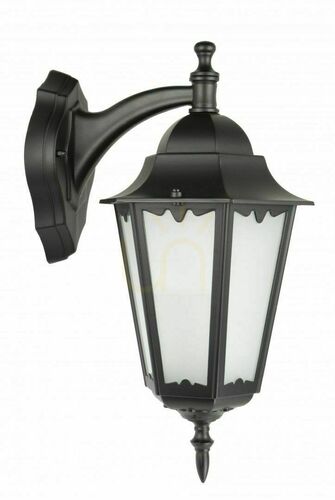
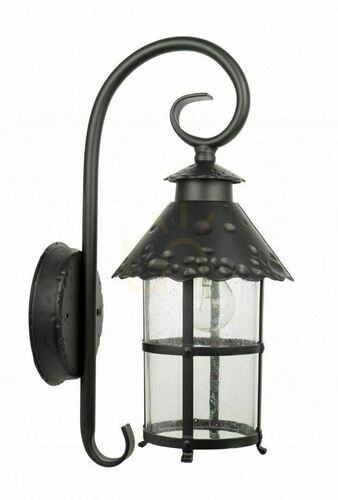
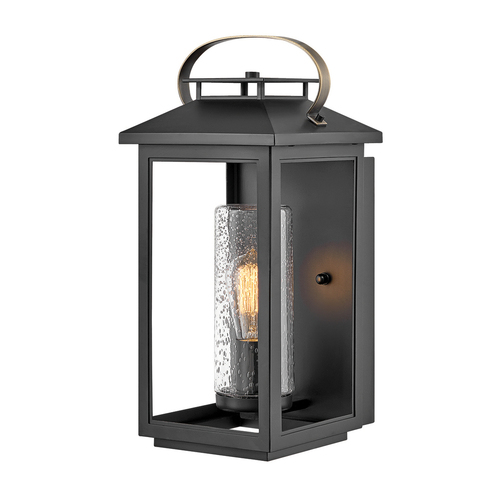
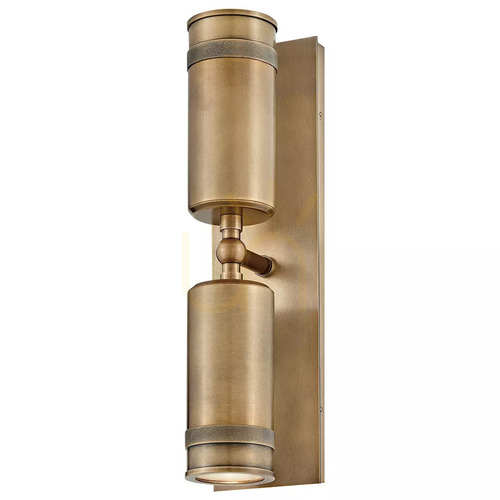
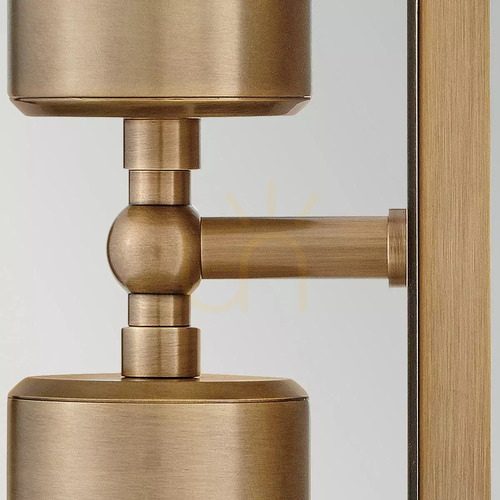
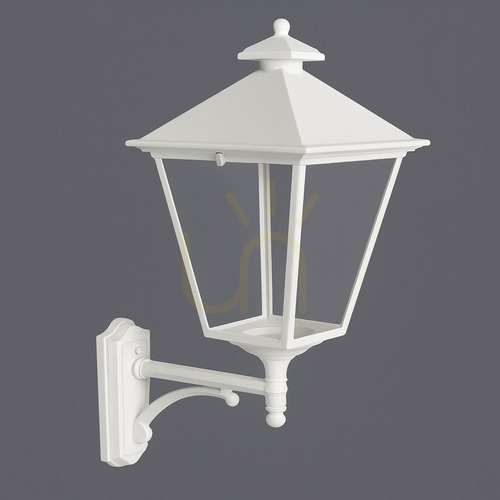
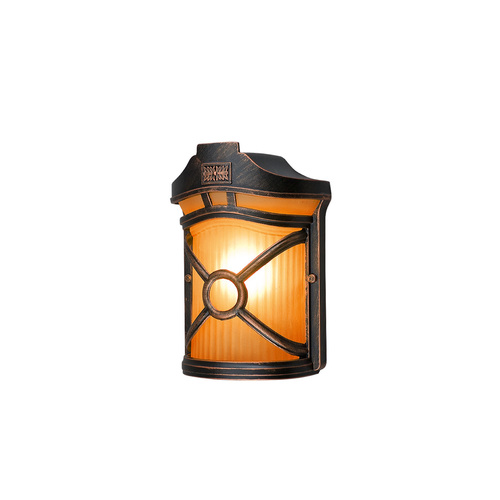
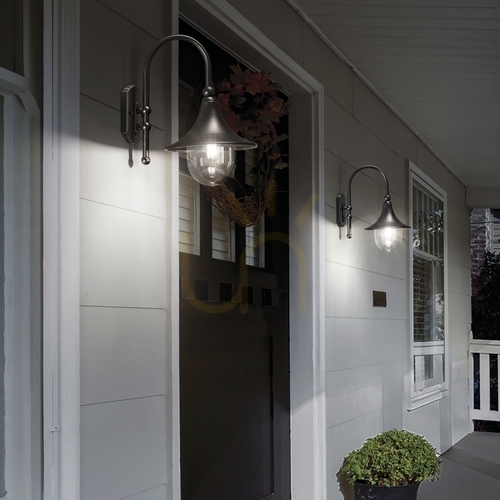
Retro outdoor wall lights are new fittings built to an old silhouette: the coach lantern, the six-sided glazed box on a scrolled bracket, the domed bulkhead, the shallow copper hood that used to sit beside a workshop door. The word retro is doing precise work here. These are deliberate reproductions, made now, to current wiring and weather standards — not salvaged pieces, and not fittings given a false patina. That distinction matters outdoors more than anywhere else, because a genuine antique lantern has no sealing gasket, no earth continuity worth the name, and no protection rating at all.
Retro, vintage and mid-century are three different requests
Shops use the three words interchangeably and buyers end up with the wrong object. A retro fitting reproduces a period shape in current materials: clean edges, even powder coat, modern glazing, a proper gasket. A vintage fitting is about surface age — chipped enamel, aged brass, deliberately uneven finish — and is a look rather than a period. Mid-century is a specific window of furniture design in the 1950s and 1960s, with its own geometry of cones and thin arms. If you want the shape of a 1930s lantern with none of the problems of a 1930s lantern, retro is the correct word for what you are after. The indoor equivalents are on vintage wall lights and retro wall lights.
Protection rating comes before everything else
An outdoor wall light is chosen for its position first and its looks second. The second digit of the IP code is the water figure, and it maps onto exposure directly.
Position, exposure and the rating it needs
| Position |
What hits it |
Minimum rating |
Also worth checking |
| Under a deep porch or a covered walkway |
Damp air, occasional blown drizzle |
IP23 |
Insects get into unsealed lanterns and die against the lamp |
| Open house wall, sheltered by an overhang |
Rain at an angle, running water down the wall |
IP44 |
That the gasket sits between the glass and the body, not just around the base |
| Exposed wall, no overhang |
Driving rain from any direction |
IP44, and IP54 or better if it faces the prevailing wind |
Drainage — a lantern with no weep hole fills up and stays wet inside |
| Garden wall, gatepost, low level |
Rain, splash from paving, hose and sprinkler |
IP54, IP65 where a hose is used nearby |
Impact rating if it is at shin height beside a path |
| Coastal or poolside |
Salt-laden air, chlorine vapour |
IP54 minimum, plus a marine-grade material |
Stainless steel grade and whether the fixings themselves are stainless |
Across the 32 models behind this page, 12 are recorded at IP43, 11 at IP44, and small groups at IP23, IP54 and IP64. Read those figures as floors rather than shares — the attributes are filled in unevenly — but the shape of the range is clear: this is a filter of wall-mounted fittings for house walls and porches, with a smaller number rated for genuinely exposed positions.
Material decides how it looks in five years
Outdoors, the finish is a maintenance decision. 21 models are recorded in aluminium, 12 use glass, 11 use moulded plastic for lenses and diffusers, 6 are in copper, 4 in stainless steel and 2 in brass.
-
Powder-coated aluminium is the workhorse: light, it will not rust, and the coating is what you are relying on. Any chip that reaches bare metal near the coast will bloom white, so touch up scratches rather than ignoring them.
-
Copper is the material that improves. It goes from bright, through brown, to a green patina over years, and near salt air it gets there faster. Nothing needs doing to it; that is the point.
-
Stainless steel is the right answer within a few hundred metres of the sea, but the grade matters and so do the screws. A stainless body on plated steel fixings will stain from the fixings outward.
-
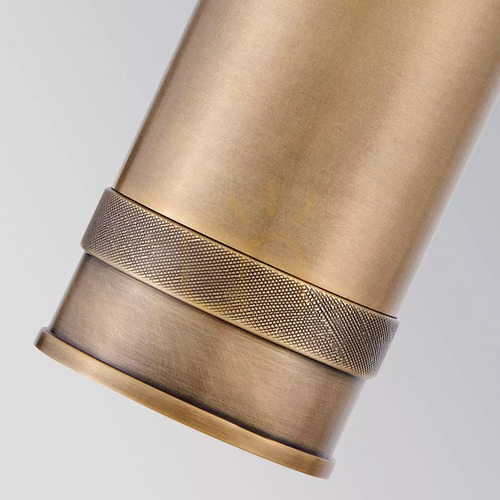
Brass behaves like copper, more slowly, and looks correct on a period reproduction where aluminium can look too crisp.
The producers behind this filter are led by SU-MA and NORLYS, with Bega, Ideallux, Maytoni, Nordlux, Nowodvorski and Lucide contributing further designs. On recorded colour, 15 models are black, with smaller groups in copper, brown, white and anthracite — the standard outdoor palette, where dark finishes disappear against a wall by day and pale ones do not.
Height, spacing and the neighbours
Mount a wall lantern with its centre at 180 to 210 cm above the ground beside a door, which puts the lamp above eye level for anyone standing at the threshold. Along a driveway or garden wall, 160 to 180 cm and spaced 3 to 5 m apart gives an even run without a runway effect. Two rules save trouble later: never mount a lantern where the glass sits directly in the sightline of a ground-floor window, and keep the lit face away from a bedroom window on the same wall.
Downward light is the courteous choice. A hooded or half-lantern form that throws light onto the path rather than sideways at the boundary keeps light out of a neighbour's garden and out of the sky, and it also makes the path more usable — a light you can see is a light that has dazzled you rather than shown you the step.
Lamp choice
28 of the models take an E27 lamp and 29 carry a single light point, so this is a filter of single-lamp fittings where you choose the source. 25 models are recorded as taking a replaceable LED lamp and 21 ship without one. Three things are worth getting right:
-
Colour temperature 2200 K to 2700 K. Warm light suits copper, brass and black paint, and it is far less disruptive to insects and to neighbours than a cool source.
-
Output around 400 to 800 lumens for a door lantern. Higher figures light the wall, not the path, and cause the glare the fitting was meant to avoid.
-
Cold-start behaviour. A lamp rated to at least minus 20 degrees Celsius, because a lamp specified for indoor use will flicker or fail to strike on a winter night.
Common questions
Can a retro lantern take a motion sensor?
Yes, and usually the neater route is a separate sensor wired to the circuit rather than a sensor built into a period-looking fitting, where the lens spoils the silhouette. Keep the sensor low and aimed across the approach rather than along it.
What does the first IP digit mean here?
Dust and solid objects. Outdoors the water digit does the work, but a low first digit is why unsealed lanterns fill with insects and spiders; anything from 4 upward keeps most of that out.
Do I need an earth connection?
Any metal-bodied outdoor fitting needs one, and outdoors it is not a formality. Check the cable gland is tightened onto the cable sheath, not the cores, and that the entry faces downward or is sealed — most water gets in through the cable entry, not the glass.
Will a black aluminium lantern fade?
A good powder coat holds its colour for many years; what fails first is usually the gasket, which hardens and lets water in. It is a cheap part to replace and worth checking every few years on an exposed wall.
Is there an indoor version of the same look?
The nearest indoor equivalents are period-shaped hall and stair fittings. If you want the same reproduction logic on a central fitting, retro chandeliers deals with reproduced period frames and how to size one.