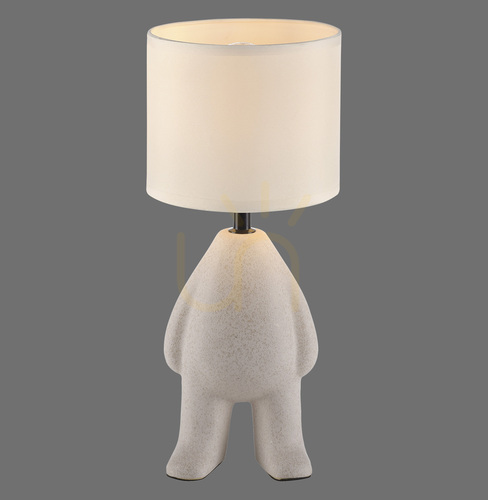
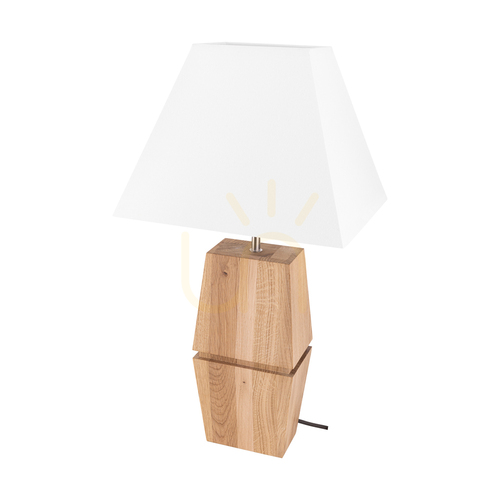
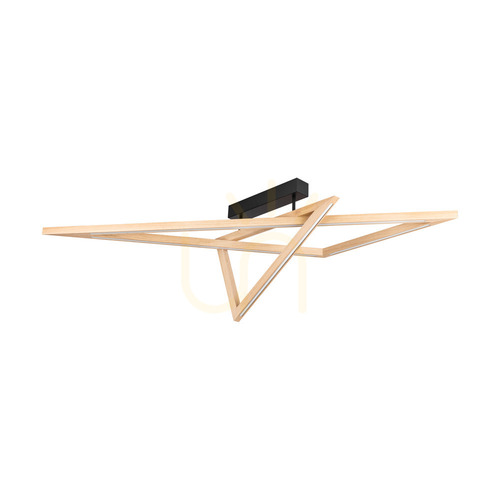
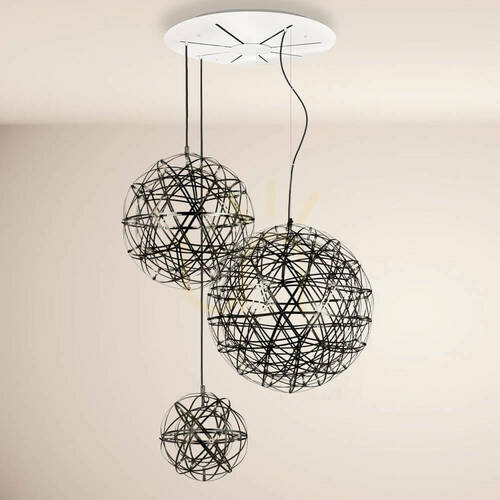
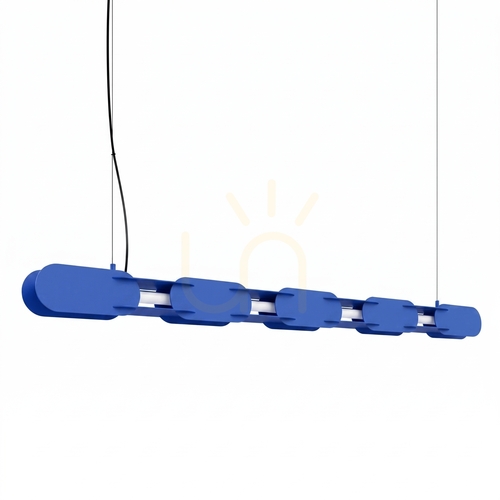
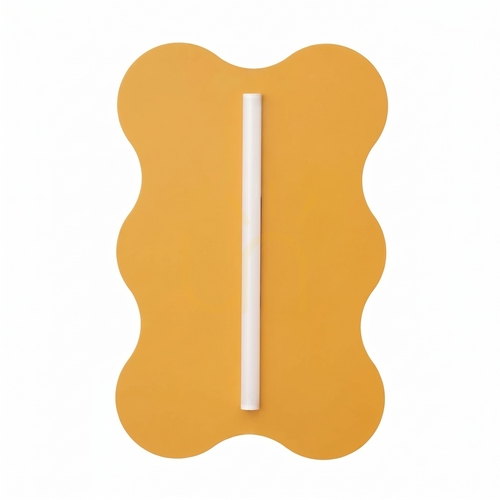
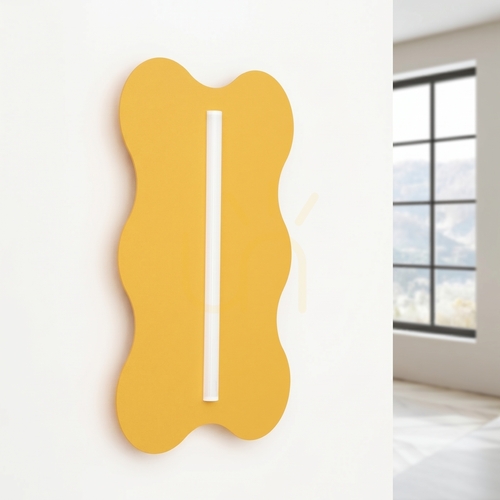
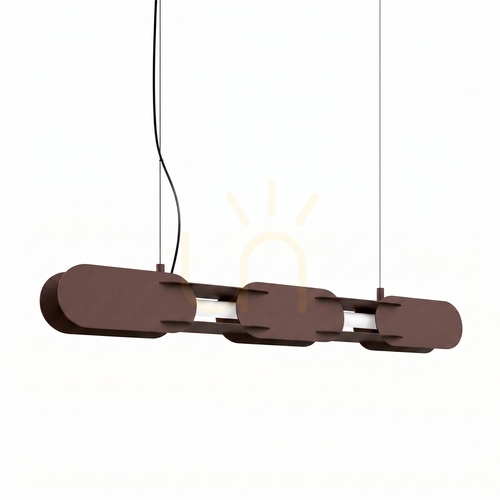
Design lamps are lamps with an author. Somebody is credited with the shape, there is a year attached to it, and a manufacturer bought the drawing, tooled up for it and put its name on the underside. That is the only definition of the category that survives contact with reality, because every lamp is designed — the cheapest bulkhead in a builders' merchant was drawn by somebody too. What separates this shelf is whether the form solves a lighting problem that had not been solved before, and whether the solution is documented well enough that you can look it up.
What a named design actually changed
The reason these shapes are still made is rarely decoration. Most of them were answers to a technical complaint about the electric light bulb, which arrived in domestic rooms as a small, brutally bright point source that nobody knew how to hide.
Designs that solved something, and what they solved
| Design |
Author, year |
The problem it answered |
| WG24 table lamp |
Wilhelm Wagenfeld, 1924 |
Opal glass shade and glass stem: the whole lamp glows instead of hiding a hot spot. The cord runs visibly inside the stem rather than being disguised. |
| PH system |
Poul Henningsen, from 1925 |
Three concentric shades set on a logarithmic spiral so that no direct light reaches the eye at normal viewing angles, and every ray is reflected at least once before it leaves. |
| Kandem bedside lamp |
Marianne Brandt with Hin Bredendieck, 1928 |
A reflector that throws light onto the page rather than into the room, plus a switch you can find in the dark. |
| 1227 lamp |
George Carwardine, 1934 |
Constant-tension springs borrowed from vehicle suspension: the head stays where you put it, at any angle, without a clamp. |
| A330S pendant |
Alvar Aalto, 1937 |
A brass bell with a stepped rim that shields the bulb from the diner opposite while lighting the tablecloth. |
| Akari light sculptures |
Isamu Noguchi, from 1951 |
Washi paper over a bamboo rib cage: a large, low-brightness surface that is light enough to hang from a flex and folds flat. |
| Arco floor lamp |
Achille and Pier Giacomo Castiglioni, 1962 |
Lighting a dining table from above when there is no ceiling outlet over it — a steel arch reaching around two metres out from a marble block. |
| Tizio |
Richard Sapper, 1972 |
Counterweighted arms that carry the current themselves, so the arm can be moved with one finger and there is no trailing wire. |
Read that list and the pattern is clear: the memorable shapes are mostly shading strategies. The marble block under the Arco is a counterweight before it is a status object, and there is a hole through it so a broom handle can be pushed in and two people can carry it. Henningsen's shades are stacked the way they are because he plotted where the light goes, not because the tiers look good — although they do.
Original, licensed reissue, replica
Three things sit under the same photograph on the open internet, and they are not the same object.
An original
A piece made in the production run the designer supervised, or close to it. These are collector goods, sold by auction and by specialist dealers, dated by their fittings, stampings and by the shade material. Rewiring one to current standards is normal and does not spoil it; replacing a shade usually does.
A licensed reissue
The current, authorised production. The manufacturer holds the rights, works from the archive drawings, and generally adjusts only the lamp holder and the electrics — for example moving from a hot tungsten source to an LED module or a modern E27 socket at 230 V. A reissue carries a maker's mark, a model reference, an EU energy label and a spare-parts route. If a shade cracks in eight years, somebody can sell you a shade.
A replica
An unlicensed copy of the shape. The visible geometry is approximated, the invisible engineering usually is not: the spring rates are wrong, so an arm droops; the reflector angles are wrong, so a shade that was designed to be glare-free is not; the metal is thinner and the finish is a coating rather than the material. There is also a legal dimension in the European Union, and it is live rather than theoretical. Registered Community designs run for up to twenty-five years, but the Court of Justice confirmed in the Cofemel judgment that a work of applied art can also carry copyright if it is the author's own intellectual creation — and copyright runs for the life of the author plus seventy years. Several of the shapes above are still inside that window. That is why a copy can be freely advertised in one place and withdrawn in another, and why a shop that sells licensed goods will tell you the manufacturer's name rather than the phrase "inspired by".
The icon that is a bad reading light
This is the part a showroom photograph never tells you, and it is worth more than any of the history above. A sculptural design is optimised for how it looks lit, not always for how much usable light lands on a surface.
- A paper-shaded sculpture is a large, gentle glow. It fills a corner beautifully and puts almost nothing on a book. If it is your only light in a reading corner, you will be squinting.
- A polished metal cone throws a hard, narrow pool. Superb over a table or a kitchen island, poor as the general light of a room, because everything outside the pool goes dark by comparison.
- Fully diffusing globes and opal spheres are comfortable to look at from every angle, which is exactly why they light nothing in particular. Use them for ambient light and add something aimed.
- Counterweighted task arms are the opposite trade: they will put plenty of light exactly where you need it and they look like machinery when switched off.
For reference points that hold across the EU, general indoor work is planned around roughly 300 lux on the surface and detailed close work around 500 lux, per the European standard for indoor workplace lighting. Nobody measures their living room, but the ratio is the useful part: a table lamp that gives a pleasant glow is delivering a fraction of what a task arm puts on the same page. Buy the sculpture for the room and the arm for the task, and accept that one lamp rarely does both.
Buying notes for the EU market
-
Fittings and voltage. Reissues sold here run on 230 V with E27, E14, G9 or GU10 sockets, or with an integrated LED module. An integrated module is not a bulb you replace — check whether the module or the whole driver is a serviceable part before you commit.
-
Colour temperature. Brass, copper and opal glass were designed under tungsten light. They read as intended at 2700 K, and warmer still at 2200 K. Above 3000 K brass turns greenish and paper shades go grey.
-
Colour rendering. Anything lighting marble, wood or textiles wants CRI 90 or better; below that, natural materials look flat.
-
Dimming. A dimmable LED has to say so. Most retrofit lamps prefer a trailing-edge dimmer, and dimmers have a minimum load — one small LED lamp on an old dimmer will flicker.
Questions people ask
Is a licensed reissue the same lamp as the original?
Dimensionally, usually yes; electrically, no, and that is deliberate. The change is almost always the light source and the wiring, because the original was built for a filament bulb that is no longer manufactured. Where the reissue also changes a material, the manufacturer normally says so in the product notes.
How do I tell a replica from the real thing in a listing?
Look for the manufacturer's name rather than the designer's name alone. A genuine listing names the brand that holds the licence and gives a model reference. A replica listing names only the designer, or uses "style", "inspired by" or "in the manner of", and rarely states a country of production.
Does a design lamp need a special bulb?
Rarely, but the shade dictates the source. Open shades and clear glass need a low-brightness lamp — a frosted bulb or a long filament — because the source is visible. Closed opal or metal shades will take anything that fits the socket and the maximum wattage on the label.
Where does this style sit against the other periods?
Authorship cuts across styles rather than competing with them. Many of the designs above are also period pieces: the 1950s and 1960s shapes sit next to retro lamps, the geometric metal and glass of the interwar decades belongs with Art Deco lamps, and the earlier, plant-like forms are Art Nouveau lamps.
Which type should I be looking at?
If the lamp is going overhead, start from the ceiling and the room, not from the shape: design ceiling lights covers the choice between a pendant, a chandelier and a flush fitting. For a surface, compare design table lamps against design desk lamps — they look adjacent and they are two different buys, one measured in proportion and one in light on the work surface.