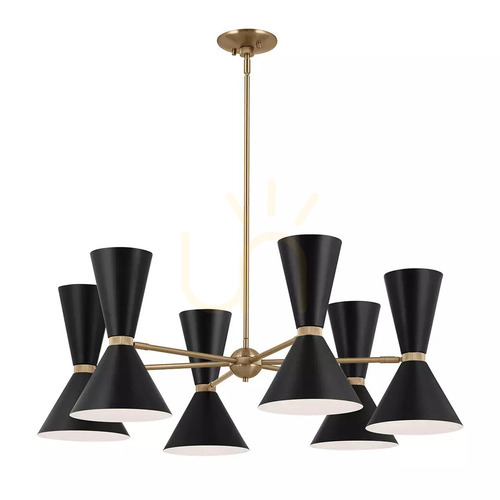
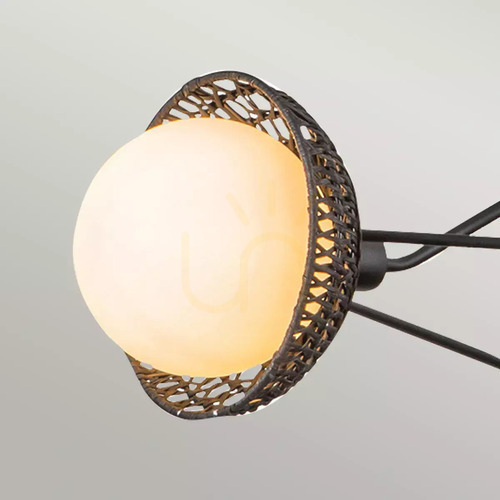
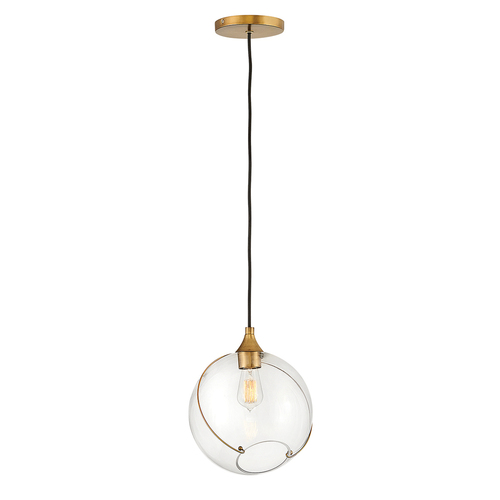
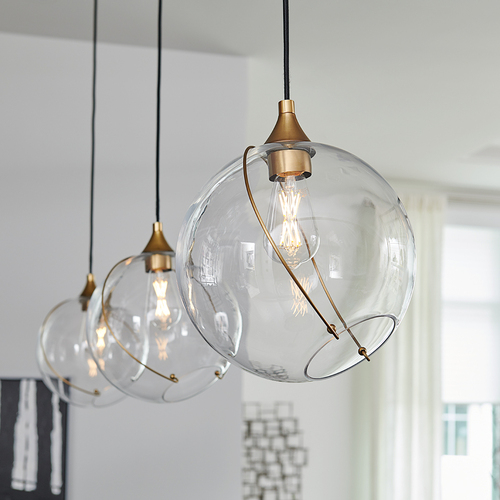
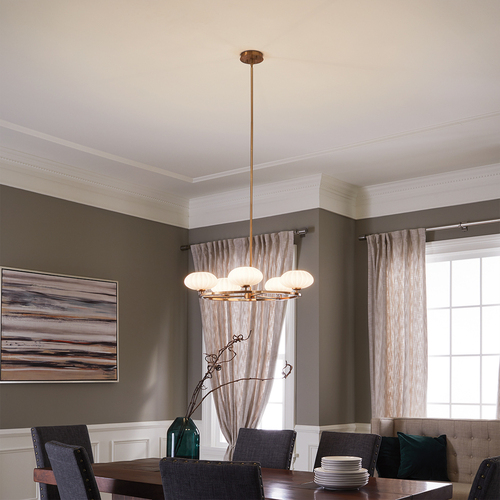
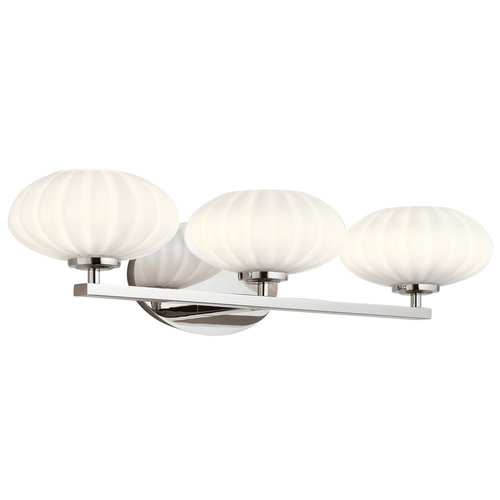
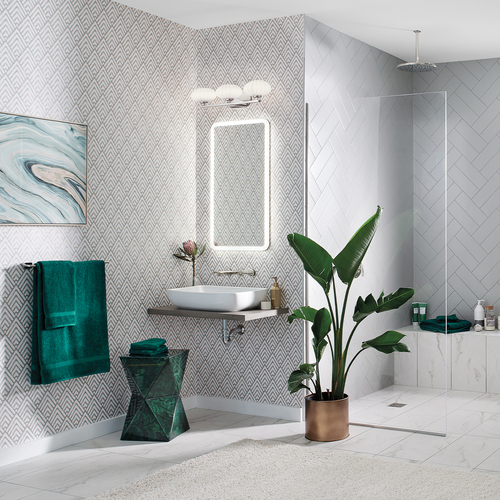
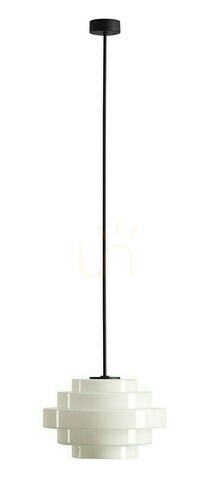
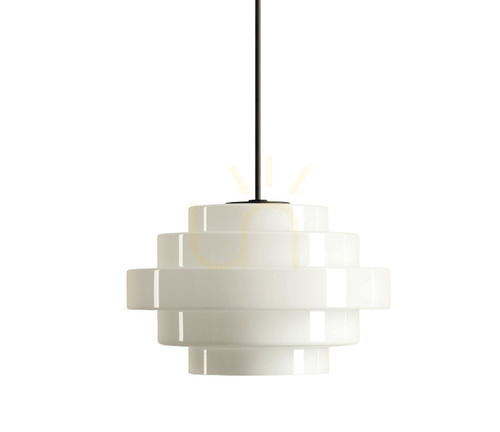
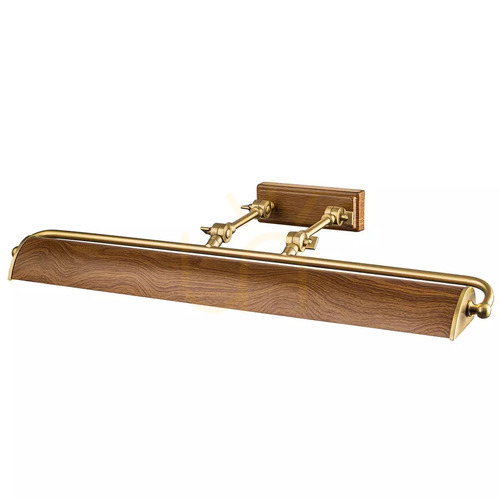
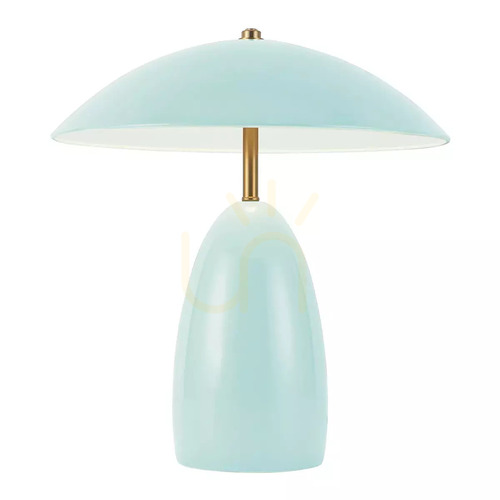
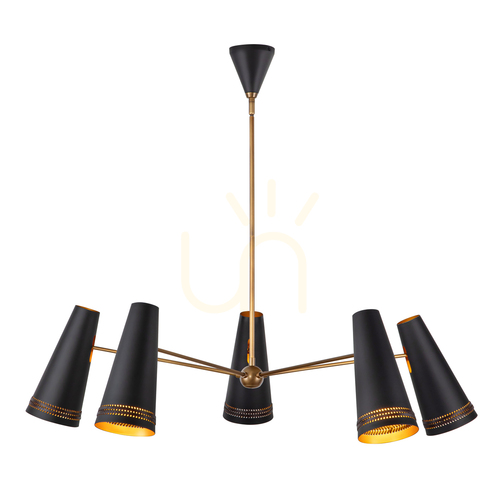
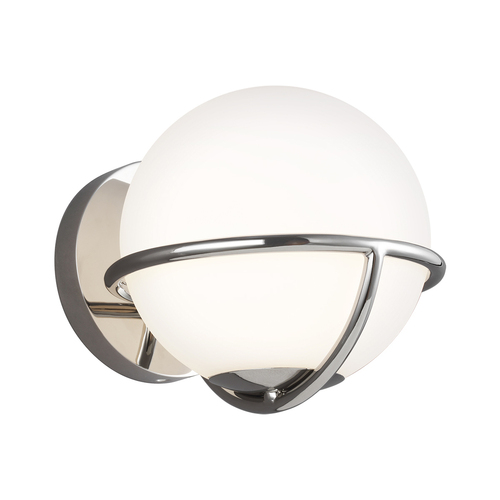
Retro lamps in the sense most people mean the word are mid-century modern: the lighting drawn between roughly 1948 and 1969, when designers in Denmark, Italy and the United States stopped hiding the fitting behind a shade and started treating the shade itself as the object. An opal glass globe on a thin brass stem, a cone of enamelled steel over a dining table, a spider of splayed arms on a ceiling rose, a teak base turned on a lathe — the whole language is thin, light, and confident about showing you how it is made.
What actually makes a lamp mid-century
The period is a design vocabulary, not a date on a label. Five things recur across almost every genuine mid-century drawing, and a reproduction that keeps four of them usually reads right in a room.
The recurring signatures of 1950s and 1960s lighting
| Signature |
What it looks like |
Why it was done that way |
| Opal and milk glass |
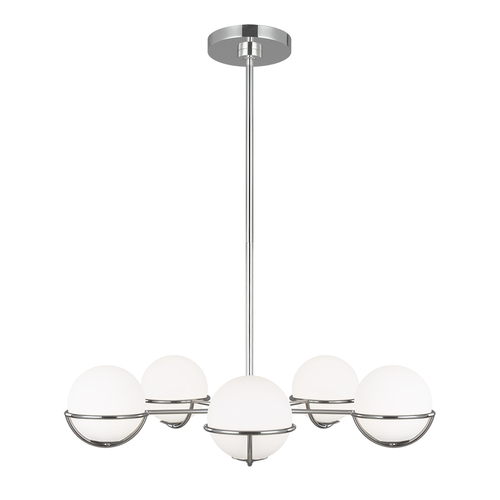
Globes, half-globes, elongated eggs, flattened discs |
Post-war glassworks could blow an evenly diffusing shade cheaply; it hid the filament, which mattered when bulbs were bare and bright |
| The cone |
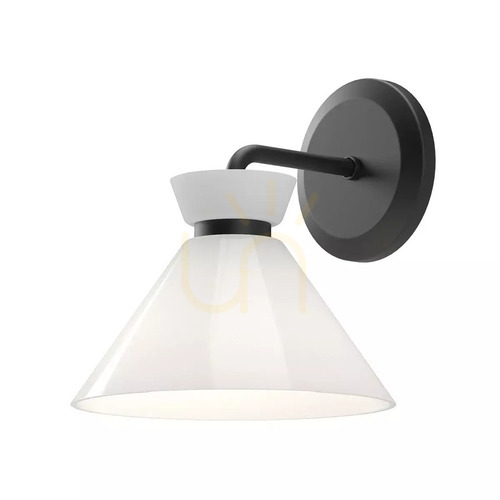
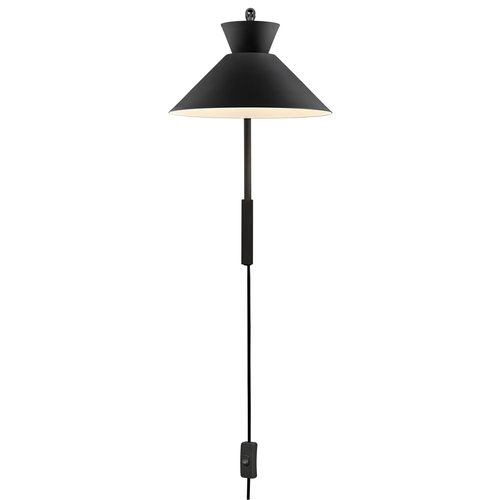
A truncated cone in enamelled steel or aluminium, narrow at the top |
Spun on a lathe from one sheet, so it cost almost nothing and threw a clean circle of light on a table |
| Splayed thin legs |
Three or four tapered dowels, often set at an angle, sometimes with brass feet |
Furniture had lifted off the floor; a lamp standing on a fat plinth would have looked pre-war next to it |
| Warm timber |
Teak, oak, later beech and rosewood, oiled rather than lacquered |
The Danish workshops had the timber and the joinery; the wood was left visible as the finish |
| Brass, not chrome |
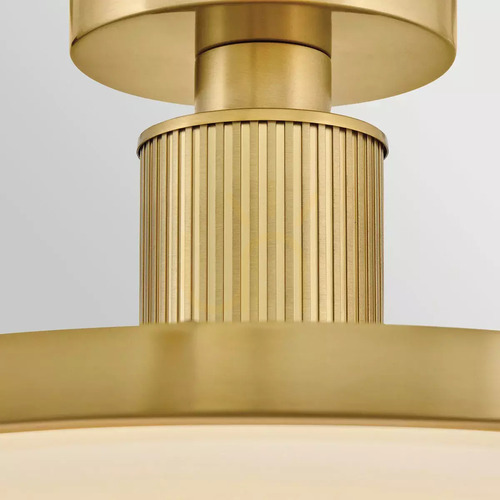
Thin brass tube, brass collars, brass ceiling roses |
Chrome belonged to the 1930s and returned in the 1970s; the middle decades preferred a warmer metal against wood |
The palette is just as reliable: mustard, rust, olive, teal and a dirty off-white, with black used as a line rather than a mass. If a lamp is high-gloss white and silver, it is later. If it is heavy, dark and ornate, it is earlier.
Retro, mid-century and vintage are three different requests
The words get used interchangeably in shop listings and they do not mean the same thing, which is why people end up with something that looks wrong beside their sofa.
Mid-century
A period style: 1950s and 1960s furniture design, whether the piece was made then or made this year to the same drawing. The test is geometry — cone, globe, splayed leg, thin arm.
Vintage
A surface condition. Aged brass, smoked glass, enamel with chips in it, a cage guard over the bulb. Vintage pieces can come from any decade, and the point is that they look used. See vintage ceiling lights if that is the register you are after.
Retro
The loosest of the three, and in practice a search term rather than a category: anything that reads as belonging to an earlier decade. Most people typing it want mid-century, which is why this page answers to both.
Room by room
-
Over a dining table. This is where the style is strongest. A single cone or opal globe hung 70 to 80 cm above the tabletop, with a diameter around a third of the table width. A rise-and-fall pendant on a counterweight is the period-correct version and still the most useful one.
-
Living room. A floor lamp with an adjustable arm beside a low chair, and a table lamp on a sideboard. Mid-century interiors were lit from several low points rather than from one bright ceiling fitting, and copying that is most of the effect.
-
Hallway. A flush opal disc or a shallow globe. Corridors of the period had low ceilings, and the flattened shapes exist because of them.
-
Bedroom. A wall-mounted swing arm on each side, which frees both bedside surfaces. The 1950s versions pivot at the plate and again at the shade, so the light lands on the page rather than the pillow.
-
Desk. A counterbalanced task lamp in painted steel. The original industrial drawings were reworked for the home during exactly this period, which is why they still suit a mid-century room.
Getting the light right, not just the shape
The one thing a faithful reproduction cannot inherit is the bulb. These fittings were drawn around incandescent lamps of 40 to 60 W, which glowed at roughly 2700 K and dimmed to amber. A modern retrofit LED at 4000 K in the same fitting makes teak look grey and brass look green.
- Choose 2700 K, or 2400 K where a bulb is visible through clear or lightly smoked glass. Warm white is not nostalgia here; it is what the materials were chosen against.
- Anything with an exposed lamp wants a frosted, opal or globe-shaped LED. A naked high-output chip inside a glass shade produces a hot spot that no amount of styling rescues.
- Sockets on European fittings of this type are almost always E27 or E14 on 230 V, with G9 appearing in newer reworkings. That means the light source is replaceable, so you can change the colour temperature later without changing the lamp.
- Put the dining pendant and the living room lamps on dimmers if you can. Low, warm and uneven is what these interiors looked like in the evening; flat and bright is a later habit.
What it sits beside
Mid-century lighting is unusually tolerant. It works against plain plaster, against oak floors, and against the pale Nordic palette that grew out of the same decades. It does not want to compete: one strong fitting per room, with the rest kept quiet, is how the original interiors were composed. Where it goes wrong is next to heavy carved furniture or high-gloss modern gloss units, where the thin brass stems simply disappear.
Questions people ask
Is a reproduction worth buying, or should I look for an original?
An original carries its own wiring, and forty-year-old flex, brittle bakelite lampholders and unearthed metal shades are a real consideration rather than a charming one. A current production piece is built to today's electrical standards and takes a modern light source. Buy the original for the object; buy the reproduction for the room.
What is a sputnik light, exactly?
A ceiling fitting with arms radiating from a central sphere in every direction, each ending in a small bulb. It appeared in the late 1950s and takes its nickname from the satellite. It is the loudest thing in the style and needs height and space around it — see mid century chandeliers for how big it needs to be.
Does everything have to match?
No, and matching sets are the surest way to make a room look like a showroom. Repeat one material — brass, or the same opal glass — across two or three fittings and let the shapes differ. A cone over the table and a globe in the hall belong together without being a family.
Which fitting should I start with?
The one over the table, because it sets the height of everything else in the room and it is the piece people sit under. Work outward from there to mid century ceiling lights for the overhead choice, mid century table lamps for the surfaces, and retro wall lights where a bedside or a corridor needs light without a table under it.
Will it date?
It has already survived seventy years and three revivals, which is a better record than most things sold as timeless. The parts of the style that age badly are the loudest ones — a very large sputnik, a strongly coloured plastic shade — and the parts that do not are the plain ones: a white globe, a wooden base, a brass stem.