The quickest way to sort out desk lighting is to move the light to the desk itself: a fitting above the worktop, a little in front of you and off to one side, so the surface you write on gets roughly 500 lux and the monitor stays free of reflections. Hung from the ceiling or fixed to the wall, it keeps the desktop clear, which counts for a lot when the desk in a box room is not much more than a deep shelf.
Most home offices are lit by accident. There is one pendant on a ceiling rose in the middle of the room, and in a spare bedroom that rose nearly always ends up behind the chair. Your head shades the page, the screen catches a bright smear, and you end up working in your own shadow. Where the new light should go depends mostly on the shape of the room.
Box rooms, alcoves and loft conversions
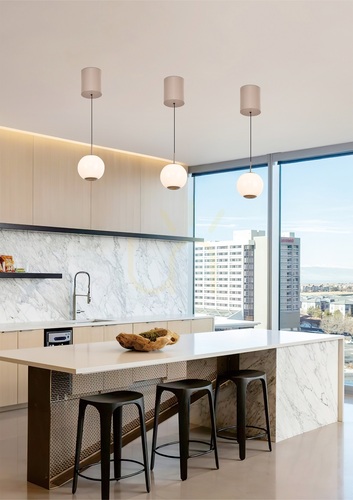
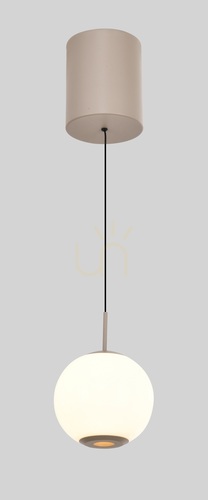
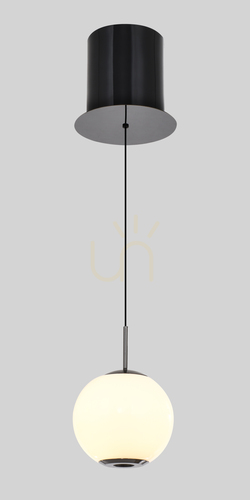
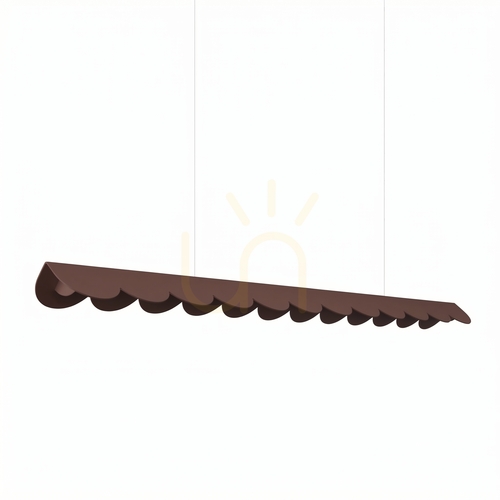
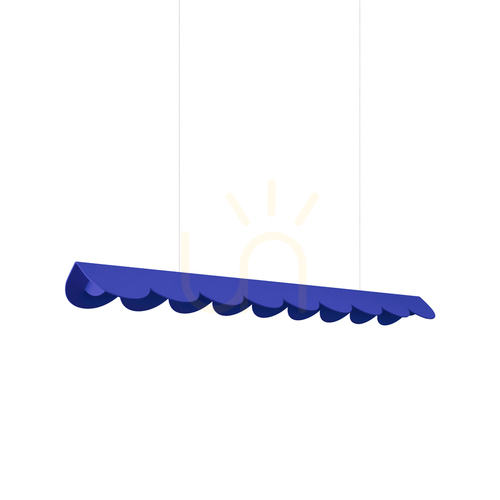
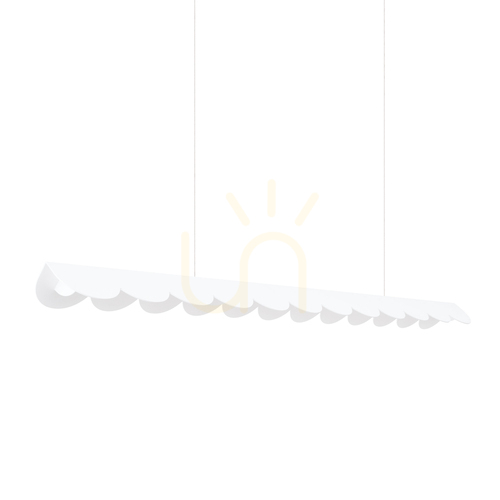
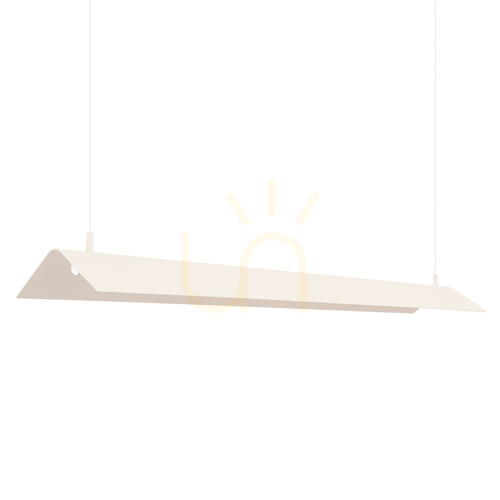
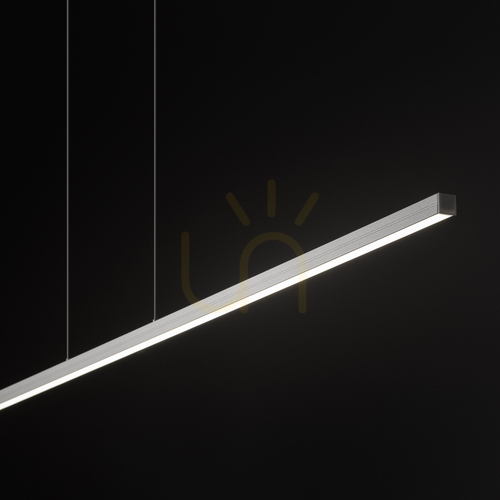
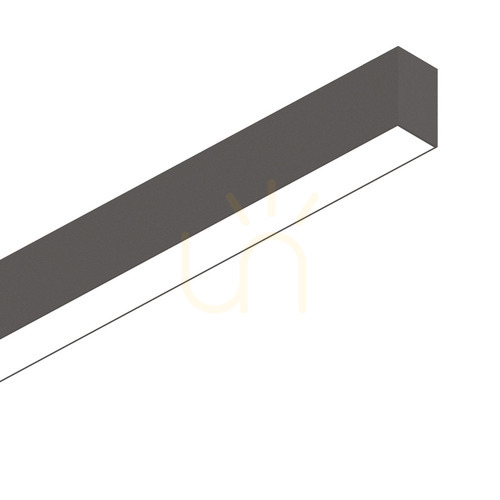
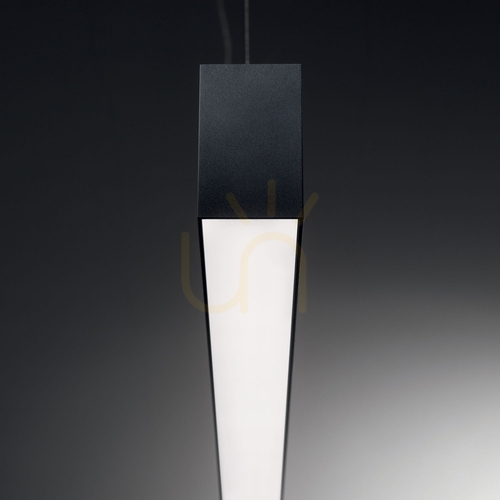
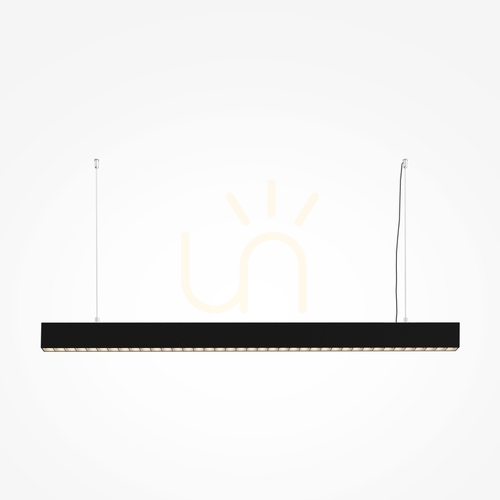
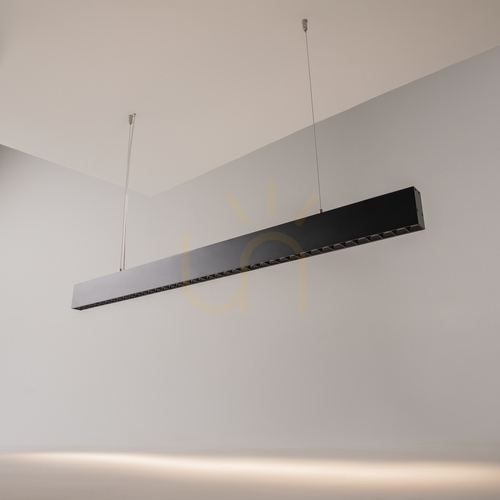
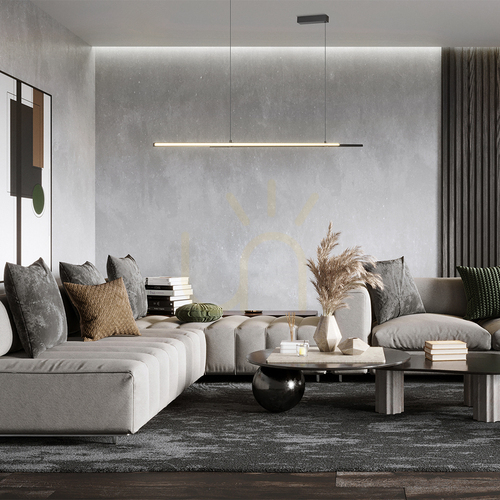
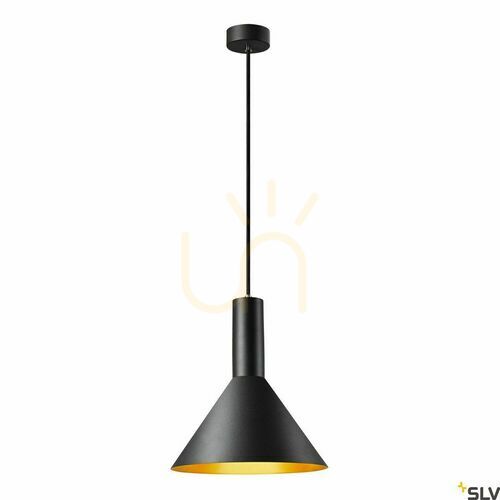
Box room. With the desk pushed against the end wall, a short linear pendant or a single shaded pendant over the front edge of the desk lights the whole worktop and can double as the room's main light. Ceilings in many newer homes are around 2.4 m, so bringing the fitting down to 60–80 cm above the desktop usually takes a drop of under a metre.
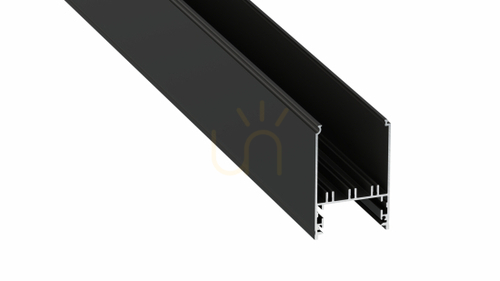
Alcove desk. A desk built into the recess beside a chimney breast nearly always has shelves above it. An LED profile with a diffuser, fixed under the lowest shelf close to its front edge, washes the desk without shining into your eyes. If there are no shelves, a wall light with an arm on the side wall of the alcove does the same job from the side.
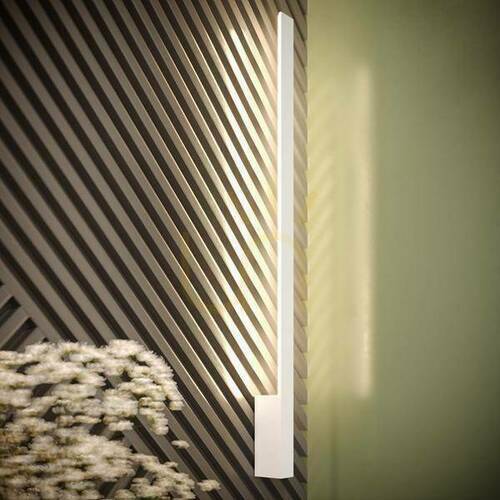
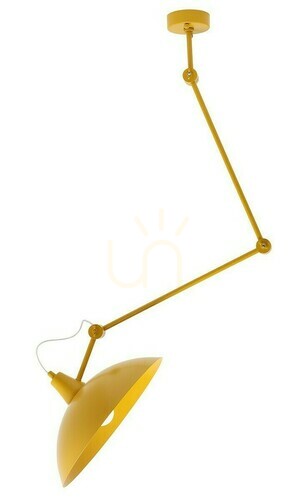
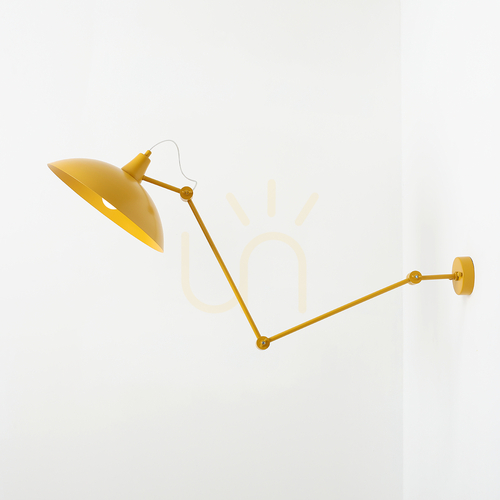
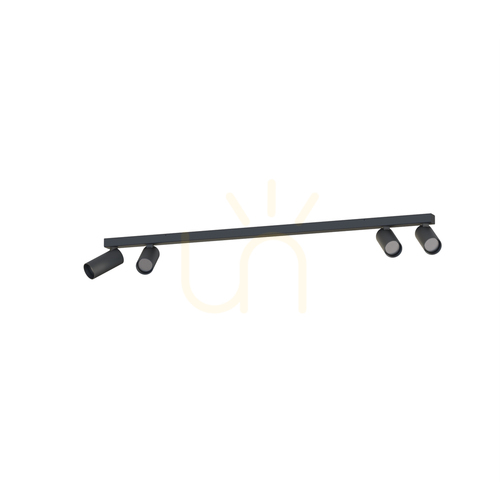
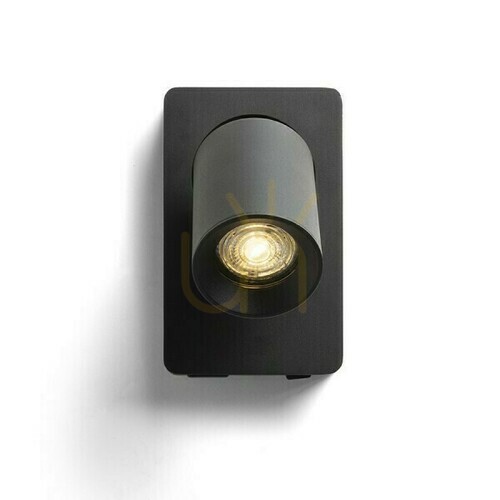
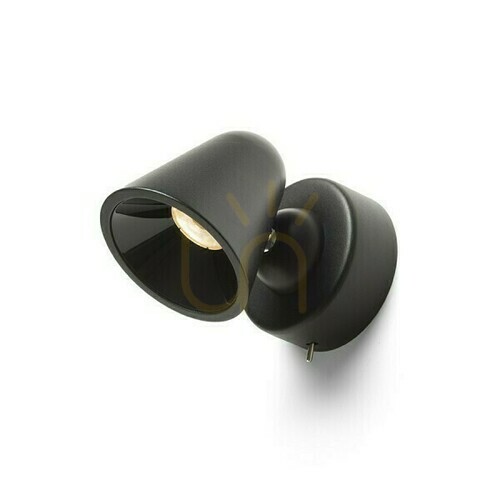
Loft conversion. Under a sloping ceiling nothing hangs straight, and a desk often sits in the dormer or under the eaves. A wall light with an adjustable head, mounted roughly 40–60 cm above the desktop, is often the neatest answer, or a short run of track spotlights aimed down at the worktop from in front. There is more on the wall-mounted option in wall lights over the desk.
Ceiling rose in the wrong place. Rather than moving the rose, many people swag the cable: a pendant with a long fabric flex runs from the existing rose to a ceiling hook above the desk, so the shade hangs where you work.
Choosing the fitting
| Fitting |
Where it goes |
Typical output |
Look out for |
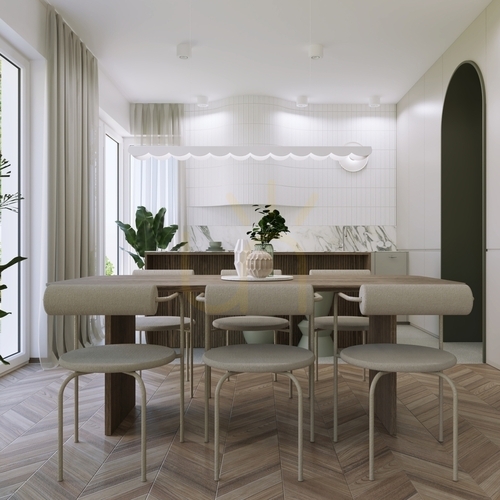
| Linear pendant |
along the front edge of the desk, 60–80 cm above it; a little shorter than the desk, around 100–120 cm for a 140 cm top |
usually 1000–2000 lm |
opal or microprismatic diffuser; up-and-down versions also light the ceiling |
| Shaded pendant |
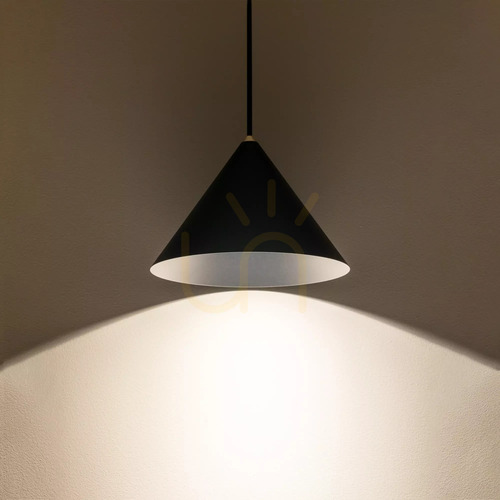
over the front half of the desk; two smaller ones over a long desk |
usually 1000–2000 lm in total |
a shade deep enough to hide the bulb from your chair |
| Wall light with arm or adjustable head |
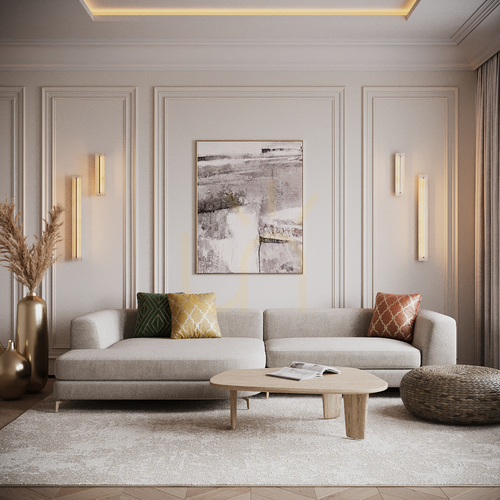
on the wall opposite your writing hand, 40–60 cm above the desktop |
roughly 400–700 lm |
a head you can angle down, not straight out |
| LED profile under a shelf |
near the front of the shelf, light pointing back towards the wall |
depends on length |
a diffuser, so you get no dotted reflections |
| Track or spotlights |
in front of the desk, aimed down at it |
depends on the number of heads |
beams aimed from behind will hit the screen |
Lighting designers in Britain work to BS EN 12464-1, which asks for 500 lux on a reading, writing or screen task, a glare rating (UGR) of no more than 19 and colour rendering of at least Ra 80. It is written for workplaces, yet the same targets suit a study at home; if you paint, draw or edit photos, go for Ra 90 or higher, and older eyes are happier with 750–1000 lux on the page.
Colour temperature is mostly a question of when you work. Cool white at about 4000 K keeps you alert in the daytime, while warm white at 3000 K feels gentler once the evening is under way. A fitting with tunable white and a dimmer lets the same light do both. One thing worth asking about is the driver: a cheap one can make LEDs flicker, and over an eight-hour day that wears on the eyes more than slightly too little light.
Keeping glare off the screen
Place the desk at right angles to the window if the room allows it, so daylight falls across the desk rather than onto the screen or into your eyes. Then put the artificial light on the same side: from the left for right-handers, from the right for left-handers, so your hand never shades what you are writing. A linear pendant runs along the front edge of the desk, a short way in front of the monitor, never directly above or behind it.
A few small things make a big difference. Keep some background light on in the evening, because a bright desk in a dark room makes your eyes keep adjusting. A bare LED or a clear filament bulb hanging low will flash at you every time you look up. A glossy desktop behaves like a mirror, and a matt desk mat cures most of it. On video calls, light from above and slightly in front lifts your face, while a fitting straight overhead leaves shadows under the eyes. And dust on a diffuser dims a light more than you would think, so wipe it with a dry cloth, power off, now and then.
Wiring, renting and Part P
In England and Wales, electrical work in a home falls under Part P of the Building Regulations, and adding a new lighting circuit is notifiable work. Any hard-wired fitting is best left to a registered electrician working to BS 7671. In a loft conversion the electrics are going in anyway, so decide where the desk will stand before the plasterboard goes up and have the lighting point placed above it.
If you rent, a plug-in pendant avoids the wiring altogether: a long flex with an inline switch, a ceiling hook above the desk, and a standard three-pin plug into the nearest socket. Clip the cable along the ceiling and down the wall so it does not hang loose behind the desk.
Frequently asked questions
What is the best type of lighting for a home office?
A mix: general light for the room plus task light over the desk, both glare-free. The task light does the real work; the room light stops the desk from being a bright island.
What is the best study lamp for a child's desk?
One that lights the whole desk evenly without glare: about 500 lux, around 4000 K, with the source hidden by a shade. Place it on the side opposite the writing hand.
Which desk lighting is best for the eyes?
Even, flicker-free light with no visible bright point, at Ra 80 or higher, combined with some background light in the room.
How high should a pendant hang above a desk?
Usually 60–80 cm above the desktop. Adjust it so you cannot see the light source when you glance up from your chair.
Warm white or cool white for a home office?
Around 4000 K helps you stay focused during the day; 3000 K feels calmer in the evening. A fitting with adjustable colour temperature covers both.
How do I stop my desk light reflecting in the monitor?
Move the light forward or to the side of the screen, choose a matt diffuser and set the monitor at right angles to the window.
For lighting the rest of the house, from ceiling lights to table lamps, start with indoor lights.