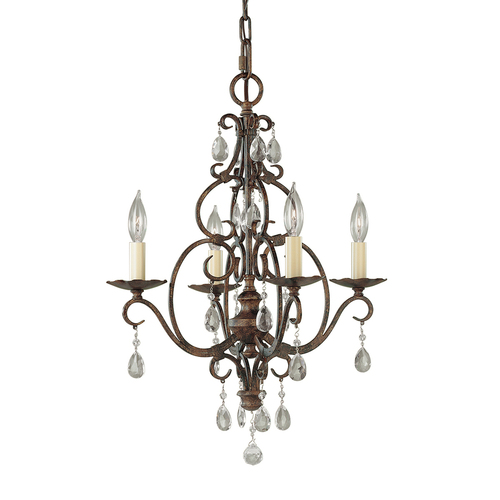
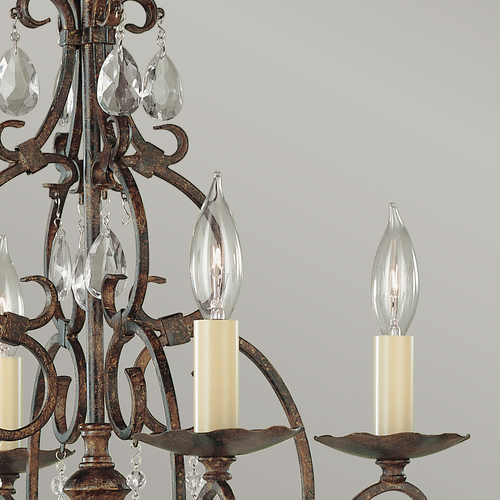
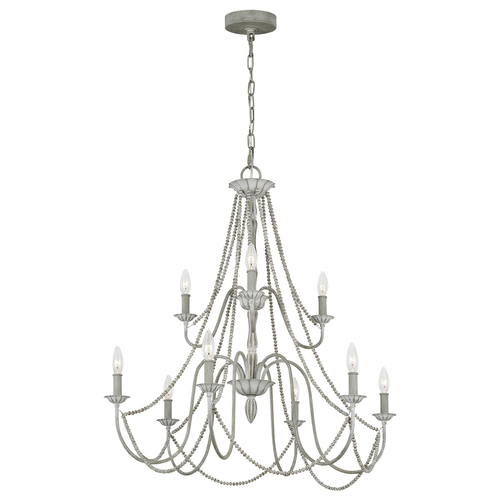
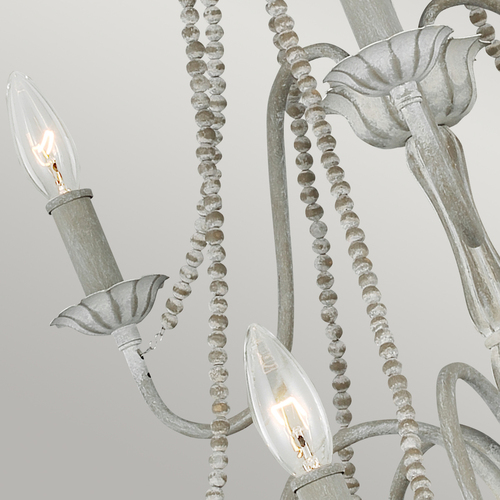
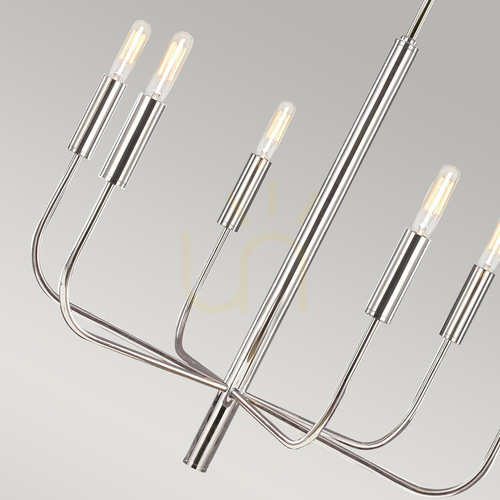
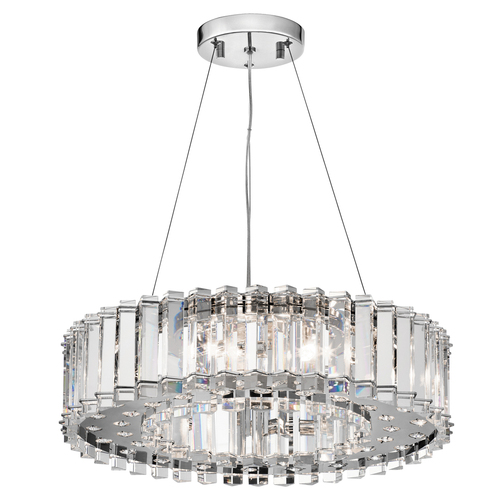
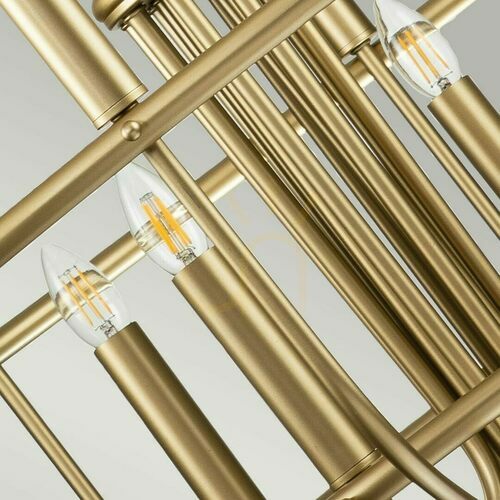
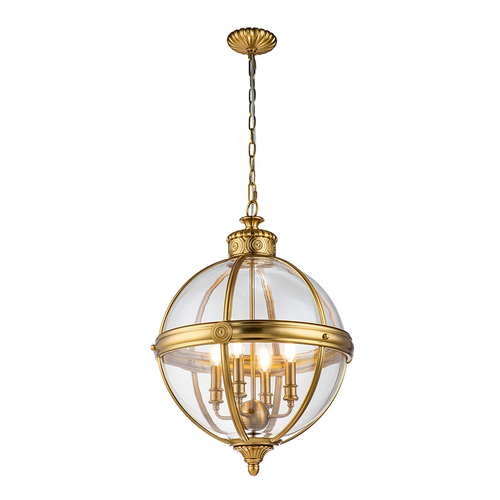
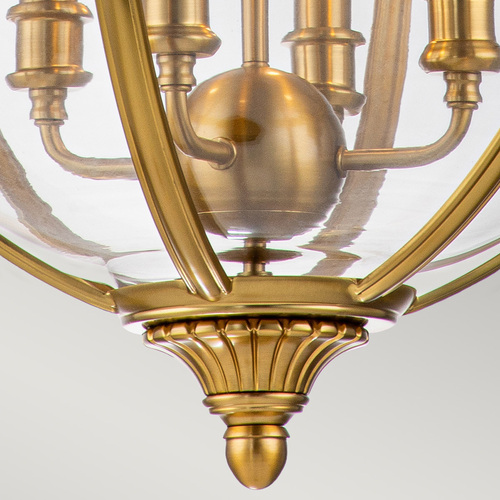
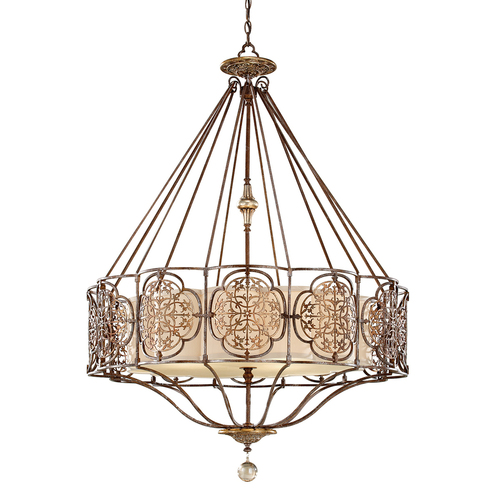
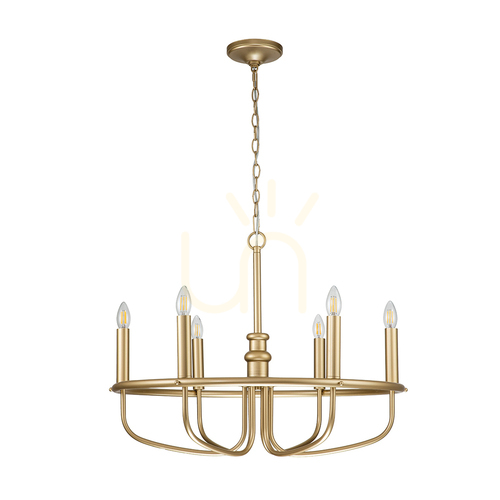
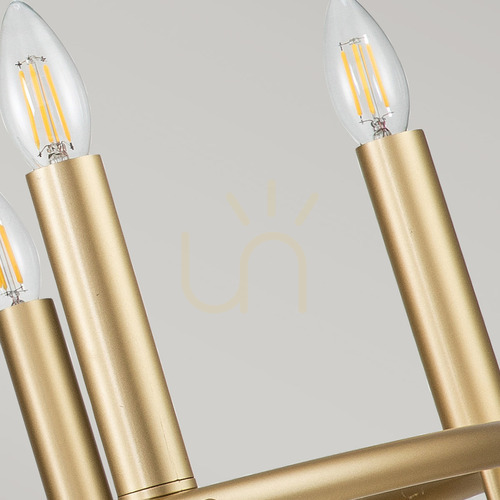
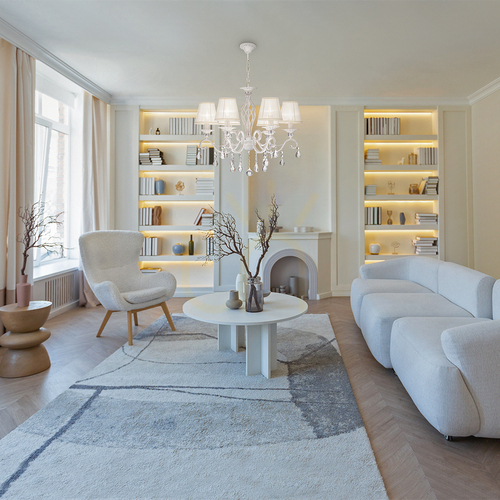
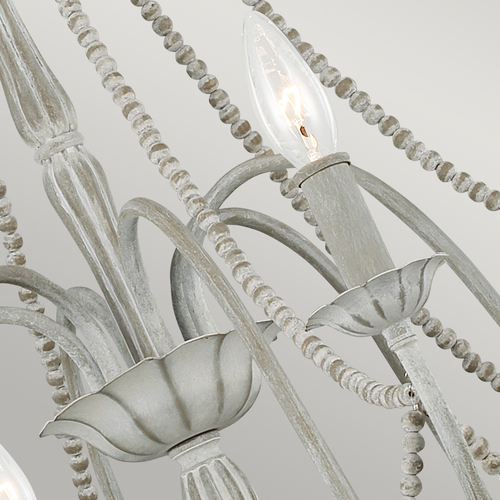
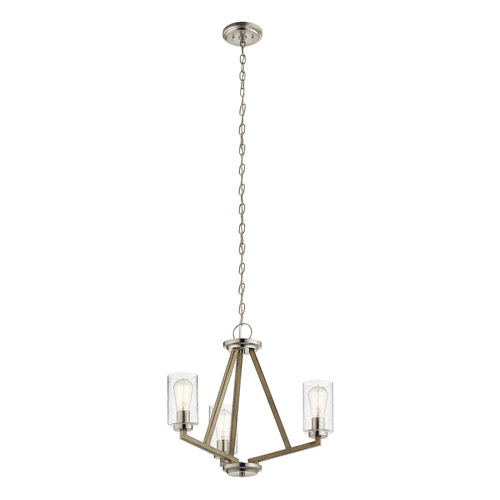
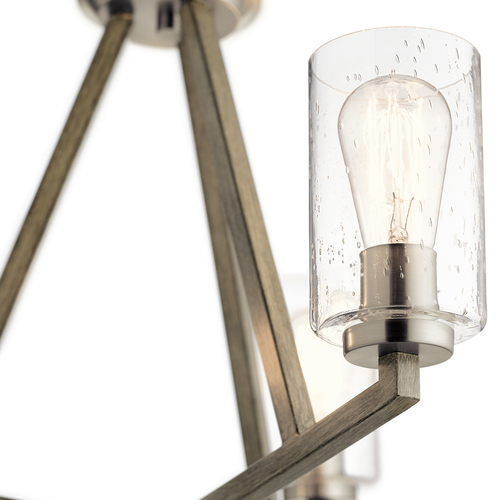
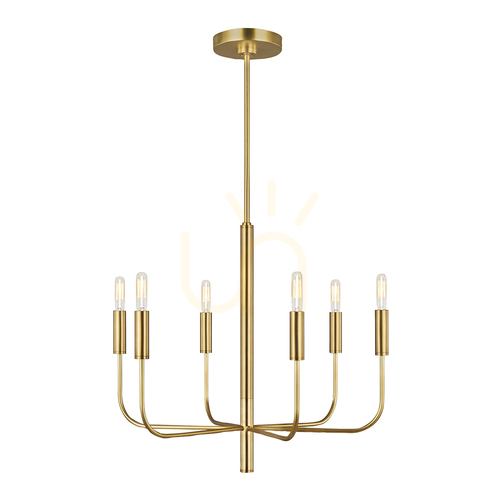
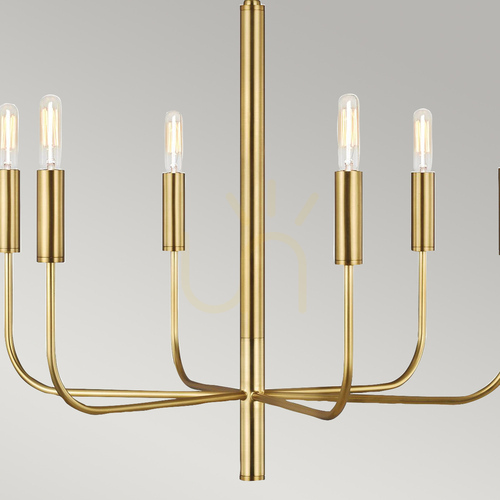
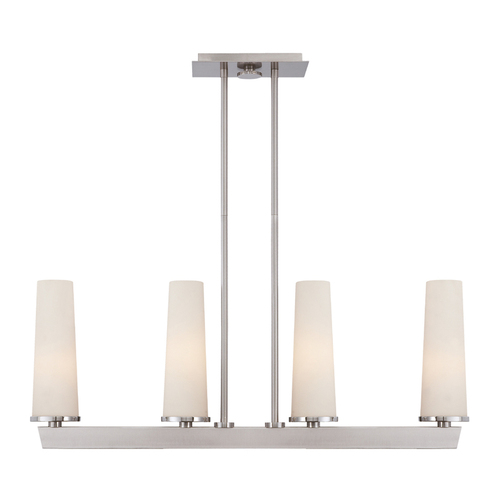
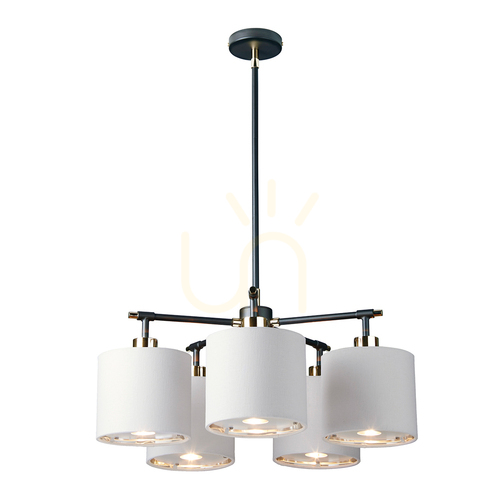
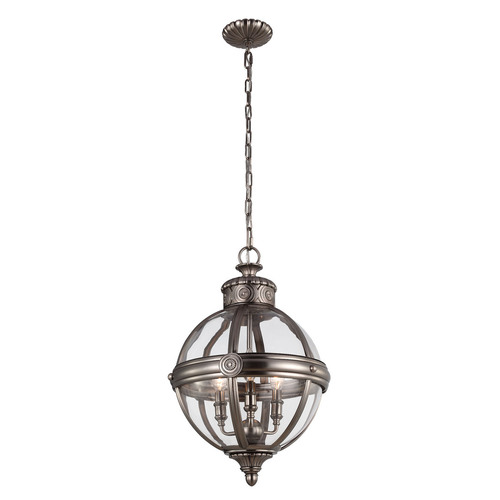
A bulb chandelier is a ceiling light, usually with several arms or drops, that takes ordinary replaceable bulbs rather than a sealed LED module. You choose how bright and how warm it is, whether it dims, and when a lamp finally fails you swap one bulb instead of calling someone out to replace the whole fitting.
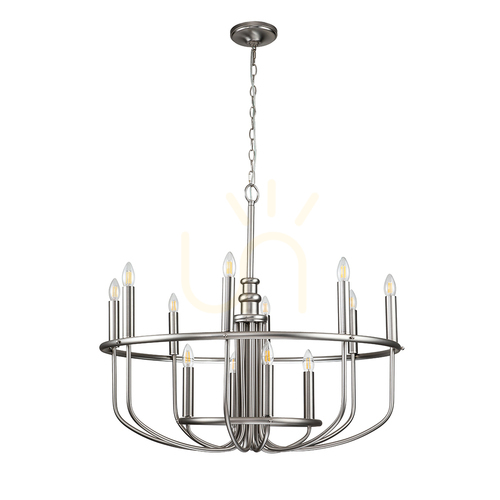
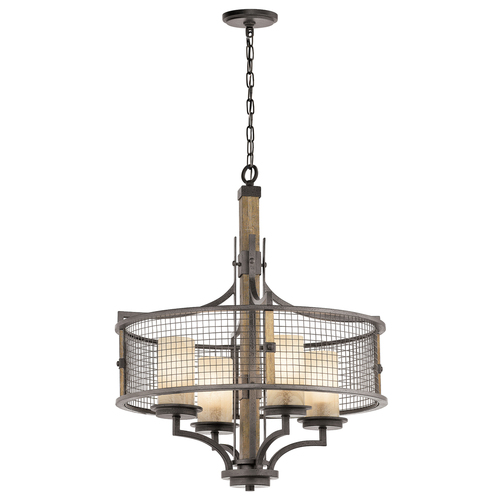
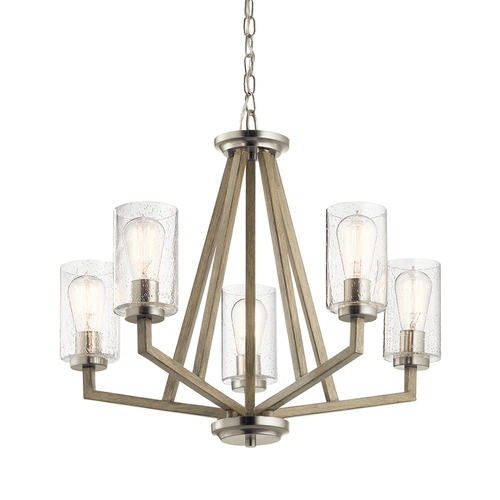
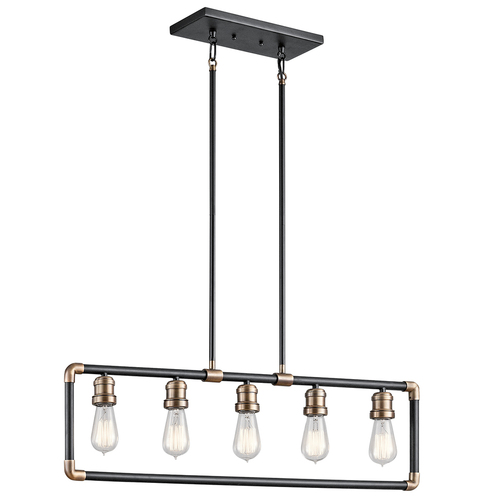
The phrase gets used in two ways in the UK. Some people mean any chandelier with lampholders; others mean the modern exposed-bulb look, where bare globes or filament lamps on rods or flex are the decoration. Both depend on the same thing – the right cap, the right wattage and the right bulb shape – so the advice below applies to either.
Know your cap before you buy bulbs
British homes grew up on the B22 bayonet cap, but most chandeliers use Edison screw caps, and the two are not interchangeable. Check the label inside the canopy or on the box: it reads something like “5 × max 40 W E14”. That maximum refers to the bulb’s real wattage, not the “equivalent” printed on LED packaging, so a 5 W LED candle is perfectly happy in a 40 W holder. Most chandeliers arrive without bulbs, so it pays to know the cap before the fitting is delivered.
| Cap |
UK name |
Usual bulb shape |
LED replacement |
Where you see it |
| E14 |
SES, small Edison screw |
candle, flame tip, small golf ball |
4–5 W ≈ 470 lm (like 40 W) |
crystal and candle-arm chandeliers |
| E27 |
ES, Edison screw |
GLS, globe, squirrel-cage filament |
7–9 W ≈ 806 lm (like 60 W) |
glass and fabric shades, exposed-bulb designs |
| B22 |
BC, bayonet |
GLS, candle |
7–9 W ≈ 806 lm |
less common on chandeliers, typical of UK pendants |
| G9 |
pin capsule |
small capsule |
3–4 W ≈ 300–400 lm |
compact cascades and small glass drops |
A bulb chandelier for the living room
For general light in a living room, plan on roughly 100–150 lumens per square metre. A 20 m² lounge therefore wants 2,000–3,000 lm in total – six E14 candles at 470 lm, or three ES bulbs at 806 lm. Add a floor or table lamp for reading; a chandelier sets the mood rather than lighting a page.
Warm white at 2700–3000 K suits lounges, dining rooms and bedrooms, and it flatters brass and crystal. Fit the same bulb model in every arm. One cool-white replacement in a ring of warm candles looks like a fault rather than a feature.
On a modern exposed-bulb chandelier the bulbs are on show, so choose them as carefully as the frame: filament lamps around 2200–2700 K give an amber glow and less glare, while smoked or amber glass tones the light down further. Pick dimmable versions if you ever want the soft evening look.
Sizing it for a British ceiling
Many UK homes have ceilings of about 2.4 m, which leaves little room for a long drop. In a walk-through space keep the bottom of the chandelier at least about 2.1 m above the floor; on a low ceiling a semi-flush or flush mount chandelier keeps the sparkle without the headroom problem. Over a dining table, hang it 70–90 cm above the top and make it about 30 cm narrower than the table. For width, a handy rule: add the room’s length and width in metres and multiply by 8 to 10 – the result is a sensible diameter in centimetres.
Installation, dimming and care
A multi-arm chandelier can be heavy, so it needs a fixing into a joist or a suitable ceiling hook rather than plasterboard alone. Connection to the mains should be done by a qualified electrician working to BS 7671. Some fittings are wired in two circuits so half the arms can be switched separately; your electrician can link them for a single switch.
- Dimming needs dimmable bulbs and an LED-compatible (trailing-edge) dimmer. Six 4 W candles add up to only 24 W, which can sit below a dimmer’s minimum load and cause flicker.
- Crystal sparkles with clear bulbs; frosted bulbs suit opal glass and fabric shades, where a bright point would show through.
- Before cleaning, switch off at the consumer unit and let the bulbs cool. Dust the arms with a soft dry cloth and handle crystal drops in cotton gloves.
- When one bulb fails, replace the set: old and new lamps rarely match exactly in colour.
Bulb chandelier FAQs
What is the best wattage for a chandelier bulb?
Think lumens rather than watts. For candle arms, 4–5 W LED candles (about 470 lm, like the old 40 W) are the usual choice; for ES globes, 7–9 W (about 806 lm). Never exceed the maximum wattage on the fitting’s label.
Can a bulb chandelier be flush mounted?
Yes. Semi-flush and flush bulb chandeliers sit on a short stem or directly on the ceiling plate, which suits rooms around 2.4 m high. Keep to the maximum wattage on the label, as a bulb close to the ceiling has less room to shed heat.
Can I put bayonet bulbs in a screw-cap chandelier?
Not directly. Cap adaptors exist, but they lengthen the bulb and rarely look right on a chandelier. Buy bulbs with the cap the fitting was made for.
Do bulb chandeliers work on a low ceiling?
Yes, if the drop is adjustable or the fitting is semi-flush. Shorten the chain or flex so the lowest point stays above head height, and keep the overall height in proportion to the room.
Are LED bulbs or an integrated LED chandelier better?
Integrated LED allows slimmer, flatter designs and runs for years without attention, but a failed module means replacing the module or fitting. A bulb chandelier lets you change colour, brightness or move to smart bulbs whenever you like.
For other styles, sizes and finishes, start with chandeliers in general. If your ceiling is on the low side, read more about flush mount chandeliers.