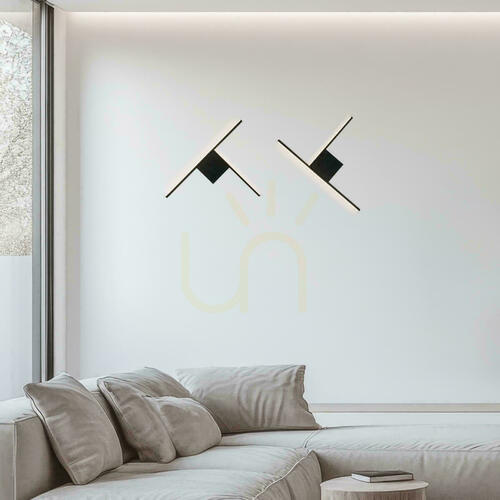
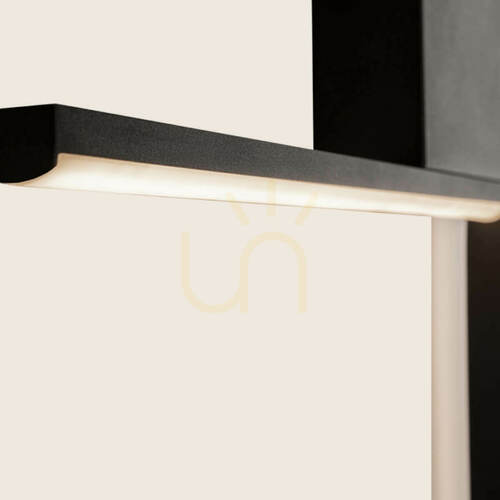
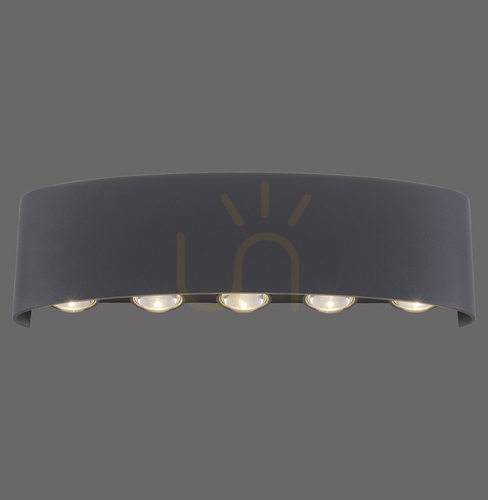
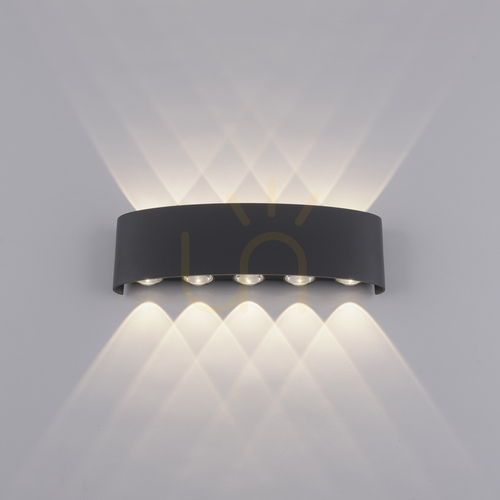
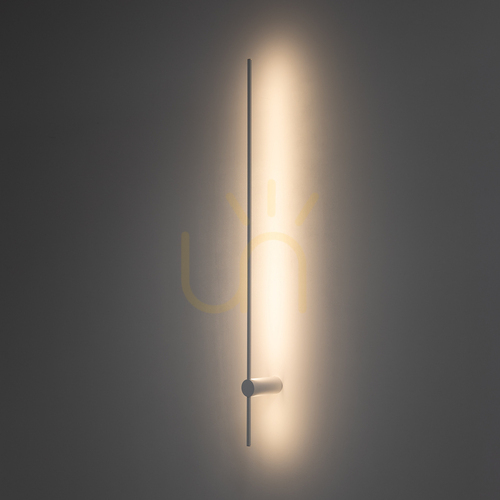
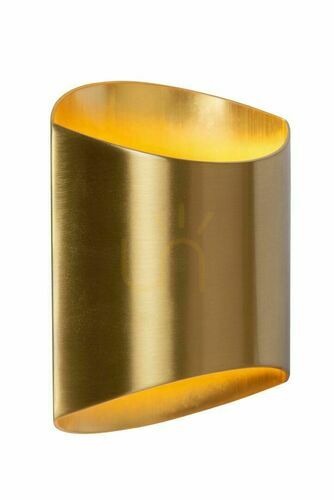
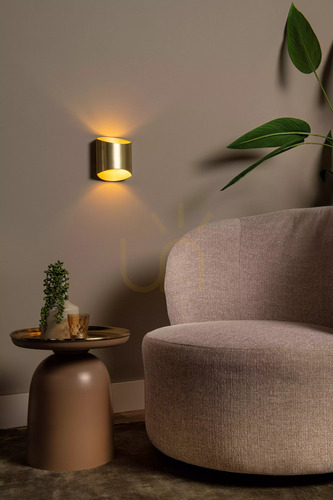
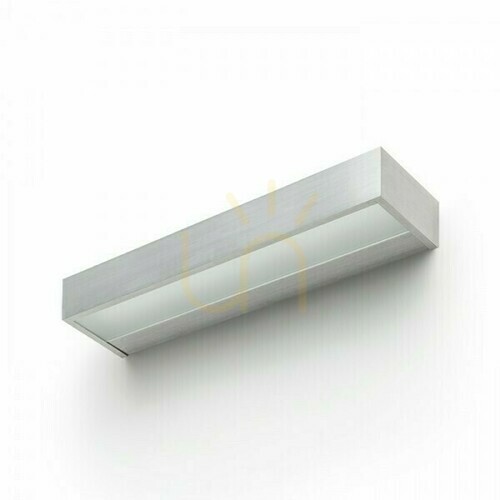
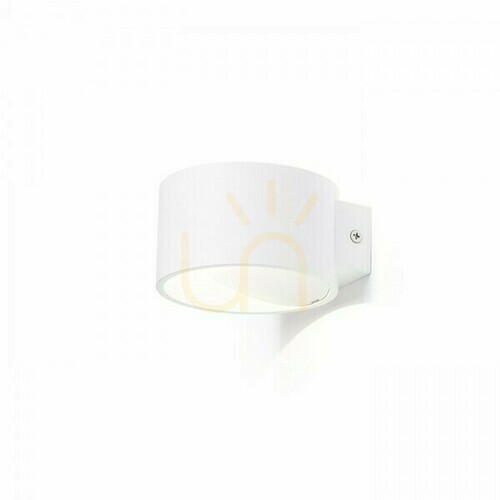
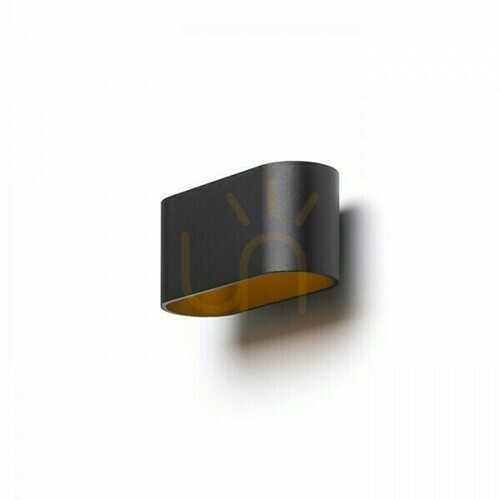
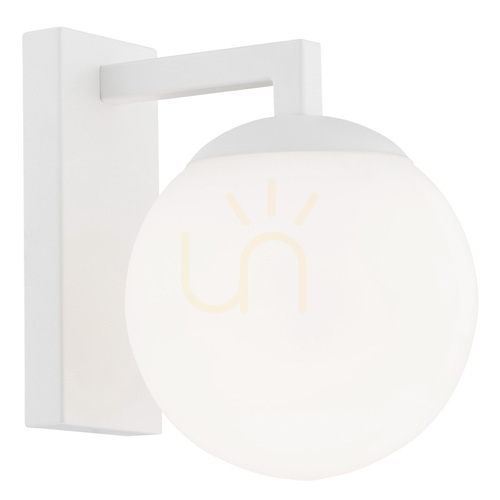
Staircase wall lights have a job with a safety edge to it: put light on the treads without putting it in the eyes of the person coming down. A single fitting at the top of a flight fails on both counts — it throws the descender's own shadow onto the steps below, which is exactly where the shadow must not be.
Light the treads, not the faces
Going down, you look at the nosing of the next step. Any bright source on that sightline is glare at the worst moment. So either mount low and aim down, or mount high with a shade that closes off the upward view. Around 100 lux on the tread is the level to aim for in a home; more than that buys nothing if the contrast between tread and riser is poor. If the stair is carpeted in one dark colour, add contrast at the nosing rather than adding lumens.
Where they go along the flight
Two heights work. As orientation lights, fittings sit 20–40 cm above the tread, spaced every three or four steps, lighting the next two or three treads ahead. As general lighting, they sit 1.6–1.8 m above the pitch line, every 2–2.5 m along the flight. Measure from the stair line rather than from the floor, or the row will visibly drift out of parallel with the stair. Half-landings need their own fitting: that is where people stop, turn and misjudge the first step of the next flight.
Switching and sensors
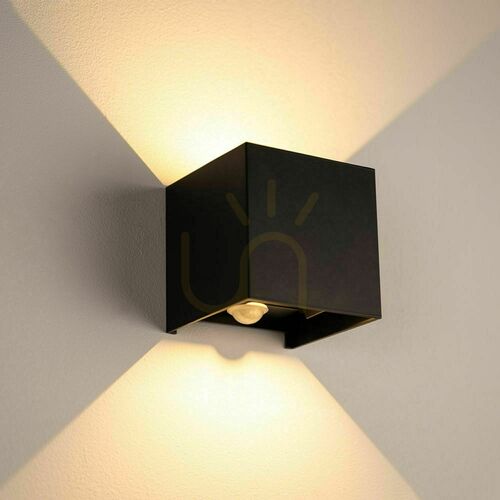
A staircase needs two-way switching by definition — one plate at the bottom, one at the top. Where there is no cable for a second switch, a fitting with a PIR sensor does the same job and is the better answer at night. Watch the hold time: under 60 seconds and the light drops while you are still on the stairs. A permanent low glow with a brighter level on detection is worth the extra cost in a house with children or older residents.
Brightness and colour after dark
2700 K matches the rooms the stair connects and is easy on eyes adjusting from a dark bedroom. Cooler light around 3000–4000 K makes edges slightly crisper, which suits a shared or utilitarian stairwell. Whatever you pick, keep it consistent along the whole flight: two colour temperatures on one staircase make the steps look uneven even when they are not.
Frequently asked questions
How high should staircase wall lights be mounted?
20–40 cm above the tread as orientation lights, or 1.6–1.8 m above the pitch line for general lighting — always measured parallel to the stair, not to the floor.
How many lights does a staircase need?
One every three or four steps for low-level orientation, or one every 2–2.5 m at head height. Add one at each landing.
Do stair lights have to be on a sensor?
No, but two-way switching is not optional. A sensor is the practical substitute when running a second switch cable is not possible.
Can wall lights replace a stairwell pendant?
Usually for the better. A row of wall fittings puts light on every tread; a single high pendant lights the void and leaves the steps in your own shadow.
For light set into the steps themselves see Stair Lighting, or run a continuous line with LED strips and profiles.