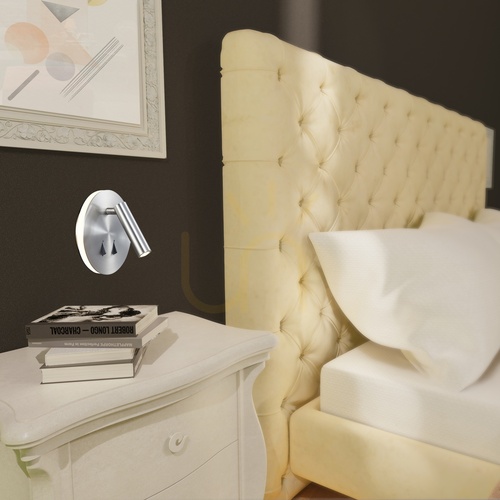
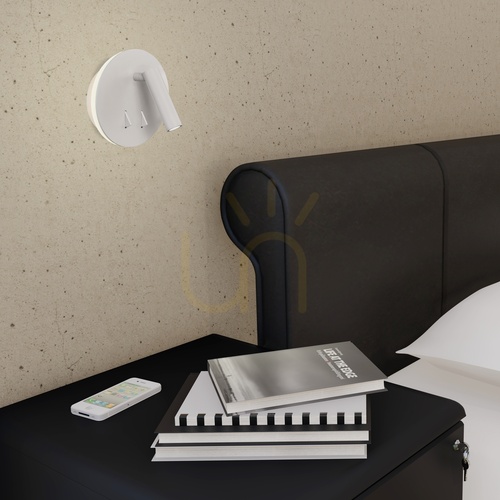
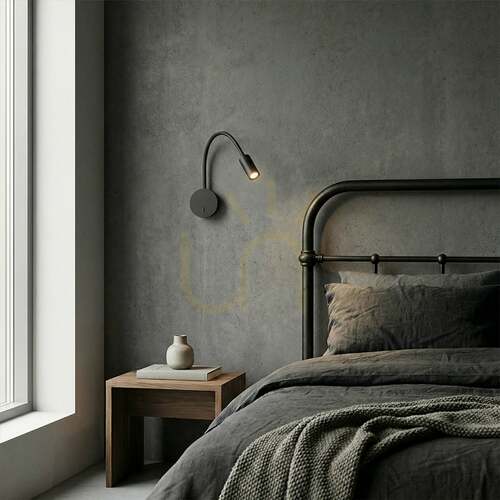
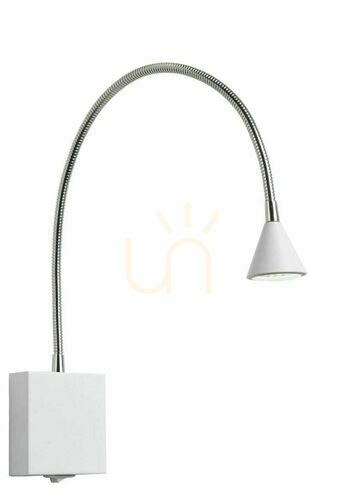
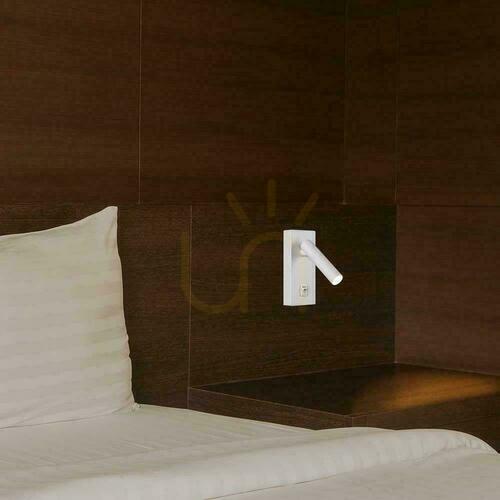
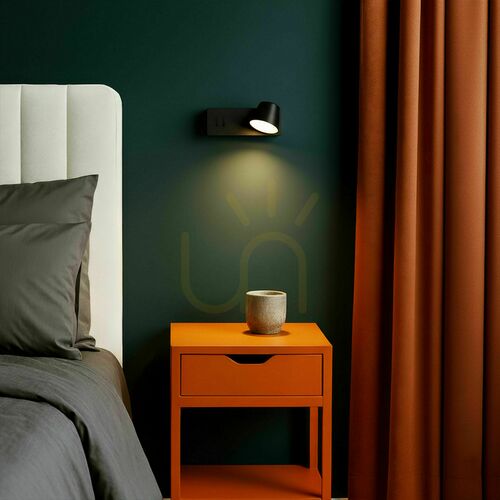
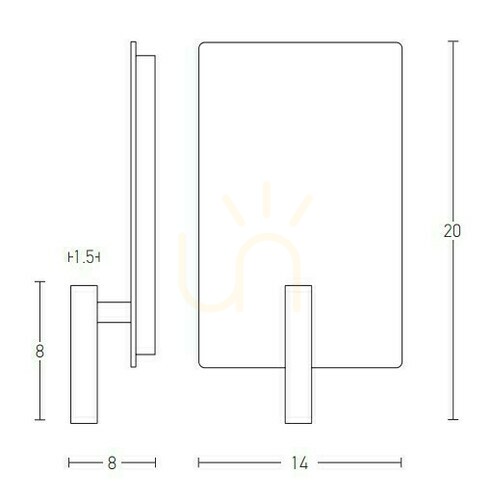
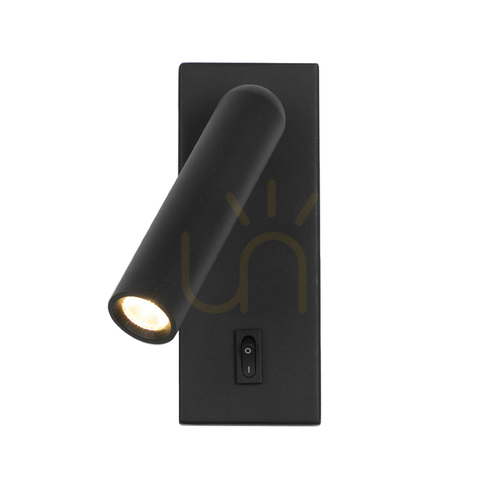
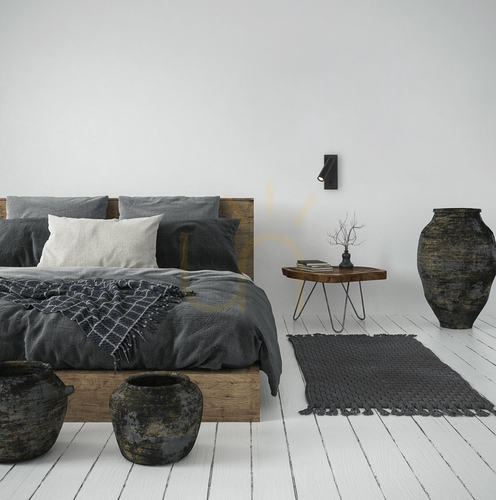
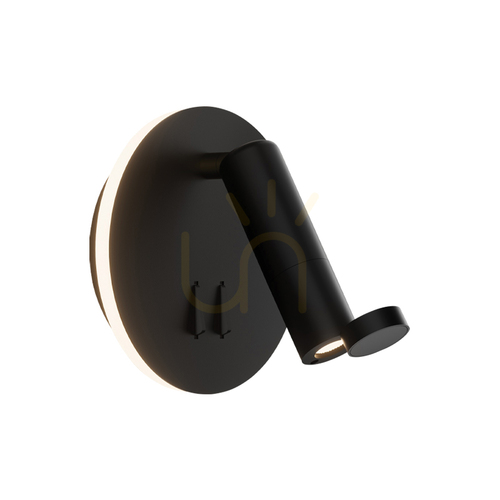
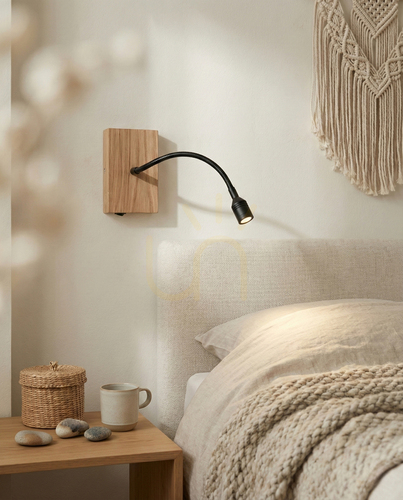
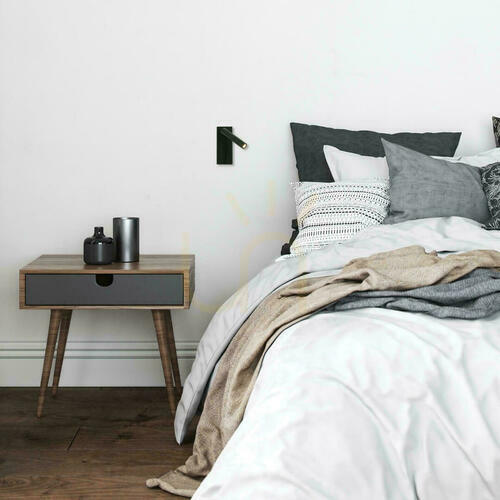
Bedside wall lights do the job of a bedside lamp without taking up the bedside table: they sit on the wall beside or just above the headboard, give a warm pool of light for reading, and leave room for a glass of water and your phone. What sets them apart from any other wall light is that they are used lying down, half asleep and in the dark – so the switch has to be within reach of the pillow and the light must not shine straight into your eyes or your partner's.
Getting the height right
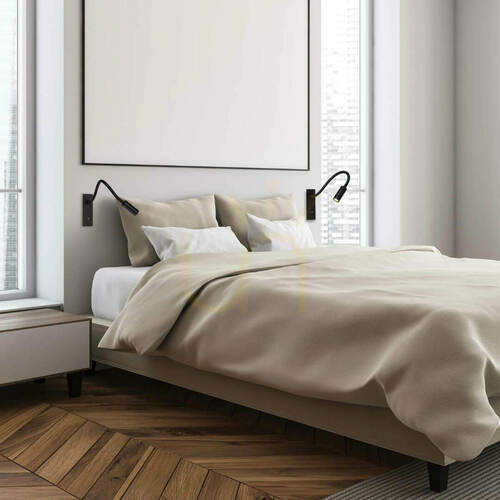
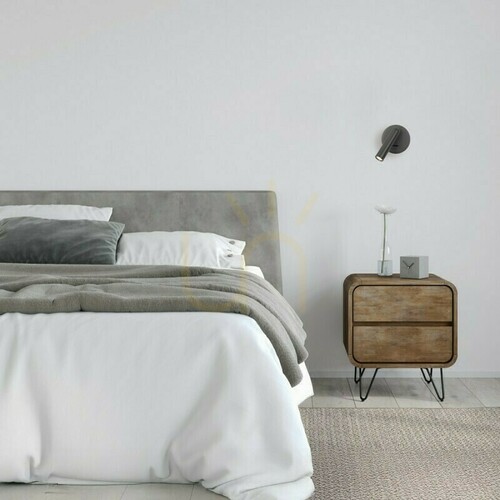
This is the question most people ask first, and it decides more than the style. As a rule of thumb, the fitting usually sits around 50–80 cm above the top of the mattress, which on a standard bed works out at roughly 110–140 cm from the floor. Sit up against the headboard, have someone hold the light against the wall, and mark the spot with masking tape where the light lands on your lap but the bulb or LED stays out of your eyeline. Only then reach for the drill.
Sideways, aim for 15–30 cm beyond the edge of the mattress or centred over the bedside table, so you will not knock your head when you sit up. A tall upholstered headboard changes everything: measure from its top edge, not from the mattress, or the light ends up hidden behind it.
Types of bedside wall light
-
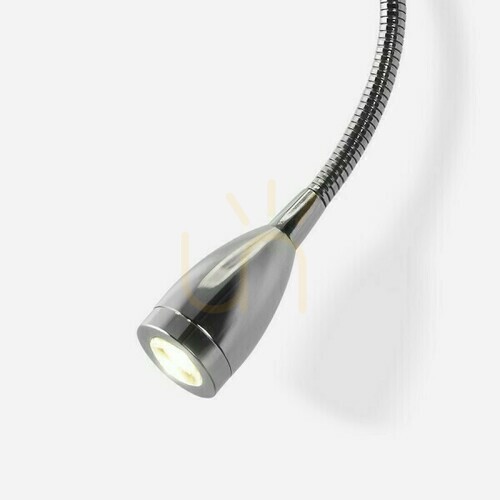
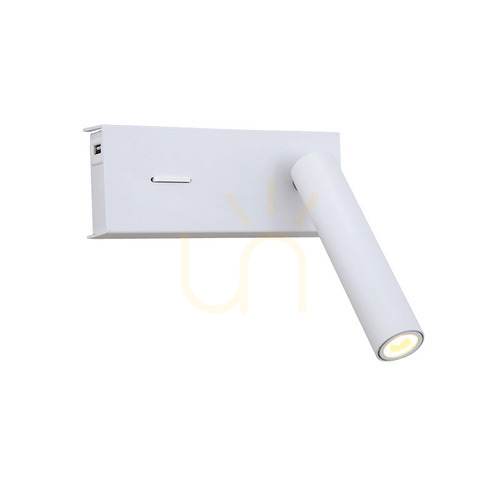
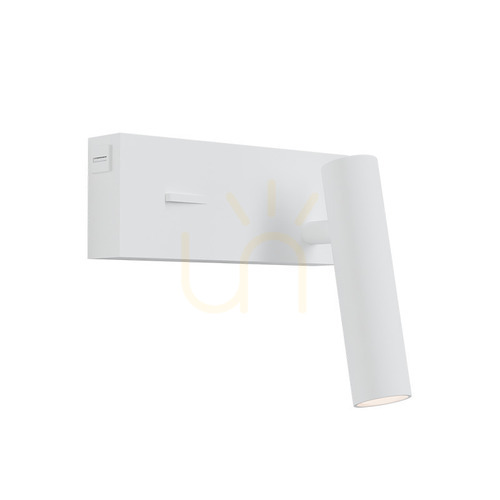
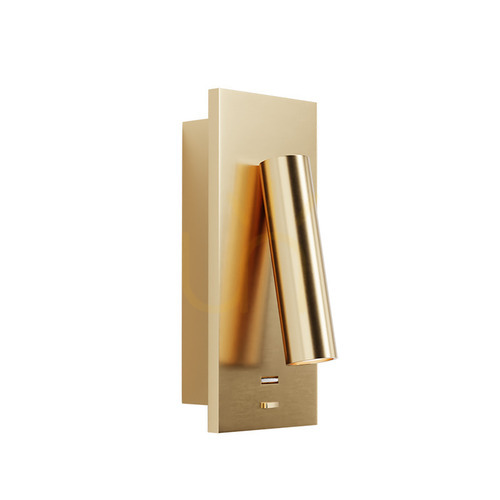
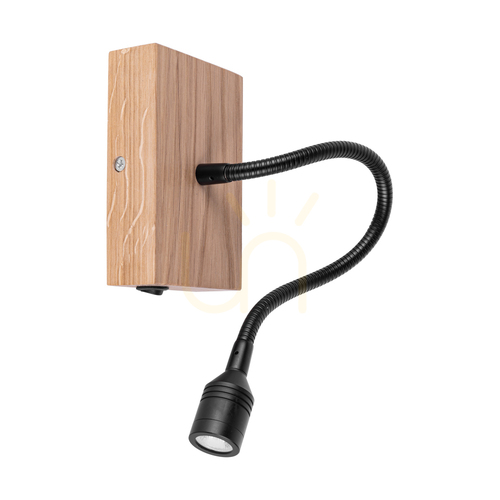
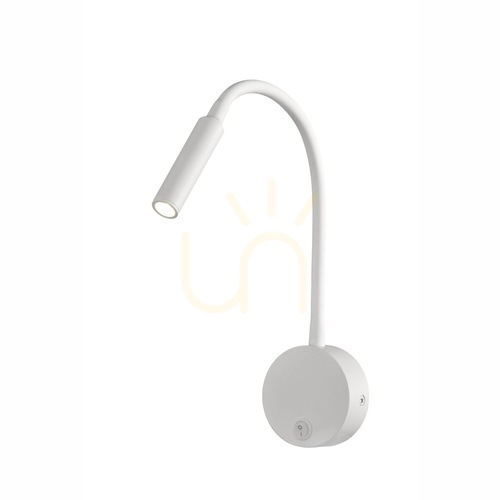
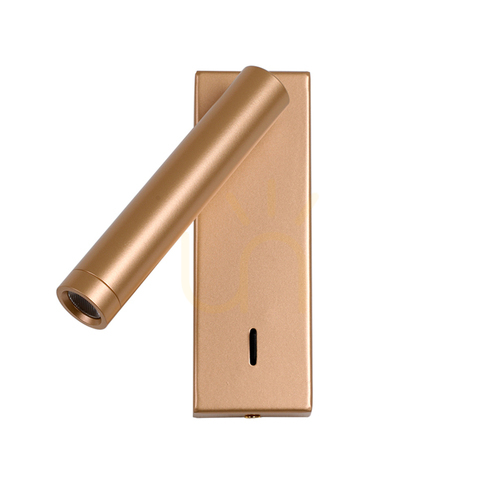
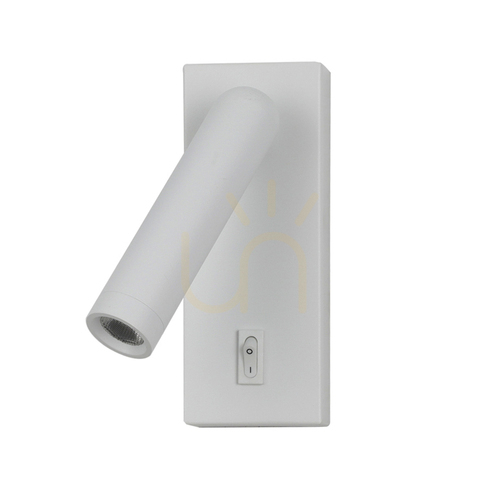
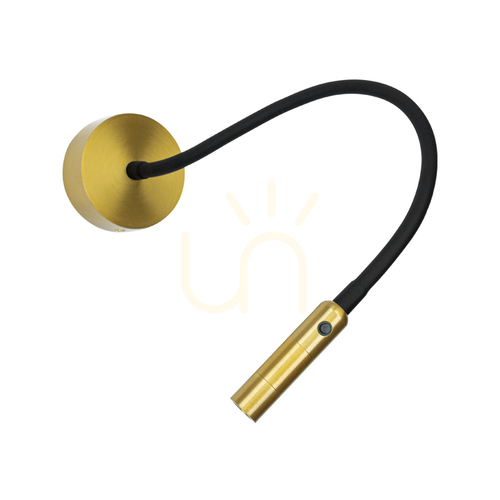
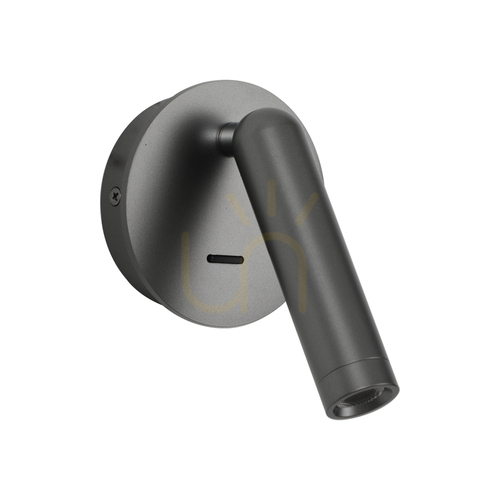
Swing-arm and adjustable-head lights – a hinged arm or flexible neck lets you point the beam at the page and away from whoever is asleep next to you.
-
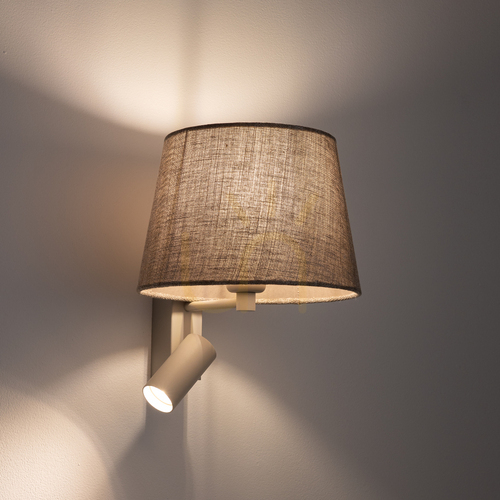
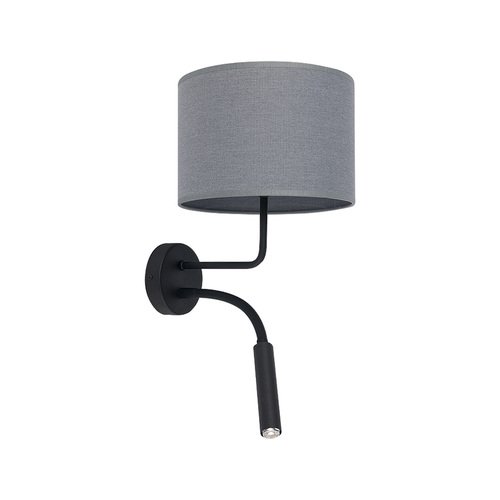
Shaded wall lights – opal glass or fabric shades wash soft light across the wall. Lovely for winding down, less focused for long reading sessions.
-
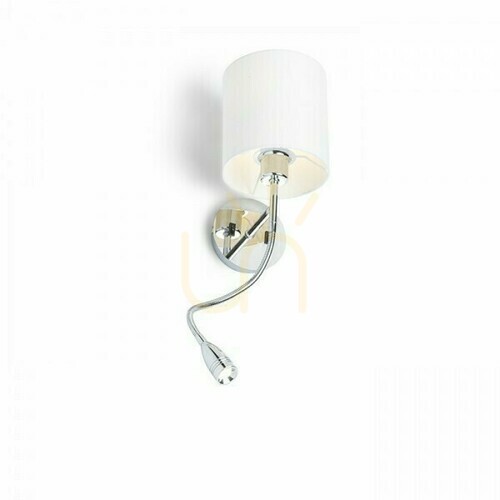
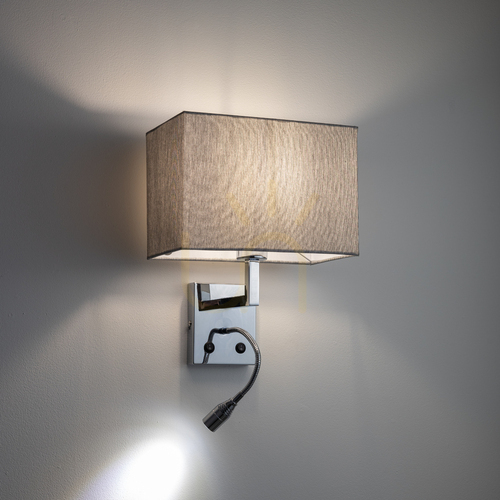
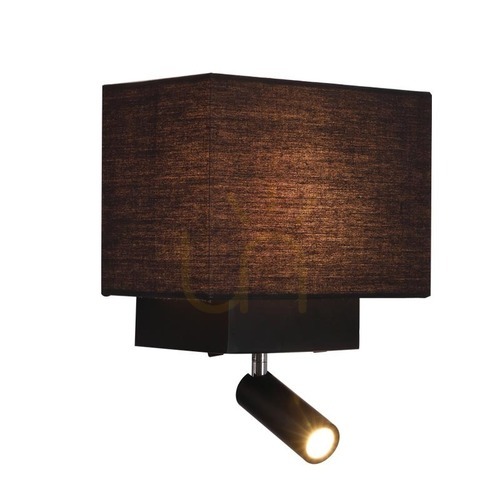
Twin lights – a main light plus a separate reading spot, each with its own switch.
-
Slim LED wall lights – low-profile fittings throwing light downwards, often used as a gentle night light in a child's room.
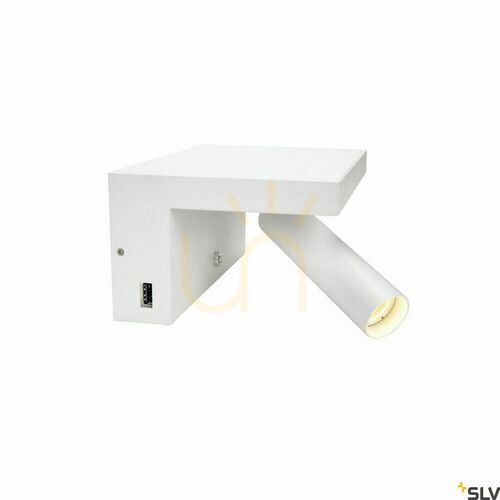
Some designs add a small shelf or a USB port for charging. If you read in bed for hours at a time, have a look at wall reading lights, which tend to have a longer reach and a tighter beam.
What to look for: typical values
| Feature |
Typical range |
Why it matters |
| Height above mattress |
usually 50–80 cm |
light falls on the book, not your face |
| Height from floor |
around 110–140 cm |
depends on bed and headboard height |
| Colour temperature |
warm white, 2700–3000 K |
calmer in the evening than cool white |
| Brightness |
about 150–400 lm per reading light |
enough to read by without glare |
| LED power |
typically 2–6 W per head |
low running cost for nightly use |
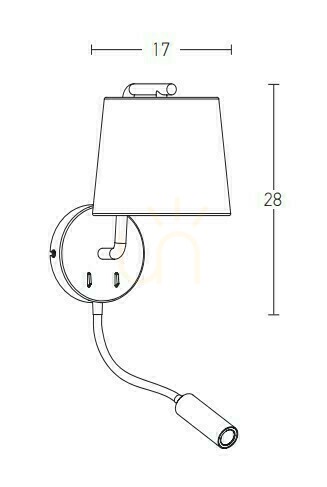
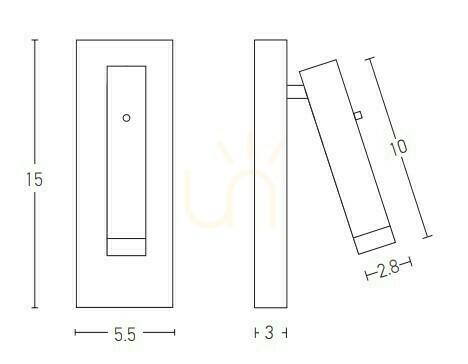
| Arm reach |
around 20–40 cm |
room to aim the beam |
| Light source |
integrated LED, or a cap such as E14 (SES), E27 (ES), B22 or G9 |
whether, and which, bulbs you can fit later |
Hardwired or plug-in?
A hardwired bedside light is the neatest finish: no visible cable, switch on the fitting. It needs a supply brought to the wall at the right height, and the work has to meet BS 7671. In England and Wales, electrical work in a home also falls under Part P of the Building Regulations, so a registered electrician is the straightforward route.
No wiring by the bed? A plug-in wall light with an inline switch is the easy answer – it plugs into a standard socket, usually on a plug fitted with a 3 A fuse, and the flex can run neatly in trunking or a fabric sleeve. More on that in plug-in wall lights. Rechargeable lights skip the cable altogether, at the cost of regular charging.
Check the electrical class, too. Class I fittings need an earth connection; Class II fittings are double insulated and must not be earthed.
Common mistakes and care
-
A switch you cannot find in the dark. A tiny rocker on the back of the fitting is fiddly at 2 am; a pull cord, inline switch or touch panel is easier.
-
The wrong dimmer. Mismatched dimmers make LEDs flicker and shorten their life. Use only compatible lamps and controls.
-
Weak fixings. Plasterboard needs cavity fixings, brick and block need wall plugs; the screws in the box are often basic.
-
One light for a double bed. A matching pair, each with its own switch, lets one person read while the other sleeps.
Integrated LEDs typically last 20,000–50,000 hours, but when the module fails the whole fitting is usually replaced. Dust the light once a month with a dry or slightly damp microfibre cloth, always with the power off, and tighten the joints if a swing arm starts to droop.
Frequently asked questions
What height should you install bedside wall lighting?
Usually 50–80 cm above the top of the mattress, roughly 110–140 cm from the floor. Test it sitting up as you would to read: the light should reach your lap without the source dazzling you.
What kind of lamp is best for a bedroom?
Layers work best: a ceiling light for general light, and a bedside wall light on each side with its own switch for reading and late-night use.
Are bedside wall lights good for reading?
Yes, if the head can be angled and the brightness sits around 150–400 lm. A swing arm brings the light closer to the page and keeps it off your partner's pillow.
Can you get bedside wall lights with a plug?
Yes. Plug-in versions need no rewiring and suit rented homes; route the flex in trunking and keep it away from the mattress and sharp edges.
Are rechargeable bedside wall lights worth it?
They are handy where there is no socket or supply at all, but expect to recharge them regularly. For nightly reading, a mains-powered light is less hassle.
What colour light is best by the bed?
Warm white, 2700–3000 K. Cooler light around 4000 K feels more alert and suits a desk better than the last half-hour before sleep.
Before you buy
Measure the bed, the headboard and the distance to the nearest socket, then decide whether the light is mainly for reading or for atmosphere. Other shapes and finishes for indoor walls are covered under wall lights.