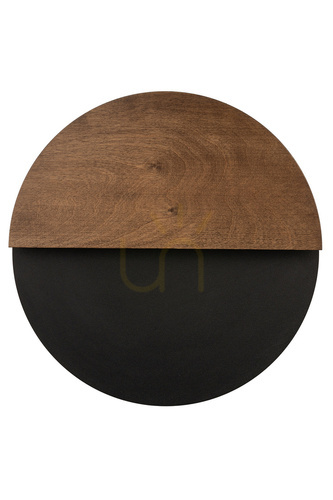
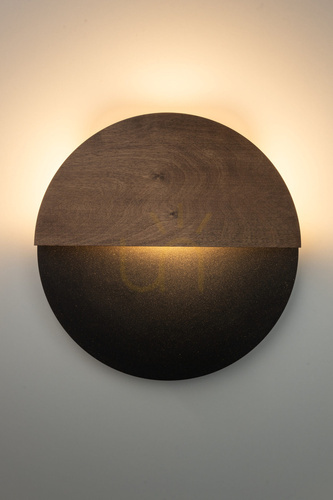
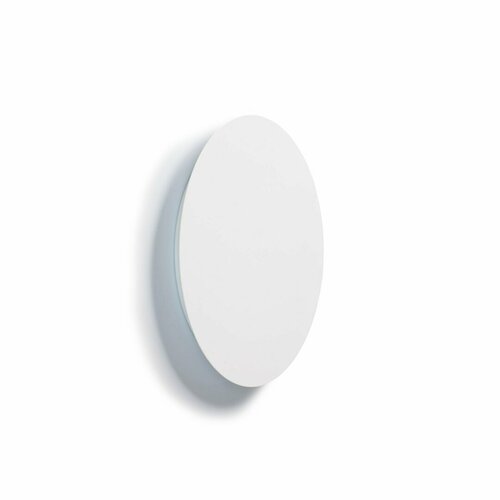
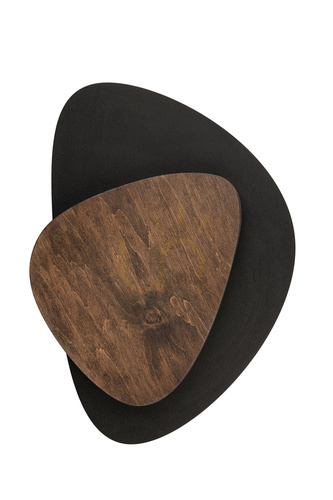
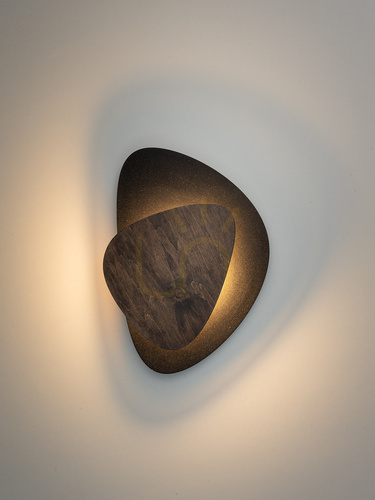
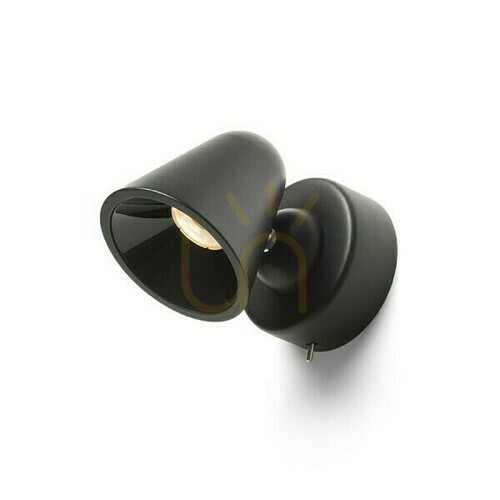
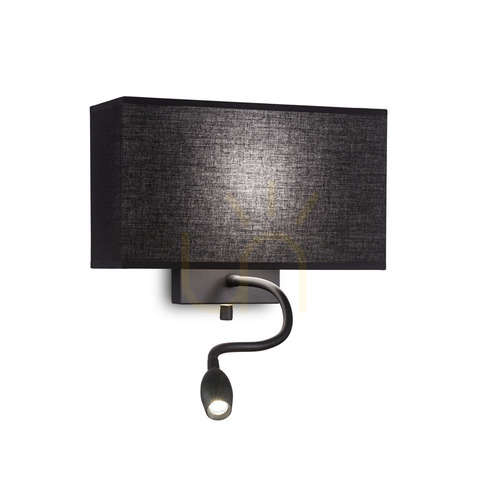
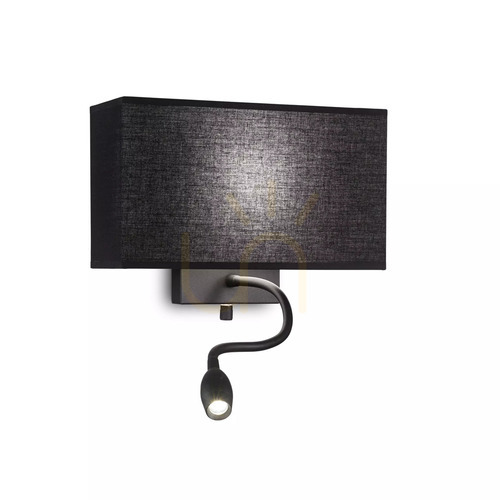
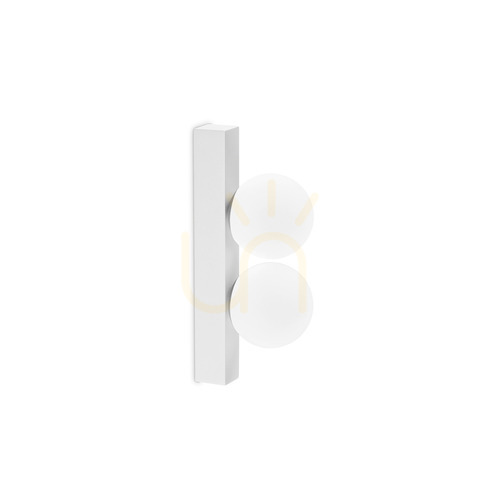
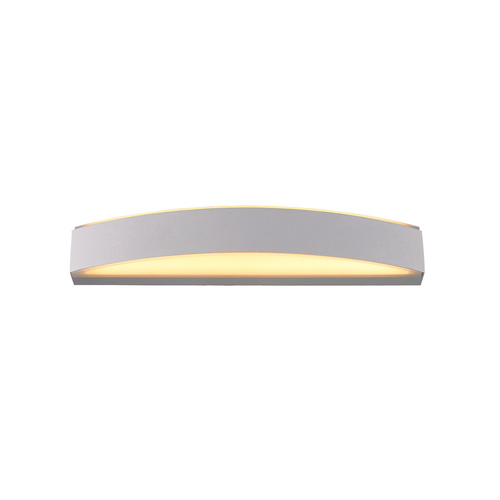
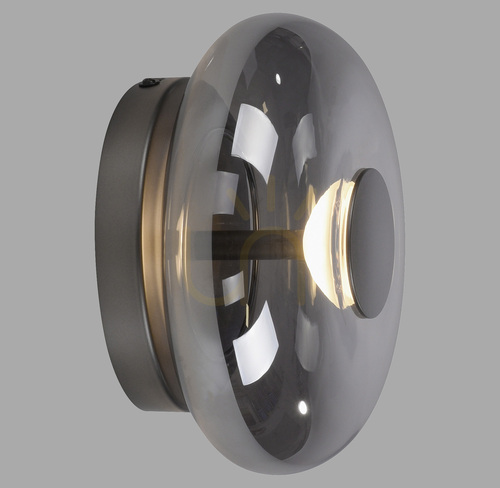
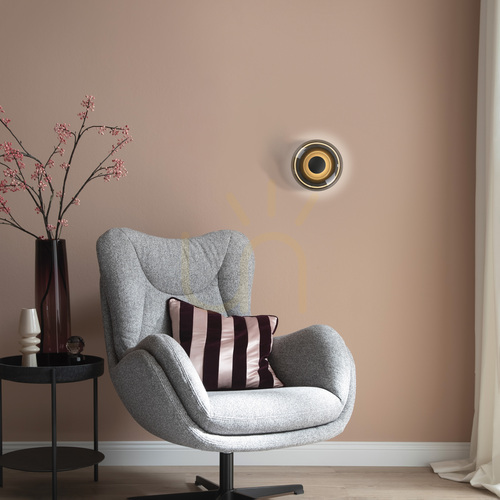
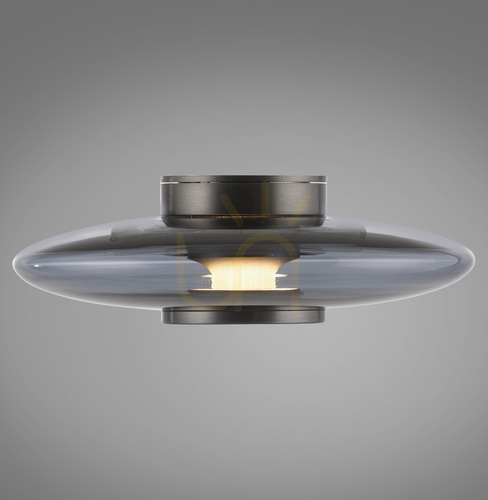
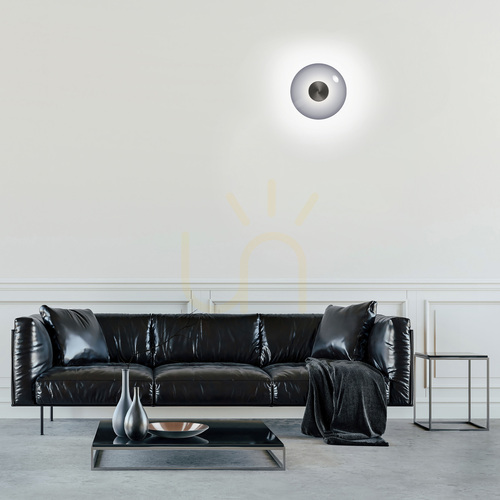
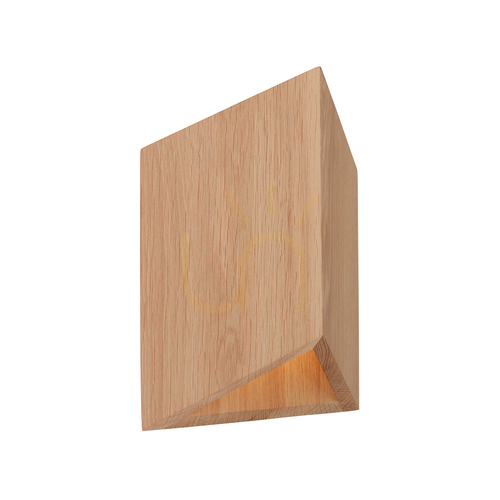
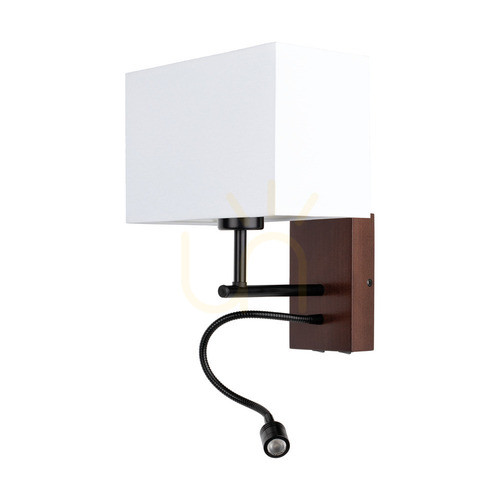
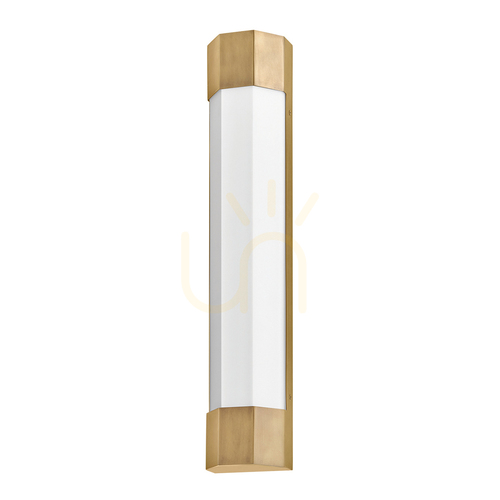
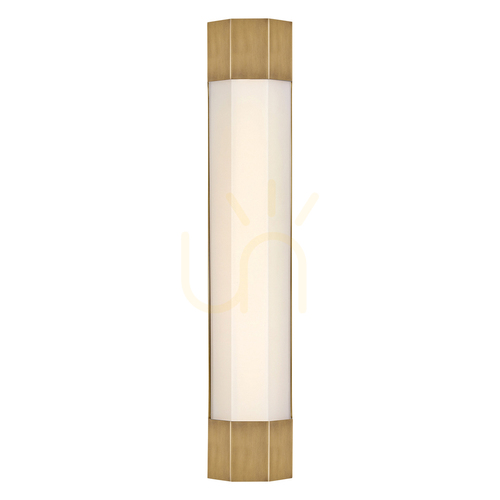
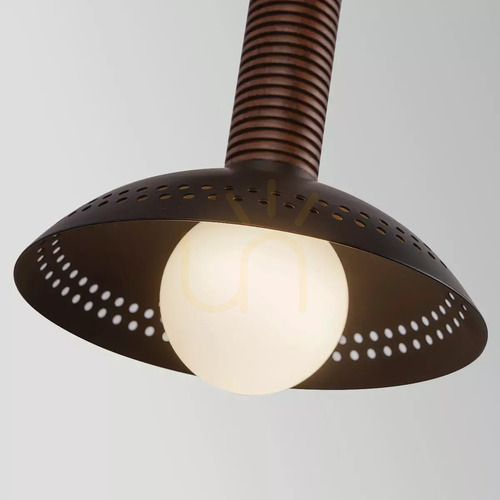
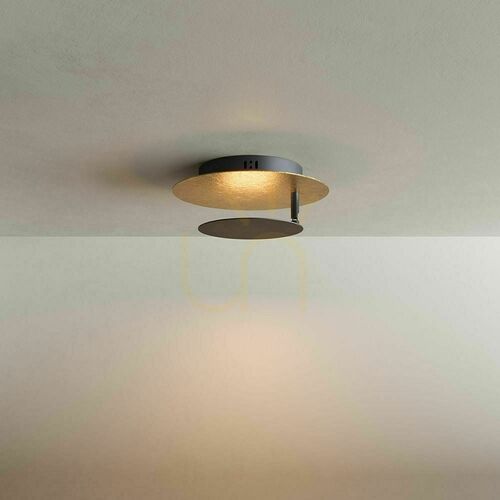
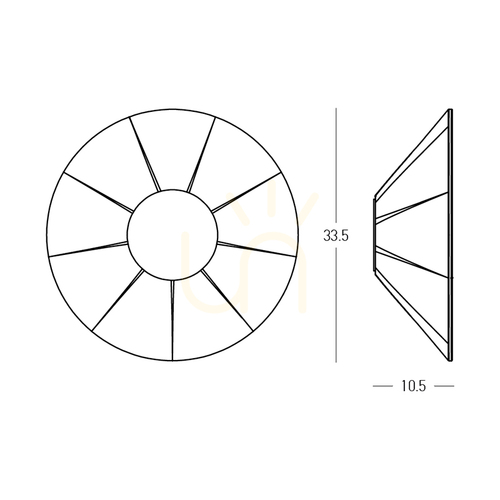
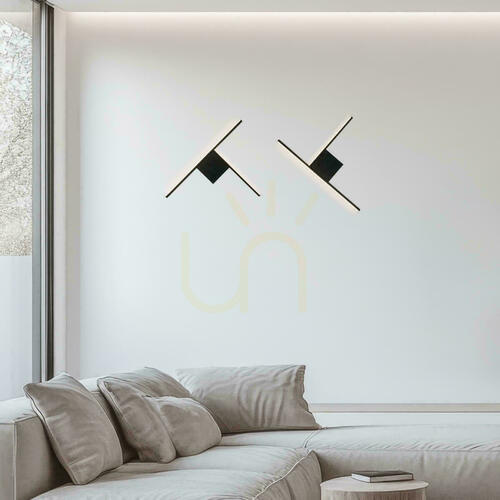
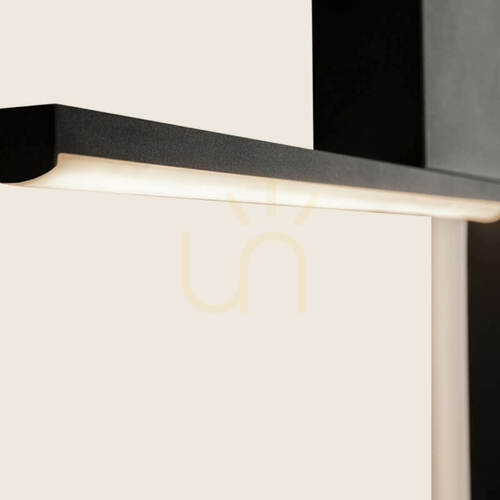
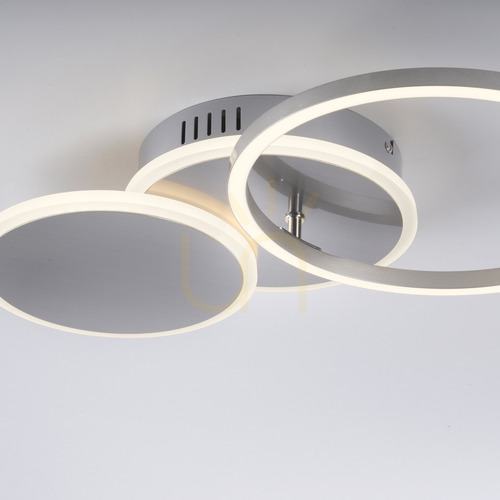
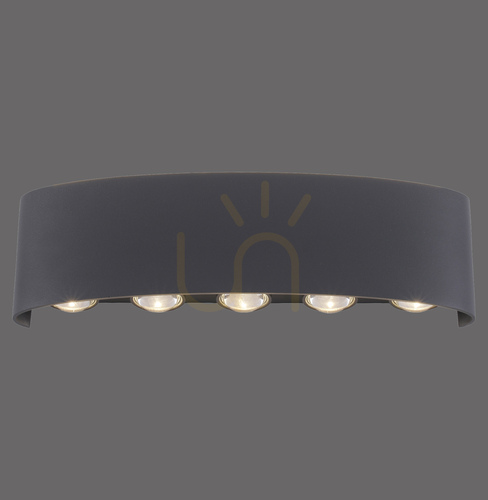
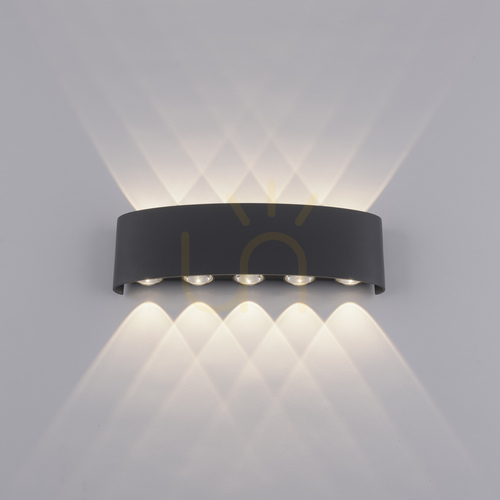
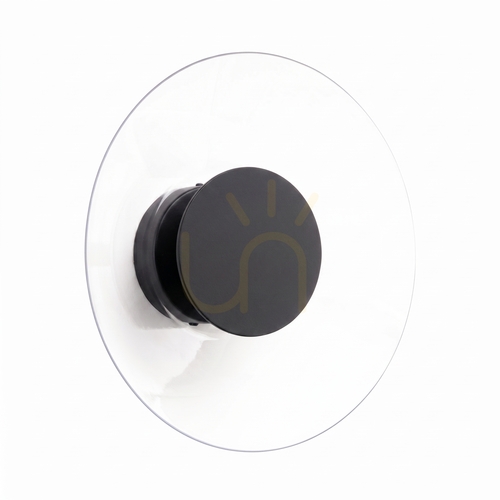
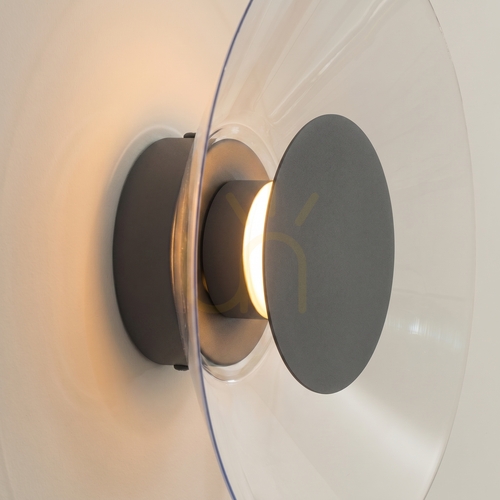
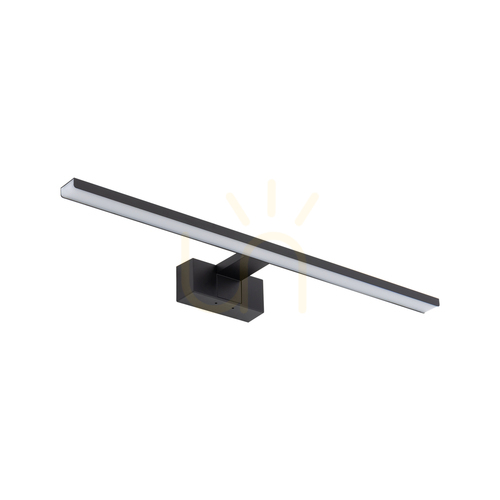
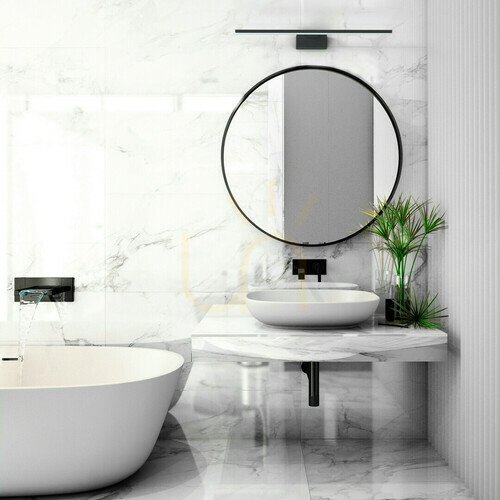
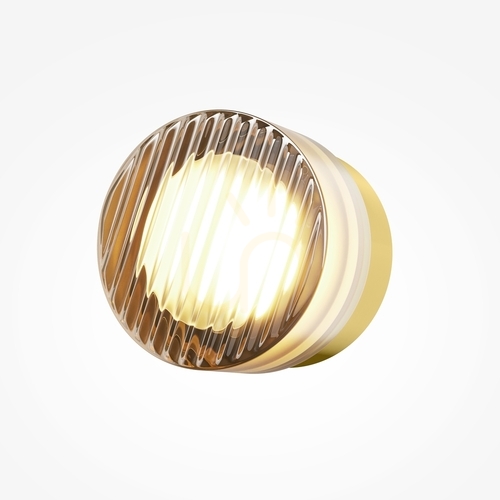
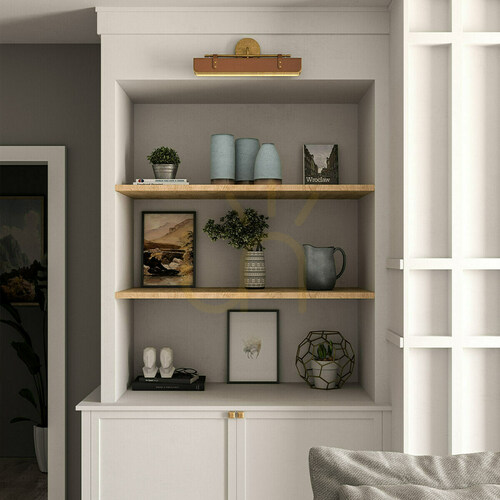
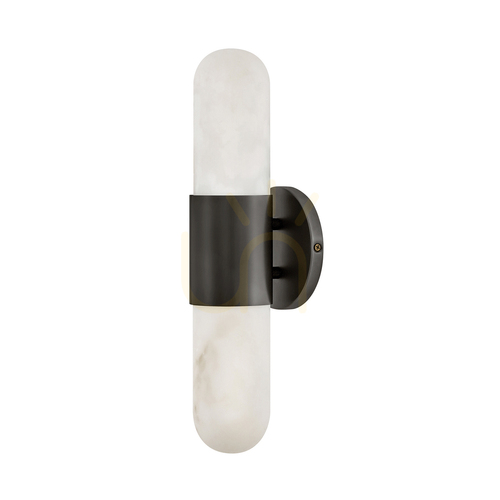
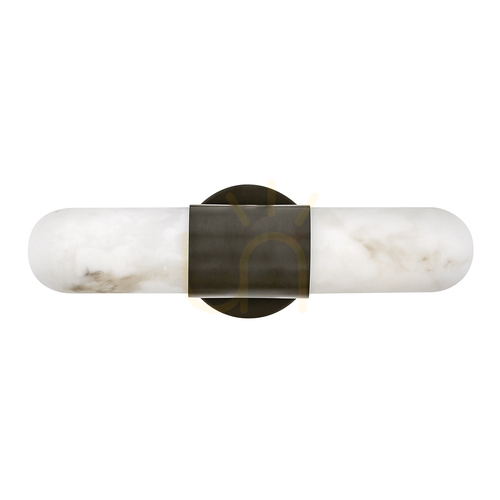
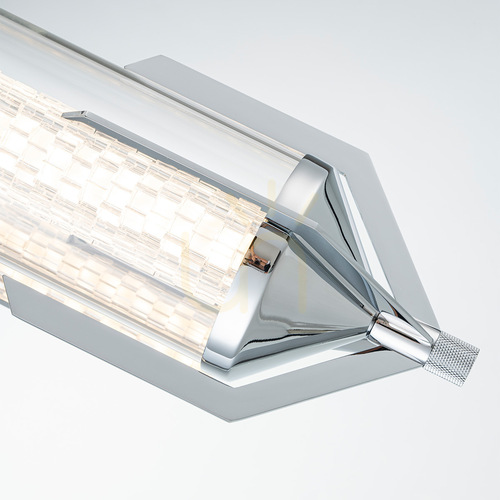
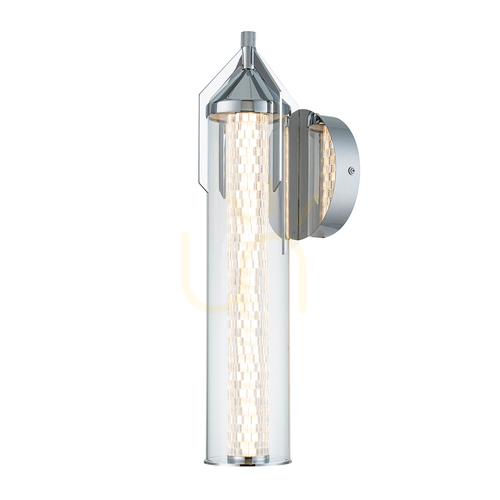
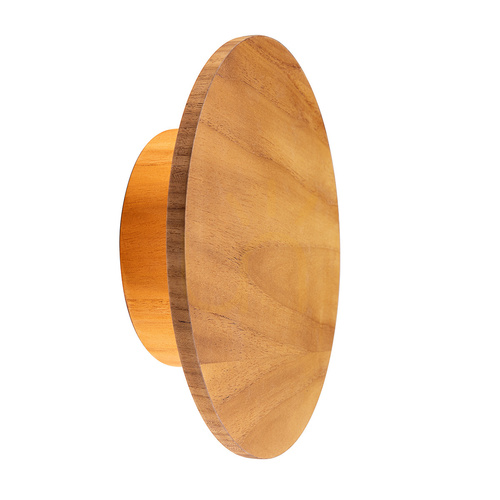
An LED wall light gets its light from LEDs that are either built into the fitting or fitted as an LED lamp in a G9, E14 or E27 holder. On a wall the choice shows more than on a ceiling, because the light sits close to eye level: integrated LEDs let the fitting stay slim and hide the light source, while a lamp-holder version lets you change the bulb, and with it the brightness or warmth, whenever you like.
Indoors, wall lights rarely carry a room on their own. They soften a living room alongside the ceiling pendant, light a landing or narrow hallway, give a reading light by the bed or a shadow-free glow at the bathroom mirror. Each of those jobs calls for different numbers.
Integrated LED versus a replaceable lamp
With integrated LED, the board and driver live inside the body. That is what makes ultra-slim fittings, continuous light lines and crisp up-and-down beams possible. Good LEDs typically run for 15,000–50,000 hours before dropping to around 70% of their output, and the driver usually gives up first. Ecodesign rules generally expect the light source and driver to be replaceable without wrecking the fitting, though there are exceptions, so it is worth asking whether spares exist.
A lamp-holder wall light is the more forgiving choice. Swap the bulb and you change the colour or brightness; if it fails, you buy a lamp, not a light. Two things catch people out: G9 LED capsules are often longer than the halogen ones they replace and may not fit under a small glass shade, and not every LED bulb is rated for enclosed fittings.
Choosing by room
Watts say little about an LED. Read lumens, colour temperature in kelvin and CRI instead. As a rough guide, an old 60 W bulb gave about 800 lm, which an LED reaches at 7–9 W.
| Where |
Output per light |
Colour temperature |
Typical height (centre) |
| Living room, either side of a sofa or chimney breast |
200–500 lm |
2700–3000 K |
1.6–1.8 m |
| Hallway or landing, as the main light |
600–1000 lm, every 2–3 m |
3000 K |
1.7–1.9 m |
| Bedroom, reading |
200–400 lm, directional |
2700 K |
1.2–1.5 m |
| Bathroom mirror |
800–1500 lm, CRI 90+ |
3000–4000 K |
above the mirror, or each side at face height |
| Staircase |
300–600 lm |
3000 K |
set so the treads are lit, not your eyes |
These heights assume a typical UK ceiling of around 2.4 m. An uplighter needs a good gap to the ceiling, or it simply paints a bright circle there.
Light direction and the wall itself
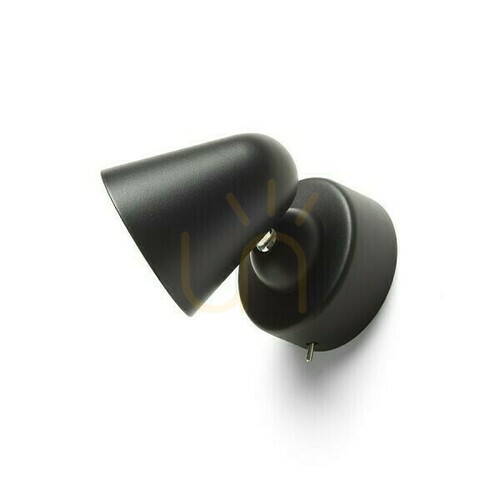
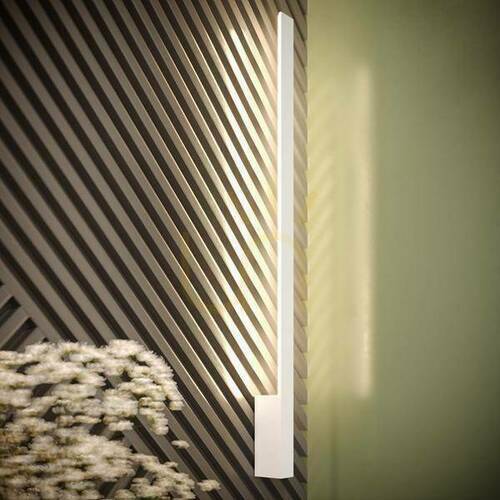
Up-and-down lights throw two beams and pick out brick, panelling or textured plaster, but they will also show every ripple in an uneven wall. Opal glass or fabric shades spread light into the room and suit a narrow hallway. Swing-arm and adjustable heads put light on the page rather than in your partner's eyes. Slim linear fittings, from about 30 cm to well over a metre, work over a mirror, above a painting or along a long landing wall.
Bathrooms, wiring and safety
A hardwired wall light connects to a back box, and the job belongs to a qualified electrician working to BS 7671. Slim LED fittings leave little room behind for terminals, so a deeper back box helps. Older UK lighting circuits sometimes have no earth; in that case a Class II (double-insulated) fitting is the safe choice. In bathrooms, zones decide the IP rating: zone 2, within 60 cm of the bath or shower, needs at least IPX4, and IP44 is the usual pick. Outside the zones, IP20 is fine. Use plasterboard fixings on stud walls and standard plugs in brick or block.
Dimming, flicker and cleaning
Only fittings marked dimmable will dim, and they need an LED-compatible dimmer, normally trailing-edge. A non-dimmable LED on an old dimmer flickers, buzzes or never fully switches off. Colour-selectable (CCT) models let you choose warm or cooler white with a switch, remote or app. To spot a poor driver, point your phone camera at the light: rolling bands on screen mean flicker.
LEDs warm a shade far less than halogen, but the driver still needs air. To clean, switch off at the consumer unit, wipe with a dry or barely damp microfibre cloth and wash glass shades separately.
Frequently asked questions
Are there LED wall lights with no wiring required?
Yes: rechargeable models, often with a magnetic mount, and plug-in wall lights with a cable and inline switch. They suit rented homes and spots with no supply, though battery lights are dimmer and need charging.
What height should bedroom wall lights be?
For reading, roughly 1.2–1.5 m from the floor, so the light falls over your shoulder when you sit up in bed. Choose warm 2700 K and a switch you can reach lying down.
How many wall lights does a living room need?
Two often do in a small room, set symmetrically. A larger room usually looks better with three or four spread around the walls.
Can you replace the LED in a wall light?
In lamp-holder fittings, simply change the bulb. With integrated LED, the driver or module can often be swapped, sometimes only through the manufacturer.
Are LED wall lights dimmable?
Some are. Check the fitting is marked dimmable and pair it with a trailing-edge LED dimmer.
Which LED wall lights suit a bathroom?
Anything in zone 2 needs at least IPX4, in practice IP44. Beside the mirror, CRI 90 and 3000–4000 K make skin tones look natural.
For wall lights in general, classic bulb-holder designs included, see indoor wall lights. Where there is no supply in the wall, read up on battery-operated wall lights.